















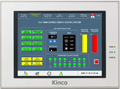






- Industrial display
-
Industrial Products
- DC Servo Drive
- AC Servo Drive
- Industrial board
- Siemens
- Switch Sensor
- Proximity Switch
- Temperature Controller
- Protection Relay
- Fiber Optic Sensor
- Encoder
- Fan
- other
- Heidelberg
- MITSUBISHI
- FANUC
- Siemens adapter
- Fujitsu connector
- Motherboard
- Board
- Contactor
- Circuit
- OMRON
- Relay
- Motor Driver
- power supply
- Cable
- Transformer
- HMI Touch Glass
-
HMI Full Machine Whole unit
- OMRON HMI Touch Panel
- Siemens HMI Touch Panel
- Mitsubishi HMI Touch Panel
- Allen-Bradley automation HMI Touch Panel
- DELTA HMI Touch Panel
- Proface HMI Touch Panel
- KINCO DELTA HMI Touch Panel
- HITECH HMI Touch Panel
- WEINTEK HMI Touch Panel
- TECVIEW HMI Touch Panel
- WEINVIEW HMI Touch Panel
- PANASONIC HMI Touch Panel
- KYOCERA HMI Touch Panel
- SCHNEIDER HMI Touch Panel
- Module
- lcd inverter
- Membrane Keypad Switch
- Zhiyan Customized Touch Screens
- Frequency Inverter
- Servo Motor
- PLC
In the ever-evolving landscape of digital display technology, the introduction of a new panel model often signals a leap in performance and application possibilities. The New 10.1 inch G101EVN01.3 LCD Display Panel stands as a prime example, engineered to deliver a reliable and high-quality visual experience at a mainstream resolution of 1280 x 800 (WXGA). This specific panel is not merely a component; it represents a critical building block for a wide array of modern devices, from industrial human-machine interfaces (HMIs) and portable medical monitors to in-vehicle infotainment systems and compact computing devices.
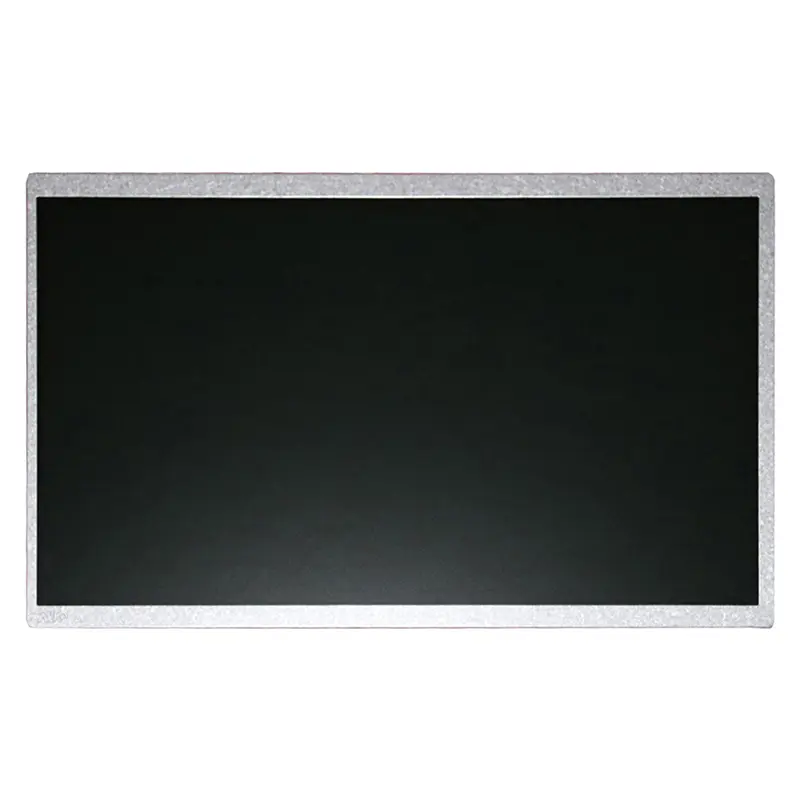
Understanding its specifications, strengths, and optimal use cases is essential for engineers, product designers, and procurement specialists. This article provides a comprehensive, in-depth analysis of the G101EVN01.3 panel. We will dissect its core technical architecture, explore the advantages of its WXGA resolution in a 10.1-inch form factor, and delve into its key performance characteristics. Furthermore, we will examine its most suitable application environments, provide crucial integration guidelines, and finally, contextualize its position within the current display market. Our goal is to move beyond basic datasheet information and offer actionable insights for leveraging this panel effectively in your next project.
Technical Architecture and Core Specifications
At its heart, the G101EVN01.3 is an a-Si TFT-LCD (Thin-Film Transistor Liquid Crystal Display) panel. This mature and cost-effective technology provides a stable foundation for consistent performance. The panel utilizes an LVDS (Low-Voltage Differential Signaling) interface, which remains an industry standard for robust data transmission with low noise interference, crucial for applications in electrically noisy environments. The 10.1-inch diagonal active area provides a balanced screen real estate, suitable for both information-dense interfaces and media consumption.
Its native resolution of 1280 x 800 pixels defines its visual clarity, offering a 16:10 aspect ratio. This aspect ratio is particularly valued as it provides more vertical space compared to the common 16:9 widescreen format, beneficial for displaying documents, web pages, and diagnostic data. The panel typically features a standard RGB stripe pixel arrangement and supports a wide range of color gamut coverage, often around 70% of NTSC, ensuring adequate color reproduction for professional and commercial uses. Understanding this foundational architecture is the first step in evaluating its fit for any system design.
The Strategic Advantage of 1280x800 WXGA Resolution
The choice of WXGA (Wide Extended Graphics Array) 1280x800 resolution on a 10.1-inch panel is a strategic balance between pixel density, cost, and system performance. This configuration yields a pixel density of approximately 149 PPI (Pixels Per Inch). While not in the "retina" class of high-end tablets, this density is more than sufficient for most industrial, commercial, and embedded applications where readability and functional clarity trump ultra-sharp media playback.
This resolution allows for the display of a significant amount of information without requiring excessive scaling of user interface elements, which is a common challenge when forcing higher resolutions onto smaller screens or lower-powered processors. For system architects, the 1280x800 resolution reduces the load on the graphics processing unit (GPU) and system memory bandwidth compared to Full HD (1920x1080) panels, leading to potentially lower power consumption and reduced system cost. It represents the sweet spot where visual fidelity meets practical engineering and economic constraints.
Performance Characteristics: Brightness, Contrast, and Viewing Angles
Beyond resolution, the usability of a display panel is defined by its core performance metrics. The G101EVN01.3 is designed to perform reliably under various lighting conditions. It typically offers a luminance ranging from 300 to 500 nits, making it viewable in brightly lit indoor environments or even under indirect sunlight when paired with appropriate optical bonding techniques.
The contrast ratio, often in the range of 600:1 to 1000:1, ensures that text and graphics appear crisp with distinct separation between dark and light areas. For viewing flexibility, most versions of this panel employ IPS (In-Plane Switching) or advanced FFS (Fringe Field Switching) technology. This provides wide viewing angles—often 80/80/80/80 (Left/Right/Up/Down) degrees or better—with minimal color shift and contrast degradation. This is a critical feature for devices like car navigation systems or shared industrial control panels where multiple operators may view the screen from off-center angles.
Target Applications and Use Case Scenarios
The robust and versatile nature of the G101EVN01.3 panel makes it an ideal candidate for a diverse set of demanding applications. In the industrial automation sector, it serves as the primary interface for PLCs, CNC machine controls, and factory floor HMIs, where reliability and clear visibility of schematics and data are paramount. The medical field utilizes similar panels in portable diagnostic devices and patient monitoring equipment, benefiting from its stable performance and good readability.
The transportation industry is another key adopter. The panel is found in in-vehicle infotainment (IVI) systems, rear-seat entertainment, and digital instrument clusters, where it must withstand temperature fluctuations and vibrations. Other prominent use cases include:
Point-of-Sale (POS) and Kiosk Systems: For customer interaction and transaction processing.
Embedded Computing & IoT Gateways: As a local management and configuration interface.
Portable All-in-One PCs and Rugged Tablets: Balancing screen size with device portability.
Integration Guidelines and Critical Considerations
Successfully integrating the G101EVN01.3 into a product requires attention to several technical details. First, designers must ensure the LCD controller or system-on-chip (SoC) supports LVDS output with the exact timing requirements (e.g., pixel clock, blanking intervals) of this panel. The power supply sequence for the panel's logic board and backlight must be meticulously followed to prevent permanent damage.
Mechanical integration is equally vital. The panel's outline dimensions, bezel size, and mounting hole positions must align with the product's chassis. Designers must also decide on backlighting solutions—typically an LED edge-light system—and consider techniques like optical bonding, which laminates the LCD to the cover glass. This process reduces reflections, improves sunlight readability, and enhances mechanical durability, which is especially beneficial for industrial and automotive applications.
Market Context and Comparative Analysis
Positioning the G101EVN01.3 within the broader display market clarifies its value proposition. It exists in a competitive space between older, lower-resolution panels (1024x600) and newer, higher-resolution options (1920x1200). Its primary advantage is offering a proven, cost-optimized solution for applications that do not necessitate 1080p resolution but require more space than 1024x600 provides.
When compared to alternative technologies, it lacks the ultra-thin profile and potential for flexibility of OLED, but it wins on cost, longevity, and absence of burn-in risk for static images. Against other TFT panels, its 16:10 aspect ratio and WXGA resolution offer a tangible productivity benefit over 16:9 panels of similar size. For projects with defined performance needs and budget constraints, the G101EVN01.3 represents a reliable and strategically sound choice that balances capability with total cost of ownership.
FAQs: New 10.1-inch G101EVN01.3 LCD Panel
1. What is the native resolution of the G101EVN01.3 panel?It is 1280 x 800 pixels (WXGA), with a 16:10 aspect ratio.
2. What type of interface does this panel use?It typically uses an LVDS (Low-Voltage Differential Signaling) interface for reliable data transmission.
3. Is this panel suitable for outdoor use?With a typical brightness of 300-500 nits and optional optical bonding, it can be used in bright indoor or semi-outdoor environments, but direct sunlight may require a higher-brightness variant.
4. What are the typical applications for this display?Common applications include industrial HMIs, medical monitors, in-vehicle systems, POS/kiosks, and embedded computing devices.
5. Does it have wide viewing angles?Yes, models often feature IPS/FFS technology, providing wide viewing angles with minimal color shift.
6. What is the advantage of the 16:10 aspect ratio?It offers more vertical screen space compared to 16:9, which is better for viewing documents, web pages, and vertical data streams.
7. What should I check for during system integration?Verify LVDS timing compatibility, strictly follow the power sequence, and ensure mechanical fit, including backlight and connector placement.
8. How does its resolution affect system performance?The 1280x800 resolution is less demanding on the GPU and memory than Full HD, potentially lowering power consumption and system cost.
9. Can this panel be used as a direct replacement for an older 10.1" panel?Not automatically. You must verify compatibility in resolution, interface (LVDS pinout), voltage requirements, physical dimensions, and mounting.
10. Where does this panel fit in the current market?It is a cost-effective, reliable mid-range option between lower-resolution (1024x600) and higher-resolution (1920x1200) 10.1-inch panels.
Conclusion
The 10.1-inch G101EVN01.3 LCD panel exemplifies how a well-executed, balanced specification can meet the needs of a vast segment of the embedded and industrial display market. Its 1280x800 WXGA resolution strikes an optimal balance between information density, system resource demands, and cost. Coupled with robust performance characteristics like good brightness, contrast, and wide viewing angles, it presents a compelling solution for designers and engineers.
Ultimately, the value of this panel lies not in chasing the highest specifications, but in delivering reliable, readable, and integratable performance where it matters most. For projects ranging from factory floor interfaces to in-vehicle systems, the G101EVN01.3 offers a proven foundation upon which innovative and dependable products can be built, ensuring clear communication between machine and user in an increasingly digital world.





