













































- Industrial display
-
Industrial Products
- DC Servo Drive
- AC Servo Drive
- Industrial board
- Siemens
- Switch Sensor
- Proximity Switch
- Temperature Controller
- Protection Relay
- Fiber Optic Sensor
- Encoder
- Fan
- other
- Heidelberg
- MITSUBISHI
- FANUC
- Siemens adapter
- Fujitsu connector
- Motherboard
- Board
- Contactor
- Circuit
- OMRON
- Relay
- Motor Driver
- power supply
- Cable
- Transformer
- HMI Touch Glass
-
HMI Full Machine Whole unit
- OMRON HMI Touch Panel
- Siemens HMI Touch Panel
- Mitsubishi HMI Touch Panel
- Allen-Bradley automation HMI Touch Panel
- DELTA HMI Touch Panel
- Proface HMI Touch Panel
- KINCO DELTA HMI Touch Panel
- HITECH HMI Touch Panel
- WEINTEK HMI Touch Panel
- TECVIEW HMI Touch Panel
- WEINVIEW HMI Touch Panel
- PANASONIC HMI Touch Panel
- KYOCERA HMI Touch Panel
- SCHNEIDER HMI Touch Panel
- Module
- lcd inverter
- Membrane Keypad Switch
- Zhiyan Customized Touch Screens
- Frequency Inverter
- Servo Motor
- PLC
In the intricate world of electronic components, the display often serves as the critical interface between machine and user. For engineers, product designers, and procurement specialists, selecting the right LCD module is a decision that balances technical specifications, reliability, and cost. This article delves into a detailed examination of the G070ACE-LH1, a 7-inch display module from Innolux, designed to meet the demands of industrial and embedded applications.
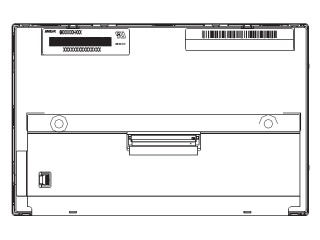
We will move beyond basic datasheet parameters to explore what makes this 800x480 resolution display a compelling choice. Our analysis will cover its core technological attributes, the practical implications of its design for integration, and its performance under various operational conditions. By understanding its strengths and optimal use cases, you can make an informed decision on whether the G070ACE-LH1 is the right visual engine for your next project, from industrial HMIs to portable medical devices.

Core Technology and Display Specifications
The Innolux G070ACE-LH1 is built on a TFT-LCD (Thin-Film Transistor Liquid Crystal Display) platform, a mature yet highly reliable technology for controlled lighting environments. Its 7-inch diagonal active area provides a substantial viewing canvas without being overly bulky. The native resolution of 800 x 480 pixels (often referred to as WVGA) offers a clear balance between detail density and the processing power required to drive it, making it efficient for microcontroller-based systems.
This module typically employs LED backlighting, which offers advantages in longevity, power efficiency, and a more uniform brightness profile compared to older CCFL technology. The standard configuration often includes a brightness level suitable for indoor use, with options for high-brightness panels available for sun-readable applications. Understanding these foundational specs is crucial as they directly impact image clarity, system power budget, and the overall user experience of the final product.
Interface and Signal Integration
A display module's interface is its language for communicating with the host system. The G070ACE-LH1 commonly utilizes an LVDS (Low-Voltage Differential Signaling) interface. LVDS is a preferred standard in industrial and automotive applications due to its robustness. It transmits data differentially, making it highly resistant to electromagnetic interference (EMI), which is paramount in electrically noisy environments.
This choice of interface dictates the type of controller or system-on-chip (SoC) needed in the host device. Designers must ensure their mainboard includes an LVDS transmitter or can accommodate a converter chip. The integration process involves matching the module's pinout, voltage levels, and timing characteristics with the host controller, a critical step for achieving a stable and flicker-free image. This behind-the-scenes compatibility is a cornerstone of reliable product design.
Mechanical Design and Environmental Durability
The physical construction of the G070ACE-LH1 is tailored for challenging operational conditions. It often features a metal frame for enhanced structural rigidity, protecting the glass substrate from flexing and shock. The surface is typically fitted with a robust cover glass or polycarbonate panel, which can be treated with anti-glare coatings or bonded for improved optical performance.
Key mechanical specifications include its outline dimensions, mounting hole positions, and bezel width. For many embedded applications, a narrow bezel design is advantageous, allowing for more compact device packaging. Furthermore, these modules are generally rated to operate across a wide temperature range (e.g., -20°C to 70°C for standard models, with extended options), ensuring functionality in everything from freezing cold storage facilities to hot factory floors.
Optical Performance and Viewing Experience
Beyond resolution, several optical parameters define the viewing quality. Contrast ratio determines the depth of blacks and the vibrancy of the image, critical for text readability and graphical detail. The color gamut indicates the range of colors the display can reproduce; for this module, it is typically sufficient for standard graphical user interfaces and diagnostic imagery.
Viewing angles are particularly important for devices that may be viewed from off-center positions. Using IPS (In-Plane Switching) or advanced TN technology, the G070ACE-LH1 offers wide viewing angles, ensuring the image remains consistent without severe color shift or inversion when viewed from the side, top, or bottom. This is a vital feature for multi-operator industrial panels or portable devices.
Typical Applications and Use Cases
The specific blend of size, resolution, and ruggedness makes the G070ACE-LH1 a versatile component across multiple sectors. In Industrial Automation, it serves as the face of Human-Machine Interfaces (HMIs) for controlling machinery, monitoring production lines, and visualizing SCADA systems. Its reliability in harsh conditions is a key asset here.
In the Transportation sector, it finds use in fleet management terminals, dashboard displays for specialized vehicles, and rear-seat entertainment systems. The Medical field employs such displays in portable diagnostic devices and patient monitoring equipment, where clarity and reliability are non-negotiable. Other applications include point-of-sale systems, building automation controllers, and agricultural equipment interfaces.
Supply Chain and Design Considerations
Selecting a display module like the G070ACE-LH1 involves long-term strategic thinking. Long-term availability is a critical factor for products with multi-year lifecycles, especially in industrial markets. Innolux, as a major panel manufacturer, generally offers stable product life cycles, but this must be verified.
Designers must also consider the total cost of integration, which goes beyond the unit price of the module. This includes the cost of the interface controller, power supply circuitry, potential touchscreen overlay, and the mechanical mounting solution. Sourcing from authorized distributors ensures genuine components and access to technical support, mitigating project risk. Planning for potential future upgrades or second-source options is also a mark of prudent design.
FAQs: Innolux G070ACE-LH1 Display Module
Q1: What is the screen size and resolution of the G070ACE-LH1?A1: It is a 7-inch diagonal TFT LCD with a resolution of 800 x 480 pixels (WVGA).
Q2: What type of interface does this display use?A2: It typically uses an LVDS (Low-Voltage Differential Signaling) interface for robust data transmission.
Q3: Is this display suitable for use outdoors?A3: The standard version is for indoor use. For outdoor/sunlight-readable applications, a high-brightness variant with an enhanced backlight is required.
Q4: Does it have a wide operating temperature range?A4: Yes, standard models are designed to operate reliably across a wide industrial temperature range, often from -20°C to 70°C.
Q5: Can a touchscreen be added to this module?A5: Yes, it is commonly available with optional resistive or capacitive touchscreen panels attached.
Q6: What are the main applications for this display?A6: It is widely used in industrial HMIs, medical devices, transportation systems, POS terminals, and embedded control systems.
Q7: Who manufactures the G070ACE-LH1?A7: It is manufactured by Innolux Corporation, a leading global manufacturer of TFT-LCD panels.
Q8: What is the advantage of using an LVDS interface?A8: LVDS offers high-speed data transfer with low noise and low power consumption, and is highly resistant to electromagnetic interference.
Q9: What should I check when integrating this display into my design?A9: Key checks include: interface compatibility (LVDS pinout & voltage), power requirements, timing parameters, mechanical mounting, and temperature ratings.
Q10: Is this module suitable for low-power or battery-operated devices?A10: While LED backlights are efficient, the total power draw depends on brightness. For battery-critical applications, careful backlight management and system-level power design are essential.
Conclusion
The Innolux G070ACE-LH1 7-inch display represents a well-balanced convergence of reliability, performance, and practicality for the embedded and industrial markets. Its WVGA resolution, robust LVDS interface, and durable mechanical design make it more than just a component—it is a dependable visual subsystem ready for integration into demanding environments.
Successful implementation, however, hinges on a holistic understanding. Engineers must appreciate the interplay between its optical characteristics, electrical interface requirements, and physical constraints. By carefully evaluating this module against the specific demands of temperature, visibility, longevity, and system architecture, product developers can leverage the G070ACE-LH1 to create interfaces that are not only functional but also resilient, ensuring clear communication between their technology and its users for years to come.





