













































- Industrial display
-
Industrial Products
- DC Servo Drive
- AC Servo Drive
- Industrial board
- Siemens
- Switch Sensor
- Proximity Switch
- Temperature Controller
- Protection Relay
- Fiber Optic Sensor
- Encoder
- Fan
- other
- Heidelberg
- MITSUBISHI
- FANUC
- Siemens adapter
- Fujitsu connector
- Motherboard
- Board
- Contactor
- Circuit
- OMRON
- Relay
- Motor Driver
- power supply
- Cable
- Transformer
- HMI Touch Glass
-
HMI Full Machine Whole unit
- OMRON HMI Touch Panel
- Siemens HMI Touch Panel
- Mitsubishi HMI Touch Panel
- Allen-Bradley automation HMI Touch Panel
- DELTA HMI Touch Panel
- Proface HMI Touch Panel
- KINCO DELTA HMI Touch Panel
- HITECH HMI Touch Panel
- WEINTEK HMI Touch Panel
- TECVIEW HMI Touch Panel
- WEINVIEW HMI Touch Panel
- PANASONIC HMI Touch Panel
- KYOCERA HMI Touch Panel
- SCHNEIDER HMI Touch Panel
- Module
- lcd inverter
- Membrane Keypad Switch
- Zhiyan Customized Touch Screens
- Frequency Inverter
- Servo Motor
- PLC
In the intricate world of industrial and embedded display solutions, the choice of a display module can be the defining factor between a good product and a great one. It sits at the crucial human-machine interface, demanding not just visual clarity but unwavering reliability under often challenging conditions. This article delves deep into one such pivotal component: the AA106TA11 Mitsubishi 10.6-inch TFT LCD Module. Far more than just a screen, this module represents a convergence of mature technology, robust engineering, and specific performance characteristics tailored for demanding applications.
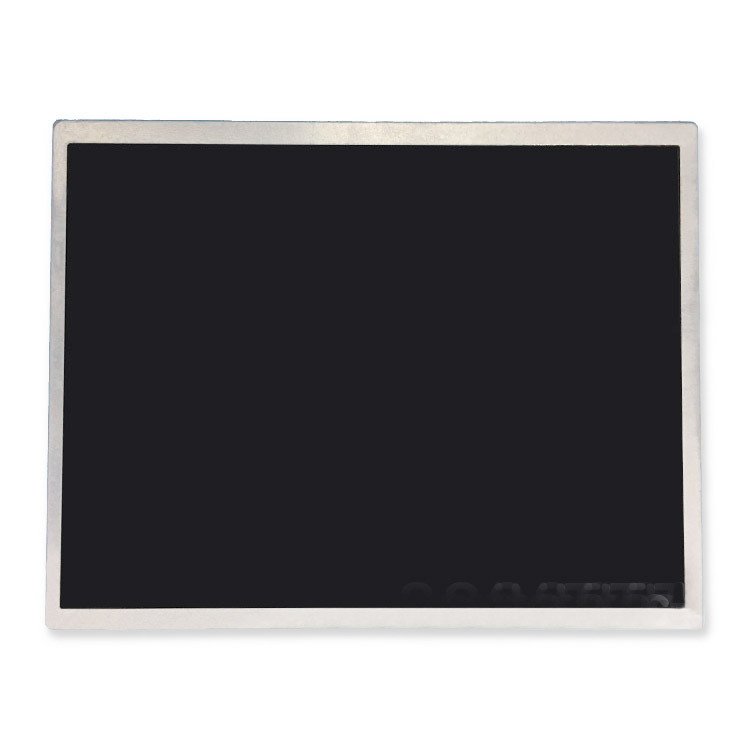
Our exploration will move beyond basic specifications to uncover the real-world value proposition of the AA106TA11. We will examine its core technological foundations, dissect its key performance parameters, and analyze the unique advantages conferred by its manufacturer, Mitsubishi Electric. Furthermore, we will investigate its primary application landscapes, provide a balanced view of its strengths and limitations, and offer practical guidance for system integration and sourcing. This comprehensive analysis aims to equip engineers, procurement specialists, and product developers with the insights needed to evaluate whether this specific module is the optimal display engine for their next project.

Technological Foundation: The AA106TA11's Core Architecture
At its heart, the AA106TA11 is built upon a Twisted Nematic (TN)TFT LCD panel with a CCFL (Cold Cathode Fluorescent Lamp) backlighting system. This technology combination signifies its position as a mature, proven, and cost-effective solution. The 10.6-inch diagonal screen offers a native resolution of 1024 x 768 (XGA), delivering a sharp pixel density suitable for displaying detailed graphics, text, and user interface elements. The use of an analog RGB interface is a key characteristic, pointing towards integration with legacy systems or specific controller boards designed for this widespread standard.
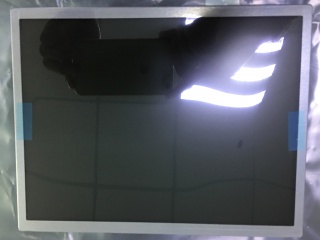
The module's construction is engineered for industrial durability. It typically features a sturdy metal frame, ensuring mechanical stability and providing a secure mounting platform. The inclusion of CCFL backlighting, while less power-efficient than modern LEDs, offers a well-understood and often bright, uniform light source with a long operational lifespan. Understanding this foundational architecture—the TN panel for fast response, the CCFL for illumination, and the analog interface—is essential for appreciating the module's performance profile and its ideal use cases, which stand in contrast to newer, consumer-oriented LCD technologies.
Performance Specifications and Key Features
The defining performance metrics of the AA106TA11 paint a picture of a module designed for clarity and resilience. Its brightness, often in the range of 300-400 nits, ensures adequate visibility in normally lit industrial environments. The contrast ratio provides distinct differentiation between dark and light areas of the display, crucial for readability. A critical specification for any display in motion-critical applications is the response time; this module's TN technology typically enables fast pixel transition, reducing blur in dynamic content.
Beyond the basic image parameters, the module's feature set includes robust operating temperature ranges (e.g., -20°C to +70°C), allowing deployment in non-climate-controlled settings. Its long-life CCFL backlight (often rated for 50,000 hours or more) translates to reduced maintenance and downtime. The screen surface is usually equipped with an anti-glare treatment, mitigating reflections from overhead lighting. These specifications collectively underscore a design philosophy centered on dependable, long-term operation rather than chasing the highest possible color gamut or ultra-thin form factors.
The Mitsubishi Electric Advantage: Reliability and Legacy
The "Mitsubishi" branding on the AA106TA11 is not merely a label; it carries significant weight in industrial electronics. Mitsubishi Electric is synonymous with high-reliability manufacturing and stringent quality control processes. For integrators, this means a reduced risk of infant mortality failures and consistent performance from unit to unit. This reliability is paramount in sectors like factory automation, medical equipment, or transportation, where display failure can lead to costly operational halts or safety concerns.
Furthermore, Mitsubishi's history in this sector provides a legacy of support and documentation. While the module itself may be a mature product, the availability of detailed datasheets, interface manuals, and known compatibility with certain controller ICs simplifies the design-in process. For businesses maintaining long-lifecycle products (often 10+ years), the assurance of a stable supply chain from a reputable manufacturer or its authorized distributors, and the module's own long-term availability, are critical factors that outweigh the allure of cheaper, unproven alternatives.
Primary Application Landscapes
The AA106TA11 finds its niche in applications where durability, readability, and proven technology trump ultra-high resolution or sleek aesthetics. A primary domain is industrial human-machine interfaces (HMIs) for machine tools, PLC control stations, and factory automation systems. Here, its rugged build, clear XGA display, and wide temperature range are ideal. Another significant application is in medical devices, particularly older or specialized diagnostic equipment, patient monitors, and laboratory instruments that require stable, flicker-free displays with high reliability.
It is also commonly employed in point-of-sale (POS) systems, kiosks, and transportation information displays where continuous operation is needed. The analog interface makes it a compatible choice for upgrading or servicing existing systems built around that standard. Essentially, the AA106TA11 serves as the "workhorse" display in embedded systems that are not consumer-facing but are integral to professional, commercial, or industrial processes, often in environments where conditions are too harsh for standard commercial monitors.
Comparative Analysis: Strengths and Considerations
Evaluating the AA106TA11 requires a balanced perspective. Its core strengths are undeniable: exceptional reliability and longevity backed by Mitsubishi's quality; rugged industrial construction; excellent readability with fast response time; and strong legacy system compatibility via its analog interface. For the right application, these are invaluable traits.
However, modern designers must also consider its limitations. The CCFL backlight consumes more power and generates more heat than contemporary LED backlights. The TN panel technology offers more limited viewing angles and color reproduction compared to IPS or VA panels. The analog RGB interface is susceptible to electrical noise and is being phased out in favor of digital interfaces like LVDS or eDP in new designs. Therefore, the choice hinges on prioritizing long-term ruggedness and legacy support over power efficiency, viewing angles, and modern digital signal integrity.
Integration Guidelines and Sourcing Insights
Successfully integrating the AA106TA11 involves addressing its specific requirements. Designers must allocate space for its inverter board (to power the CCFL lamps) and ensure adequate thermal management, as CCFLs generate noticeable heat. The analog interface requires careful PCB layout to minimize signal degradation and noise. Power supply design must account for the high-voltage needs of the inverter and the module's total power draw.
Regarding sourcing, the AA106TA11 is a mature product. While it may be available from Mitsubishi's direct channels, it is more commonly sourced through specialized electronic component distributors or authorized resellers who focus on industrial displays. It is crucial to verify the authenticity of the module to avoid counterfeit parts. Given its lifecycle stage, exploring compatible alternative modules with similar form factors and interfaces (sometimes from other manufacturers like AUO or Innolux) is a prudent step for risk mitigation and potential cost optimization in new designs, though often at the expense of the Mitsubishi-branded reliability assurance.
Frequently Asked Questions (FAQs)
Q1: What is the screen resolution of the AA106TA11?A1: It has an XGA resolution of 1024 x 768 pixels.
Q2: What type of backlight does it use?A2: It uses a Cold Cathode Fluorescent Lamp (CCFL) backlight system.
Q3: What is the main interface for this LCD module?A3: It features an analog RGB interface.
Q4: Is this module suitable for outdoor use?A4: It is designed for industrial indoor use. Its brightness may be insufficient for direct sunlight, and it lacks dedicated outdoor sealing.
Q5: What are typical applications for this module?A5: Common applications include industrial HMIs, medical devices, POS systems, kiosks, and transportation information displays.
Q6: What are the advantages of its TN panel?A6: TN panels generally offer faster response times and lower cost compared to IPS or VA panels, though with narrower viewing angles.
Q7: What is a key consideration for power supply design?A7: Designers must account for the power needs of both the LCD panel logic and the separate high-voltage inverter for the CCFL backlight.
Q8: Where can I buy the AA106TA11 module?A8: It is available through authorized industrial electronic component distributors and specialized display module resellers.
Q9: How does it compare to modern LED-backlit modules?A9: It is typically less power-efficient, thicker, and generates more heat than LED-backlit modules, but offers proven reliability and legacy compatibility.
Q10: Is this module still in production?A10: As a mature product, its production status should be verified with distributors or Mitsubishi. It is often available as a long-term supply item for legacy systems.
Conclusion
The Mitsubishi AA106TA11 10.6-inch TFT LCD module stands as a testament to the enduring value of robust, purpose-built engineering. It is not a cutting-edge consumer display, but rather a highly reliable component engineered for the demanding, long-lifecycle world of industrial and professional embedded systems. Its strengths—exemplary reliability, industrial durability, clear XGA readability, and analog interface compatibility—make it a compelling choice for maintaining, upgrading, or designing systems where operational uptime and proven performance are non-negotiable.
Ultimately, selecting the AA106TA11 is a strategic decision that weighs legacy support and ruggedness against modern efficiency and digital interfaces. For engineers navigating the landscape of industrial HMIs, medical equipment, or specialized kiosks, this module offers a trusted solution. By thoroughly understanding its architecture, performance profile, and integration requirements, developers can effectively harness its capabilities to build interfaces that are not only functional but fundamentally dependable for years of continuous service.





