


















- Industrial display
-
Industrial Products
- DC Servo Drive
- AC Servo Drive
- Industrial board
- Siemens
- Switch Sensor
- Proximity Switch
- Temperature Controller
- Protection Relay
- Fiber Optic Sensor
- Encoder
- Fan
- other
- Heidelberg
- MITSUBISHI
- FANUC
- Siemens adapter
- Fujitsu connector
- Motherboard
- Board
- Contactor
- Circuit
- OMRON
- Relay
- Motor Driver
- power supply
- Cable
- Transformer
- HMI Touch Glass
-
HMI Full Machine Whole unit
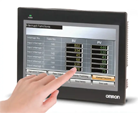
- OMRON HMI Touch Panel
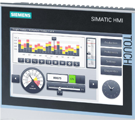
- Siemens HMI Touch Panel
- Mitsubishi HMI Touch Panel
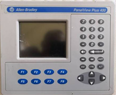
- Allen-Bradley automation HMI Touch Panel
- DELTA HMI Touch Panel
- Proface HMI Touch Panel
- KINCO DELTA HMI Touch Panel
- HITECH HMI Touch Panel
- WEINTEK HMI Touch Panel
- TECVIEW HMI Touch Panel
- WEINVIEW HMI Touch Panel
- PANASONIC HMI Touch Panel
- KYOCERA HMI Touch Panel
- SCHNEIDER HMI Touch Panel
- Module
- lcd inverter
- Membrane Keypad Switch
- Zhiyan Customized Touch Screens
- Frequency Inverter
- Servo Motor
- PLC
In the intricate world of industrial and embedded display solutions, certain components stand out not merely as commodities, but as benchmarks of reliability and tailored performance. The Mitsubishi AA084VC03 is one such component—an 8.4-inch a-Si TFT-LCD Liquid Crystal Module (LCM) that has carved a niche for itself across demanding applications. With a resolution of 640(RGB)×480 (VGA) and a pixel density of 95 PPI, this display represents a specific and enduring sweet spot in the technology landscape.
This article delves beyond the basic datasheet to explore the AA084VC03 in depth. We will dissect its core technological architecture, understand the rationale behind its key specifications, and examine the real-world environments where its particular combination of features becomes a critical advantage. From industrial control panels to medical instrumentation and transportation systems, this module’s value proposition lies in its rugged dependability and optimized design for integration. Join us as we unpack the engineering logic and enduring relevance of this stalwart display solution.

Deconstructing the AA084VC03: Core Architecture and Technology
The foundation of the Mitsubishi AA084VC03 is its a-Si (amorphous Silicon) TFT-LCD technology. This mature and highly refined process involves depositing thin-film transistors in a non-crystalline form onto a glass substrate. For industrial-grade modules like this, a-Si TFT offers an optimal balance of performance, manufacturing stability, and cost-effectiveness for its target specifications. The "LCM" designation is crucial—it signifies that this is a complete Liquid Crystal Module, integrating the TFT glass, driver ICs, backlight unit, and interface circuitry into a single, ready-to-use package.
This integrated approach is a key value driver. It absolves system designers from the complexities of sourcing and aligning separate panels, controllers, and inverters. The module presents a unified digital interface, significantly reducing development time and potential points of failure. The internal design prioritizes signal integrity and stable power delivery, ensuring consistent image quality even in electrically noisy environments. Understanding this packaged architecture is the first step to appreciating its role as a building block in larger, mission-critical systems.

The VGA Standard in a Modern Context: Why 640x480 Still Matters
At first glance, a VGA resolution might seem anachronistic in an era of 4K and beyond. However, for the AA084VC03's intended applications, this specification is a deliberate and strategic choice. The 640x480 resolution on an 8.4-inch diagonal yields a pixel density of 95 PPI. This results in large, easily discernible pixels that render UI elements, text, and schematic diagrams with exceptional clarity without requiring excessive anti-aliasing or complex scaling.
This is particularly advantageous in industrial and medical settings where operators may view screens from a distance or through protective glass, and where legibility under stress is paramount. Furthermore, the VGA standard imposes a significantly lower computational load on the host system's graphics controller compared to higher resolutions. This allows for the use of simpler, more robust, and often more power-efficient embedded processors, extending the lifecycle and reliability of the overall product. Thus, the resolution is not a limitation, but a feature optimized for functional human-machine interaction.
Engineered for Endurance: Ruggedization and Environmental Specifications
The true differentiation of the AA084VC03 emerges in its environmental and mechanical robustness. This module is engineered to perform reliably where commercial-grade displays would falter. Key specifications typically include a wide operating temperature range (often from -20°C to +70°C or similar), ensuring functionality in unheated enclosures or under direct sun load. Its construction resists vibration and shock, critical for applications in vehicles, factory floors, or portable equipment.
The backlight system, often utilizing high-quality CCFL or ruggedized LED arrays, is designed for long life and consistent brightness output. The surface treatment of the polarizer may include anti-glare coatings to maintain readability under bright ambient light. Furthermore, the electrical design incorporates protections against power surges and electromagnetic interference (EMI), ensuring stable operation alongside heavy machinery or communication devices. This suite of rugged features transforms it from a simple display into a durable system component.
Critical Application Verticals: Where This Module Excels
The specific attributes of the AA084VC03 make it the display of choice for several demanding vertical markets. In industrial automation, it serves as the primary interface for PLCs, CNC machine controls, and test equipment, where its readability and reliability are essential for continuous operation. The medical device field utilizes it in diagnostic equipment, patient monitors, and surgical tools, valuing its stable performance and clear data presentation for critical decision-making.
Transportation and logistics represent another major area, with the module found in fleet management systems, onboard vehicle diagnostics, and airport ground support equipment. Its ability to withstand temperature extremes and vibration is key here. Finally, it appears in specialized point-of-sale terminals, kiosks, and legacy system upgrades, where its standard interface and long-term availability simplify maintenance and extend product lifecycles.
Integration Considerations and Design-In Best Practices
Successfully integrating the AA084VC03 requires attention to several technical details. Designers must carefully review the manufacturer's datasheet for absolute maximum ratings, power sequencing requirements, and the precise timing characteristics of its digital interface (often parallel RGB or LVDS). Proper mounting is critical; the module should be secured using the recommended bezel or bracket system to avoid stressing the glass and to manage heat dissipation.
Electrical design must account for clean power rails, as noise on the supply can manifest as visual artifacts. The backlight driver circuit (whether inverter for CCFL or constant-current for LED) must be matched to the module's specifications to ensure longevity and avoid flicker. Furthermore, system firmware should initialize the display controller according to the exact timing parameters provided. Adhering to these best practices ensures the module delivers its promised performance and reliability in the field.
The Supply Chain and Lifecycle Advantage in Embedded Design
For OEMs developing products with multi-year or even decade-long lifecycles, component longevity is as important as technical specs. Mitsubishi, as a long-standing industrial supplier, typically offers extended availability for modules like the AA084VC03. This mitigates the massive risk and cost associated with a forced mid-lifecycle display redesign due to part obsolescence.
This creates a compelling total cost of ownership argument. While the initial unit price may be higher than a commercial panel, the savings in avoided re-engineering, re-certification (especially for medical or automotive), and supply chain stability are substantial. Sourcing from authorized distributors or directly from the manufacturer ensures genuine components and access to technical support, safeguarding the integrity of the final product over its entire production run.
FAQs: Common Questions on the AA084VC03 Module
Q1: What does "LCM" stand for in AA084VC03?A1: LCM means Liquid Crystal Module, indicating it's a complete unit with panel, drivers, backlight, and interface.
Q2: Is the 640x480 resolution too low for modern uses?A2: No. For industrial HMIs, it offers excellent legibility and reduces processing load, which is a key advantage.
Q3: What is the typical operating temperature range?A3: It is designed for a wide range, often between -20°C to +70°C, suitable for harsh environments.
Q4: What type of backlight does it use?A4: It commonly uses a CCFL or a rugged, long-life LED backlight system for consistent brightness.
Q5: What is the main interface for this display?A5: It typically features a standard digital interface like parallel RGB or LVDS for easy connection to embedded controllers.
Q6: Is this module suitable for medical devices?A6: Yes, its reliability, stability, and clear display make it a common choice for diagnostic and monitoring equipment.
Q7: How does it handle vibration and shock?A7: It is built with ruggedized components and secure mounting points to withstand industrial and transportation environments.
Q8: Why choose this over a cheaper commercial panel?A8: For ruggedness, wide temperature operation, long-term supply guarantees, and integrated design that reduces engineering risk.
Q9: Can it be used for sunlight-readable applications?A9: With its standard anti-glare treatment and high-brightness backlight option, it performs well in high-ambient light.
Q10: Where can I find technical documentation for integration?A10: Full datasheets and application notes are available through Mitsubishi's component division or authorized distributors.
Conclusion
The Mitsubishi AA084VC03 8.4-inch VGA TFT-LCD module exemplifies the principle that in embedded and industrial design, the "right" technology is not necessarily the one with the highest specs, but the one most precisely aligned with the application's environmental, functional, and longevity requirements. Its enduring relevance is a testament to a well-calibrated design: a robust a-Si TFT LCM, a legible VGA resolution, and ruggedization for challenging conditions.
For engineers and product managers, selecting this module is a strategic decision that prioritizes system reliability, reduced lifecycle complexity, and total cost of ownership over fleeting trends. It serves as a reliable bridge between the digital control system and the human operator in contexts where failure is not an option. As such, the AA084VC03 remains a benchmark, proving that thoughtful, application-specific engineering holds timeless value.





