













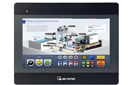
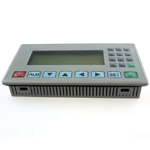




- Industrial display
-
Industrial Products
- DC Servo Drive
- AC Servo Drive
- Industrial board
- Siemens
- Switch Sensor
- Proximity Switch
- Temperature Controller
- Protection Relay
- Fiber Optic Sensor
- Encoder
- Fan
- other
- Heidelberg
- MITSUBISHI
- FANUC
- Siemens adapter
- Fujitsu connector
- Motherboard
- Board
- Contactor
- Circuit
- OMRON
- Relay
- Motor Driver
- power supply
- Cable
- Transformer
- HMI Touch Glass
-
HMI Full Machine Whole unit
- OMRON HMI Touch Panel
- Siemens HMI Touch Panel
- Mitsubishi HMI Touch Panel
- Allen-Bradley automation HMI Touch Panel
- DELTA HMI Touch Panel
- Proface HMI Touch Panel
- KINCO DELTA HMI Touch Panel
- HITECH HMI Touch Panel
- WEINTEK HMI Touch Panel
- TECVIEW HMI Touch Panel
- WEINVIEW HMI Touch Panel
- PANASONIC HMI Touch Panel
- KYOCERA HMI Touch Panel
- SCHNEIDER HMI Touch Panel
- Module
- lcd inverter
- Membrane Keypad Switch
- Zhiyan Customized Touch Screens
- Frequency Inverter
- Servo Motor
- PLC
In the rapidly evolving landscape of industrial and medical display technology, the selection of a reliable LCD module is a critical determinant of system performance. The AUO G156HAB02.5, a 15.6-inch LCD display module, represents a specific intersection of high-brightness engineering and robust design. While many displays are marketed for consumer convenience, the G156HAB02.5 is purpose-built for environments where clarity, durability, and consistent operation are non-negotiable. This article delves deep into the technical architecture, application suitability, and comparative advantages of this particular module. We will move beyond superficial specifications to explore the underlying panel technology, driving requirements, and the practical implications of its design choices. Understanding this component is essential for OEMs, system integrators, and procurement specialists who require a display that performs reliably under demanding conditions. The following sections will systematically dissect the module’s features, from its optical characteristics and mechanical construction to its interface compatibility and long-term lifecycle considerations.
Optical Architecture and High-Brightness Performance
The G156HAB02.5 is distinguished primarily by its optical performance metrics. Engineered for high ambient light environments, this module typically boasts a luminance level exceeding 1000 cd/m² (nits). This is not merely a marketing figure; it is achieved through a carefully designed backlight unit using efficient LED arrays, often configured in a 2-string or 4-string layout to ensure current uniformity and thermal management. The high brightness directly counters washout effects in settings like factory floors, kiosks in sunlit lobbies, or medical operating rooms. Furthermore, the module employs Advanced Wide Viewing Angle (MVA or similar VA technology) or TN (Twisted Nematic) technology, depending on the specific revision. While TN panels offer faster response times (often crucial for video playback), VA panels provide superior contrast ratios and deeper blacks, which are vital for diagnostic imaging readability. The color gamut, typically around 72% NTSC, ensures accurate color representation for GUI interfaces and HMI graphics. The optical film stack, including anti-glare (AG) treatment, is specifically selected to minimize reflections while maintaining light transmission efficiency, a balancing act critical for outdoor readability.

Mechanical Resilience and Thermal Design Considerations
Moving from the visible output to the physical structure, the G156HAB02.5 is built for endurance. The module utilizes a robust metal frame to provide rigidity and electromagnetic interference (EMI) shielding, a necessity for medical equipment certification. A key mechanical specification is its operating temperature range, which often spans from -20°C to +70°C or wider. This allows deployment in unheated or vehicle-mounted systems. The thermal design is critical here; the high-brightness LEDs generate significant heat. The backlight driver circuit is designed to dissipate heat effectively, often incorporating thermal pads or vias connecting to the chassis. The module’s physical dimensions (typically 366.5 x 215.5 mm outline size) and mounting hole locations follow a standard pattern compatible with many 15.6-inch industrial chassis, making it a drop-in upgrade for many existing systems. Weight is also a factor; at approximately 1.2 kg, it balances durability with handling weight for assembly processes. The LVDS (Low-Voltage Differential Signaling) interface connector is positioned for optimal cable routing in tight enclosures, minimizing signal interference from power lines.
Interface Compatibility and System Integration Challenges
Integrating the G156HAB02.5 into a system requires precise electrical interfacing. The module primarily utilizes a 30-pin eDP (Embedded DisplayPort) or LVDS interface, depending on the exact T-con board revision. eDP is becoming more common for higher resolutions and data rates, simplifying cabling compared to older LVDS standards. This interface carries both video data and, critically, control signals for the backlight driver. A standard +5V or +3.3V power source is required for the logic, while the backlight demands a separate, higher voltage (typically 12V or 24V) constant current source. A common integration pitfall is the backlight PWM (Pulse Width Modulation) frequency. Using a frequency lower than 200Hz can cause visible flicker to sensitive users, while too high a frequency can interfere with the backlight driver’s efficiency. The module’s datasheet specifies the exact capacitance and voltage ratings for the bypass capacitors near the connector. Failure to adhere to these lead-free soldering reflow profiles can cause latent connector failures. For designers, verifying the timing diagrams for the data enable signal (DE) is crucial to avoid data corruption on power-up.
Comparative Analysis: Industrial vs. Consumer Grade LCD Modules
To appreciate the G156HAB02.5 fully, one must compare it directly to its consumer-grade counterparts, such as those found in laptops. The most significant divergence is in the LC (Liquid Crystal) cell design. Industrial modules use wider cell gaps and stronger sealing techniques to prevent contamination from humidity and dust, extending the MTBF (Mean Time Between Failures) to 50,000 hours or more. Consumer screens are optimized for thinness and cost, often using a glass cell that is more prone to pressure-induced mura (unevenness). The driver ICs on the G156HAB02.5 are typically rated for a wider voltage fluctuation range, allowing them to operate on noisy industrial power supplies without failure. Furthermore, the gamma correction curve is factory-set for a consistent look across the entire display, whereas consumer screens may have individual panel variations. The backlight lifespan is rated at 50,000 hours (half brightness) versus 30,000 hours for many consumer equivalents. This longevity is a direct result of derating the LED current and using higher-grade phosphorus in the LEDs, which degrade more slowly over time.
Application-Specific Performance in Medical and POS Environments
The AUO G156HAB02.5 finds its natural habitat in three primary application verticals: medical imaging, POS (Point-of-Sale) terminals, and industrial HMIs (Human Machine Interfaces). In medical applications, such as patient monitoring or ultrasound displays, the high brightness and wide viewing angle allow multiple clinicians to view critical data simultaneously from different positions. The consistent gamma ensures that gray-scale shades in X-rays are rendered accurately. In POS environments, the display must survive 24/7 operation and frequent cleaning with aggressive chemical disinfectants. The G156HAB02.5’s VGA (Video Graphics Array) + LVDS dual-input capability allows for compatibility with legacy POS motherboards, an essential feature for upgrades without replacing the entire system logic. For industrial HMIs, the module’s ability to operate in environments with vibration and dust is paramount. The embedded timing controller (T-con) supports standard resolutions like 1366x768 (HD) or 1920x1080 (FHD), providing sufficient pixel density for complex control panels and machinery monitoring screens. The optical bondability of the glass lens is also a consideration; many integrators will apply an optically clear adhesive (OCA) to attach a touch panel or cover glass, and the module’s surface chemistry is designed to accept this process without delamination.
Supply Chain, Lifecycle Management, and End-of-Life Considerations
A less technical but equally critical aspect is the supply chain and lifecycle support for industrial components like the G156HAB02.5. Unlike consumer displays that are often discontinued within 18 months, industrial modules are supported for 3 to 5 years after initial production, with AUO providing product change notifications (PCNs) well in advance of any end-of-life (EOL) notices. This long lifecycle is crucial for medical device manufacturers who must validate their products for multi-year cycles. The responsible party must verify that the distributor or OEM is purchasing from authorized AUO channels to ensure full warranty and traceability. Counterfeit or re-worked modules are a risk in the secondary market, leading to premature failures. Procurement professionals should also understand the revision history; a "-A" revision might have a different LED pinout than a "-B" revision, requiring a circuit board spin. The datasheet’s revision table is the definitive guide. Finally, the modules are shipped in standardized vacuum-sealed ESD bags with moisture barrier bags (MBB). The floor life once opened is typically 48 hours in a controlled environment, after which baking (at 60°C for 24 hours) is required to avoid popcorning defects during soldering.
Frequently Asked Questions (FAQS)
Q: What is the typical resolution of the G156HAB02.5?A: It is available in both HD (1366x768) and FHD (1920x1080) configurations. Check the specific suffix in the model code.
Q: Does it support touchscreen integration?A: No, it is a bare LCD module without a touch panel. However, it is designed for optical bonding with external touch sensors (e.g., P-cap or resistive).
Q: What is the interface standard used?A: Primarily LVDS (30-pin) for older units, or eDP (Embedded DisplayPort) for newer revisions. Verify the datasheet for pin 1 location.
Q: What is the storage temperature range?A: Typically -30°C to +80°C, allowing for non-operational storage in extreme environments like warehouses or trucks.
Q: Can I use a standard laptop screen driver board?A: Not directly. The G156HAB02.5 requires an industrial timing controller board with specific voltage and backlight drive capabilities (often 12V for the backlight).
Q: How do I set the brightness control?A: Through the PWM (Pulse Width Modulation) input on the backlight connector. The logic voltage is typically 3.3V with a frequency of 100-200Hz.
Q: Is the coating anti-glare or glossy?A: It features an anti-glare (AG) coating, typically with a haze value of 25%, to reduce reflections in bright ambient light.
Q: What is the typical power consumption?A: Power draw varies by brightness setting but typically ranges from 8-15 Watts total (logic + backlight).
Q: Is the module halogen-free and RoHS compliant?A: Yes, AUO complies with RoHS and halogen-free directives for environmental and safety certification.
Q: How long is the expected lifespan?A: The backlight LED lifespan is rated at 50,000 hours to half-brightness under normal operating temperatures.
Conclusion: Strategic Value Beyond a Component
The AUO G156HAB02.5 is far more than a mere display panel; it is a carefully engineered subsystem designed for reliability, clarity, and long-term operational stability in the most demanding environments. From its high-luminance backlight and robust mechanical construction to its strict compatibility with industrial interface standards, every aspect of this module is a response to the specific needs of medical, POS, and HMI systems. For engineers and procurement managers, understanding the distinction between this industrial-grade component and a consumer display is the difference between a system that operates flawlessly for years and one that fails prematurely. The key takeaway is that integration success hinges not only on the visual output but on the electrical, thermal, and mechanical boundary conditions that the module imposes. By appreciating the technical depth of this display, stakeholders can make informed decisions, optimize system design, and ultimately deliver a better user experience in critical applications. This module stands as a testament to the principle that in industrial design, performance is defined by resilience, not just resolution.





