













































- Industrial display
-
Industrial Products
- DC Servo Drive
- AC Servo Drive
- Industrial board
- Siemens
- Switch Sensor
- Proximity Switch
- Temperature Controller
- Protection Relay
- Fiber Optic Sensor
- Encoder
- Fan
- other
- Heidelberg
- MITSUBISHI
- FANUC
- Siemens adapter
- Fujitsu connector
- Motherboard
- Board
- Contactor
- Circuit
- OMRON
- Relay
- Motor Driver
- power supply
- Cable
- Transformer
- HMI Touch Glass
-
HMI Full Machine Whole unit
- OMRON HMI Touch Panel
- Siemens HMI Touch Panel
- Mitsubishi HMI Touch Panel
- Allen-Bradley automation HMI Touch Panel
- DELTA HMI Touch Panel
- Proface HMI Touch Panel
- KINCO DELTA HMI Touch Panel
- HITECH HMI Touch Panel
- WEINTEK HMI Touch Panel
- TECVIEW HMI Touch Panel
- WEINVIEW HMI Touch Panel
- PANASONIC HMI Touch Panel
- KYOCERA HMI Touch Panel
- SCHNEIDER HMI Touch Panel
- Module
- lcd inverter
- Membrane Keypad Switch
- Zhiyan Customized Touch Screens
- Frequency Inverter
- Servo Motor
- PLC
In the intricate world of industrial and embedded display solutions, specific components become benchmarks of reliability for demanding applications. One such component is the AA150XN02, a 15-inch TFT-LCD module engineered by Mitsubishi Electric. This article delves deep into this specific display module, moving beyond basic datasheet specifications to explore its technological foundations, design rationale, and the unique value proposition it offers in a market increasingly dominated by consumer-grade panels.
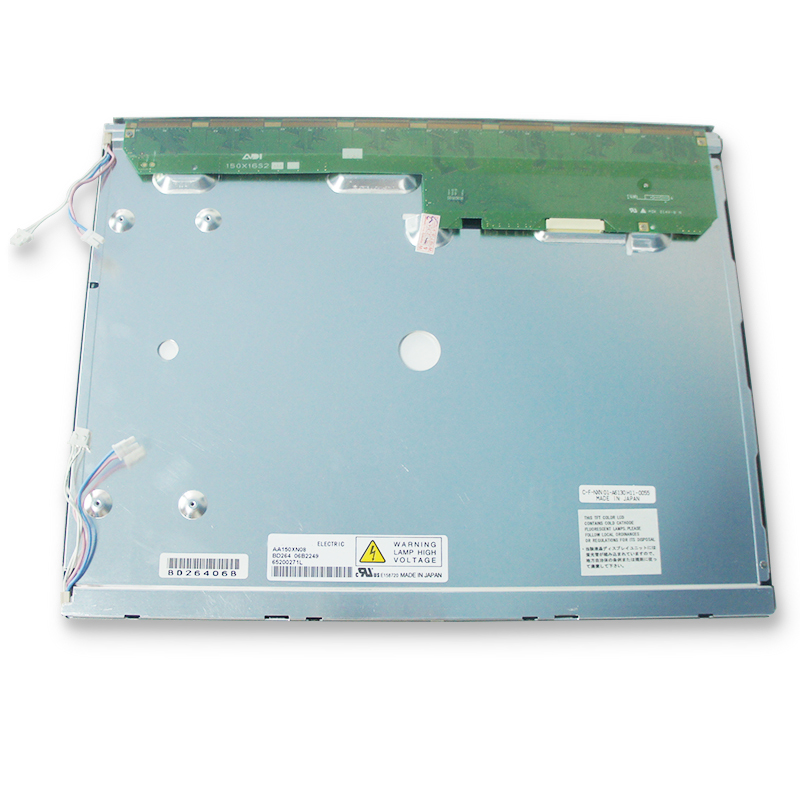
We will dissect the AA150XN02's core architecture, starting with its XGA resolution and amorphous-Silicon (a-Si) technology, and examine how these choices impact performance and longevity. The analysis will extend to its critical role within larger systems, its environmental robustness, and the specific industrial niches where it excels. By understanding the engineering behind modules like the AA150XN02, system integrators and procurement specialists can make informed decisions that balance performance, durability, and total cost of ownership for mission-critical projects.
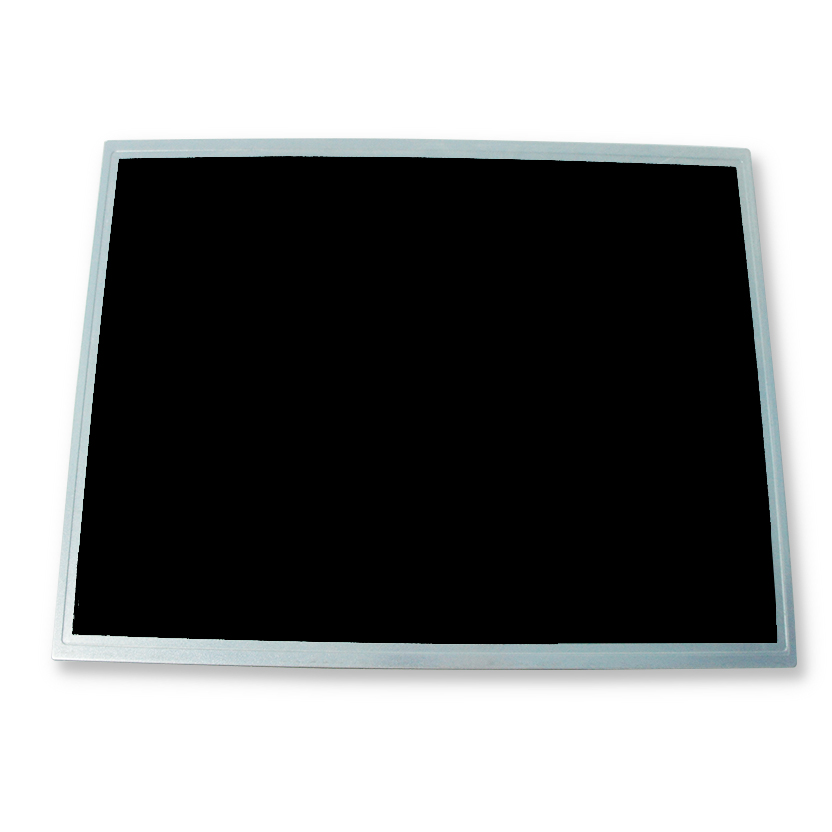
Deconstructing the AA150XN02: Core Specifications and Technology
The Mitsubishi AA150XN02 is defined by a precise set of parameters that cater to industrial needs. Its 15-inch diagonal active area presents a 1024 (RGB) x 768 pixel array, conforming to the XGA standard. This results in a pixel pitch of approximately 0.297mm and a 85 Pixels Per Inch (PPI) density. While this PPI is modest compared to modern smartphone displays, it is a deliberate and optimal choice for industrial human-machine interfaces (HMIs), providing clear, legible graphics without unnecessary processing overhead.
The heart of the module is its a-Si TFT (Amorphous Silicon Thin-Film Transistor) LCD panel. a-Si technology represents a mature, highly reliable, and cost-effective manufacturing process for TFT backplanes. It offers excellent stability and longevity, which are paramount for systems intended to operate continuously for years, often in controlled environments where ultra-high brightness or extreme contrast ratios are secondary to unwavering reliability. The module typically incorporates a CCFL backlight system, known for its uniform illumination and proven performance over extended periods.
The Significance of XGA Resolution in Industrial Contexts
The choice of XGA (1024x768) resolution is far from arbitrary for a module like the AA150XN02. This 4:3 aspect ratio format was a mainstream standard for desktop monitors and systems for many years. Consequently, a vast ecosystem of legacy software, control systems, and graphical assets is built around this resolution. For industries undergoing system upgrades or long-term maintenance—such as manufacturing, medical diagnostics, or aviation—maintaining compatibility is crucial.
Upgrading an entire control system to accommodate a widescreen format can be prohibitively expensive and complex. The AA150XN02 provides a direct, drop-in replacement path for aging displays, ensuring system continuity. Furthermore, the 4:3 aspect ratio is often more efficient for displaying vertical data lists, schematic diagrams, and traditional control panels where horizontal space is not the limiting factor, making it a functionally superior choice for many dedicated applications.
Integration and Interface: The LCM Advantage
The AA150XN02 is not merely a panel; it is a fully integrated LCD Module (LCM). This means it includes the LCD panel, driving circuitry, backlight unit, and often a built-in controller (LVDS interface is common for such modules). This integration is a significant advantage for engineers. It dramatically simplifies the design-in process, reducing the need for developers to source separate controllers and design complex interface boards.
The system integrator provides appropriate power and a low-voltage differential signaling (LVDS) data stream, and the module handles the rest. This "plug-and-play" characteristic accelerates development timelines, reduces design risk, and ensures optimal performance of the display subsystem as a tested whole. It allows companies to focus their engineering resources on their core application rather than on the intricacies of display driving and timing control.
Built for Endurance: Environmental and Mechanical Robustness
Industrial environments pose challenges rarely encountered in office or home settings. The AA150XN02 is engineered with these challenges in mind. Its construction emphasizes durability and stable operation across a wide operating temperature range (typically from -10°C to 70°C or similar, depending on variant). This ensures functionality in unheated factory floors or enclosed spaces that may experience heat buildup.
The module is designed for high resistance to vibration and shock, critical for applications in transportation, heavy machinery, or test equipment. Furthermore, the use of CCFL backlights and a-Si TFT technology, while not as thin as modern LED/OLED alternatives, offers proven resilience against image retention and performance degradation over time. This focus on long-term, predictable performance under stress defines the true cost-of-ownership value of an industrial-grade LCM.
Typical Applications and Market Niche
The specific attributes of the AA150XN02 carve out a clear niche in the marketplace. It is not suited for consumer televisions or high-end digital signage. Instead, it finds its home in applications where reliability, compatibility, and longevity are non-negotiable. Primary sectors include:
Industrial Automation: As the primary interface for PLCs, CNC machines, and process control systems on factory floors.
Medical Equipment: In diagnostic devices, patient monitoring systems, and laboratory instruments where display consistency is vital.
Point-of-Sale (POS) and Kiosks: For transactional systems that require continuous, reliable operation.
Transportation and Avionics: In control and information displays for marine, rail, or auxiliary aircraft systems (subject to specific qualifications).
Test and Measurement: As a durable display for oscilloscopes, spectrum analyzers, and other field service equipment.
Lifecycle Considerations and Sourcing in the Modern Era
As a product based on mature technology, understanding the product lifecycle is essential. Mitsubishi has a history of supporting its industrial display products for extended periods, but the AA150XN02 has reached a stage where it may be in long-term supply or considered for replacement by newer models. For ongoing projects and maintenance, this necessitates proactive sourcing strategies.
Procurement often shifts to authorized distributors and specialized industrial electronic component suppliers who may hold stock or have access to last-time-buy opportunities. When direct replacement becomes challenging, the search for a form-fit-function compatible alternative begins, requiring careful evaluation of not just physical dimensions and resolution, but also interface pinouts, voltage requirements, and mechanical mounting points. This landscape underscores the importance of partnering with knowledgeable suppliers.
FAQs: AA150XN02 Mitsubishi LCD Module
Q1: What is the screen size and resolution of the AA150XN02?A1: It is a 15-inch diagonal display with an XGA resolution of 1024 (RGB) x 768 pixels.
Q2: What does "a-Si TFT-LCD" mean?A2: It stands for Amorphous Silicon Thin-Film Transistor Liquid Crystal Display, a reliable and mature technology known for stability.
Q3: What is the pixel density (PPI)?A3: The pixel density is approximately 85 PPI (Pixels Per Inch).
Q4: What type of backlight does it use?A4: It typically uses a CCFL (Cold Cathode Fluorescent Lamp) backlight system for uniform brightness.
Q5: What is the main interface for this LCM?A5: It commonly uses an LVDS (Low-Voltage Differential Signaling) interface for robust data transmission.
Q6: Is this a 4:3 or widescreen display?A6: It is a standard 4:3 aspect ratio display.
Q7: What are typical operating temperatures?A7: Operating temperature ranges vary, but a common specification is from -10°C to +70°C.
Q8: Where is this display module commonly used?A8: Typical applications include industrial HMIs, medical devices, POS/kiosk systems, and test equipment.
Q9: What are the advantages of using an integrated LCM?A9: An LCM simplifies design, reduces development time, and ensures a tested, reliable display subsystem.
Q10: Is the AA150XN02 still in production?A10: It is a mature product. Availability should be checked with authorized distributors, as it may be in long-term supply status.
Conclusion
The Mitsubishi AA150XN02 exemplifies the engineering philosophy behind successful industrial components: optimized performance for a specific set of challenges, not pursuit of the latest consumer trends. Its value lies in its deliberate design choices—the reliable a-Si TFT technology, the compatible XGA resolution, and the robust LCM integration—which together deliver unmatched reliability and ease of use in demanding environments.
For system designers and maintainers in industrial, medical, and specialized fields, understanding the intrinsic qualities of modules like the AA150XN02 is crucial. It represents more than just a display; it is a dependable interface between complex machinery and human operators. In an era of rapid technological change, such components provide the stability and longevity that form the backbone of critical infrastructure, reminding us that in many applications, proven reliability is the most advanced feature of all.





