














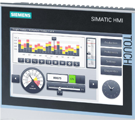





- Industrial display
-
Industrial Products
- DC Servo Drive
- AC Servo Drive
- Industrial board
- Siemens
- Switch Sensor
- Proximity Switch
- Temperature Controller
- Protection Relay
- Fiber Optic Sensor
- Encoder
- Fan
- other
- Heidelberg
- MITSUBISHI
- FANUC
- Siemens adapter
- Fujitsu connector
- Motherboard
- Board
- Contactor
- Circuit
- OMRON
- Relay
- Motor Driver
- power supply
- Cable
- Transformer
- HMI Touch Glass
-
HMI Full Machine Whole unit
- OMRON HMI Touch Panel
- Siemens HMI Touch Panel
- Mitsubishi HMI Touch Panel
- Allen-Bradley automation HMI Touch Panel
- DELTA HMI Touch Panel
- Proface HMI Touch Panel
- KINCO DELTA HMI Touch Panel
- HITECH HMI Touch Panel
- WEINTEK HMI Touch Panel
- TECVIEW HMI Touch Panel
- WEINVIEW HMI Touch Panel
- PANASONIC HMI Touch Panel
- KYOCERA HMI Touch Panel
- SCHNEIDER HMI Touch Panel
- Module
- lcd inverter
- Membrane Keypad Switch
- Zhiyan Customized Touch Screens
- Frequency Inverter
- Servo Motor
- PLC
In the intricate world of electronic components, the display often serves as the critical interface between a device and its user. Among the myriad of options available to engineers and product designers, TFT LCD modules stand out for their reliability, color performance, and versatility. This article delves deep into a specific and widely utilized component: the 12.1-inch TFT LCD module with a resolution of 800 x 600 pixels, exemplified by the AA121SL01 model. This particular screen represents a mature yet highly relevant technology solution, balancing clarity, physical dimensions, and power efficiency for a range of industrial and commercial applications.


Our exploration will move beyond basic specifications to uncover the technical nuances, design considerations, and practical implementation strategies associated with this display module. We will examine its core architecture, the advantages of its native resolution, and its ideal application environments. Furthermore, we will provide a comparative analysis, discuss critical integration factors, and look at the future trajectory of similar display technologies. Whether you are sourcing a component for a new medical device, industrial HMI, or point-of-sale system, understanding the depth of what a module like the AA121SL01 offers is essential for making an informed and optimal selection for your project.
Unpacking the AA121SL01: Core Architecture and Technology
The "AA121SL01" designation follows a common industry naming convention, often encoding information about size, technology, and revision. The 800x600 pixel grid, known as SVGA resolution, provides a specific pixel density that balances detail with component cost and system processing requirements. The module's construction is designed for durability, often featuring a robust metal frame and surface treatments to mitigate glare or enhance readability in various lighting conditions. Understanding this foundational technology is the first step in appreciating its suitability for demanding applications.
The SVGA Advantage: Why 800 x 600 Pixels Matters
From a human factors perspective, the size and spacing of UI elements rendered at SVGA on a 12.1-inch screen are often ideal for touch interaction and viewing from a moderate distance. It avoids the ultra-fine elements of higher resolutions that can be difficult to interact with reliably in environments where operators may wear gloves. Furthermore, the 4:3 aspect ratio, a standard for this resolution, is perfectly suited for many legacy and modern software applications designed for traditional computer monitors, ensuring broad compatibility and a familiar layout.
Ideal Application Ecosystems for the 12.1-Inch TFT Module
Additionally, these modules are found in transportation and logistics (e.g., vehicle telematics, forklift displays), point-of-sale (POS) and kiosk systems, and various test and measurement instruments. In each case, the module serves as a reliable window into the system's operation, designed to withstand continuous use, potential temperature variations, and electrical noise common in these environments. Its form factor fits standard panel cutouts, simplifying the mechanical design of enclosures.
Comparative Analysis: Positioning Against Other Display Sizes and Resolutions
In terms of resolution, moving to XGA (1024x768) on a similar-sized screen increases sharpness but also requires a more capable graphics controller and may render on-screen elements too small for some uses. Conversely, lower resolutions like VGA (640x480) on a 12.1-inch screen result in a coarser image with more visible pixels. The 12.1-inch SVGA module thus occupies a "sweet spot," offering ample display area with adequate detail for complex interfaces, all while maintaining relatively low system overhead and cost-effectiveness.
Critical Integration Factors: Interface, Power, and Environment
Environmental specifications are crucial. The module's operating and storage temperature range, typically from -20°C to 70°C for industrial grades, must align with the target application. Resistance to vibration, humidity, and electromagnetic interference (EMI) should also be verified. Furthermore, mechanical integration involves precise cutout dimensions, mounting hole patterns, and consideration of the bezel area. Neglecting these factors can lead to display failure, image artifacts, or shortened product lifespan.
The Future Trajectory: Evolution and Long-Term Viability
The evolution for such modules lies in incremental improvements: transitioning from CCFL to more energy-efficient and longer-lasting LED backlights, adopting wider viewing angle technologies, and offering more versatile interface options. For many B2B and industrial applications, the priority is not ultimate pixel count but predictable performance, long-term availability, and robustness. The AA121SL01 and its peers are likely to remain cornerstone components in embedded design for years to come, evolving steadily alongside niche market demands.
Frequently Asked Questions (FAQs)
10. Where can I find the technical datasheet for the AA121SL01?Datasheets are typically available from authorized distributors or by contacting display module manufacturers directly.
Conclusion
The 12.1-inch TFT LCD module with 800x600 resolution, as embodied by models like the AA121SL01, is far more than a simple commodity screen. It represents a carefully optimized convergence of size, resolution, and technology tailored for the rigorous demands of industrial, medical, and commercial embedded systems. Its enduring relevance is a testament to its balanced performance, offering sufficient clarity and interface real estate without imposing unnecessary cost or complexity on the overall system design.





