














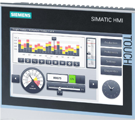

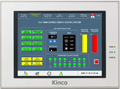




- Industrial display
-
Industrial Products
- DC Servo Drive
- AC Servo Drive
- Industrial board
- Siemens
- Switch Sensor
- Proximity Switch
- Temperature Controller
- Protection Relay
- Fiber Optic Sensor
- Encoder
- Fan
- other
- Heidelberg
- MITSUBISHI
- FANUC
- Siemens adapter
- Fujitsu connector
- Motherboard
- Board
- Contactor
- Circuit
- OMRON
- Relay
- Motor Driver
- power supply
- Cable
- Transformer
- HMI Touch Glass
-
HMI Full Machine Whole unit
- OMRON HMI Touch Panel
- Siemens HMI Touch Panel
- Mitsubishi HMI Touch Panel
- Allen-Bradley automation HMI Touch Panel
- DELTA HMI Touch Panel
- Proface HMI Touch Panel
- KINCO DELTA HMI Touch Panel
- HITECH HMI Touch Panel
- WEINTEK HMI Touch Panel
- TECVIEW HMI Touch Panel
- WEINVIEW HMI Touch Panel
- PANASONIC HMI Touch Panel
- KYOCERA HMI Touch Panel
- SCHNEIDER HMI Touch Panel
- Module
- lcd inverter
- Membrane Keypad Switch
- Zhiyan Customized Touch Screens
- Frequency Inverter
- Servo Motor
- PLC
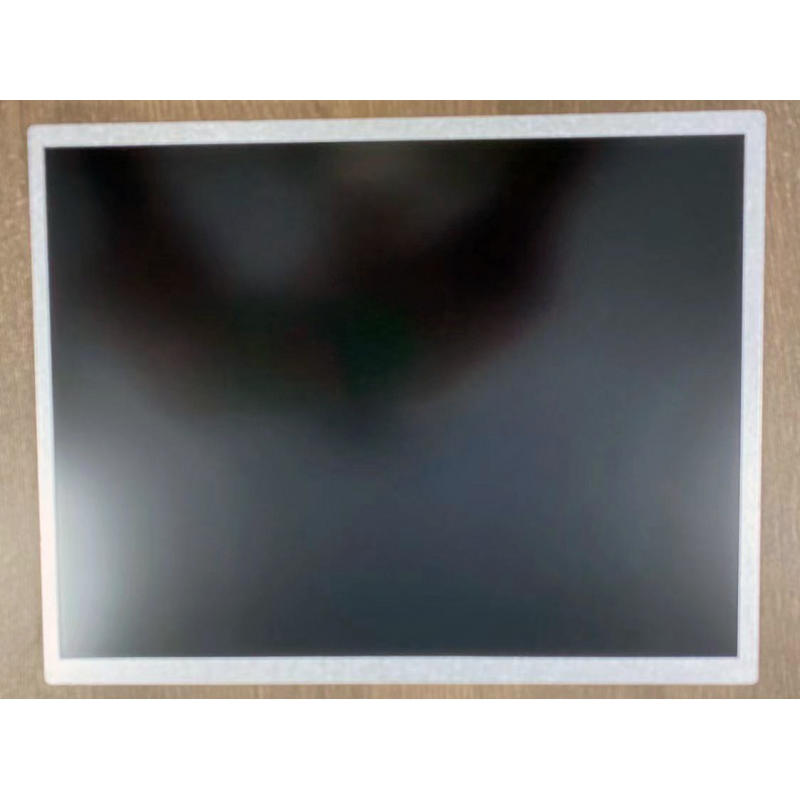
In the intricate ecosystem of industrial and embedded display solutions, the selection of a specific LCD module often dictates the performance, reliability, and user experience of the final product. Among the myriad of options, the G104XCE-L01from Innolux stands out as a quintessential component for demanding applications. This article delves into a comprehensive analysis of this 10.4-inch display module, moving beyond basic datasheet specifications to explore its technological foundations, inherent strengths, and optimal implementation scenarios.
We will dissect the a-Si TFT-LCD technology at its core, examine the practical implications of its XGA (1024x768) resolution in modern contexts, and evaluate the critical role of its integrated LCM (LCD Module) design. By understanding its electrical characteristics, mechanical robustness, and application-specific advantages, engineers, procurement specialists, and product designers can make an informed decision on whether the G104XCE-L01 is the ideal visual interface for their next-generation industrial, medical, or point-of-sale systems.
Decoding the Core Technology: a-Si TFT-LCD
The foundation of the G104XCE-L01 lies in its Amorphous Silicon (a-Si) Thin-Film Transistor (TFT) technology. This mature and highly refined manufacturing process is the workhorse of the LCD industry, particularly for mid-sized displays. Each pixel on this 10.4-inch screen is controlled by its own dedicated TFT switch, allowing for precise and rapid control of the liquid crystal alignment. This results in the stable, consistent image quality essential for applications where the display may be active for thousands of hours.
Compared to alternatives like LTPS (Low-Temperature Polycrystalline Silicon), a-Si technology offers an exceptional balance of performance, yield, and cost-effectiveness for this screen size and resolution. Its reliability across a wide temperature range and proven longevity in field operations make it a trusted choice. The technology's maturity translates to a stable supply chain and predictable performance characteristics, reducing engineering risk in product design cycles where display failure is not an option.


The Significance of XGA Resolution in a Modern Context
With a native resolution of 1024 (RGB) x 768 pixels, the G104XCE-L01 adheres to the XGA (Extended Graphics Array) standard. While considered legacy in the consumer PC space, this 4:3 aspect ratio resolution retains profound relevance in specialized industrial and commercial environments. Its strength lies in compatibility and clarity. Countless legacy software systems, machine Human-Machine Interfaces (HMIs), and diagnostic equipment were designed for XGA displays, making a direct, pixel-to-pixel replacement crucial for seamless upgrades.
Furthermore, the 4:3 aspect ratio provides a more vertical viewing area compared to wide-screen formats, which can be advantageous for displaying lists, diagnostic logs,portrait-mode documents, or control panels with stacked information. The pixel density on a 10.4-inch panel offers sharp, legible character and graphic display without requiring excessive operating system scaling, ensuring information is presented clearly and without ambiguity to the operator.
The Integrated LCM Advantage: Simplifying Design and Assembly
The G104XCE-L01 is not merely a bare LCD panel; it is a fully integrated LCD Module (LCM). This means it arrives as a complete subsystem, incorporating the TFT glass, driver ICs, a stable backlight unit (LED in this case), power circuitry, and a defined interface (typically LVDS). This integration is a monumental advantage for OEMs. It dramatically simplifies the design-in process, reducing the engineering burden associated with sourcing separate components, managing complex timing controllers, and ensuring electromagnetic compatibility.
By providing a single, pre-tested component with a standard electrical and mechanical interface, Innolux significantly shortens development time and mitigates risk. Design teams can focus their resources on the core functionality of their product rather than the intricacies of display subsystem design. The modular nature also streamlines procurement and assembly logistics, leading to a more efficient manufacturing process and consistent final product quality.
Electrical and Interface Characteristics for System Integration
Successful integration hinges on a deep understanding of the module's electrical parameters. The G104XCE-L01 typically operates on a single power supply (often 3.3V or 5V for the logic and a higher voltage for the LED backlight), simplifying power architecture design. Its interface is almost certainly LVDS (Low-Voltage Differential Signaling), the industry-standard for robust, low-noise data transmission in noisy environments.
The LVDS interface is key to its industrial suitability. Its differential signaling provides high immunity to electromagnetic interference (EMI), a common challenge in factories, medical labs, or transportation settings. Designers must ensure their host controller can output an LVDS signal with the correct timing characteristics (as per the module's datasheet) or utilize a readily available bridge chip. Attention to these details ensures flicker-free, artifact-free image transmission over the product's lifetime.
Mechanical Durability and Environmental Considerations
Industrial displays face harsher conditions than their consumer counterparts. The G104XCE-L01 is engineered with this in mind. Its construction typically involves a robust metal frame that provides structural rigidity, protects the delicate glass substrate, and offers secure mounting points. The surface is often treated with anti-glare or hard-coating layers to resist scratches and mitigate ambient light reflections, crucial for readability under bright factory or outdoor canopies.
While specific ratings depend on the exact model variant and sealing, such modules are often designed to withstand extended temperature ranges (e.g., -20°C to 70°C operational), higher humidity levels, and sustained vibration. This environmental resilience ensures reliable operation in settings ranging from freezing warehouse floors to sun-baked point-of-sale terminals, making it a component that product designers can specify with confidence for field deployment.
Ideal Application Scenarios and Competitive Positioning
The G104XCE-L01 finds its ideal home in applications where reliability, longevity, and compatibility trump ultra-high resolution or consumer aesthetics. Its primary domains include Industrial Human-Machine Interfaces (HMIs) for factory automation and process control, medical monitoring devices (where clear, consistent data presentation is vital), point-of-sale (POS) systems, and transportation information displays.
Its competitive positioning is clear: it is a high-reliability, cost-optimized solution for embedded systems requiring a robust 10.4-inch XGA display. It competes not with the latest consumer tablets but with other industrial-grade modules. Its advantages are the Innolux supply chain reputation, the proven a-Si TFT technology, and the full LCM integration that reduces total cost of ownership by minimizing design overhead and assembly complexity for the OEM.
FAQs: G104XCE-L01 10.4" LCD Module
Q1: What is the screen size and aspect ratio of the G104XCE-L01?A1: It features a 10.4-inch diagonal screen size with a 4:3 aspect ratio.
Q2: What is its native resolution?A2: The native resolution is XGA, 1024 (RGB) x 768 pixels.
Q3: What display technology does it use?A3: It uses Amorphous Silicon (a-Si) Thin-Film Transistor (TFT) LCD technology.
Q4: Is it a bare panel or a complete module?A4: It is a complete LCM (LCD Module), including panel, drivers, backlight, and interface.
Q5: What is the typical interface for this module?A5: It typically uses an LVDS (Low-Voltage Differential Signaling) interface for robust data transmission.
Q6: What type of backlight is used?A6: It employs a long-life LED backlight system.
Q7: In what applications is this module commonly used?A7: Common applications include industrial HMIs, medical devices, POS systems, and transportation displays.
Q8: What are the main advantages of choosing this module?A8: Key advantages are high reliability, design simplicity due to full integration, strong EMI immunity from LVDS, and excellent legacy software compatibility.
Q9: Does it support touch functionality?A9: The G104XCE-L01 is a display module; touch functionality (resistive or capacitive) is usually offered as an additional option or separate overlay.
Q10: Where can I find detailed technical specifications?A10: Always refer to the official Innolux datasheet for the specific version (L01) for absolute electrical, mechanical, and optical specifications.
Conclusion
The Innolux G104XCE-L01 exemplifies how a well-executed, purpose-driven display module remains critically relevant in an age of rapidly evolving consumer screen technology. By mastering the fundamentals—reliable a-Si TFT technology, a compatible XGA resolution, and a fully integrated LCM design—it delivers exceptional value in demanding embedded environments. Its strength is not in being the most advanced, but in being the most appropriate and dependable solution for its target applications.
For engineers and product managers navigating the selection of a 10.4-inch display, this module represents a low-risk, high-reliability choice that simplifies the design process and ensures operational longevity. In the world of industrial, medical, and commercial electronics, where uptime and clarity are paramount, the G104XCE-L01 continues to prove that robust performance and thoughtful integration will always have a definitive place on the drawing board.





