


















In the intricate ecosystem of electronic design and manufacturing, the choice of a display module can define the user experience, influence product architecture, and impact time-to-market. Among the myriad of options available to engineers and product developers, the G101EVN01.1 stands out as a pivotal 10.1-inch solution. This module, built around a high-quality AUO (AU Optronics) TFT LCD panel, represents more than just a screen; it is a fully integrated display subsystem engineered for reliability and performance.
This article delves deep into the G101EVN01.1, moving beyond basic datasheet specifications to explore its technical DNA, application landscapes, and the tangible value it brings to modern device design. We will dissect its core characteristics, from the visual performance driven by AUO's panel technology to the integrated features that simplify integration. Our journey will cover its ideal use cases, the critical considerations for successful implementation, and how it compares within the broader display ecosystem. Finally, we will provide a forward-looking perspective on its role in an evolving technological world, offering a comprehensive resource for professionals seeking to make an informed component selection.

Deconstructing the G101EVN01.1: Core Architecture and Specifications
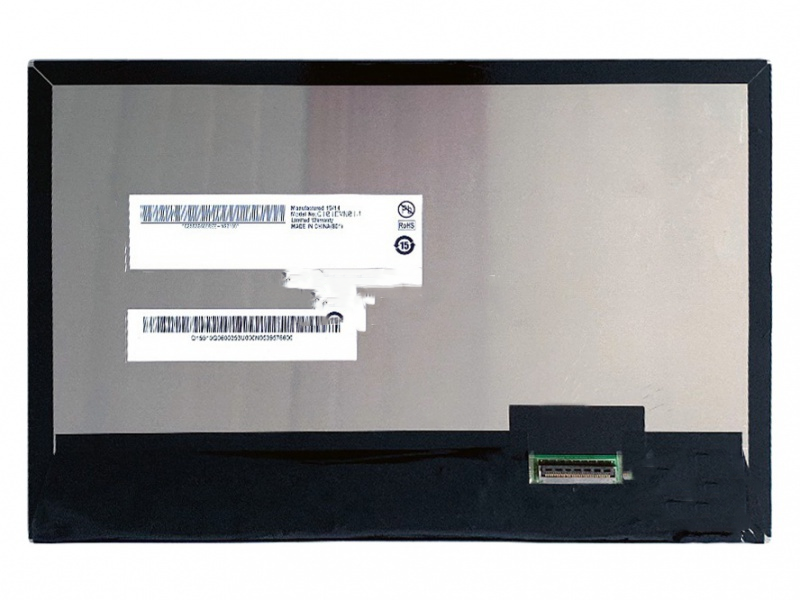
The G101EVN01.1 is a 10.1-inch display module utilizing an AUO TFT LCD panel with a resolution of 1280 (RGB) x 800 pixels (WXGA). This resolution offers a balanced pixel density for clear text and graphics, suitable for a wide range of applications from industrial controls to point-of-sale systems. The module typically employs In-Plane Switching (IPS) or similar advanced wide-viewing angle technology, ensuring consistent color and contrast even when viewed from sharp angles—a critical feature for multi-user or mounted devices.
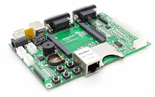
Beyond the panel itself, the module integrates essential components: a robust LED backlight unit providing high brightness (often 500 nits or more) for readability in various lighting conditions, and a comprehensive driver board. This board houses the timing controller, power circuitry, and LVDS (Low-Voltage Differential Signaling) interface, which is the standard for reliable, high-speed data transmission with low noise. This level of integration transforms a raw panel into a plug-and-play component, significantly reducing the engineering burden on the host system designer and mitigating risks associated with signal integrity and power sequencing.
The AUO Advantage: Panel Technology and Visual Fidelity
The heart of the G101EVN01.1's performance lies in the AUO-sourced LCD panel. AU Optronics is a global leader in display manufacturing, renowned for its consistent quality, rigorous testing, and continuous innovation. The panel within this module benefits from advanced optical treatments that enhance readability. These include anti-glare surface finishes to diffuse ambient light reflections and high-transmittance polarizers that improve optical efficiency, allowing for good brightness with potentially lower backlight power.
Color performance is another key area. The module is engineered to cover a standard color gamut (typically ~70% NTSC), delivering vibrant and accurate colors essential for user interfaces, diagnostic imaging, or digital signage. Furthermore, AUO's manufacturing prowess ensures high uniformity across the entire screen surface, with minimal backlight bleeding or clouding—flaws that can severely degrade the perceived quality in applications like medical monitors or professional kiosks. This reliability in visual output is a direct result of the vertically integrated supply chain and quality control behind the core panel.
Ideal Application Landscapes: Where the Module Excels
The technical profile of the G101EVN01.1 makes it exceptionally suited for demanding, always-on environments. In industrial automation and Human-Machine Interfaces (HMIs), its wide viewing angles, high brightness, and robust construction allow operators to interact with machinery from various positions under factory lighting. Its reliability ensures minimal downtime in critical processes.
For point-of-sale (POS) systems, self-service kiosks, and digital signage, the module offers the visual appeal needed for customer engagement and the durability to withstand public use. The integrated design simplifies assembly for OEMs, speeding up production cycles. Additionally, it finds a strong fit in transportation infotainment, medical diagnostic equipment (where consistent grayscale is vital), and thin-client terminals. In each case, the module provides a dependable, high-performance visual interface that forms the cornerstone of the user's interaction with the technology.
Critical Integration Considerations for Design Engineers
Successfully incorporating the G101EVN01.1 into a product requires attention to several key factors. Mechanical integration is paramount: designers must account for the module's exact dimensions, bezel size, and mounting hole patterns. Ensuring proper physical support and alignment prevents stress on the panel and connectors. Thermally, the design must manage heat dissipation from the LED backlight and drivers to maintain optimal performance and longevity, often requiring thoughtful placement and passive heatsinking.
Electrically, the host system must supply stable, clean power within the module's specified voltage range (e.g., 3.3V or 5V for logic, a higher voltage for the backlight). Signal integrity for the LVDS interface must be maintained through controlled impedance routing on the host PCB. Furthermore, firmware developers must ensure the host graphics controller's output timing matches the module's native resolution and sync parameters. Overlooking these electrical and logical compatibility checks is a common source of display artifacts or failure.
Comparative Analysis: Positioning in the 10.1-Inch Market
When evaluated against other 10.1-inch modules, the G101EVN01.1 carves out a distinct position. Compared to entry-level modules using TN (Twisted Nematic) panels, it offers vastly superior viewing angles and color reproduction, justifying a higher price point for quality-critical applications. Against other IPS-based modules, its value proposition often hinges on the reputation and reliability of the AUO panel and the completeness of its integration.
Some competing modules may offer higher resolutions (like Full HD) or advanced features like integrated touch controllers. The G101EVN01.1's strength is its optimization for the WXGA resolution, providing a sweet spot of performance, cost, and system complexity for a vast array of commercial and industrial uses. Its design philosophy prioritizes robustness, ease of integration, and trusted panel technology over niche, high-spec features, making it a versatile and dependable workhorse in its class.
Future-Proofing and Ecosystem Compatibility
Adopting a display module like the G101EVN01.1 is an investment in a product's lifecycle. Its use of the mature and widespread LVDS interface ensures compatibility with a broad range of system-on-chips (SoCs) and embedded processors, protecting against connector or protocol obsolescence. Furthermore, the long-term availability and stable manufacturing of such standard modules from AUO and its partners are crucial for products with extended lifecycles, such as medical or industrial equipment that may be in production for a decade.
Looking ahead, the principles embodied by this module—integration, reliability, optical clarity—remain evergreen. While future iterations may see transitions to eDP (Embedded DisplayPort) interfaces or mini-LED backlights, the G101EVN01.1 represents a proven, high-performance solution for the current generation of devices. Its design facilitates not just the initial product launch but also long-term serviceability, as replacement modules remain consistent and available, a key factor for OEMs managing global supply chains and after-sales support.
Frequently Asked Questions (FAQs)
Q1: What is the exact resolution of the G101EVN01.1 display module?A1: It features a WXGA resolution of 1280 (horizontal) x 800 (vertical) pixels.
Q2: Which company manufactures the core LCD panel in this module?A2: The core TFT LCD panel is manufactured by AU Optronics (AUO), a leading display panel producer.
Q3: What type of interface does this module use?A3: It typically uses an LVDS (Low-Voltage Differential Signaling) interface for reliable data transmission from the host controller.
Q4: Is this module suitable for outdoor use?A4: While it offers high brightness (often 500+ nits), true outdoor use requires specific sunlight-readable enhancements (higher brightness, optical bonding). It is best suited for bright indoor or shaded outdoor environments.
Q5: Does the G101EVN01.1 include a touch screen?A5: The standard G101EVN01.1 is a display module only. Touch panels (resistive or capacitive) are usually available as separate add-on components that can be laminated to the module.
Q6: What are the primary application areas for this module?A6: It is ideal for industrial HMIs, POS/kiosk systems, medical devices, transportation displays, and embedded computing terminals.
Q7: What are the key advantages of using an IPS-type panel in this module?A7: IPS technology provides superior wide viewing angles (often 178/178 degrees) and better color consistency compared to older TN panels, which is critical for many professional applications.
Q8: What power supply voltage does it require?A8: It commonly requires a single power supply for the logic (e.g., 3.3V or 5V) and a separate supply for the LED backlight (which can range from 12V to 30V+ depending on configuration). Always consult the specific datasheet.
Q9: How does this module simplify design for engineers?A9: Its fully integrated design, including the driver board and backlight, reduces the need for separate display electronics design, simplifying power sequencing, signal integrity management, and overall system validation.
Q10: Is this module considered a long-lifecycle component?A10: Yes, modules based on AUO panels are typically part of long-term supply programs, making them suitable for products with extended manufacturing and service life requirements.
Conclusion
The G101EVN01.1 10.1-inch display module is far more than a simple commodity component. It embodies a sophisticated convergence of AUO's panel manufacturing excellence with thoughtful system-level integration. For product developers and engineers, it presents a compelling solution that balances high visual performance—through its IPS technology, robust brightness, and color fidelity—with the practical benefits of simplified design and reliable supply.
By choosing a module like the G101EVN01.1, teams mitigate integration risks, accelerate development timelines, and ultimately deliver a superior and dependable user experience. In a market where the display is the primary conduit of information and interaction, investing in a proven, high-quality module is a strategic decision that pays dividends throughout the product's entire lifecycle, from initial prototype to long-term field deployment.





