















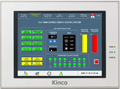





- Industrie-LCD-Display
-
Industrial Products
- DC Servo Drive
- AC Servo Drive
- PCB
- Siemens
- Switch Sensor
- Näherungsschalter
- Temperaturregler
- Schutzrelais
- Fiber Optic Sensor
- Encoder
- Fan
- other
- Heidelberg
- MITSUBISHI
- FANUC
- Siemens adapter
- Fujitsu connector
- Der Aufsichtsrat
- Board
- Contactor
- Circuit
- Omron
- Relais.
- Motortreiber
- power supply
- Cable
- Transformator
- HMI Touch-Glas
-
HMI-Vollautomat Ganze Einheit
- OMRON HMI Touch Panel
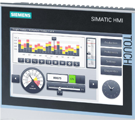
- Siemens HMI Touch Panel
- Mitsubishi HMI Touch Panel
- Allen-Bradley Automatisierung HMI Touch
- DELTA HMI Touch Panel
- EVIEW DELTA HMI Touch Panel
- KINCO DELTA HMI Touch Panel
- HITECH HMI Touch Panel
- WEINTECK HMI Touch Panel
- TECVIEW HMI Touch Panel
- WEINVIEW HMI Touch Panel
- PANASONIC HMI Touch Panel
- KYOCERA HMI Touch Panel
- SCHNEIDER HMI Touch Panel
- Module
- LCD Wechselrichter
- Membran Tastenfeld Schalter
- Winni Touch Screens
- Frequenzumrichter
- Servo Motor
- PLC
In the intricate ecosystem of display technology, specific component models like the G101EAN02.5 represent the critical building blocks behind the visual experiences of countless devices. This article delves into a comprehensive analysis of this particular 10.1-inch LCD panel, designed and manufactured by AUO (AU Optronics), a global leader in display solutions. Our exploration moves beyond a simple specification sheet to uncover the panel's technological DNA, its intended applications, and the tangible value it brings to product designers and engineers.
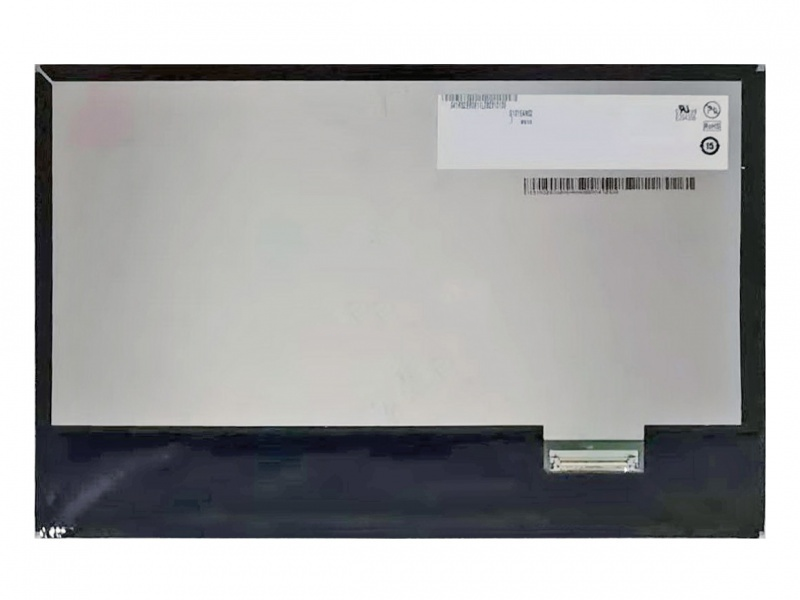
We will dissect its core performance characteristics, from resolution and brightness to color performance and power efficiency. Furthermore, we will contextualize its position within the broader market, examining its competitive advantages and typical use cases. Whether you are sourcing components for a rugged industrial tablet, a sophisticated medical display, or a portable entertainment device, understanding the nuances of the G101EAN02.5 is essential for making an informed, strategic decision that balances performance, reliability, and cost.

Decoding the Model: Anatomy of the G101EAN02.5
The model name G101EAN02.5 is a coded identifier that reveals key attributes. Breaking it down: 'G' often denotes a generation or series, '101' indicates a 10.1-inch diagonal screen size, and 'EAN' typically references the specific design lineage and technology base within AUO's portfolio. The '02.5' suffix usually points to a revision or variant level, signifying potential incremental improvements over a base model. This panel utilizes a standard a-Si TFT (Amorphous Silicon Thin-Film Transistor) LCD process, a mature and cost-effective technology known for its reliability and good performance.
Its native resolution is 1280 x 800 pixels (WXGA), offering a 16:10 aspect ratio. This resolution provides a clear balance between pixel density for sharpness and lower power consumption compared to higher-resolution alternatives. The designation immediately informs engineers about the physical footprint, basic technology, and performance tier, serving as the first critical filter in the component selection process for embedded systems and custom display integrations.
Core Technical Specifications and Performance Profile
At the heart of any display evaluation are its measurable specifications. The G101EAN02.5 panel typically features a brightness level in the range of 300 to 400 nits, making it suitable for indoor use and some environments with ambient light. Its contrast ratio, crucial for depth and image clarity, is competitive for its class. Color performance is a key highlight; it covers a significant portion of the sRGB color gamut, ensuring vibrant and reasonably accurate color reproduction for general-purpose and multimedia applications.
Interface support is centered on LVDS (Low-Voltage Differential Signaling), a robust and widely adopted standard for transmitting high-speed video data in industrial and commercial applications. This choice ensures broad compatibility with standard display controllers and driver boards. The panel also maintains a careful balance with power draw, a critical factor for battery-operated portable devices. Understanding this performance profile allows designers to match the panel's capabilities precisely with their project's requirements.
Primary Applications and Market Positioning
The G101EAN02.5 is engineered not for consumer-grade tablets but for the demanding world of embedded systems and specialized equipment. Its robust construction and reliable performance make it a prime candidate for industrial human-machine interfaces (HMIs), where it operates in factories, control rooms, and logistics hubs. In the medical field, it finds use in portable diagnostic devices and monitoring equipment, where clarity and reliability are non-negotiable.
Additional common applications include point-of-sale (POS) systems, kiosks, in-vehicle infotainment displays, and portable gaming or entertainment devices. Its market positioning is that of a high-quality, workhorse panel—offering excellent value, proven durability, and a stable supply chain. It sits between basic, low-cost panels and high-end, ultra-high-brightness or ruggedized options, carving out a dominant space in mid-range professional and industrial applications.
Integration Considerations and Design Challenges
Successfully integrating a panel like the G101EAN02.5 into a final product involves several technical considerations. The LVDS interface requires a compatible timing controller (T-CON) and careful PCB layout to ensure signal integrity and avoid electromagnetic interference. Designers must account for the complete mechanical footprint, including the active area, bezel dimensions, and mounting hole positions.
Power sequencing—the precise order in which voltages are applied to the panel—is critical to prevent damage and ensure longevity. Furthermore, integrating the appropriate backlight driver circuit is essential, as the panel's CCFL or LED backlight (depending on the specific variant) has specific voltage and current requirements. Addressing these challenges upfront is key to a stable, flicker-free, and long-lasting display implementation.
Comparative Analysis with Alternative Panels
To appreciate the G101EAN02.5's value proposition, it's instructive to compare it with alternatives. Against older CCFL-backlit panels, it often offers lower power consumption and a slimmer profile if it uses an LED backlight. Compared to newer panels with IPS (In-Plane Switching) technology, it may have slightly narrower viewing angles and color consistency off-axis, but it generally wins on cost-effectiveness for applications where extreme viewing angles are not the primary concern.
When evaluated against other brands offering similar a-Si TFT, WXGA 10.1-inch panels, the AUO G101EAN02.5 often stands out due to AUO's reputation for consistent quality, strong manufacturing yield, and reliable technical support. The decision often boils down to a trade-off between premium features (like higher brightness, wider gamut, or ruggedization) and the total cost of ownership, where this panel frequently represents an optimal balance.
Sourcing, Longevity, and Supply Chain Strategy
For product developers, the availability and lifecycle of a core component are as important as its technical specs. The G101EAN02.5, being part of a mature product family from a major manufacturer, typically benefits from a stable and predictable supply chain. However, engaging with authorized distributors or directly with AUO is crucial to guarantee genuine components and access to technical documentation.
Planning for product longevity requires understanding the panel's End-of-Life (EOL) cycle. Proactive strategies include securing lifetime buys for long-term projects, working with suppliers to identify compatible successor models (like a potential G101EAN02.6 or V.3), or designing a display module with a standardized interface that allows for easier panel substitution in the future. This strategic view mitigates risk and ensures product sustainability.
FAQs: G101EAN02.5 10.1" LCD Panel
Q1: What is the native resolution of the G101EAN02.5 panel?A1: It has a WXGA resolution of 1280 x 800 pixels with a 16:10 aspect ratio.
Q2: What type of interface does this panel use?A2: It uses a standard LVDS (Low-Voltage Differential Signaling) interface.
Q3: Is this panel suitable for outdoor use?A3: With a typical brightness of 300-400 nits, it is best suited for indoor or shaded outdoor use. For direct sunlight, a high-brightness (500+ nits) panel is recommended.
Q4: What is the main technology behind this display?A4: It is based on a-Si TFT (Amorphous Silicon Thin-Film Transistor) LCD technology.
Q5: What are the most common applications for this panel?A5: Industrial HMIs, medical devices, POS systems, kiosks, in-vehicle displays, and portable entertainment units.
Q6: Does it have a touch screen?A6: The G101EAN02.5 is a display panel only. Touch functionality (resistive, capacitive) would be added as a separate overlay or module.
Q7: How does its color performance rate?A7: It offers good color performance, covering a significant portion of the sRGB color gamut, suitable for most general-purpose and multimedia applications.
Q8: Who manufactures the G101EAN02.5 panel?A8: It is manufactured by AU Optronics (AUO), a leading Taiwanese display panel maker.
Q9: What should I consider when integrating this panel?A9: Key considerations include LVDS interface compatibility, mechanical mounting, power sequencing, and the backlight driver circuit design.
Q10: Where can I source this panel and find datasheets?A10: It is available through authorized electronic component distributors. Official datasheets and application notes should be requested from AUO or their authorized partners.
Conclusion
The AUO G101EAN02.5 10.1-inch LCD panel exemplifies a well-optimized component that successfully bridges performance, reliability, and cost. Its WXGA resolution, robust LVDS interface, and solid color fidelity make it a versatile and dependable choice for a wide spectrum of embedded and professional applications outside the consumer tablet space. Its strength lies in its maturity and proven track record within industrial, medical, and commercial systems.
For engineers and product managers, selecting this panel is not merely a procurement decision but a strategic one. It involves a clear understanding of the device's operational environment, lifecycle requirements, and total integration cost. By thoroughly evaluating its specifications within the context of your specific project—and planning for long-term supply chain stability—the G101EAN02.5 can serve as the reliable visual foundation for a successful and durable end product.





