













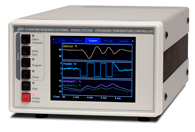
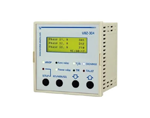

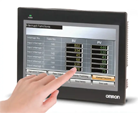

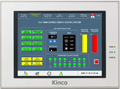
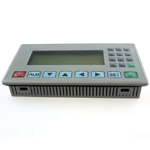




- Industrie-LCD-Display
-
Industrial Products
- DC Servo Drive
- AC Servo Drive
- PCB
- Siemens
- Switch Sensor
- Näherungsschalter
- Temperaturregler
- Schutzrelais
- Fiber Optic Sensor
- Encoder
- Fan
- other
- Heidelberg
- MITSUBISHI
- FANUC
- Siemens adapter
- Fujitsu connector
- Der Aufsichtsrat
- Board
- Contactor
- Circuit
- Omron
- Relais.
- Motortreiber
- power supply
- Cable
- Transformator
- HMI Touch-Glas
-
HMI-Vollautomat Ganze Einheit
- OMRON HMI Touch Panel
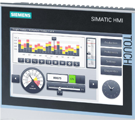
- Siemens HMI Touch Panel
- Mitsubishi HMI Touch Panel
- Allen-Bradley Automatisierung HMI Touch
- DELTA HMI Touch Panel
- EVIEW DELTA HMI Touch Panel
- KINCO DELTA HMI Touch Panel
- HITECH HMI Touch Panel
- WEINTECK HMI Touch Panel
- TECVIEW HMI Touch Panel
- WEINVIEW HMI Touch Panel
- PANASONIC HMI Touch Panel
- KYOCERA HMI Touch Panel
- SCHNEIDER HMI Touch Panel
- Module
- LCD Wechselrichter
- Membran Tastenfeld Schalter
- Winni Touch Screens
- Frequenzumrichter
- Servo Motor
- PLC
In the intricate ecosystem of modern electronics, the display panel serves as the critical interface between user and machine. Among the myriad of specialized components enabling this interaction, the G070VAN01.0 stands out as a meticulously engineered solution for applications demanding reliability, clarity, and compact form. This article delves into a comprehensive analysis of this specific 7-inch TFT-LCD module from AUO (AU Optronics), a leading name in display technology.

We will move beyond basic datasheet specifications to explore the technical architecture, performance characteristics, and the nuanced engineering decisions embedded within the G070VAN01.0. Our exploration will cover its core display technology, interface and signal processing, mechanical and optical design, typical application ecosystems, comparative advantages in its class, and essential integration considerations. This deep dive aims to provide engineers, product designers, and procurement specialists with the contextual understanding necessary to evaluate its suitability for their next-generation embedded systems, industrial HMIs, portable medical devices, or consumer electronics.
Core Technology: Decoding the a-Si TFT-LCD Architecture
The foundation of the G070VAN01.0 lies in its Amorphous Silicon (a-Si) Thin-Film Transistor (TFT) technology. This mature and highly reliable process involves depositing non-crystalline silicon on a glass substrate to create the transistor matrix that controls each individual pixel. For a resolution of 800 x RGB x 480 (effectively 800x480 pixels, with each pixel comprising Red, Green, and Blue sub-pixels), this translates to over 1.15 million transistors actively managing light transmission.
The a-Si process offers an excellent balance of manufacturing yield, cost-effectiveness, and performance for this screen size and resolution. It ensures stable operation over a wide temperature range and a long operational lifespan, which are paramount for industrial and commercial applications. The "LCM" (LCD Module) designation indicates that the unit is a fully integrated system, including the TFT panel, driver ICs, backlight unit, and interface connectors, supplied as a ready-to-use component.
Interface and Signal Processing: The LVDS Pathway
Communication between the host system and the display module is facilitated via a Low-Voltage Differential Signaling (LVDS) interface. This is a critical differentiator from older TTL interfaces. LVDS uses a differential pair for each data channel, transmitting signals as the voltage difference between two lines. This method provides high noise immunity, minimizes electromagnetic interference (EMI), and allows for higher data rates over longer cable lengths with lower power consumption.
For the G070VAN01.0's 800x480 resolution and typical 60Hz refresh rate, the LVDS interface robustly handles the digital video signal, ensuring a sharp, flicker-free image. The integration of timing controllers (TCON) and source drivers on the module's PCB simplifies the design-in process for engineers, as the host only needs to supply the LVDS signal and appropriate power, abstracting away the complexities of directly driving the pixel matrix.
Mechanical and Optical Design Specifications
The module's physical design is defined by a 7-inch diagonal active area, with precise outline dimensions, mounting hole patterns, and connector placement to facilitate integration into end products. The optical stack is engineered for performance, featuring a brightness level suitable for indoor use, a contrast ratio that defines depth between blacks and whites, and wide viewing angles—typically 70/70/50/70 (Left/Right/Up/Down) in CR≥10—ensuring readability from various positions.
The backlight unit, often utilizing LED edge-lighting, provides uniform illumination across the screen. Key parameters like color gamut (the range of colors it can reproduce) and operating temperature range (e.g., -20°C to 70°C) are tailored for its target markets. The surface treatment, usually a hard coating or optional touch panel integration, is designed for durability in demanding environments.
Target Applications and Ecosystem Integration
The G070VAN01.0 finds its niche in applications where a balance of size, reliability, and cost is essential. Its primary domains include Industrial Human-Machine Interfaces (HMIs) for factory automation and control systems, portable medical monitoring devices where clear data visualization is critical, and point-of-sale (POS) terminals and kiosks.
Furthermore, it is a candidate for embedded systems in transportation, consumer appliances with advanced interfaces, and specialized handheld equipment. Its value lies not just as a standalone component but as part of a broader ecosystem supported by AUO, which may include reference designs, compatibility with standard controller boards, and a stable supply chain—factors crucial for product lifecycle planning.
Comparative Analysis and Market Positioning
Positioned within the competitive landscape of 7-inch LCDs, the G070VAN01.0's strengths are its use of proven a-Si technology and a full LVDS interface. Compared to modules using older RGB TTL interfaces, it offers superior signal integrity. Against newer technologies like IPS (In-Plane Switching) panels, it may have narrower viewing angles but wins on cost for applications where ultra-wide viewing is not mandatory.
Its 800x480 resolution (WVGA) is a standard for this size, providing adequate pixel density for most instrumental and interface applications without the unnecessary cost overhead of higher resolutions like 1024x600. This strategic positioning makes it an optimal choice for cost-sensitive, volume-driven projects that cannot compromise on fundamental quality and reliability.
Critical Considerations for System Integration
Successfully integrating the G070VAN01.0 requires attention to several key factors. Power supply sequencing for the logic and backlight must adhere to specifications to prevent damage. LVDS signal integrity on the host PCB, involving controlled impedance routing and proper termination, is non-negotiable for image quality.
Mechanically, designers must account for the z-height of the module, including connectors, and ensure adequate support. Thermal management, especially if operating at high ambient temperatures or at maximum brightness, is vital for longevity. Finally, understanding the lead time and lifecycle status of the module from the manufacturer is essential for production planning and avoiding obsolescence issues.
FAQs: G070VAN01.0 AUO 7" LCD Module
Q1: What is the resolution of the G070VAN01.0?A1: It has a resolution of 800 x RGB x 480, commonly referred to as WVGA (800x480 pixels).
Q2: What type of interface does it use?A2: It uses a Low-Voltage Differential Signaling (LVDS) digital interface.
Q3: What does "a-Si TFT-LCD" mean?A3: It stands for Amorphous Silicon Thin-Film Transistor Liquid Crystal Display, indicating the transistor technology used to control each pixel.
Q4: Is the backlight included?A4: Yes, as an LCM (LCD Module), it includes an integrated LED backlight unit.
Q5: What are the typical applications for this display?A5: Common applications include industrial HMIs, medical devices, POS systems, kiosks, and embedded systems.
Q6: What is the operating temperature range?A6: The standard operating temperature range is typically -20°C to 70°C, but always verify with the latest datasheet.
Q7: Does it support touch functionality?A7: The G070VAN01.0 is a display module. Touch panels (resistive or capacitive) can be added as an optional overlay.
Q8: How does LVDS compare to RGB TTL?A8: LVDS offers better noise immunity, lower EMI, and is better suited for longer cable runs than parallel RGB TTL interfaces.
Q9: Who manufactures the G070VAN01.0?A9: It is manufactured by AU Optronics (AUO), a major global display panel producer.
Q10: What should I check when designing this module into my product?A10: Focus on LVDS PCB layout guidelines, power supply sequencing, mechanical fit (including connector clearance), and thermal management.
Conclusion
The AUO G070VAN01.0 7-inch LCD module exemplifies how a well-executed application of mature technology continues to deliver immense value in the electronics industry. Its combination of reliable a-Si TFT architecture, the robust LVDS interface, and a balanced optical performance package makes it a workhorse component for a wide array of embedded visual systems.
For engineers and designers, its appeal lies in the reduction of integration risk and the predictability it brings to product development cycles. By understanding its technical underpinnings, ideal use cases, and integration requirements, teams can effectively leverage this module to create durable, clear, and responsive user interfaces. In a market constantly chasing the next technological breakthrough, the G070VAN01.0 stands as a testament to the enduring importance of optimized, reliable, and purpose-driven design.





