













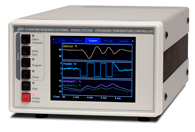

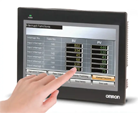
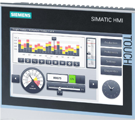





In the intricate world of specialized display technology, where every millimeter and milliwatt counts, components are not merely parts but pivotal enablers of innovation. Among these, the G057QTN01.0 emerges as a significant yet often overlooked player. This 5.7-inch LCD panel module, manufactured by AUO (AU Optronics), represents a precise convergence of engineering designed for applications where reliability, clarity, and compact form factor are non-negotiable.


This article delves beyond the basic datasheet to explore the G057QTN01.0 in depth. We will dissect its core technical architecture, unravel its unique value proposition in a crowded market, and examine the specific industrial ecosystems it powers. From its optical performance to its interface logic, understanding this panel provides a masterclass in how tailored display solutions drive functionality in embedded systems, portable instruments, and human-machine interfaces. The journey through its specifications reveals a narrative of purposeful design meeting stringent application demands.
Decoding the G057QTN01.0: Core Architecture and Specifications
The foundation of any display's capability lies in its fundamental specs. The G057QTN01.0 is a 5.7-inch diagonal TFT-LCD module with a native resolution of 640 x 480 pixels (VGA). This 4:3 aspect ratio is a classic format, particularly suited for legacy system upgrades or interfaces designed for structured data display rather than widescreen media. The panel utilizes a transmissive display mode, requiring a backlight for visibility, which is typically an integrated LED array offering uniform brightness and long life.
At its heart is an a-Si (amorphous Silicon) TFT process, a mature and highly reliable technology known for its stability and cost-effectiveness for mid-size panels. The module specifies a landscape-oriented active area of 115.2mm x 86.4mm, with overall dimensions carefully constrained for compact integration. Key optical parameters include a specified brightness level (typically several hundred nits), a contrast ratio sufficient for indoor and some industrial environments, and color performance defined by the number of displayed colors, often 262K or higher. These parameters are not record-breaking in isolation but are meticulously balanced for its target domains.
The Strategic Niche: Application Ecosystems and Use Cases
The true significance of the G057QTN01.0 is defined by where it is used, not just what it is. This panel is engineered for embedded systems and industrial human-machine interfaces (HMIs), where environmental robustness and long-term availability trump fleeting consumer trends. Its primary habitats include portable medical diagnostic devices, where clear readouts of patient vitals or imaging are critical.
Furthermore, it finds a home in industrial control panels for manufacturing equipment, test and measurement instruments, and transportation systems telematics. In these settings, the VGA resolution provides sharp enough detail for text, graphs, and schematic diagrams without overburdening the system's graphics processing unit. The 5.7-inch size is a sweet spot: large enough for effective interaction yet small enough to fit into portable or space-constrained fixed enclosures. This panel is a workhorse, designed for continuous operation in demanding conditions.
Optical Performance and Readability Under Pressure
For an industrial or medical display, optical performance is measured differently than for a consumer tablet. It's about consistency, readability, and adaptability. The G057QTN01.0 is designed with viewing angles (typically 70/70/50/70 degrees in CR≥10) that ensure the information remains legible even when the operator is not directly in front of the device—a common scenario on a factory floor or beside a hospital bed.
Brightness and contrast are calibrated to combat ambient glare from overhead lighting, while the color gamut is often tuned for accurate representation of status indicators (like red alarms or green "go" signals) rather than for photographic realism. The backlight system is engineered for stable performance across a wide temperature range, preventing dimming or color shift that could lead to user error. This focus on functional optics ensures that the interface communicates effectively under the pressure of real-world use.
Interface and Integration: The Digital Nervous System
A display module does not operate in a vacuum; its interface is its lifeline to the host system. The G057QTN01.0 commonly features a parallel RGB interface, a robust and straightforward digital interface standard. This interface transmits separate data for red, green, and blue colors along with synchronization signals (HSYNC, VSYNC) and a pixel clock, giving system designers fine-grained control over the image output.
This parallel interface, often with 18 or 24-bit color depth, is widely supported by embedded microprocessors, FPGAs, and legacy controller chips. Its simplicity translates to reliability and deterministic timing. The module also requires precise power supply inputs (typically 3.3V or 5V for logic and a higher voltage for the LED backlight driver), which must be clean and stable to prevent visual artifacts. Successful integration hinges on meticulously following the panel's timing requirements and power sequencing guidelines.
Comparative Analysis: Positioning in the 5.7-Inch Landscape
To appreciate the G057QTN01.0's position, a comparative view is essential. The market for small-to-mid sized industrial panels includes competitors from other Taiwanese, Korean, Japanese, and increasingly Chinese manufacturers. Competing panels might offer similar diagonal sizes but with different resolutions (e.g., 800x480 WVGA), aspect ratios (16:9), or interface options (LVDS, MIPI).
The G057QTN01.0's strategic choice is its steadfast commitment to the VGA 4:3 format. This makes it a direct replacement or upgrade path for a vast installed base of older equipment using the same resolution, avoiding costly software reworks of the graphical user interface. While newer interfaces like LVDS offer advantages in noise immunity for longer cables, the parallel RGB of the G057QTN01.0 remains perfectly adequate for the short, controlled connections inside an instrument. Its value lies in this optimized, backward-compatible stability.
Reliability, Longevity, and Supply Chain Considerations
For OEMs designing products with lifecycles measured in decades, display reliability and procurement longevity are as critical as technical specs. AUO, as a major panel maker, generally offers extended lifecycle support for its industrial-grade modules like the G057QTN01.0, unlike consumer panels which are phased out rapidly. This long-term availability is a key purchasing driver.
Reliability is baked in through the use of grade-A cell materials, rigorous testing for operating temperature ranges (often from -20°C to 70°C), and high tolerance for humidity and vibration. The module's mechanical design, including the rigidity of the PCB and the robustness of the connector, is built to withstand repeated installation and the stresses of its operating environment. Sourcing this panel often involves authorized industrial distributors or direct engagement with AUO's B2B channels, emphasizing a supply chain geared towards business continuity rather than spot purchases.
FAQs: G057QTN01.0 AUO 5.7" LCD
Q1: What is the resolution of the G057QTN01.0 panel?A1: It has a VGA resolution of 640 (H) x 480 (V) pixels.
Q2: Who manufactures this LCD module?A2: It is manufactured by AU Optronics (AUO), a leading Taiwanese display panel producer.
Q3: What is the most common interface for this module?A3: It typically uses a parallel RGB digital interface (e.g., 18-bit or 24-bit).
Q4: Is this panel suitable for consumer devices like smartphones?A4: No, it is an industrial-grade module designed for embedded systems, medical devices, and HMIs, not for high-volume consumer electronics.
Q5: What is the screen size in millimeters?A5: The active display area is approximately 115.2mm (W) x 86.4mm (H).
Q6: Does it have a touchscreen?A6: The standard G057QTN01.0 is a display-only module. Touch functionality (resistive or capacitive) would require an additional overlay and controller.
Q7: What is the typical brightness?A7: Brightness varies, but industrial versions are commonly in the range of 300 to 500 nits.
Q8: Can it operate in extreme temperatures?A8: Yes, it is designed for an extended operating temperature range, often from -20°C to 70°C.
Q9: Why choose a 4:3 VGA panel over a widescreen one?A9: For legacy system compatibility, efficient display of data-heavy interfaces, and as a direct replacement in existing equipment.
Q10: Where can I buy this panel or find technical documents?A10: Through authorized industrial electronic distributors or by contacting AUO directly. The datasheet and application notes should be requested from these sources.
Conclusion
The G057QTN01.0 AUO 5.7" LCD module exemplifies the principle that the most effective technology is often that which is perfectly matched to its task. It is not a display chasing spec sheet superlatives, but one engineered for durability, clarity, and integration stability in critical environments. Its enduring VGA format, robust parallel interface, and industrial-grade construction make it a cornerstone for designers of medical, industrial, and instrumentation equipment.
In an era of rapid technological churn, this panel serves as a reminder that longevity and reliability hold immense value. Understanding its architecture and application niche provides crucial insight into the world of embedded display design, where seamless performance under pressure is the ultimate metric of success. For engineers and procurement specialists, the G057QTN01.0 represents a dependable solution that bridges the gap between proven technology and modern application demands.





