










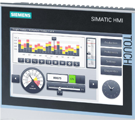





- Industrial display
-
Industrial Products
- DC Servo Drive
- AC Servo Drive
- Industrial board
- Siemens
- Switch Sensor
- Proximity Switch
- Temperature Controller
- Protection Relay
- Fiber Optic Sensor
- Encoder
- Fan
- other
- Heidelberg
- MITSUBISHI
- FANUC
- Siemens adapter
- Fujitsu connector
- Motherboard
- Board
- Contactor
- Circuit
- OMRON
- Relay
- Motor Driver
- power supply
- Cable
- Transformer
- HMI Touch Glass
-
HMI Full Machine Whole unit
- OMRON HMI Touch Panel
- Siemens HMI Touch Panel
- Mitsubishi HMI Touch Panel
- Allen-Bradley automation HMI Touch Panel
- DELTA HMI Touch Panel
- Proface HMI Touch Panel
- KINCO DELTA HMI Touch Panel
- HITECH HMI Touch Panel
- WEINTEK HMI Touch Panel
- TECVIEW HMI Touch Panel
- WEINVIEW HMI Touch Panel
- PANASONIC HMI Touch Panel
- KYOCERA HMI Touch Panel
- SCHNEIDER HMI Touch Panel
- Module
- lcd inverter
- Membrane Keypad Switch
- Zhiyan Customized Touch Screens
- Frequency Inverter
- Servo Motor
- PLC
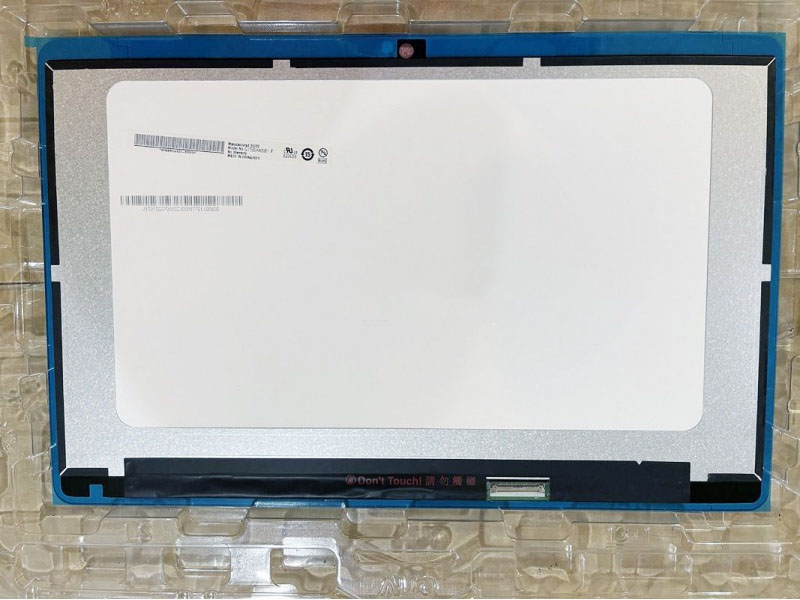
In the rapidly evolving landscape of industrial and medical displays, the AUO G156HAB01.2 stands as a benchmark for reliability and precision. This 15.6-inch TFT LCD module, manufactured by AU Optronics (AUO), is not simply a repurposed consumer laptop screen; it is an engineered solution designed for demanding environments where uptime, readability, and durability are non-negotiable. As industries shift toward more interactive and data-rich interfaces, understanding the specific capabilities of such a component becomes critical for system integrators, OEMs, and engineers. This article explores the architectural nuances, performance specifications, and application-specific advantages of the AUO G156HAB01.2. From its advanced optical bonding technology to its adherence to strict medical safety standards, we will dissect what makes this display a preferred choice for high-stakes user interfaces. Furthermore, we will compare its market positioning against alternative solutions and provide clarity on common technical inquiries, offering a comprehensive resource for professionals seeking to deploy superior visual solutions.
Architectural Excellence: Beyond Standard TFT Construction
The fundamental differentiator of the AUO G156HAB01.2 is its construction, which moves beyond simple glass and polarizer assembly. This module utilizes a High-Brightness design, typically rated at 400 to 500 cd/m², ensuring visibility under direct ambient light. However, the true architectural feat is its compatibility with optical bonding. This process involves laminating a touch panel or cover glass directly to the TFT cell using a liquid optically clear adhesive (LOCA).
This elimination of the air gap between the LCD and the outer glass drastically reduces internal reflections, improving contrast and sunlight readability by up to 300%. For industrial control rooms or medical carts often used near bright windows, this is a transformative feature. The bonded structure also prevents dust and moisture ingress, a common failure point in non-bonded screens. Furthermore, the G156HAB01.2 supports a wide operating temperature range typically spanning from -10°C to +60°C, supported by robust driver ICs and a metal frame for heat dissipation. It is important to note that this is a LVDS (Low-Voltage Differential Signaling) interface panel, requiring a dedicated timing controller, which provides a stable, interference-resistant data transmission path critical for industrial longevity.
Optical Fidelity: Color Accuracy and Viewing Consistency
Visual consistency is paramount in diagnostic and monitoring applications, and the AUO G156HAB01.2 delivers this through strict optical engineering. The display leverages a Vertical Alignment (VA) or Advanced Super-View (ASV) technology, depending on the specific revision, which provides a superior contrast ratio often exceeding 3000:1. This deep black state is essential for medical imaging (such as X-ray or ultrasound viewing), where subtle grayscale distinctions directly impact diagnostic accuracy.
The viewing angles are specified at 89 degrees in all four directions (up/down/left/right), ensuring that operators viewing the screen from off-axis positions see minimal color shift or luminance loss. The panel supports a 16.7 million color depth (8-bit), providing smooth gradients without visible banding. For applications requiring precise color fidelity, such as pulp and paper process control or pharmaceutical labeling verification, the G156HAB01.2 can be calibrated to meet stringent standards like sRGB or even DICOM Part 14 for medical grayscale display. The uniformity across the active area is tightly controlled, with AUO guaranteeing minimal luminance and chromaticity variation—a critical factor when multiple displays are used side-by-side in a monitoring wall.
Interface and Integration: LVDS and Power Architecture
Integrating the AUO G156HAB01.2 into a final product requires a clear understanding of its electrical interface. This module utilizes a dual-channel LVDS interface, typically supporting resolutions up to Full HD (1920 x 1080). The pinout is standardized but requires careful attention to signal pairing and termination resistors. The display operates on a typical voltage of 3.3V for the logic interface and a separate 12V input for the backlight LED driver.
The backlight circuit is a critical design consideration. The G156HAB01.2 typically employs a white LED array driven by a constant current source. Integrators must ensure their power supply can provide sufficient current (often 300-400mA for the backlight) without significant ripple, as ripple can cause audible noise or visible flicker. The module includes over-voltage and over-current protection on the LED input, but external protection circuits for ESD (Electrostatic Discharge) are strongly recommended. For systems with low-power budgets, the display offers inherent power-saving modes via the LVDS link, allowing the system to blank the screen or dim the backlight without external switching hardware. A 40-pin connector (standard for 15.6" LVDS panels) is used, and proper cable shielding is essential to maintain signal integrity over distances greater than 20 cm.
Environmental Resilience: Designed for the Industrial Frontier
Unlike commercial displays meant for climate-controlled offices, the AUO G156HAB01.2 is built to withstand the rigors of production floors, outdoor kiosks, and healthcare environments. It passes rigorous High-Acceleration Life Tests (HALT) and meets specifications for vibration (5-500Hz) and shock (50G). The metal back cover provides structural rigidity, preventing warping under thermal stress.
Chemicals are a constant threat in factories; this display can be specified with an anti-glare (AG) or anti-reflection (AR) coating that also resists common solvents like isopropyl alcohol and dilute acids. The bonding process previously described also creates a barrier against humidity, allowing operation in up to 85% relative humidity (non-condensing). For outdoor or high-vibration applications, the display can be equipped with a thermal management system—either a heater for sub-zero startup or conductive cooling for high-temperature operation. The LED backlight has a specified half-life (L50) of 50,000 to 70,000 hours, ensuring years of continuous operation before luminance decays to half its initial value, drastically reducing total cost of ownership compared to traditional CCFL screens
.
Application Ecosystem: Where Precision Meets Performance
The specific attributes of the G156HAB01.2 make it the ideal candidate for a curated set of high-stakes applications. In medical imaging, its high contrast and grayscale performance are used in surgical displays, patient monitoring, and diagnostic workstations. The ability to display fine anatomical details accurately is directly correlated to the panel's low latency and high static contrast ratio.
In industrial automation, the display serves as the HMI (Human-Machine Interface) for CNC machines, robotic controllers, and factory line monitoring. The robust touch compatibility, especially with projected capacitive (PCAP) sensors, allows for glove-tolerant interaction. For transportation (aircraft, trains, naval vessels), the wide operating temperature and vibration resistance are critical. The sunlight readability achieved via bonding ensures that a train operator can read track information even in direct summer sun. In the retail and kiosk sector, the panel's aesthetics and wide viewing angles create an immersive user experience for self-service checkouts or digital signage in high-traffic areas, where reliability and consistent image quality are paramount.
Comparative Market Position: The Value of Industrial Grade
When selecting a 15.6-inch TFT display, engineers often face a choice between a cheap consumer-grade panel and an industrial-grade module like the G156HAB01.2. The cost differential is significant, but the value breakdown reveals a clear rationale. Consumer panels may have shorter lifetimes, limited temperature ranges, and non-bonded construction leading to mirror-like reflections. They are optimized for cost and high volume, not longevity.
The G156HAB01.2 holds a distinct advantage in Total Cost of Ownership (TCO). Its extended backlight life means fewer replacements. Its bonded construction reduces field failures from dust and moisture. Furthermore, AUO provides long-term product lifecycles (often 5-7 years minimum) and documentation support, including mechanical drawings, electrical specifications, and optical reports. This contrasts sharply with consumer panels that may be discontinued within 18 months. For critical systems in medical, military, or industrial control, the premium paid for the AUO G156HAB01.2 is essentially an insurance policy against downtime, warranty claims, and system obsolescence. It is not a commodity; it is a component engineered for sustained professional use.
Frequently Asked Questions (FAQ)
Is the AUO G156HAB01.2 compatible with Raspberry Pi? Yes, but you need a suitable LVDS-to-HDMI adapter board (e.g., a Jutatech or Waveshare model) and a 12V power supply for the backlight and adapter.
What is the exact resolution of this panel? The standard configuration is Full HD (1920 x 1080 pixels). Some OEM versions may support WUXGA (1920 x 1200), but verify the specific part number.
Does the panel come with a touch screen? Typically, it is sold as a raw TFT module (without touch). You must order a touch panel separately or specify an optical bonding service from a distributor.
What is the difference between the G156HAB01.2 and the G156HAN01.0? The HAB series often includes enhanced brightness and temperature range options compared to the HAN series, which may be a cost-optimized variant.
Can this display be used outdoors? Yes, but it is optimized for outdoor use when optically bonded to a cover glass with an anti-reflective coating and a high-brightness backlight.
What is the standard interface connector? It is a 40-pin JAE or compatible LVDS connector. The pin 1 location is critical for correct installation.
How long does the backlight last? The LED backlight is rated for a half-life (L50) of approximately 50,000 hours under recommended current conditions.
Is the panel RoHS compliant? Yes, AUO complies with RoHS and WEEE directives. The panel is lead-free and halogen-free.
What is the typical power consumption? The panel consumes approximately 8-12 Watts total (logic + backlight) at typical brightness of 400 cd/m².
Can I dim the backlight? Yes, using PWM (Pulse Width Modulation) on the backlight enable pin or via a dedicated dimming signal. The standard frequency is 200-2000 Hz.
Conclusion: The Enduring Value of Specification-Driven Design
The AUO G156HAB01.2 15.6-inch TFT screen is a testament to the philosophy that precision engineering underpins reliable user interfaces. Throughout this analysis, we have seen that its value extends far beyond its physical dimensions. It is a product of careful optical design, robust mechanical construction, and a clear understanding of the harsh environments in which it operates. From its high contrast ratio enabling medical diagnoses to its bonded architecture resisting industrial contaminants, every feature serves a specific purpose.
For system integrators and engineers, selecting this panel is not merely a bill of materials decision; it is a commitment to longevity, performance, and user safety. While the market is full of cheaper alternatives, the G156HAB01.2 provides a quantified assurance of performance under stress. As we move into an era where digital interfaces are critical for safety and operational efficiency, displays that prioritize durability, optical clarity, and consistent thermal performance will continue to be the backbone of professional applications. Investing in a component of this caliber ensures that your product not only functions today but remains reliable and competitive for years to come.





