


















- Industrial display
-
Industrial Products
- DC Servo Drive
- AC Servo Drive
- Industrial board
- Siemens
- Switch Sensor
- Proximity Switch
- Temperature Controller
- Protection Relay
- Fiber Optic Sensor
- Encoder
- Fan
- other
- Heidelberg
- MITSUBISHI
- FANUC
- Siemens adapter
- Fujitsu connector
- Motherboard
- Board
- Contactor
- Circuit
- OMRON
- Relay
- Motor Driver
- power supply
- Cable
- Transformer
- HMI Touch Glass
-
HMI Full Machine Whole unit
- OMRON HMI Touch Panel
- Siemens HMI Touch Panel
- Mitsubishi HMI Touch Panel
- Allen-Bradley automation HMI Touch Panel
- DELTA HMI Touch Panel
- Proface HMI Touch Panel
- KINCO DELTA HMI Touch Panel
- HITECH HMI Touch Panel
- WEINTEK HMI Touch Panel
- TECVIEW HMI Touch Panel
- WEINVIEW HMI Touch Panel
- PANASONIC HMI Touch Panel
- KYOCERA HMI Touch Panel
- SCHNEIDER HMI Touch Panel
- Module
- lcd inverter
- Membrane Keypad Switch
- Zhiyan Customized Touch Screens
- Frequency Inverter
- Servo Motor
- PLC
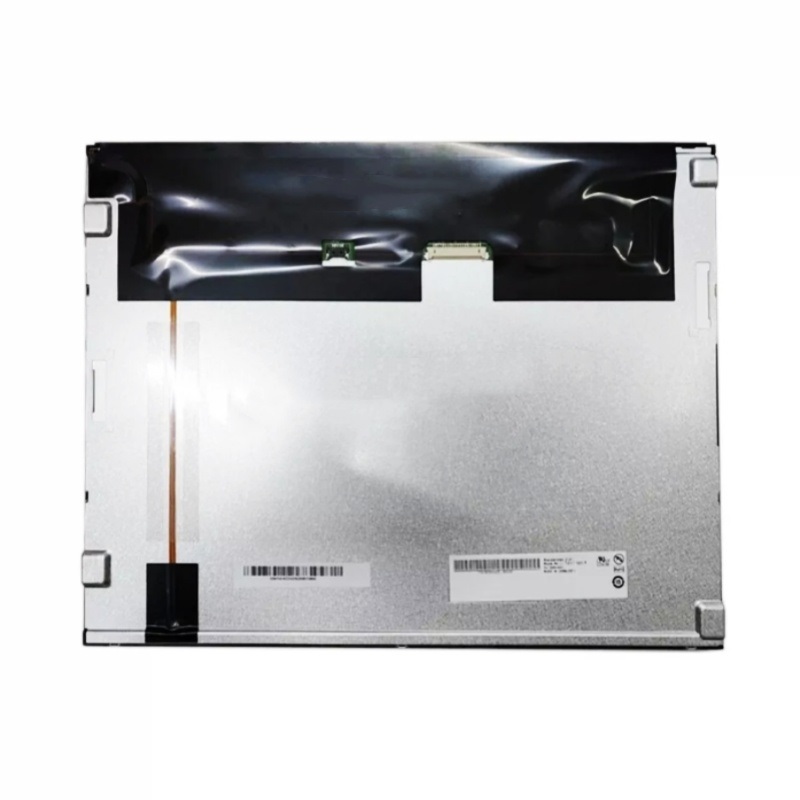
The global industrial display market is highly specialized, with specific panel models becoming benchmarks for reliability and performance. Among these, the G150XTN06.9 from AU Optronics (AUO) stands out as a pivotal component in the 15-inch display segment. This model is not merely a screen; it is a carefully engineered interface designed for demanding environments. This article delves deep into the technical architecture, operational strengths, and application ecosystems of this particular display module.
We will move beyond the basic specifications to explore why this panel is a preferred choice for integrators and OEMs. By examining its optical characteristics, mechanical resilience, and interface compatibility, we aim to provide a comprehensive understanding of its role in modern human-machine interfaces. Whether you are a procurement specialist, an engineer, or a system designer, this analysis offers actionable insights into how the G150XTN06.9 meets the rigorous demands of industrial automation, medical imaging, and digital signage.

Defining the Core Architecture: TN Technology for Industrial Reliability
The G150XTN06.9 employs Twisted Nematic (TN) liquid crystal technology, a choice that prioritizes response time and cost efficiency over the wider viewing angles of IPS panels. In industrial settings, where fast-moving data needs to be rendered without motion blur, the 5 to 8 millisecond response time of this TN panel is a decisive advantage. For applications like real-time process monitoring or conveyor belt control, this speed ensures that critical data updates are crisp and legible.
The panel operates with a standard resolution of 1024 x 768 (XGA) in a 4:3 aspect ratio. While wide-aspect screens are prevalent in consumer electronics, the 4:3 format remains the gold standard for many legacy industrial control systems and medical displays. This format provides a taller viewing area, which is beneficial for reading lists, graphs, or patient data without excessive scrolling. The 16.7 million color depth ensures sufficient color rendering for most non-critical color work, maintaining clarity and contrast across the panel's surface.
Optical Performance and Environmental Resilience
A key differentiator for the G150XTN06.9 is its high luminance rating, typically specified at 400 to 450 cd/m² (nits). This brightness level is not arbitrary; it is a direct response to the ambient light conditions found in factories, warehouses, and outdoor kiosks. A standard consumer monitor (often 250-300 nits) would appear washed out in these environments. High brightness ensures that the display remains readable even when positioned near large windows or under direct overhead lighting.
Furthermore, the module is designed with a wide operating temperature range, often from -20°C to +70°C. This is critical for applications in cold storage facilities, outdoor equipment, or unventilated machinery enclosures. The panel utilizes an LVDS (Low-Voltage Differential Signaling) interface, which is a mature and robust standard in the industrial sector. This interface provides excellent noise immunity over long cable runs, which is common when the display is physically separated from the main computing unit in a control cabinet.
Mechanical Integrity and Integration Challenges
From a mechanical standpoint, the G150XTN06.9 is not a "drop-in" replacement for a generic monitor. It is a bare module, meaning integrators must design their own housing, touch screen overlays, and mounting brackets. The panel typically features mounting holes on the left and right sides, allowing for secure attachment to a metal chassis. Its overall thickness is controlled to meet the tight space constraints of panel-mounted equipment.
One of the primary integration challenges is thermal management. While the panel is rated for high temperatures, the associated CCFL or LED backlight (the G150XTN06.9 often uses an LED backlight solution with a long lifetime of 50,000+ hours) generates heat. Proper ventilation must be designed into the enclosure to prevent hot spots that could degrade the polarizer or cause image retention. Additionally, the interface connector is a delicate component; the 20-pin or 30-pin LVDS connector requires careful cable routing to prevent strain that could lead to intermittent signal loss.
Comparative Advantages in the Medical and Industrial Sectors
In the medical field, the G150XTN06.9 finds a home in patient monitoring systems and diagnostic imaging stations that do not require high-end color calibration (e.g., grayscale X-ray viewers). The 4:3 aspect ratio aligns perfectly with the legacy software architectures used in many hospitals. Its anti-glare surface treatment is a critical feature, reducing reflections from overhead surgical lights, which enhances operator comfort during extended shifts.
For industrial automation, the panel competes against older 12.1-inch and 17-inch models. The 15-inch size is a "sweet spot" for human-machine interfaces (HMIs) because it offers enough real estate for a comprehensive control panel without being too large for a standard 19-inch rack mount system. The high contrast ratio (typically 700:1 or higher) ensures that gray scales are distinct, which is essential for differentiating between active and inactive controls or alarm states where color coding might not be available.
Longevity (LTS) and Supply Chain Considerations
AUO explicitly markets this panel for a Long Term Supply (LTS) program. This is arguably the most undervalued specification. In the industrial world, product lifecycles can span a decade or more. Standard consumer panels are often discontinued within 18-24 months, forcing costly redesigns and re-qualifications. The G150XTN06.9 is guaranteed by AUO to be available for a significantly longer period, often 5 years or more from initial release.
This commitment mitigates the risk for OEMs. It allows them to build a product, certify it for medical or safety standards, and sell it for years without a Last Time Buy (LTB) panic. The supply chain stability offered by this panel is a form of risk insurance. When combined with its electrical interface standardization, it makes the G150XTN06.9 a safe choice for projects where long-term field support is a contractual requirement, such as in railway signaling or building management systems.
Future-Proofing and Compatibility with Modern Controllers
Despite being a TN panel with XGA resolution, the G150XTN06.9 is far from obsolete. Modern embedded controllers, such as those based on the Raspberry Pi Compute Module 4 or high-end Intel Atom processors, natively support the LVDS interface used by this display. There is a robust ecosystem of adapter boards that can convert HDMI or DisplayPort signals to the specific 20/30-pin LVDS connector required.
Looking forward, the panel's LED backlight technology is a significant upgrade over older CCFL models. LEDs offer lower power consumption (typically 8-12 watts for the backlight), which is critical for fanless embedded systems. They also contain no mercury, making the panel compliant with modern RoHS standards. For integrators, this means the G150XTN06.9 is a compatible bridge between legacy software requirements (XGA resolution) and modern green power management standards. It avoids the need to emulate older hardware, a common headache in industrial upgrades.
Frequently Asked Questions (FAQS)
Q: What is the exact resolution of the G150XTN06.9?A: The native resolution is 1024 x 768 pixels (XGA), with a 4:3 aspect ratio.
Q: Is this a touch screen display?A: No, it is a bare LCD module without touch functionality. Touch overlays must be added by the integrator.
Q: What type of backlight does it use?A: It uses an LED backlight, with a typical lifetime of 50,000 hours or more before brightness halves.
Q: What is the operating temperature range for this panel?A: Typically -20°C to +70°C, making it suitable for harsh environments.
Q: What interface connector does it use?A: It uses a standard LVDS interface, usually a 20-pin or 30-pin connector (check specific datasheet revision).
Q: Is the G150XTN06.9 a direct replacement for the G150XTG01.0?A: Only if the mechanical dimensions and backlight type (LED vs. CCFL) are verified against the original datasheet; they are often not drop-in compatible.
Q: Can I use this display with a standard HDMI source?A: Not directly. You need an LVDS driver board or converter card to translate HDMI to the LVDS signal.
Q: What is "LTS" meaning for this AUO panel?A: Long Term Supply, meaning AUO guarantees production availability for an extended period, often 5+ years.
Q: Is the viewing angle comparable to a smartphone?A: No. As a TN panel, it has narrower viewing angles (typically 80/80/80/60 degrees) compared to IPS panels.
Q: Why is the 4:3 aspect ratio still popular?A: It is ideal for text-heavy industrial data display, legacy software compatibility, and rack-mount integration where width is limited.
Conclusion
The AUO G150XTN06.9 15-inch display module represents a masterclass in purposeful engineering. It is not designed to dazzle with ultra-high resolution or infinite contrast, but to serve as a reliable, long-term interface for machines and processes. Its strength lies in the balanced combination of high brightness for readability, a robust LVDS interface for noise immunity, and a form factor that aligns perfectly with existing industrial infrastructure.
For the professional integrator, choosing this panel is a strategic decision that favors stability over novelty. The long-term supply guarantee, wide temperature tolerance, and straightforward drive electronics make it a low-risk investment for mission-critical applications. As the industrial world continues its gradual digitalization, the need for such mature, well-characterized displays will persist. The G150XTN06.9 is not a fleeting product; it is a standard. When you design it into your system, you are building on a foundation that AUO has committed to maintaining, ensuring that your own product’s lifecycle can be as resilient as the components inside it.





