


















- Industrial display
-
Industrial Products
- DC Servo Drive
- AC Servo Drive
- Industrial board
- Siemens
- Switch Sensor
- Proximity Switch
- Temperature Controller
- Protection Relay
- Fiber Optic Sensor
- Encoder
- Fan
- other
- Heidelberg
- MITSUBISHI
- FANUC
- Siemens adapter
- Fujitsu connector
- Motherboard
- Board
- Contactor
- Circuit
- OMRON
- Relay
- Motor Driver
- power supply
- Cable
- Transformer
- HMI Touch Glass
-
HMI Full Machine Whole unit
- OMRON HMI Touch Panel
- Siemens HMI Touch Panel
- Mitsubishi HMI Touch Panel
- Allen-Bradley automation HMI Touch Panel
- DELTA HMI Touch Panel
- Proface HMI Touch Panel
- KINCO DELTA HMI Touch Panel
- HITECH HMI Touch Panel
- WEINTEK HMI Touch Panel
- TECVIEW HMI Touch Panel
- WEINVIEW HMI Touch Panel
- PANASONIC HMI Touch Panel
- KYOCERA HMI Touch Panel
- SCHNEIDER HMI Touch Panel
- Module
- lcd inverter
- Membrane Keypad Switch
- Zhiyan Customized Touch Screens
- Frequency Inverter
- Servo Motor
- PLC
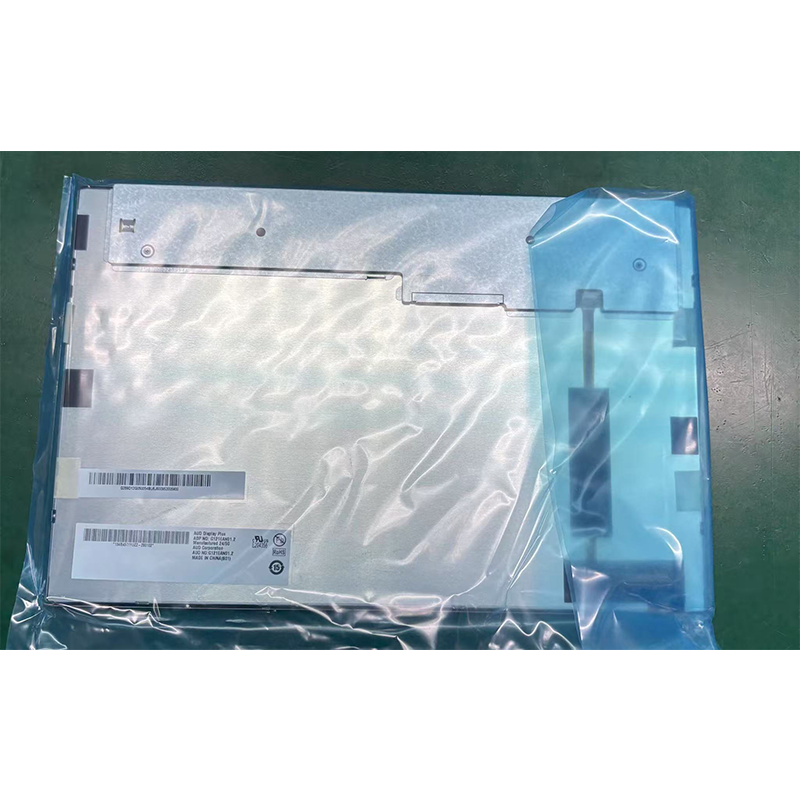
In the intricate world of electronic components, where specifications often blur into an alphabet soup of part numbers, the G121EAN01.2 stands out as a critical display solution for a wide range of industrial and commercial applications. This 12.1-inch LCD module, manufactured by AU Optronics (AUO), represents more than just a screen; it is a carefully engineered interface that bridges digital information and human interaction. With its 1280x800 resolution (WXGA), it offers a specific balance of clarity, form factor, and performance that makes it a preferred choice beyond consumer-grade displays.


This article delves deep into the G121EAN01.2, moving beyond basic datasheet parameters to explore its technological significance, inherent strengths, and ideal application landscapes. We will dissect the engineering rationale behind its key specifications, compare its positioning within the broader display ecosystem, and provide practical insights for integrators and engineers. Our goal is to transform this part number from a mere identifier into a comprehensive understanding of a pivotal display technology component.
Decoding the Specification: A Balance of Clarity and Efficiency
The G121EAN01.2's core identity is defined by its 12.1-inch diagonal and 1280x800 pixel array. This WXGA (Wide Extended Graphics Array) resolution, with its 16:10 aspect ratio, is a deliberate choice. It provides substantially more vertical real estate than the common 16:9 widescreen format, which is invaluable for displaying documents, control panels, or diagnostic interfaces where vertical scrolling is a detriment to productivity.
The pixel density of approximately 125 PPI (Pixels Per Inch) strikes a critical balance. It ensures sharp text and legible graphics without imposing the excessive processing power and cost associated with ultra-high-density panels. This makes it an efficient solution, delivering sufficient detail for close-up human-machine interaction while remaining compatible with a broad spectrum of mid-range processing units and controller boards commonly used in industrial settings.
The AUO Advantage: Engineering for Reliability and Longevity
AU Optronics brings its substantial manufacturing pedigree to the G121EAN01.2. This module is built not for the transient lifecycle of consumer electronics but for the demanding environments of continuous operation. Key to this is the robust mechanical construction, designed to withstand vibration and shock better than typical commercial panels.
Furthermore, AUO typically employs higher-grade LED backlighting systems in such industrial-focused modules, offering extended lifespan and consistent brightness output over time. The focus is on mean time between failures (MTBF) and stable performance across a wide temperature range, often from -20°C to 70°C. This inherent reliability, backed by AUO's supply chain stability, reduces long-term project risk for integrators in fields like medical, transportation, and factory automation.
Interface and Integration: The Critical Connectivity Layer
A display module is only as good as its ability to connect. The G121EAN01.2 commonly features an LVDS (Low-Voltage Differential Signaling) interface. LVDS has been the long-standing workhorse for industrial displays due to its robustness, noise immunity, and ability to transmit high-speed data over longer cables within a device.
This choice signals the module's target application: embedded systems. Integration requires a compatible controller board (often called a LCD controller or timing controller) that can translate the output from a system's CPU or GPU into the precise LVDS signal the display expects. Understanding this interface is crucial for engineers, as it dictates driver compatibility, cable design, and potential signal integrity considerations during product development.
Ideal Application Ecosystems: Where This Display Excels
The specific attributes of the G121EAN01.2 carve out its ideal niches. Its size and resolution make it perfect for Human-Machine Interfaces (HMIs) on industrial machinery, programmable logic controller (PLC) panels, and test/measurement equipment. The 16:10 ratio is excellent for dashboard-style layouts.
Beyond the factory floor, it finds a home in point-of-sale (POS) systems, kiosks, and digital signage where reliability is paramount. It is also a fit for specialized medical monitoring devices, in-vehicle infotainment or control systems for rugged vehicles, and certain aviation displays. In each case, the need is for a durable, consistently readable, and long-life component that performs under pressure—precisely the promise of this AUO module.
Comparative Landscape: WXGA in a World of HD and 4K
In an era dominated by 4K marketing, one might question the relevance of 1280x800. The answer lies in application-specific suitability. For many industrial and commercial tasks, excessive resolution is not just unnecessary; it is counterproductive. It demands more powerful (and expensive) graphics processors, consumes more energy, and can introduce UI scaling challenges without delivering tangible user benefit.
The G121EAN01.2 occupies a sweet spot between legacy VGA/SVGA panels and modern Full HD displays. It offers a clear visual upgrade from lower resolutions while avoiding the cost and complexity penalties of higher ones. When compared to a 12.1-inch 1920x1080 panel, the G121EAN01.2 provides a more pragmatic, cost-effective, and system-efficient solution for its target markets.
Sourcing and Lifecycle Considerations for Integrators
For product developers, selecting a display like the G121EAN01.2 involves strategic thinking beyond initial specs. Sourcing from authorized distributors or directly through AUO's channels is vital to ensure authenticity and access to technical support. Given its industrial nature, checking the official product lifecycle status is critical—these modules often have longer manufacturing and support windows than consumer parts.
Integrators must also plan for the supply chain ecosystem: availability of compatible controller boards, cables, and touch screen overlays (if a touch version is required). Building a Bill of Materials (BOM) around a stable, long-life display like this can significantly reduce the risk of costly redesigns due to component end-of-life notifications, securing the longevity of the final product itself.
FAQs: G121EAN01.2 AUO 12.1-inch Display
Q1: What is the resolution and aspect ratio of the G121EAN01.2?A1: It has a WXGA resolution of 1280 x 800 pixels with a 16:10 aspect ratio.
Q2: Who manufactures this LCD module?A2: It is manufactured by AU Optronics (AUO), a leading display panel producer.
Q3: What is the primary interface for this display?A3: It typically uses an LVDS (Low-Voltage Differential Signaling) interface for robust data transmission.
Q4: Is this display suitable for outdoor use?A4: While robust, it is not inherently sunlight-readable. It would require a high-brightness version and protective bonding for reliable outdoor use.
Q5: What are typical applications for this module?A5: Industrial HMIs, POS systems, kiosks, medical devices, transportation displays, and test equipment.
Q6: Does it support touch functionality?A6: The G121EAN01.2 is the LCD panel itself. Touch functionality (resistive or capacitive) is added as a separate overlay component.
Q7: What is the advantage of the 16:10 aspect ratio?A7: It offers more vertical screen space than 16:9, improving productivity for text-heavy applications, toolbars, and control panels.
Q8: How does its resolution compare to Full HD?A8: Its 1280x800 resolution is lower than Full HD (1920x1080), making it less demanding on system resources and more cost-effective for its target uses.
Q9: Why is LVDS common in such displays?A9: LVDS is favored for its high-speed performance, low noise, and reliability over distance, making it ideal for embedded industrial systems.
Q10: Where can I find technical documentation for this module?A10: Datasheets and detailed
specifications are available through AU Optronics' official website or authorized distributors.
The G121EAN01.2 AUO 12.1-inch display exemplifies how optimal engineering is not about pursuing the highest specifications, but about achieving the right specifications for a defined purpose. Its 1280x800 resolution, 16:10 aspect ratio, robust LVDS interface, and industrial-grade construction are not arbitrary choices but a coherent response to the needs of reliable, long-life human-machine interaction.
For integrators and product developers, understanding this synergy is key. Selecting this module represents a decision to prioritize durability, system efficiency, and vertical usability over mere pixel count. In the vast ecosystem of display components, the G121EAN01.2 stands as a testament to the enduring value of purpose-built, reliable technology that performs consistently where it matters most—on the factory floor, in the vehicle, or at the point of service.





