


















- Industrial display
-
Industrial Products
- DC Servo Drive
- AC Servo Drive
- Industrial board
- Siemens
- Switch Sensor
- Proximity Switch
- Temperature Controller
- Protection Relay
- Fiber Optic Sensor
- Encoder
- Fan
- other
- Heidelberg
- MITSUBISHI
- FANUC
- Siemens adapter
- Fujitsu connector
- Motherboard
- Board
- Contactor
- Circuit
- OMRON
- Relay
- Motor Driver
- power supply
- Cable
- Transformer
- HMI Touch Glass
-
HMI Full Machine Whole unit
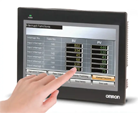
- OMRON HMI Touch Panel
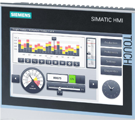
- Siemens HMI Touch Panel
- Mitsubishi HMI Touch Panel
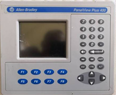
- Allen-Bradley automation HMI Touch Panel
- DELTA HMI Touch Panel
- Proface HMI Touch Panel
- KINCO DELTA HMI Touch Panel
- HITECH HMI Touch Panel
- WEINTEK HMI Touch Panel
- TECVIEW HMI Touch Panel
- WEINVIEW HMI Touch Panel
- PANASONIC HMI Touch Panel
- KYOCERA HMI Touch Panel
- SCHNEIDER HMI Touch Panel
- Module
- lcd inverter
- Membrane Keypad Switch
- Zhiyan Customized Touch Screens
- Frequency Inverter
- Servo Motor
- PLC
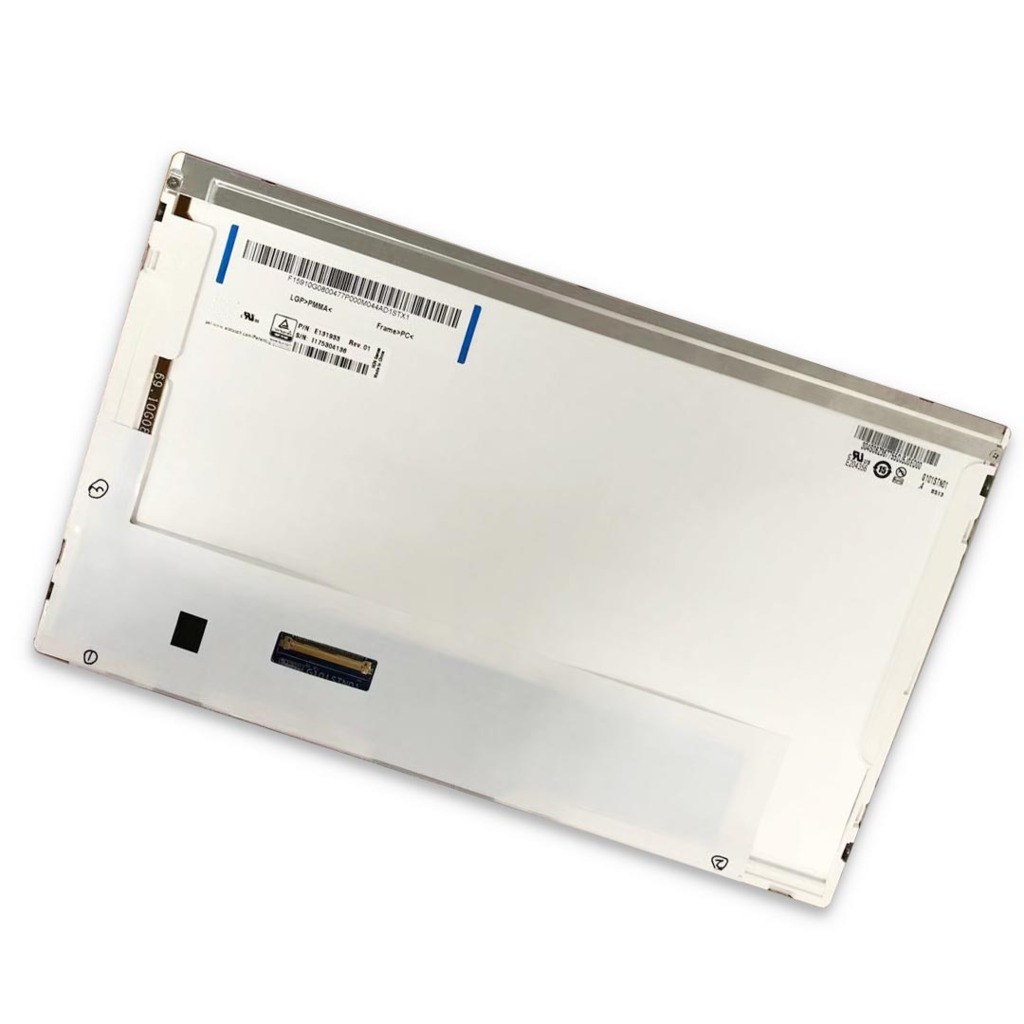
In the demanding world of industrial automation, medical equipment, and process control, the display interface is far more than a simple window to data—it is a critical component of system reliability, longevity, and operator efficiency. Not all screens are built to withstand the rigors of such environments. This brings us to the specialized realm of industrial LCD panels, where models like the G104STN01.4 are engineered not for consumer appeal, but for unwavering performance under pressure.


This article provides a comprehensive exploration of the G104STN01.4, a 10.4-inch industrial LCD display with a resolution of 800 x 600 (SVGA). We will delve beyond basic specifications to understand its core technology, the rationale behind its design choices, and its precise application landscape. From its rugged construction and stable imaging to its integration requirements and comparative advantages, this deep dive aims to equip engineers, system integrators, and procurement specialists with the knowledge needed to evaluate its suitability for mission-critical projects where failure is not an option.
Understanding the STN Technology Core
The G104STN01.4 utilizes STN (Super Twisted Nematic) LCD technology, a choice that defines its fundamental characteristics. Unlike the more common TFT (Thin-Film Transistor) panels known for vibrant colors and fast response, STN technology prioritizes stability, lower power consumption, and cost-effectiveness for monochrome or limited color applications. The "super twisted" molecular structure allows for a higher contrast ratio in passive matrix designs.
This panel typically displays monochrome images, often in grayscale, blue-on-white, or amber-on-black schemes, which are exceptionally clear and readable in various lighting conditions. The technology is inherently less complex than TFT, leading to excellent long-term reliability and a wider operating temperature range. For applications where the primary requirement is the crisp, reliable presentation of data, graphics, or text—not full-motion video—STN remains a robust and pragmatic engineering solution. The G104STN01.4 embodies this philosophy, offering a dependable visual interface built on a time-tested and resilient core technology.
Decoding the 10.4-inch 800x600 SVGA Format
The specific dimensions and resolution of this panel are not arbitrary; they are the result of industrial ergonomics and legacy system compatibility. The 10.4-inch diagonal screen size has long been a standard in industrial and embedded systems, providing ample viewing area for control dashboards, diagnostic information, and equipment interfaces without occupying excessive panel space. It represents a sweet spot between readability and form-factor efficiency.
The 800 x 600 pixel SVGA resolution is equally significant. While considered low by modern consumer standards, it is perfectly suited for its intended roles. This resolution delivers sharp character and line rendering for SCADA systems, CNC machine controls, or medical monitoring devices. Furthermore, it ensures broad compatibility with a vast installed base of industrial PCs, single-board computers, and legacy systems designed for 4:3 aspect ratio VGA/SVGA outputs. It reduces processing overhead and simplifies driver integration, contributing to overall system stability and a predictable, glitch-free display output.
Ruggedized Design for Harsh Environments
The defining feature of an industrial screen like the G104STN01.4 is its construction to endure conditions that would swiftly incapacitate a commercial display. Its operating temperature range is significantly wider, often spanning from -20°C to 70°C or beyond, ensuring functionality in unheated warehouses or under the heat of industrial machinery.
Robustness is further enhanced through mechanical reinforcement. The module is built to resist high levels of vibration and shock, protecting the delicate internal components from the constant tremors of factory floors or mobile installations. Additionally, many industrial panels, including variants of this model, feature enhanced ingress protection via sealing or specialized front polarizers to guard against dust, moisture, and chemical exposure. This ruggedized design philosophy ensures a long service life and minimal downtime, translating directly into lower total cost of ownership for critical operations.
Interface and Integration Considerations
Integrating the G104STN01.4 into a system requires careful attention to its electrical and physical interfaces. Typically, it employs a standard LVDS (Low-Voltage Differential Signaling) interface. LVDS is favored in industrial settings for its robustness, noise immunity, and ability to transmit high-speed data over longer cables with minimal electromagnetic interference—a crucial factor in electrically noisy environments.
The integration process involves more than just connecting a cable. Engineers must account for the power supply requirements, backlight inverter compatibility (for CCFL backlight versions), and precise mounting. The panel's mechanical drawings, detailing mounting hole positions and bezel dimensions, are essential for proper chassis design. Furthermore, understanding the pinout and signal timing of the LVDS connector is vital to developing or selecting the correct controller board, ensuring the display functions as intended from the first power-on.
Backlighting Systems and Longevity
The backlight is a critical, and often the most life-limited, component of an LCD module. The G104STN01.4 commonly utilizes a CCFL (Cold Cathode Fluorescent Lamp) backlight system. CCFLs provide a uniform, high-brightness light source with excellent white point stability over a wide temperature range, which is essential for consistent readability.
The longevity of the backlight, often rated for 30,000 to 50,000 hours, is a key specification. However, this lifespan can be drastically affected by operating temperature and drive current. To mitigate this, industrial displays often incorporate sophisticated backlight control circuits. Some advanced modules may offer LED backlighting as an alternative or newer standard, which provides even longer life (70,000+ hours), instant-on capability, a wider dimming range, and lower power consumption, though sometimes at a different cost or brightness profile. The choice impacts maintenance schedules and long-term performance.
Comparative Analysis: STN vs. TFT in Industrial Use
Choosing between an STN panel like the G104STN01.4 and a modern TFT panel is a fundamental application decision. TFT (Active Matrix) displays excel in scenarios requiring high color depth, fast video response, wide viewing angles, and high resolutions. They are the default for HMIs showing complex graphics or dynamic visualizations.
Conversely, STN (Passive Matrix) displays, as represented by this model, hold distinct advantages for specific use cases. They typically consume less power, offer superior readability in direct sunlight (especially with monochrome modes), exhibit exceptional stability over extreme temperature swings, and are generally more cost-effective. For applications that are functionally monochrome, such as diagnostic text readouts, legacy terminal emulation, or basic machinery status screens, the STN panel provides a more reliable and economically optimized solution. The decision ultimately hinges on the specific visual, environmental, and economic requirements of the project.
FAQs: G104STN01.4 Industrial LCD Display
1. What does "STN" stand for in G104STN01.4?STN stands for Super Twisted Nematic, a passive matrix LCD technology known for stability and low power consumption, often used for monochrome displays.
2. Is this a color or monochrome display?The G104STN01.4 is primarily a monochrome display, commonly showing grayscale, amber, or blue-on-white schemes, optimized for data clarity.
3. What is the main advantage of the 800x600 SVGA resolution?It provides excellent compatibility with legacy industrial systems, ensures sharp text/graphics for control interfaces, and reduces system processing load.
4. Can this display operate in cold environments?Yes, industrial screens like this are designed for wide temperature ranges, typically operating reliably from -20°C to 70°C.
5. What type of interface does it use?It typically uses an LVDS (Low-Voltage Differential Signaling) interface for robust, noise-resistant data transmission.
6. What is the typical backlight and its lifespan?It often uses a CCFL backlight with a lifespan of 30,000-50,000 hours. LED backlight options may also be available for longer life.
7. Is this display suitable for outdoor use?While rugged, direct outdoor use requires careful consideration of sunlight readability and additional weatherproofing; it's best for harsh indoor environments.
8. How does it compare to a standard TFT screen?It trades high color performance and fast video for better temperature stability, lower power draw, and often higher reliability in monochrome applications.
9. What industries commonly use this display?Industrial automation, medical devices, process control, test and measurement equipment, and transportation systems.
10. What are key integration factors to consider?LVDS controller compatibility, power supply/backlight inverter requirements, operating temperature, and precise mechanical mounting.
Conclusion
The G104STN01.4 10.4-inch industrial LCD display exemplifies a purpose-driven component engineered for reliability over novelty. Its STN technology core, standard SVGA resolution, and ruggedized construction are not compromises, but deliberate choices that make it an optimal solution for a vast array of demanding, mission-critical applications. It serves where consistent performance under thermal stress, mechanical vibration, and long operational hours is paramount.
In an era of rapidly evolving display technology, this panel reminds us that the "best" specification is the one that most perfectly aligns with the application's fundamental needs. For system designers integrating interfaces for industrial control, medical diagnostics, or specialized instrumentation, understanding the inherent strengths of displays like the G104STN01.4 is key to building systems that are not only functional but fundamentally robust and trustworthy over the long term.





