


















- Industrial display
-
Industrial Products
- DC Servo Drive
- AC Servo Drive
- Industrial board
- Siemens
- Switch Sensor
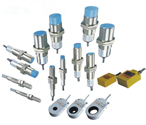
- Proximity Switch
- Temperature Controller
- Protection Relay
- Fiber Optic Sensor
- Encoder
- Fan
- other
- Heidelberg
- MITSUBISHI
- FANUC
- Siemens adapter
- Fujitsu connector
- Motherboard
- Board
- Contactor
- Circuit
- OMRON
- Relay
- Motor Driver
- power supply
- Cable
- Transformer
- HMI Touch Glass
-
HMI Full Machine Whole unit
- OMRON HMI Touch Panel
- Siemens HMI Touch Panel
- Mitsubishi HMI Touch Panel
- Allen-Bradley automation HMI Touch Panel
- DELTA HMI Touch Panel
- Proface HMI Touch Panel
- KINCO DELTA HMI Touch Panel
- HITECH HMI Touch Panel
- WEINTEK HMI Touch Panel
- TECVIEW HMI Touch Panel
- WEINVIEW HMI Touch Panel
- PANASONIC HMI Touch Panel
- KYOCERA HMI Touch Panel
- SCHNEIDER HMI Touch Panel
- Module
- lcd inverter
- Membrane Keypad Switch
- Zhiyan Customized Touch Screens
- Frequency Inverter
- Servo Motor
- PLC
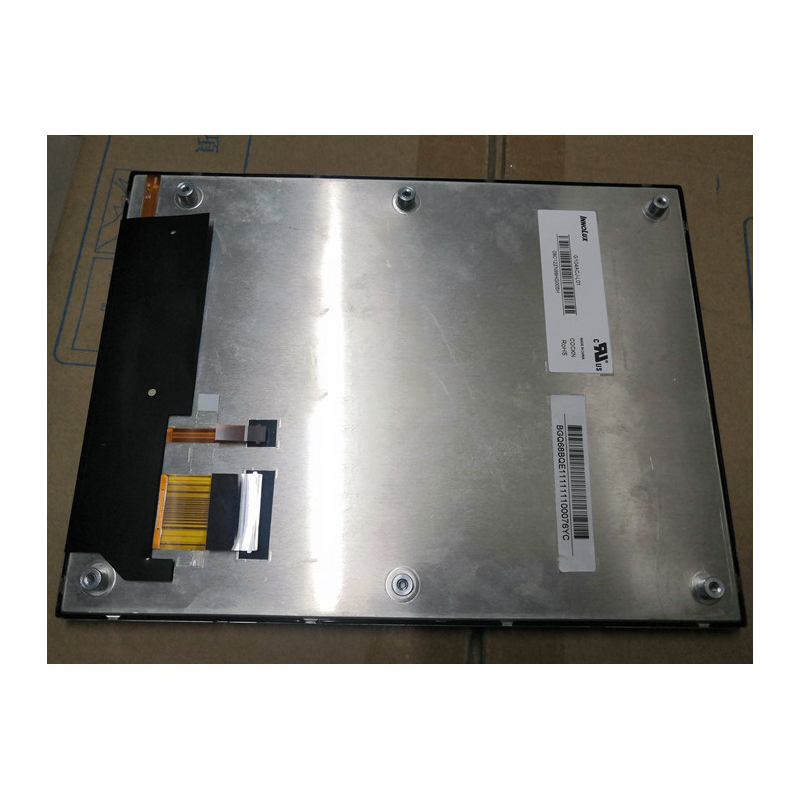
In the intricate world of industrial and embedded display solutions, the choice of a screen module is a critical decision that impacts performance, reliability, and the end-user experience. At the heart of many specialized applications, from medical devices and industrial control panels to sophisticated test and measurement equipment, lies a specific class of components: high-resolution, ruggedized TFT-LCD modules. This article delves deep into one such exemplary component, the G104ACJ-L01 from Innolux.
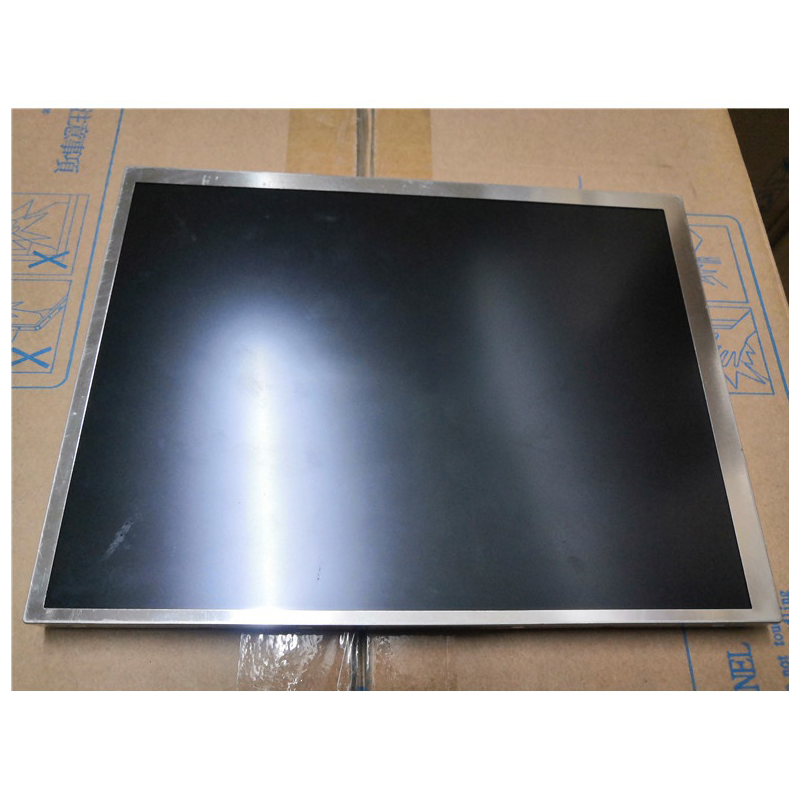
We will embark on a comprehensive exploration of this 10.4-inch display module, moving beyond basic datasheet specifications. Our analysis will uncover the engineering rationale behind its a-Si TFT-LCD technology and its distinctive 960×1280 portrait-mode resolution. We will examine its structural composition as an LCM (LCD Module), dissect its key performance characteristics under the demanding conditions of industrial use, and evaluate the tangible benefits it delivers to system integrators and OEMs. Finally, we will contextualize its position within the broader market, providing a clear understanding of where and why the G104ACJ-L01 stands out as a preferred solution for professionals seeking durability, clarity, and precision in their visual interfaces.
Decoding the G104ACJ-L01: Core Architecture and Technology
The G104ACJ-L01 is fundamentally an LCM, or LCD Module. This means it is a fully integrated unit comprising the LCD panel itself, the driver ICs, the backlight system, and often a touch panel interface, all assembled into a single, ready-to-use component. The core display technology is a-Si TFT-LCD (Amorphous Silicon Thin-Film Transistor Liquid Crystal Display). This mature and highly reliable technology is prized in industrial applications for its excellent stability, proven manufacturing yield, and cost-effectiveness for mid-size panels.
Unlike consumer-grade displays, this module is engineered for integration. Its design prioritizes a flat, robust form factor with precise mechanical mounting points. The inclusion of standard interfaces, such as LVDS (Low-Voltage Differential Signaling), simplifies connection to a host controller. The "L01" suffix typically denotes specific revision or optical characteristics, such as a wide-temperature range or enhanced brightness. Understanding this architecture is the first step in appreciating its value proposition: it is not just a screen, but a complete, subsystem-level component designed to reduce engineering complexity for the OEM.


The Significance of 960×1280 Portrait Resolution
Departing from the common 1024×768 (XGA) landscape format, the G104ACJ-L01's native resolution of 960×1280 pixels is a defining feature. This 3:4 aspect ratio is inherently optimized for portrait orientation. This is not an arbitrary choice but a response to specific human-machine interface (HMI) requirements. Many industrial, medical, and instrumentation applications involve navigating long lists, reading detailed vertical schematics, or viewing portrait-oriented documents.
A landscape screen would force excessive scrolling or inefficient use of space in these scenarios. The 960×1280 resolution provides 1.23 million pixels, offering a pixel density that ensures sharp rendering of text, numerals, and fine graphical elements crucial for data accuracy. This orientation and resolution directly enhance usability and operator efficiency in target applications, reducing eye strain and the potential for error during prolonged use.
Performance Under Pressure: Key Specifications Analyzed
The datasheet numbers for the G104ACJ-L01 tell a story of resilience. Key specifications are tailored for non-benign environments. A typical operating temperature range of -30°C to 80°C ensures functionality in unheated enclosures or near heat-generating machinery. High brightness levels, often around 1000 nits, guarantee readability under direct ambient light or in brightly lit medical settings.
Furthermore, industrial displays must exhibit longevity and consistency. The use of an LED backlight provides a long lifespan and consistent white point over time, unlike older CCFL technology. A high contrast ratio (e.g., 1000:1) delivers deep blacks and bright whites, essential for distinguishing fine details in grayscale medical imagery or complex control system graphics. These specs collectively translate to a display that won't falter when reliability is paramount.
The LCM Advantage: Simplifying Integration and Enhancing Reliability
Choosing an LCM like the G104ACJ-L01 over a bare panel offers profound advantages for system developers. The primary benefit is dramatically reduced integration overhead. Innolux delivers a fully tested, optically bonded, and mechanically assembled unit. This eliminates the need for the OEM to source backlights, design driver boards, manage delicate flex cable connections, or perform complex optical assembly—all processes requiring specialized expertise and capital equipment.
This turnkey approach directly translates to enhanced end-product reliability. The LCM is factory-calibrated and subjected to quality controls that are difficult to replicate on an assembly line. Risks of dust ingress between layers, backlight uniformity issues, or connection failures are mitigated. For the OEM, this means faster time-to-market, lower overall development cost, and a more reliable final product with a consistent display performance across all units shipped.
Target Applications: Where the G104ACJ-L01 Excels
The specific combination of features makes the G104ACJ-L01 ideal for a range of demanding vertical markets. In industrial automation, it serves as the primary interface for PLCs, CNC machine controls, and robotic operating terminals, where its rugged build and clear portrait display are perfect for command lists and diagnostic data.
In the medical field, it is found in portable diagnostic devices, patient monitoring systems, and laboratory analyzers. Here, its high brightness, sharp resolution for text and waveforms, and reliable performance are critical. Additionally, test and measurement equipment, transportation systems, and specialized point-of-sale or kiosk applications benefit from its robust, integrator-friendly design. It is the display of choice where equipment is expected to perform for years in challenging conditions.
Competitive Landscape and Selection Considerations
While the G104ACJ-L01 is a strong contender, informed selection requires market awareness. Competing modules may offer similar form factors but with different technologies, like LTPS (for higher pixel density) or newer IPS variants (for wider viewing angles). Key selection criteria extend beyond initial cost. Engineers must evaluate long-term supply guarantees, crucial for products with multi-year lifecycles.
Technical support from the manufacturer or distributor, availability of compatible touch solutions (resistive, projective capacitive), and the ease of interfacing with modern processors are equally important. The G104ACJ-L01's strength lies in its balanced proposition: proven a-Si technology, a specialized portrait resolution, and the full integration of an LCM, offered by a major panel maker with extensive industrial market experience.
FAQs: G104ACJ-L01 Innolux 10.4" LCD Module
1. What does "LCM" stand for and why is it important?LCM means "LCD Module." It's important because it's a complete, pre-assembled display subsystem (panel, drivers, backlight), simplifying design and boosting reliability for integrators.
2. What is the main advantage of the 960x1280 resolution?Its portrait orientation is ideal for displaying vertical content like lists, documents, and schematics common in industrial and medical HMIs, improving usability and efficiency.
3. Is this display suitable for outdoor use?With high brightness (~1000 nits), it can be used in high-ambient light, but true outdoor use typically requires a higher brightness (>1500 nits) and enhanced environmental sealing.
4. What is a-Si TFT technology, and is it outdated?Amorphous Silicon TFT is a mature, highly stable, and cost-effective technology. It is not outdated for industrial uses where long-term reliability and proven performance are prioritized over ultra-high refresh rates or extreme pixel density.
5. What is the typical interface for this module?It typically uses an LVDS (Low-Voltage Differential Signaling) interface, a standard, robust digital interface for transmitting high-speed display data from a controller board.
6. Can a touch screen be added to this module?Yes, it is commonly available with optional integrated touch solutions, such as resistive or projective capacitive touchscreens, configured as a complete touch-display unit.
7. What is the operating temperature range?Industrial-grade versions typically offer a wide operating temperature range, such as -30°C to 80°C, ensuring functionality in harsh environments.
8. How does this module compare to a consumer laptop display?It is far more robust, with wider temperature tolerance, higher brightness, longer lifespan, and designed for 24/7 operation, unlike consumer displays focused on cost and thinness.
9. Who is the typical user of this display?System integrators, OEMs, and product developers in industrial automation, medical device manufacturing, and test & measurement equipment.
10. What should I consider besides the datasheet when sourcing this module?Consider long-term availability, technical support from the supplier, compatibility with your controller, and the total cost of integration, not just the unit price.
Conclusion
The Innolux G104ACJ-L01 is far more than a simple 10.4-inch screen. It represents a carefully engineered solution tailored for the rigorous demands of professional and industrial applications. Its value is derived from the synergistic combination of a reliable a-Si TFT core, a purpose-built portrait resolution, and the significant integration advantages of the LCM format.
For engineers and product managers, selecting this module translates into reduced development risk, accelerated project timelines, and a foundation of proven display reliability for their end products. In a market where equipment performance and uptime are critical, the G104ACJ-L01 stands as a testament to the principle that the right specialized component is a strategic asset, enabling clearer communication between machine and operator in the most challenging environments.





