














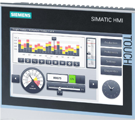





- Industrial display
-
Industrial Products
- DC Servo Drive
- AC Servo Drive
- Industrial board
- Siemens
- Switch Sensor
- Proximity Switch
- Temperature Controller
- Protection Relay
- Fiber Optic Sensor
- Encoder
- Fan
- other
- Heidelberg
- MITSUBISHI
- FANUC
- Siemens adapter
- Fujitsu connector
- Motherboard
- Board
- Contactor
- Circuit
- OMRON
- Relay
- Motor Driver
- power supply
- Cable
- Transformer
- HMI Touch Glass
-
HMI Full Machine Whole unit
- OMRON HMI Touch Panel
- Siemens HMI Touch Panel
- Mitsubishi HMI Touch Panel
- Allen-Bradley automation HMI Touch Panel
- DELTA HMI Touch Panel
- Proface HMI Touch Panel
- KINCO DELTA HMI Touch Panel
- HITECH HMI Touch Panel
- WEINTEK HMI Touch Panel
- TECVIEW HMI Touch Panel
- WEINVIEW HMI Touch Panel
- PANASONIC HMI Touch Panel
- KYOCERA HMI Touch Panel
- SCHNEIDER HMI Touch Panel
- Module
- lcd inverter
- Membrane Keypad Switch
- Zhiyan Customized Touch Screens
- Frequency Inverter
- Servo Motor
- PLC
In the ever-evolving world of display technology, the introduction of a new panel model sends ripples through industries ranging from consumer electronics to industrial automation. The G101STN01.4 emerges as a significant entry, a 10.1-inch LCD display that promises to redefine expectations for mid-sized screens. This isn't merely a component swap; it represents a calculated advancement in the balance of performance, efficiency, and integration.
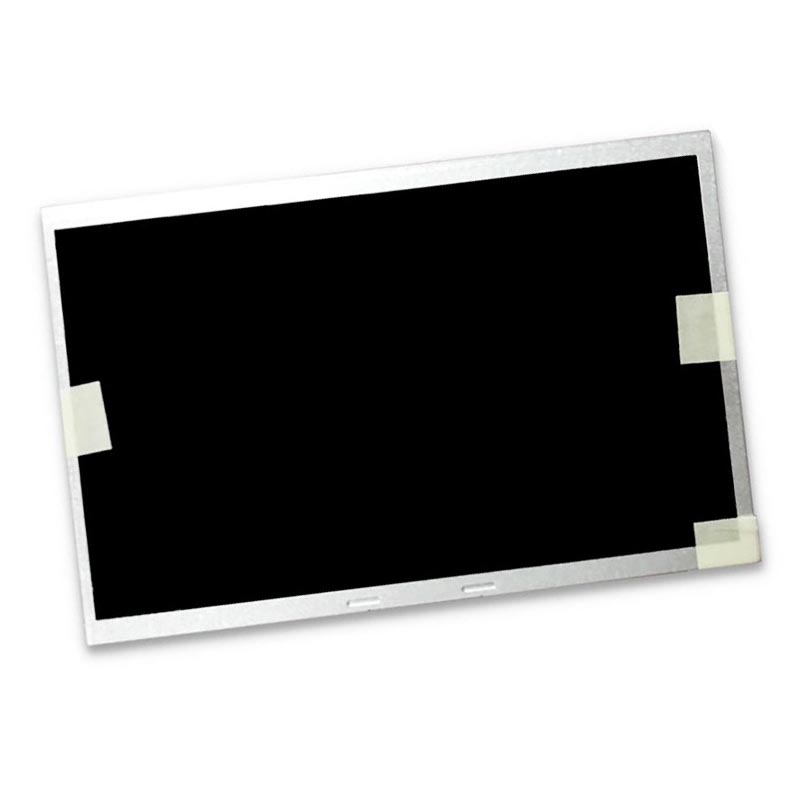
This article delves deep into the architecture and potential of the G101STN01.4. We will move beyond basic datasheet specifications to explore its technological foundations, dissect its performance characteristics in real-world contexts, and examine the practical considerations for engineers and product designers. Our journey will uncover why this panel is more than just a display—it's a pivotal building block for the next generation of portable, reliable, and visually coherent devices.
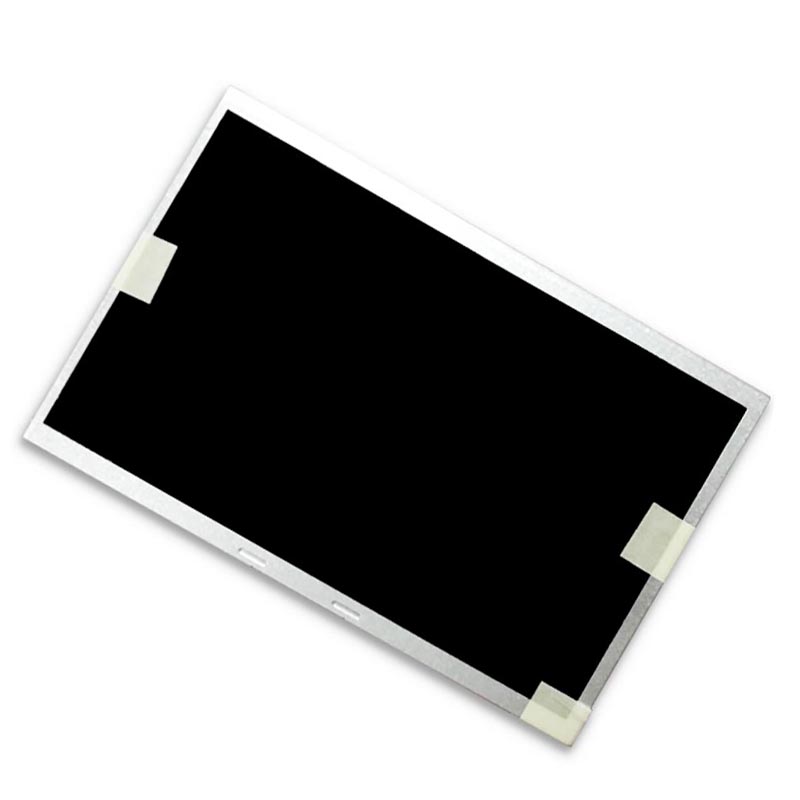
Decoding the G101STN01.4: Core Architecture and Technology
At its heart, the G101STN01.4 is a 10.1-inch diagonal a-Si TFT LCD module with an STN-derived nomenclature that belies its modern TFT active-matrix design. The core of its performance lies in its native resolution of 1024 x 600 pixels (WSVGA), a format that provides a widescreen 16:9 aspect ratio ideal for multimedia interfaces and modern software UIs. This resolution offers a clear pixel density for its size, ensuring sharp text and adequate detail for most control and viewing applications.
The module employs a standard RGB stripe arrangement and typically utilizes LED backlighting, which is a key contributor to its potential for enhanced brightness and longevity compared to older CCFL systems. The interface is commonly LVDS (Low-Voltage Differential Signaling), a robust and widely adopted standard that ensures reliable data transmission with minimal noise interference. Understanding this foundational architecture is crucial, as it sets the stage for the panel's performance in areas like color reproduction, power management, and physical integration into a final product.
Illuminating Performance: Brightness, Contrast, and Color Gamut
Performance metrics translate directly to user experience. The G101STN01.4 is engineered to deliver reliable visibility under various conditions. A typical brightness specification of 250-300 nits makes it suitable for indoor environments, from factory floors to retail kiosks. The contrast ratio, often in the range of 500:1 or higher, defines its ability to render deep blacks against bright whites, which is critical for text clarity and image depth.
While not designed for professional photo editing, its color gamut usually covers a respectable portion of the NTSC standard (e.g., 45-50% NTSC), ensuring that colors are vibrant and distinguishable for graphical user interfaces, diagnostic screens, and general content. The viewing angles, supported by its TFT technology, are sufficiently wide for collaborative viewing or devices that may be viewed from off-axis, preventing significant color shift or contrast loss when not viewed head-on.
The Power Equation: Efficiency and Thermal Management
In portable or always-on devices, power consumption is not a minor detail—it's a central design constraint. The G101STN01.4 benefits from the inherent efficiency of LED backlighting. Designers can often implement dynamic backlight control (DBC) to further reduce power draw by dimming the LEDs during static or dark scenes. The total module power is a sum of the logic board and backlight consumption, making the choice of backlight intensity a direct lever for battery life.
Efficient power use also simplifies thermal management. Lower heat generation reduces the need for complex cooling systems, allowing for slimmer product designs and enhancing long-term component reliability. Engineers evaluating this panel must consider the power profile in the context of their overall system power budget, as the display is frequently one of the largest single consumers of energy in a device.
Robustness by Design: Durability and Environmental Specifications
A display must survive the environment it's built for. The G101STN01.4 is typically characterized by a suite of reliability tests. Its operating and storage temperature ranges are specified to ensure functionality in both consumer and light-industrial settings. Resistance to shock and vibration is critical for embedded systems in vehicles, machinery, or mobile equipment.
Furthermore, the assembly often includes considerations for optical bonding (an option or standard feature depending on the integrator). This process fills the air gap between the LCD and the cover glass with a clear resin, dramatically reducing internal reflection, improving sunlight readability, strengthening the mechanical stack, and preventing condensation. This transforms the panel from a simple visual component into a ruggedized interface element.
Integration in Practice: Mechanical and Electrical Interface
Successful implementation hinges on seamless integration. Mechanically, the G101STN01.4 comes with a defined outline dimension, bezel area, and mounting hole patterns. These precise measurements are vital for CAD designers ensuring a perfect fit within the product enclosure. The thickness of the module, including the backlight unit, dictates how slim the end product can be.
Electrically, integration revolves around the LVDS interface connector and the power supply requirements. Designers must ensure their host system's timing controller (T-CON) or SoC can output a compatible LVDS signal. The power sequence—the order in which logic power, panel power, and backlight are enabled—is also crucial to prevent potential damage. Attention to these details in the schematic and layout phase prevents costly revisions later.
Application Landscape: From Industrial HMI to Portable Consoles
The true test of a component's value is its versatility in application. The G101STN01.4 finds a strong foothold in Industrial Human-Machine Interfaces (HMIs), where its size and reliability are perfect for machine control panels. In the transportation sector, it serves as a display for telematics, rear-seat entertainment, or fleet management systems.
Beyond industrial uses, it enables portable medical devices for patient monitoring, point-of-sale (POS) terminals in retail, and embedded systems in smart home controllers. Its format is also excellent for compact gaming consoles, portable media players, and specialized handheld test equipment. In each case, the panel provides the critical bridge between digital information and human interaction.
FAQs: G101STN01.4 10.1-Inch LCD Display
Q1: What is the resolution of the G101STN01.4?A1: It has a native resolution of 1024 x 600 pixels (WSVGA).
Q2: What type of interface does it use?A2: It typically uses a standard LVDS (Low-Voltage Differential Signaling) interface.
Q3: Is this display suitable for outdoor use?A3: With standard brightness (~250-300 nits), it's best for indoor use. Sunlight readability requires high-brightness options or optical bonding.
Q4: What is the aspect ratio?A4: The aspect ratio is 16:9 (widescreen format).
Q5: Does it support touch functionality?A5: The G101STN01.4 is a LCD module. Touch capability (resistive or capacitive) is added as a separate layer by the integrator.
Q6: What is the typical power consumption?A6: Power consumption varies with backlight setting. Total module power is usually in the range of a few watts.
Q7: What are the common applications for this panel?A7: Common uses include industrial HMI, portable medical devices, POS systems, transportation displays, and embedded systems.
Q8: What does "STN" in the model number refer to?A8: While historically meaning Super Twisted Nematic, here it's part of the model nomenclature. This is a modern TFT (Thin-Film Transistor) LCD, not a passive STN display.
Q9: Can it be used as a direct replacement for an older 10.1" panel?A9: Not automatically. Replacement requires verifying mechanical dimensions, mounting holes, interface type, pinout, and power requirements against the existing panel.
Q10: Where can I find the detailed datasheet?A10: Detailed datasheets are available from authorized distributors or display panel manufacturers/suppliers.
Conclusion
The G101STN01.4 10.1-inch LCD display stands as a testament to refined, application-driven engineering. It successfully bridges the gap between fundamental display requirements and the nuanced demands of modern embedded systems. Through its balanced combination of WSVGA resolution, efficient LED backlighting, robust interface standards, and design-ready form factor, it offers a reliable and high-value solution for a diverse spectrum of industries.
For product designers and engineers, this panel is not merely a commodity part but a strategic component. Its value lies in its ability to simplify the integration process while delivering consistent performance, thereby accelerating development cycles and enhancing end-product reliability. As the demand for intelligent, connected devices grows, components like the G101STN01.4 will continue to serve as the essential windows through which users interact with technology.





