

















- Industrial display
-
Industrial Products
- DC Servo Drive
- AC Servo Drive
- Industrial board
- Siemens
- Switch Sensor
- Proximity Switch
- Temperature Controller
- Protection Relay
- Fiber Optic Sensor
- Encoder
- Fan
- other
- Heidelberg
- MITSUBISHI
- FANUC
- Siemens adapter
- Fujitsu connector
- Motherboard
- Board
- Contactor
- Circuit
- OMRON
- Relay
- Motor Driver
- power supply
- Cable
- Transformer
- HMI Touch Glass
-
HMI Full Machine Whole unit
- OMRON HMI Touch Panel
- Siemens HMI Touch Panel
- Mitsubishi HMI Touch Panel
- Allen-Bradley automation HMI Touch Panel
- DELTA HMI Touch Panel
- Proface HMI Touch Panel
- KINCO DELTA HMI Touch Panel
- HITECH HMI Touch Panel
- WEINTEK HMI Touch Panel
- TECVIEW HMI Touch Panel
- WEINVIEW HMI Touch Panel
- PANASONIC HMI Touch Panel
- KYOCERA HMI Touch Panel
- SCHNEIDER HMI Touch Panel
- Module
- lcd inverter
- Membrane Keypad Switch
- Zhiyan Customized Touch Screens
- Frequency Inverter
- Servo Motor
- PLC
In the intricate ecosystem of industrial and commercial display solutions, specific panel models become the unsung heroes behind reliable performance. The AUO G101STN01.0 10.1-inch LCD display panel stands as a prime example—a component engineered not for the consumer spotlight but for the demanding environments of embedded systems, human-machine interfaces (HMI), and point-of-sale terminals. This article delves deep into the technical DNA and application rationale of this particular panel, moving beyond basic specifications to explore its real-world value proposition.
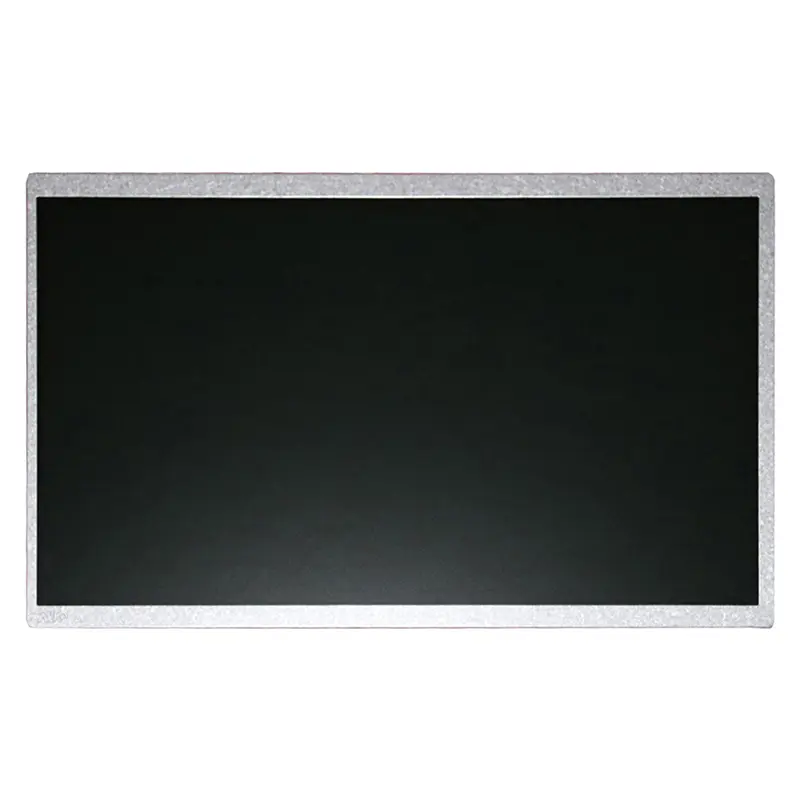
Understanding this panel requires a shift in perspective: it is not a standalone product but a critical building block. Its design choices, from the STN (Super Twisted Nematic) technology to its ruggedized interface, are deliberate responses to a specific set of industrial challenges. We will unpack its core characteristics, dissect its ideal use cases, and compare it with alternative technologies to provide a comprehensive guide for engineers, procurement specialists, and integrators seeking a durable and cost-effective display solution for their next project.
Decoding the G101STN01.0: Core Specifications and Technology
The AUO G101STN01.0 is a 10.1-inch diagonal display panel with a native resolution of 1024 x 600 (WSVGA). Its most defining characteristic is its use of STN (Super Twisted Nematic) LCD technology. Unlike the more common TFT (Thin-Film Transistor) panels found in smartphones and monitors, STN technology employs a passive matrix design. This fundamental difference shapes its performance profile: it offers excellent sunlight readability, lower power consumption, and superior cost-effectiveness for static or slow-moving content.
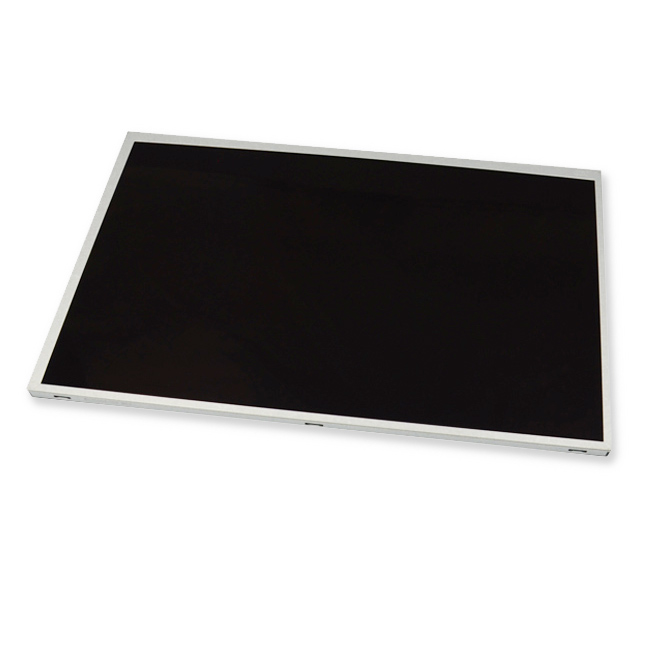
The panel features an LVDS (Low-Voltage Differential Signaling) interface, which is the industrial standard for reliable data transmission over longer cable lengths with high noise immunity. Its outline dimensions and mounting hole patterns are designed for straightforward integration into various chassis. The backlight system, typically utilizing LED arrays, is engineered for long life and consistent brightness, crucial for systems expected to operate continuously for thousands of hours.
The Strategic Advantage of STN Technology in Industrial Contexts
Why choose STN in an era dominated by high-speed TFTs? The answer lies in the specific demands of industrial and commercial applications. Sunlight readability is a paramount advantage. STN panels, often combined with specific optical treatments, exhibit much lower reflectivity and higher contrast under direct ambient light compared to glossy, high-transmittance TFTs, making them ideal for outdoor kiosks or factory floors with bright overhead lighting.
Secondly, power efficiency and thermal stability are critical. The simpler driving electronics of passive matrix STN panels generate less heat and draw less current, reducing the burden on the system's power supply and cooling design. This leads to enhanced long-term reliability. Finally, for applications where the displayed image changes infrequently (e.g., menu boards, data readouts, basic control interfaces), the cost structure of STN provides a significant advantage without sacrificing the necessary visual performance.
Ideal Application Scenarios and Integration Considerations
The G101STN01.0 finds its home in environments where reliability trumps ultra-high refresh rates. Key application verticals include Industrial HMIs for machine control and monitoring, Point-of-Sale (POS) Systems and self-service kiosks, Transportation Information Displays, and Basic Instrumentation Panels. Its rugged design is suited for extended operation in varied temperatures and conditions.
Successful integration requires attention to several factors. Designers must ensure compatibility with the LVDS signal source (controller board) and match the voltage and current requirements for the backlight inverter or LED driver. Mechanical integration must account for the panel's bezel and mounting points. Furthermore, considering the operating environment—temperature ranges, potential humidity, and vibration—is essential for specifying any necessary additional sealing or strengthening.
Comparative Analysis: G101STN01.0 vs. Alternative Display Panels
Placing the G101STN01.0 in context clarifies its niche. Compared to a standard 10.1" TFT panel, the STN variant will typically have narrower viewing angles and slower response times. However, it will outperform the TFT in bright-light conditions, consume less power, and often come at a lower cost. Compared to more advanced IPS (In-Plane Switching) TFT panels, the difference in viewing angle and color reproduction is more pronounced, making IPS unsuitable as a direct substitute for sunlight-readable applications.
The true alternative consideration often lies in optical bonding. While the G101STN01.0 itself may not be bonded, understanding the option is key. Bonding the cover glass directly to the LCD cell drastically reduces internal reflection, further enhancing sunlight readability and making the display more robust against condensation and physical shock—a potential upgrade path for harsher environments.
Supply Chain and Sourcing Strategies for Industrial Panels
Sourcing a specialized component like the G101STN01.0 differs from buying consumer goods. It is primarily distributed through authorized industrial electronic component distributors and specialized display module integrators. Buyers should be prepared for minimum order quantities (MOQs) and lead times that reflect its B2B manufacturing cycle.
Verifying authenticity is crucial to avoid counterfeit parts that fail in the field. Key strategies include purchasing from reputable, authorized sources, checking lot codes, and understanding the lifecycle status of the panel (active, end-of-life, not recommended for new design). For long-term projects, engaging with suppliers early to discuss lifecycle management and potential future replacements or equivalents is a prudent step.
Future-Proofing and Long-Term Reliability Management
Integrating a display panel into a product with a multi-year lifecycle requires foresight. First, assess the expected operational lifespan of your product against the panel's rated backlight life (often 20,000 to 50,000 hours). For continuous-use scenarios, this may dictate a maintenance or replacement schedule.
Proactively managing obsolescence is critical. Stay in communication with your supplier regarding the panel's production status. Explore options such as last-time buys or identifying approved alternate models (from AUO or other manufacturers) that are pin-to-pin and performance compatible. Designing your system with some flexibility in the display driver circuitry can facilitate a smoother transition to a new panel when the time comes, protecting your product from unforeseen component end-of-life announcements.
FAQs: AUO G101STN01.0 Display Panel
Q1: What does "STN" stand for and why is it important?A1: STN stands for Super Twisted Nematic. It's a passive matrix LCD technology prized for high contrast in bright light and lower power consumption, ideal for industrial use.
Q2: Is this panel suitable for outdoor use?A2: Yes, its STN technology offers excellent sunlight readability. For harsh outdoor environments, pairing it with an optically bonded cover glass is recommended.
Q3: What is the main interface for this panel?A3: It uses an LVDS (Low-Voltage Differential Signaling) interface, the standard for reliable data transmission in industrial displays.
Q4: Can I use a standard HDMI-to-LVDS converter with it?A4: You need a specific controller board that matches the panel's resolution, LVDS pinout, and voltage requirements. Generic converters may not be compatible.
Q5: How does it compare to a standard TFT panel?A5: It has better sunlight readability and lower power use but narrower viewing angles and slower response than an active-matrix TFT.
Q6: What is the typical backlight lifespan?A6: LED backlight life is typically rated between 20,000 to 50,000 hours, depending on drive current and operating temperature.
Q7: Where can I buy the G101STN01.0 panel?A7: Source it from authorized industrial electronic component distributors or specialized display module suppliers to ensure authenticity.
Q8: Is this panel still in production?A8: Production status changes. You must check with authorized distributors or AUO directly for current lifecycle information (active, EOL).
Q9: What are the key integration considerations?A9: Match the LVDS controller, design for backlight power, ensure mechanical fit, and consider environmental factors like temperature and vibration.
Q10: What if this panel goes end-of-life (EOL)?A10: Work with your supplier on a last-time buy or identify a compatible alternate model. Designing driver flexibility into your system helps future-proof it.
Conclusion
The AUO G101STN01.0 10.1-inch LCD panel exemplifies how specialized component selection drives success in industrial design. Its value is not measured by consumer-centric specs like color gamut or refresh rate, but by its steadfast performance under challenging conditions: brilliant sunlight, constant operation, and cost-sensitive BOMs. Choosing this panel is a deliberate engineering decision that prioritizes long-term reliability, readability, and integration stability over fleeting technical benchmarks.
For system integrators and product developers, understanding the "why" behind its STN technology, LVDS interface, and application fit is as crucial as knowing its dimensions. By aligning this panel's inherent strengths with the demands of HMIs, kiosks, and instrumentation, one can build robust products that endure. In a world of rapidly changing display trends, the G101STN01.0 remains a testament to the enduring power of purpose-built, right-fit technology.





