














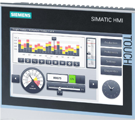





- Industrial display
-
Industrial Products
- DC Servo Drive
- AC Servo Drive
- Industrial board
- Siemens
- Switch Sensor
- Proximity Switch
- Temperature Controller
- Protection Relay
- Fiber Optic Sensor
- Encoder
- Fan
- other
- Heidelberg
- MITSUBISHI
- FANUC
- Siemens adapter
- Fujitsu connector
- Motherboard
- Board
- Contactor
- Circuit
- OMRON
- Relay
- Motor Driver
- power supply
- Cable
- Transformer
- HMI Touch Glass
-
HMI Full Machine Whole unit
- OMRON HMI Touch Panel
- Siemens HMI Touch Panel
- Mitsubishi HMI Touch Panel
- Allen-Bradley automation HMI Touch Panel
- DELTA HMI Touch Panel
- Proface HMI Touch Panel
- KINCO DELTA HMI Touch Panel
- HITECH HMI Touch Panel
- WEINTEK HMI Touch Panel
- TECVIEW HMI Touch Panel
- WEINVIEW HMI Touch Panel
- PANASONIC HMI Touch Panel
- KYOCERA HMI Touch Panel
- SCHNEIDER HMI Touch Panel
- Module
- lcd inverter
- Membrane Keypad Switch
- Zhiyan Customized Touch Screens
- Frequency Inverter
- Servo Motor
- PLC
In the intricate world of industrial and commercial display solutions, the choice of a specific panel model can define the success of an entire product line. The G101EAN02.1, a 10.1-inch LCD display module manufactured by AUO (AU Optronics), stands as a prime example of a component engineered not just to show an image, but to meet rigorous technical demands. This article delves deep into this particular display, moving beyond basic specifications to explore its architectural significance and practical applications.
Targeting engineers, product designers, and procurement specialists, this analysis will dissect the G101EAN02.1's core technology, its performance characteristics under various conditions, and the key design considerations it imposes. We will examine its role within the broader ecosystem of AUO's product portfolio and identify the market segments where its blend of size, resolution, and reliability creates a compelling advantage. Understanding this display is to understand a key building block in modern digital interfaces.

Decoding the G101EAN02.1: Core Architecture and Specifications
The AUO G101EAN02.1 is a 10.1-inch diagonal TFT-LCD module with a native resolution of 1280 x 800 pixels (WXGA). This 16:10 aspect ratio offers a balanced workspace, suitable for both portrait and landscape orientations in industrial settings. At its heart lies an a-Si (amorphous Silicon) TFT process, a mature and cost-effective technology renowned for its stability and long-term reliability in non-consumer environments.
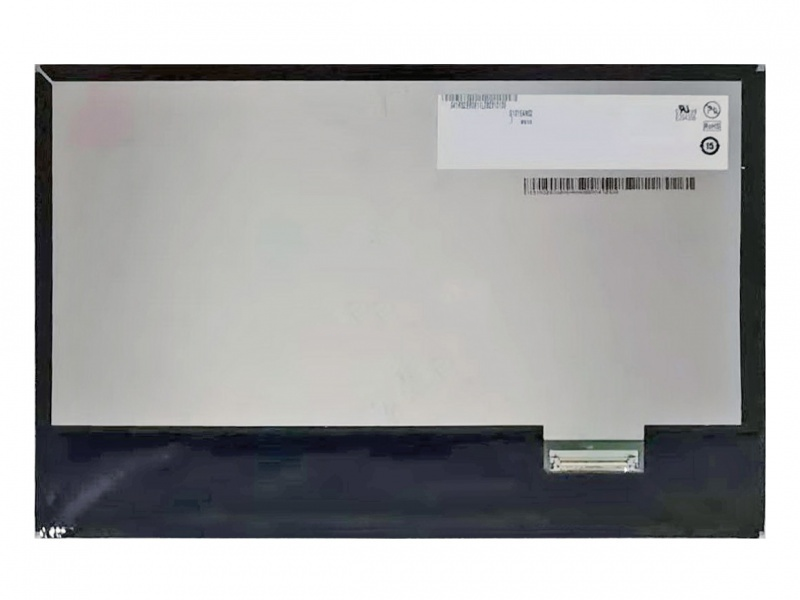
The module typically incorporates an LED backlight system, ensuring uniform brightness and lower power consumption compared to older CCFL technology. Key interface options often include LVDS (Low-Voltage Differential Signaling), a standard known for its robustness against noise in electrically complex systems. The mechanical outline, including mounting hole positions and bezel dimensions, is precisely defined, making it a drop-in solution for many existing chassis designs. This combination of standard resolution, reliable a-Si technology, and common interfaces forms the foundation of its widespread adoption.
Performance Under the Microscope: Brightness, Contrast, and Viewing Angles
Raw specifications only tell part of the story. The true value of an industrial display like the G101EAN02.1 is revealed in its performance metrics under operational conditions. With a typical brightness ranging from 300 to 500 nits or higher, it remains readable in brightly lit indoor environments, such as factory floors or medical offices. A high contrast ratio (often 700:1 or above) ensures deep blacks and clear differentiation between shades, crucial for displaying detailed graphics or diagnostic images.
Perhaps more critical for collaborative or multi-angle applications are its viewing angles. Utilizing specific wide-view technology (like AUO's own AFFS or similar), the panel maintains color and contrast integrity at horizontal and vertical angles often exceeding 80 degrees. This means the displayed information remains accurate for operators viewing from the side, a common scenario in control panels or point-of-sale systems. This performance triad—brightness, contrast, and viewing angle—directly impacts usability and decision-making accuracy.
Engineered for Endurance: Reliability and Environmental Robustness
Unlike consumer-grade panels, the G101EAN02.1 is built for mission-critical longevity. Its design prioritizes endurance across a wide operating temperature range, typically from -20°C to 70°C, allowing deployment in unregulated environments like automotive dashboards, outdoor kiosks, or refrigerated warehouses. The component selection and manufacturing process are geared towards a long operational lifespan, often rated for tens of thousands of hours of continuous use.
Robustness also extends to mechanical and visual reliability. The module is designed to resist vibration and minor shock, common in industrial and transportation settings. Furthermore, it often features a robust surface treatment to minimize glare and resist scratches. For the most demanding applications, optional enhancements like optical bonding—filling the air gap between the LCD and cover glass—can be specified to further improve sunlight readability, enhance mechanical strength, and prevent internal condensation.
Integration Challenges and Design Considerations
Successfully integrating the G101EAN02.1 into an end product requires careful planning. Electrical integration involves designing a compatible power supply circuit and correctly routing the LVDS signals from the host controller, often requiring impedance matching to ensure signal integrity. Thermally, designers must ensure adequate heat dissipation from the driver ICs and backlight to prevent premature aging, especially when operating at high brightness in elevated ambient temperatures.
Mechanically, the mounting scheme must adhere to the panel's specification to avoid stress on the glass, which can cause uniformity issues or failure. The design must also account for the total module thickness, including connectors. Furthermore, selecting the correct timing controller (TCON) settings or ensuring the host's graphics output matches the panel's native resolution and timing is crucial to avoid display artifacts. These considerations transform a commodity component into a seamlessly functioning part of a larger system.
The Competitive Landscape: Positioning Within AUO's Portfolio and the Market
The G101EAN02.1 occupies a strategic niche within AUO's extensive lineup. It serves as a reliable workhorse in the 10.1-inch segment, positioned between smaller, lower-cost panels and larger, higher-performance ones. Its WXGA resolution offers a clear upgrade path from older 1024x768 (XGA) modules, providing more vertical pixels for data display without a drastic increase in system cost or power draw.
In the broader market, it competes with similar panels from other manufacturers like Innolux, BOE, and LG Display. Its competitive edge often lies in AUO's consistent quality control, strong supply chain, and the technical support available for integration. For companies with existing designs based on AUO's mechanical footprints, the G101EAN02.1 provides a straightforward upgrade or continuation path, reducing requalification risks and time-to-market for next-generation products.
Real-World Applications: Where the G101EAN02.1 Excels
The specific attributes of the G101EAN02.1 make it ideal for a range of specialized applications. In Industrial Human-Machine Interfaces (HMIs), it provides a durable and readable screen for machine control, process monitoring, and SCADA systems. The medical device field utilizes it in diagnostic equipment, patient monitors, and portable devices where reliability and clear image reproduction are non-negotiable.
It is also prevalent in transportation (in-vehicle infotainment and telematics systems), point-of-sale/kiosk terminals, and fitness equipment displays. In each case, the panel's blend of moderate size, sufficient resolution, environmental hardening, and predictable performance from a major supplier like AUO reduces engineering risk and ensures a consistent user experience over the product's lifetime.
Frequently Asked Questions (FAQs)
Q1: What is the exact resolution of the AUO G101EAN02.1 display?A1: It has a native resolution of 1280 (horizontal) x 800 (vertical) pixels, known as WXGA.
Q2: What type of interface does this display module use?A2: It typically uses an LVDS (Low-Voltage Differential Signaling) interface for robust data transmission.
Q3: Is the G101EAN02.1 suitable for outdoor use?A3: With high-brightness options (500+ nits) and potential for optical bonding, it can be used in shaded outdoor or high-ambient-light indoor environments, but full sunlight readability may require additional enhancements.
Q4: What is the operating temperature range?A4: The standard operating temperature range is typically from -20°C to 70°C.
Q5: Does it have a touch screen?A5: The G101EAN02.1 is primarily an LCD module. Touch functionality (resistive or capacitive) is usually added as a separate component layered on top.
Q6: How does it compare to an IPS display?A6: The G101EAN02.1 likely uses a wide-view technology similar in performance to IPS (In-Plane Switching), offering excellent viewing angles and color consistency.
Q7: Can I use this as a direct replacement for an older 10.1" XGA (1024x768) panel?A7: Not directly. The resolution and likely the interface timing are different. A controller board or host graphics output capable of supporting WXGA resolution is required.
Q8: Who manufactures the G101EAN02.1?A8: It is manufactured by AU Optronics (AUO), a leading Taiwanese display panel maker.
Q9: What is the typical lifespan of this display?A9: Industrial-grade panels like this are often rated for 50,000 hours or more of operation.
Q10: Where can I find the detailed datasheet for this model?A10: Official datasheets are available through authorized AUO distributors or by contacting AUO directly, as they contain the most accurate and current specifications.
Conclusion
The AUO G101EAN02.1 10.1-inch LCD display is far more than a simple screen; it is a meticulously engineered component designed for durability, clarity, and long-term performance in demanding applications. Its value proposition lies in the proven a-Si TFT technology, robust WXGA resolution, and the environmental hardening that allows it to thrive where consumer displays would fail.
For product developers and engineers, selecting this panel represents a strategic decision that balances performance, reliability, and supply chain stability. By understanding its technical nuances, integration requirements, and ideal use cases, professionals can leverage the G101EAN02.1 to build more reliable and effective digital interfaces, ultimately contributing to the success and longevity of their end products in the industrial, medical, and commercial markets.





