











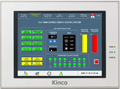
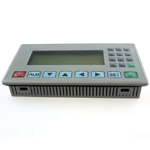




- Industrie-LCD-Display
-
Industrial Products
- DC Servo Drive
- AC Servo Drive
- PCB
- Siemens
- Switch Sensor
- Näherungsschalter
- Temperaturregler
- Schutzrelais
- Fiber Optic Sensor
- Encoder
- Fan
- other
- Heidelberg
- MITSUBISHI
- FANUC
- Siemens adapter
- Fujitsu connector
- Der Aufsichtsrat
- Board
- Contactor
- Circuit
- Omron
- Relais.
- Motortreiber
- power supply
- Cable
- Transformator
- HMI Touch-Glas
-
HMI-Vollautomat Ganze Einheit
- OMRON HMI Touch Panel
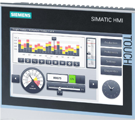
- Siemens HMI Touch Panel
- Mitsubishi HMI Touch Panel
- Allen-Bradley Automatisierung HMI Touch
- DELTA HMI Touch Panel
- EVIEW DELTA HMI Touch Panel
- KINCO DELTA HMI Touch Panel
- HITECH HMI Touch Panel
- WEINTECK HMI Touch Panel
- TECVIEW HMI Touch Panel
- WEINVIEW HMI Touch Panel
- PANASONIC HMI Touch Panel
- KYOCERA HMI Touch Panel
- SCHNEIDER HMI Touch Panel
- Module
- LCD Wechselrichter
- Membran Tastenfeld Schalter
- Winni Touch Screens
- Frequenzumrichter
- Servo Motor
- PLC
In the intricate world of industrial and commercial display integration, specifying the correct component is paramount. The G101EAN01.0 emerges as a critical part number for engineers, procurement specialists, and product developers seeking a reliable 10.1-inch display solution. This model represents a specific LCD panel manufactured by AUO (AU Optronics), a global leader in display technology. Understanding its specifications, applications, and integration nuances is not merely a procurement task but a strategic decision impacting product performance, longevity, and user experience.

This article delves deep into the G101EAN01.0, moving beyond basic datasheet parameters. We will explore its technical DNA, decode its interface and performance characteristics, and examine its ideal application environments. Furthermore, we will address critical considerations for successful integration, from supply chain dynamics to compatibility testing, providing a comprehensive resource for professionals who need to make informed decisions about this specific display module.

Decoding the G101EAN01.0: Technical Specifications Unveiled
At its core, the AUO G101EAN01.0 is a 10.1-inch diagonal TFT-LCD panel with a resolution of 1280 (H) x 800 (V), commonly known as WXGA. This aspect ratio of 16:10 offers a balanced workspace for both landscape and portrait orientations, suitable for a variety of human-machine interface (HMI) applications. The module typically employs IPS (In-Plane Switching) or advanced fringe-field switching (AFFS) technology, which provides wide viewing angles—often 85/85/85/85 degrees (Left/Right/Up/Down)—crucial for devices viewed from multiple positions.
Key specifications include its brightness, usually ranging from 300 to 500 nits, ensuring readability in moderately lit industrial environments. The contrast ratio and color gamut define its visual clarity and color reproduction capability. It's essential to note that the "01.0" suffix often indicates a specific revision or version of the G101EAN series, highlighting the importance of verifying the exact datasheet for the target version, as parameters like power consumption or optical bonding options may vary.
Interface and Connectivity: The LVDS Standard
The G101EAN01.0 module primarily utilizes an LVDS (Low-Voltage Differential Signaling) interface. This is a critical detail for system designers. LVDS is a mature, robust, and noise-resistant digital video transmission standard prevalent in industrial and automotive displays. It requires a compatible LVDS transmitter on the host controller board (such as from an FPGA or system-on-chip) and a matching receiver on the display's timing controller (TCON).
The specific pinout, voltage levels (often 3.3V or 5V for power, with 1.8V or 3.3V for I/O), and signal mapping (e.g., single-channel or dual-channel LVDS) must be meticulously matched. Incorrect interface matching is a common point of failure. Designers must also plan for the backlight driver circuit, as this module typically uses an LED backlight array requiring a constant-current driver, separate from the LCD logic power.
Ideal Application Scenarios and Use Cases
The technical profile of the G101EAN01.0 positions it perfectly for applications demanding durability, clear visibility, and reliable performance. Its primary domain is industrial automation, where it serves as the face of PLCs, control panels, and test equipment. The wide viewing angle ensures operators can read data from various stances on the factory floor.
Beyond industry, it finds a home in point-of-sale (POS) systems, self-service kiosks, and interactive digital signage, where consistent color and touch compatibility (when paired with a touch overlay) are key. It is also a candidate for specialized medical monitoring devices, transportation information displays, and ruggedized portable devices, where its standardized form factor and proven reliability outweigh the need for ultra-high resolution or extreme brightness.
Critical Integration Considerations for Engineers
Successfully integrating the G101EAN01.0 extends beyond electrical connection. Mechanical integration is paramount: the module has precise dimensions, mounting hole locations, and bezel requirements. Designers must account for thermal management, as excessive heat can degrade LCD performance and LED backlight lifespan. Ensuring adequate ventilation or heat sinking is often necessary.
Optical bonding is a transformative option. This process laminates the cover glass (or touch panel) directly to the LCD cell with an optical clear resin. It reduces internal reflection, enhances sunlight readability, improves mechanical strength, and prevents condensation—a vital feature for harsh environments. Specifying a pre-bonded module or planning for the bonding process is a significant design decision.
Supply Chain and Sourcing Strategies
The G101EAN01.0 is a standard catalog part from AUO, but it is typically not sold directly to end-users in small quantities. Sourcing occurs through authorized distributors, specialized display module integrators, or brokers. For long-term product viability, obsolescence management is crucial. Display panels have lifecycles; understanding AUO's product phase (introduction, growth, maturity, decline) and planning for potential end-of-life (EOL) notifications is a strategic necessity.
Engaging with suppliers who offer compatible alternative suggestions or can provide long-term stock agreements is prudent. Verifying the authenticity of the module is also critical, as the market contains refurbished or remarked panels. Requesting manufacturer lot codes and certificates of conformity is a standard due diligence practice.
Ensuring Compatibility and Pre-Deployment Testing
The final, non-negotiable step is rigorous compatibility and reliability testing. This should encompass electrical validation (signal integrity, power sequencing, EMI), optical validation (uniformity, color accuracy, dead pixel check per ISO 9241-307 class), and environmental testing (temperature, humidity, vibration) if applicable to the end-use.
Building a prototype and running it through extended burn-in tests under realistic operating conditions can uncover latent issues with image retention, backlight stability, or thermal performance. This phase mitigates the high cost of post-production failures and ensures the G101EAN01.0 performs as expected throughout the product's intended lifespan.
FAQs: G101EAN01.0 10.1" LCD Display Screens
Q1: What is the exact resolution of the G101EAN01.0?A1: It offers a WXGA resolution of 1280 x 800 pixels.
Q2: What type of interface does this display use?A2: It primarily uses an LVDS (Low-Voltage Differential Signaling) interface.
Q3: Is this a touchscreen display?A3: No, the G101EAN01.0 is a bare LCD panel. Touch functionality requires adding a separate resistive or capacitive touch overlay.
Q4: What are the typical viewing angles?A4: It features wide viewing angles, typically 85 degrees or more in all directions (Left/Right/Up/Down), thanks to IPS/AFFS technology.
Q5: What is the standard brightness level?A5: Brightness commonly ranges from 300 to 500 nits, suitable for indoor industrial and commercial use.
Q6: Can it be used in outdoor applications?A6: Not directly. For outdoor use, it requires high-brightness enhancement (700+ nits), optical bonding, and a ruggedized cover glass to combat sunlight and weather.
Q7: Where can I buy the G101EAN01.0?A7: It is sourced through authorized electronic component distributors, display module specialists, or brokers.
Q8: What does the "01.0" suffix mean?A8: It denotes a specific version or revision of the G101EAN panel series. Always check the exact datasheet for the version you are procuring.
Q9: What is the main advantage of optical bonding for this panel?A9: Optical bonding improves sunlight readability, reduces glare, enhances durability, and prevents internal fogging.
Q10: How do I drive the LED backlight?A10: The LED backlight requires an external constant-current driver circuit. The voltage and current requirements are specified in the panel's datasheet.
Conclusion
The AUO G101EAN01.0 10.1-inch LCD panel is far more than a simple commodity screen; it is a precision-engineered component that forms the visual foundation of countless industrial and commercial systems. Its value lies in its proven reliability, wide viewing angles, and standardized interface, making it a trusted choice for engineers designing HMIs, kiosks, and specialized monitoring equipment.
Successful implementation, however, demands a holistic approach. From deciphering LVDS interface requirements and planning for mechanical integration to navigating the supply chain and executing rigorous pre-deployment testing, each step is crucial. By treating display integration as a core system design challenge rather than a mere procurement activity, developers can fully leverage the capabilities of the G101EAN01.0, ensuring their end products deliver exceptional performance, durability, and user satisfaction in demanding environments.





