


















- Industrial display
-
Industrial Products
- DC Servo Drive
- AC Servo Drive
- Industrial board
- Siemens
- Switch Sensor
- Proximity Switch
- Temperature Controller
- Protection Relay
- Fiber Optic Sensor
- Encoder
- Fan
- other
- Heidelberg
- MITSUBISHI
- FANUC
- Siemens adapter
- Fujitsu connector
- Motherboard
- Board
- Contactor
- Circuit
- OMRON
- Relay
- Motor Driver
- power supply
- Cable
- Transformer
- HMI Touch Glass
-
HMI Full Machine Whole unit
- OMRON HMI Touch Panel
- Siemens HMI Touch Panel
- Mitsubishi HMI Touch Panel
- Allen-Bradley automation HMI Touch Panel
- DELTA HMI Touch Panel
- Proface HMI Touch Panel
- KINCO DELTA HMI Touch Panel
- HITECH HMI Touch Panel
- WEINTEK HMI Touch Panel
- TECVIEW HMI Touch Panel
- WEINVIEW HMI Touch Panel
- PANASONIC HMI Touch Panel
- KYOCERA HMI Touch Panel
- SCHNEIDER HMI Touch Panel
- Module
- lcd inverter
- Membrane Keypad Switch
- Zhiyan Customized Touch Screens
- Frequency Inverter
- Servo Motor
- PLC
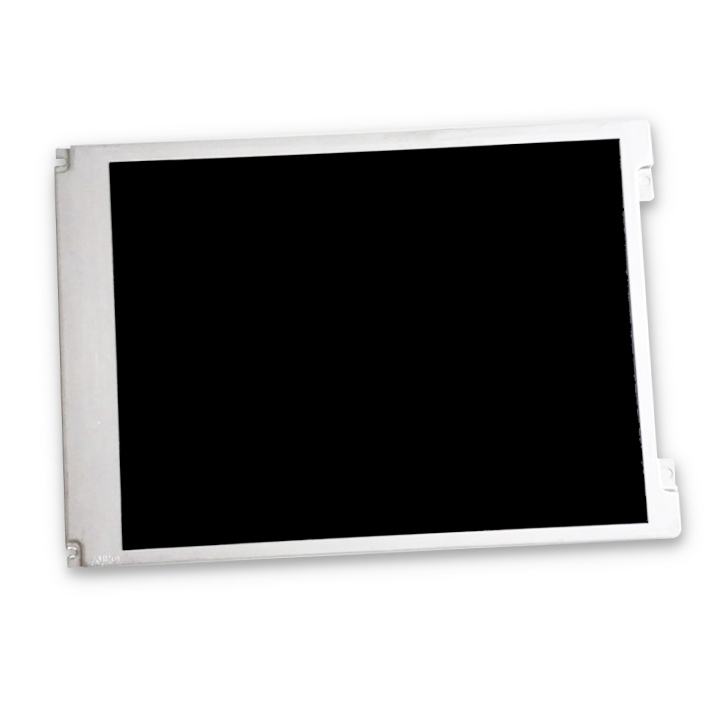
In the intricate world of industrial and embedded display solutions, the precise specification of components is paramount. Among these, the g084sn05 v9 8.4" LCD display screen stands out as a critical module for engineers, procurement specialists, and product developers. This article delves into a comprehensive analysis of this specific panel, manufactured by AU Optronics (AUO), a global leader in display technology. We will move beyond basic datasheet parameters to explore its technical DNA, application ecosystems, and the tangible value it brings to complex projects.

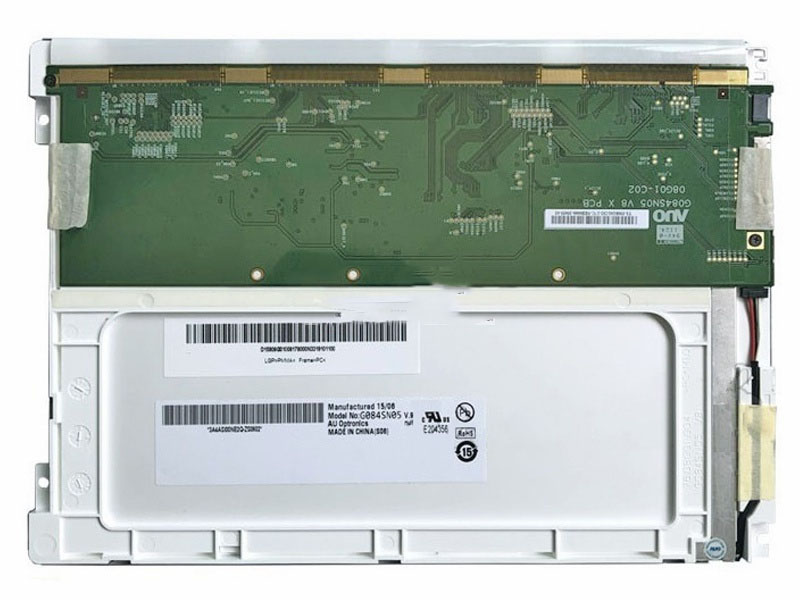
Understanding this display is not merely about knowing its diagonal measurement. It involves grasping its interface protocols, optical performance under various conditions, mechanical integration challenges, and its position within the broader supply chain. Whether you are designing a ruggedized human-machine interface (HMI), a medical diagnostic device, or advanced transportation instrumentation, the choice of display can define product success. This deep dive aims to equip you with the insights needed to evaluate the g084sn05 v9 as more than a commodity, but as a foundational component enabling clarity, reliability, and innovation in your next-generation devices.
Decoding the g084sn05 v9: Core Technical Architecture
The AUO g084sn05 v9 is an 8.4-inch diagonal TFT-LCD module built on an a-Si (amorphous Silicon) process. Its native resolution of 800 x 600 pixels (SVGA) offers a balanced pixel density for detailed graphics and readable text in arm's-length viewing scenarios. A key technical differentiator is its LVDS (Low-Voltage Differential Signaling) interface, which provides robust, high-speed data transmission with reduced electromagnetic interference—a critical feature in electrically noisy environments.
Beyond the digital interface, the panel's optical stack defines user experience. It typically features a high-brightness specification, often ranging from 500 to 1000 nits, ensuring visibility in high-ambient light conditions. The contrast ratio and color gamut are engineered for fidelity, while options for wide-temperature operation allow functionality in non-climate-controlled settings. This foundational architecture makes it not just a screen, but a sophisticated optoelectronic system designed for stability and longevity.
Targeted Application Ecosystems and Use Cases
The technical specifications of the g084sn05 v9 directly map to demanding industrial and professional applications. Its primary domain is Industrial Human-Machine Interfaces (HMIs), where it serves as the visual conduit between operators and complex machinery, PLCs, and control systems. The combination of rugged build quality, stable performance, and clear visibility under factory lighting is indispensable here.
Furthermore, this display finds a strong foothold in medical equipment, such as patient monitoring systems and diagnostic devices, where color accuracy and reliability are non-negotiable. The transportation sector, including automotive diagnostic tools, construction vehicle dashboards, and marine instrumentation, also leverages its wide-temperature tolerance and vibration resistance. In each case, the module is valued not for being a consumer-grade panel, but for its engineered resilience and deterministic performance.
Integration Considerations and Design Challenges
Successfully incorporating the g084sn05 v9 into a product requires careful attention to integration parameters. Electrically, designers must ensure the host system's LVDS transmitter is compatible with the panel's pinout, voltage levels, and timing requirements. Power sequencing is crucial to prevent latch-up and ensure long-term reliability. Mechanically, the module's outline dimensions, bezel design, and mounting hole patterns dictate enclosure design.
A significant challenge often involves backlight management. The typical CCFL (Cold Cathode Fluorescent Lamp) or high-performance LED backlight requires an inverter or constant-current driver, respectively. Thermal management of these components and the display itself is vital, especially in sealed enclosures or high-ambient temperatures. Addressing electromagnetic compatibility (EMC) early in the design, by following the panel's recommended grounding and shielding guidelines, prevents costly redesigns later.
The AUO Supply Chain and Sourcing Strategy
AUO (AU Optronics) is a Tier 1 display manufacturer, and modules like the g084sn05 v9 are often produced in high-volume runs. For OEMs, this means engaging with authorized distributors or directly with AUO's industrial sales channels. Understanding the product lifecycle status is critical—whether it's in active production, nearing end-of-life (EOL), or already in the not-recommended-for-new-designs (NRND) phase.
Sourcing requires a proactive strategy. For long-term projects, securing a Long-Term Supply Agreement (LTSA) or identifying compatible alternative parts from AUO's portfolio is wise. The market also features specialized distributors and brokers who cater to the industrial sector, offering value-added services like programming, custom cabling, and holding buffer stock. Due diligence is essential to avoid counterfeit components and ensure receipt of genuine, grade-A panels.
Comparative Analysis with Alternative Technologies
While the g084sn05 v9 is a strong contender, evaluating alternatives ensures an optimal technical and commercial decision. Within AUO's own lineup, one might compare it to newer panels with similar form factors but employing advanced technologies like IPS (In-Plane Switching) for superior viewing angles, or LED backlights for higher efficiency and thinner profiles.
Cross-manufacturer comparison is also valuable. Displays from competitors like Innolux, BOE, or Sharp with identical or similar diagonal sizes and resolutions may offer different trade-offs in brightness, interface (e.g., eDP vs. LVDS), power consumption, or cost. The decision matrix should weigh not just initial unit cost, but total cost of integration, supply chain security, and the specific performance attributes that align with the end product's core requirements.
Future-Proofing and Long-Term Product Support
Integrating a display module is a commitment that spans the entire lifecycle of the end product, which may be years or even decades in industrial contexts. Therefore, planning for long-term support is a strategic necessity. This begins with securing comprehensive technical documentation from the supplier, including detailed datasheets, interface manuals, and mechanical drawings.
Establishing a managed inventory for spare parts or planning for a future last-time buy (LTB) before the panel is discontinued mitigates risk. For products with very long lifecycles, exploring the feasibility of a panel re-spin or a carefully managed upgrade to a pin-compatible successor module from the same manufacturer can extend product viability. The goal is to protect your product from obsolescence, ensuring serviceability and customer satisfaction for years to come.
FAQs: g084sn05 v9 8.4" LCD Display Screens
1. What is the primary interface of the g084sn05 v9?It uses an LVDS (Low-Voltage Differential Signaling) interface for robust data transmission.
2. What is the native resolution of this display?The native resolution is 800 x 600 pixels (SVGA format).
3. Is this display suitable for outdoor use?With its high-brightness option (often 500+ nits), it can be used in high-ambient light, but direct sunlight may still require a bonded capacitive touchscreen and anti-glare treatment.
4. What type of backlight does it typically use?It commonly uses a CCFL or high-brightness LED backlight system, each requiring appropriate driver circuitry.
5. Can I use this display with a standard Raspberry Pi or Arduino?Not directly. You need an intermediate controller board that converts the Pi's HDMI or DSI signal (or an Arduino's output) to the panel's specific LVDS protocol and voltage levels.
6. Is the g084sn05 v9 still in production?Lifecycle status changes. You must check with AUO or an authorized distributor for the current status (Active, NRND, or EOL).
7. What are the typical operating and storage temperature ranges?Specifications vary, but industrial-grade versions often offer an operating range of -30°C to 80°C and a storage range of -40°C to 85°C.
8. Where is this display most commonly used?Primary applications include Industrial HMIs, medical monitoring devices, and transportation instrumentation.
9. How do I mount this display into my product?It is typically mounted via screw holes in its metal frame (bezel). The datasheet provides precise mechanical drawings for integration.
10. What should I do if this model is discontinued for my long-term project?Contact AUO or your distributor to identify a recommended migration path or pin-compatible successor, and consider a final last-time buy to secure inventory.
Conclusion
The AUO g084sn05 v9 8.4" LCD display represents a specialized component engineered for durability and performance in professional environments. Its value extends far beyond its physical dimensions, lying in its reliable LVDS interface, robust optical performance, and proven suitability for critical applications in industrial, medical, and transportation systems. Selecting such a module requires a holistic view that balances immediate technical needs with long-term supply chain and product lifecycle strategies.
Ultimately, successful implementation hinges on deep integration knowledge—from electrical compatibility and thermal design to sourcing authenticity and obsolescence planning. By treating the display as a core system element rather than a simple output peripheral, engineers and developers can harness its full potential to create products that are not only functional but also resilient and future-proof. In the landscape of embedded vision, the right display choice is a clear window into a product's quality and reliability.





