


















- Industrial display
-
Industrial Products
- DC Servo Drive
- AC Servo Drive
- Industrial board
- Siemens
- Switch Sensor
- Proximity Switch
- Temperature Controller
- Protection Relay
- Fiber Optic Sensor
- Encoder
- Fan
- other
- Heidelberg
- MITSUBISHI
- FANUC
- Siemens adapter
- Fujitsu connector
- Motherboard
- Board
- Contactor
- Circuit
- OMRON
- Relay
- Motor Driver
- power supply
- Cable
- Transformer
- HMI Touch Glass
-
HMI Full Machine Whole unit
- OMRON HMI Touch Panel
- Siemens HMI Touch Panel
- Mitsubishi HMI Touch Panel
- Allen-Bradley automation HMI Touch Panel
- DELTA HMI Touch Panel
- Proface HMI Touch Panel
- KINCO DELTA HMI Touch Panel
- HITECH HMI Touch Panel
- WEINTEK HMI Touch Panel
- TECVIEW HMI Touch Panel
- WEINVIEW HMI Touch Panel
- PANASONIC HMI Touch Panel
- KYOCERA HMI Touch Panel
- SCHNEIDER HMI Touch Panel
- Module
- lcd inverter
- Membrane Keypad Switch
- Zhiyan Customized Touch Screens
- Frequency Inverter
- Servo Motor
- PLC
In the intricate world of electronic components, the display panel often serves as the critical interface between machine and user. Among the myriad of options available to engineers and product developers, the G070Y3-T01 from Innolux stands out as a specific and compelling solution for applications demanding a compact yet capable visual canvas. This 7-inch LCD module is not merely a generic screen; it is a carefully engineered assembly designed to meet precise performance criteria in a defined form factor.
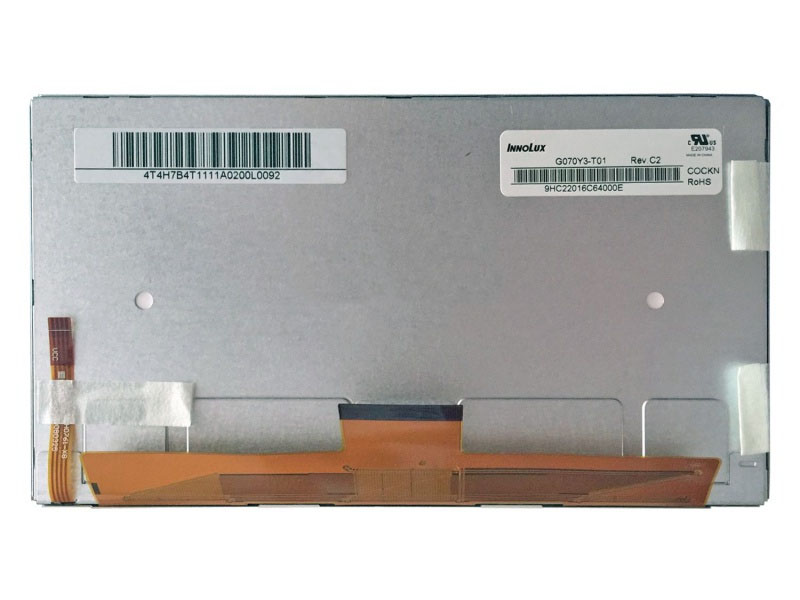
This article delves into a comprehensive analysis of the Innolux G070Y3-T01 display panel. We will move beyond basic datasheet specifications to explore its technical architecture, key performance characteristics, and the practical considerations for integration. Our goal is to provide hardware designers, product managers, and procurement specialists with a deep, actionable understanding of this component—examining where it excels, what challenges it may present, and how it fits into the broader landscape of human-machine interface (HMI) technology. By dissecting its features and potential applications, we aim to illuminate why this particular panel might be the optimal choice for your next embedded project.
Technical Architecture and Core Specifications
The foundation of the G070Y3-T01's performance lies in its underlying technology. It is a 7.0-inch diagonal TFT-LCD (Thin-Film Transistor Liquid Crystal Display) module, utilizing a-Si (amorphous Silicon) technology for the active matrix. This mature and cost-effective technology provides a reliable base for its resolution of 800 (RGB) x 480 pixels, commonly known as WVGA. The panel employs a standard RGB stripe arrangement and typically uses a transmissive display mode, requiring a backlight unit (BLU) for illumination, which is often integrated as part of the module.
Key physical and electrical specifications define its integration parameters. The active area measures precisely 154.08mm x 85.92mm, with an overall outline dictated by the driver board and bezel. A critical interface detail is its use of an LVDS (Low-Voltage Differential Signaling) interface, typically in a 1-channel, 8-bit (24-bit RGB) configuration. This interface is favored for its robustness against noise, making it suitable for environments with potential electromagnetic interference. The module operates on a single power supply, usually +3.3V, simplifying power design for the host system.
Optical Performance and User Experience
Beyond the raw numbers, the optical characteristics of the G070Y3-T01 directly impact the end-user's visual experience. The panel offers a brightness specification typically ranging from 300 to 500 nits (cd/m²), making it suitable for indoor use and some controlled outdoor environments. Its contrast ratio, a measure of the difference between the brightest white and darkest black, is a crucial factor for image depth and legibility. While exact figures vary, this class of panel often delivers a static contrast ratio sufficient for most industrial and consumer applications.
Color performance is defined by its gamut, often covering a standard range like 50-60% of the NTSC color space. This ensures decent color reproduction for interfaces, graphics, and video playback without the premium cost associated with wide-gamut displays. The viewing angle is another vital consideration. Utilizing TN (Twisted Nematic) or possibly ADS/IPS-type technology (depending on the specific variant), the panel provides adequate horizontal and vertical viewing angles to ensure the content remains visible from common off-axis positions, which is essential for multi-person viewing or devices with a non-fixed orientation.

Mechanical Design and Integration Considerations
Integrating a display module into a product is a mechanical as well as an electrical challenge. The G070Y3-T01 comes as a complete module, which includes the LCD glass, driver ICs, backlight unit, and often a metal or plastic structural frame. This "drop-in" design significantly reduces engineering complexity. The mechanical drawings provided by Innolux specify critical dimensions: the exact location of mounting holes, the height of the module (including the backlight), and the position of the connector.
The interface connector, usually a pin-type or FPC (Flexible Printed Circuit) connector, is a key integration point. Designers must ensure proper alignment, strain relief, and accessibility for assembly. Furthermore, thermal management must be considered. While the panel itself generates minimal heat, the LED backlight does produce some. Ensuring adequate ventilation or heat sinking around the module, especially in sealed enclosures, is necessary to maintain long-term reliability and prevent brightness degradation or color shift over the product's lifespan.
Typical Applications and Market Positioning
The G070Y3-T01 finds its niche in applications where a balance of size, cost, and performance is paramount. Its 7-inch WVGA format is a sweet spot for numerous embedded systems. Primary application sectors include Industrial Human-Machine Interfaces (HMIs) for factory automation, process control monitors, and test equipment. In these settings, reliability, readability under various lighting conditions, and long-term supply stability are more critical than ultra-high resolution.
Beyond industrial use, this panel is commonly found in point-of-sale (POS) systems, kiosks, in-vehicle infotainment/displays for commercial or auxiliary functions, and home automation control panels. It is also a frequent choice for portable medical devices and various consumer electronics requiring a robust display. Its market positioning is as a workhorse component—not designed for cutting-edge smartphones or high-end televisions, but for dependable, continuous operation in B2B and specialized B2C products where total cost of ownership is a major factor.
Comparative Analysis with Alternative Solutions
Understanding the G070Y3-T01 requires contextualizing it against alternatives. Competing 7-inch modules from manufacturers like AUO, BOE, or Tianma may offer similar core specs but differ in subtle ways. Comparisons might reveal differences in optical bonding options (which reduce glare and improve durability), touch panel integration (resistive vs. capacitive), or specific operating temperature ranges. Some alternatives might push brightness higher for sunlight readability or offer a wider color gamut for graphic-intensive uses, often at a premium.
The choice may also come down to newer versus older panel lines. While the G070Y3-T01 represents a proven design, newer generations might offer slight improvements in power efficiency (via advanced LED backlights) or thinner profiles. However, the incumbent module often benefits from maturity—thoroughly vetted reliability, extensive application notes, and potentially lower cost due to scaled, long-term production. The decision frequently hinges on the project's priority: cutting-edge specs or proven, low-risk integration.
Sourcing, Longevity, and Design-In Support
For product-based companies, the component supply chain is a strategic concern. The G070Y3-T01, as part of Innolux's standard product catalog, is typically available through authorized distributors and display module specialists. However, lead times and minimum order quantities can vary. Engaging with suppliers early to understand inventory levels and forecast requirements is crucial to avoid production delays.
Product longevity and end-of-life (EOL) management are critical for products with multi-year lifecycles. One advantage of choosing a major brand like Innolux for a standard module is the potential for longer manufacturing support compared to obscure panels. Before final design-in, it is prudent to inquire about the product's roadmap. Furthermore, leveraging Innolux's technical resources—such as detailed datasheets, application schematics, and recommended bill of materials for the driver board—can significantly accelerate development and reduce risk during the prototyping and testing phases.
FAQs: Innolux G070Y3-T01 Display Panel
Q1: What is the exact resolution of the G070Y3-T01?A1: It has a WVGA resolution of 800 horizontal by 480 vertical pixels.
Q2: What type of interface does it use?A2: It typically uses a 1-channel LVDS (Low-Voltage Differential Signaling) interface.
Q3: Is a touchscreen included with this display module?A3: No, the G070Y3-T01 is a display-only panel. Touch panels (resistive or capacitive) can be added as a separate component.
Q4: What is the typical brightness level?A4: Brightness commonly ranges from 300 to 500 nits, suitable for indoor use.
Q5: What is the main power supply voltage?A5: It typically operates on a single +3.3V power supply.
Q6: What are its most common applications?A6: It's widely used in industrial HMIs, POS systems, kiosks, in-vehicle displays, and portable devices.
Q7: Who manufactures the G070Y3-T01?A7: It is manufactured by Innolux Corporation, a major Taiwanese display panel maker.
Q8: How does it compare to a modern smartphone display?A8: It has lower resolution, likely narrower viewing angles and color gamut, but is built for durability, long-term reliability, and easier integration into embedded systems.
Q9: Can it be used outdoors?A9: With 300-500 nits, it may be readable in shaded outdoor conditions, but direct sunlight likely requires a higher-brightness (>1000 nits) panel or a ruggedized sunlight-readable version.
Q10: Where can I find technical documentation for this panel?A10: Datasheets and mechanical drawings are available through Innolux's official channels or from authorized distributors and display module suppliers.
Conclusion
The Innolux G070Y3-T01 7-inch LCD display panel exemplifies a mature, optimized solution for a vast array of embedded visual applications. Its value proposition is clear: it offers a reliable combination of adequate resolution, robust LVDS interface, and proven optical performance in a compact form factor. As we have explored, its strengths lie not in being the most advanced panel on the market, but in being a dependable and well-understood component that simplifies the design-in process for engineers.
Selecting this module is a decision weighted towards reliability, cost-effectiveness, and ease of integration over cutting-edge specs. For projects ranging from factory floor interfaces to commercial kiosks, it provides a solid foundation for the human-machine interface. Ultimately, a deep understanding of its technical attributes, mechanical requirements, and market context empowers developers to make an informed choice, ensuring the display becomes a seamless and enduring part of their product's success.





