


















- Industrial display
-
Industrial Products
- DC Servo Drive
- AC Servo Drive
- Industrial board
- Siemens
- Switch Sensor
- Proximity Switch
- Temperature Controller
- Protection Relay
- Fiber Optic Sensor
- Encoder
- Fan
- other
- Heidelberg
- MITSUBISHI
- FANUC
- Siemens adapter
- Fujitsu connector
- Motherboard
- Board
- Contactor
- Circuit
- OMRON
- Relay
- Motor Driver
- power supply
- Cable
- Transformer
- HMI Touch Glass
-
HMI Full Machine Whole unit
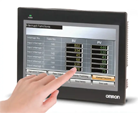
- OMRON HMI Touch Panel
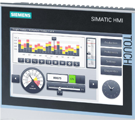
- Siemens HMI Touch Panel
- Mitsubishi HMI Touch Panel
- Allen-Bradley automation HMI Touch Panel
- DELTA HMI Touch Panel
- Proface HMI Touch Panel
- KINCO DELTA HMI Touch Panel
- HITECH HMI Touch Panel
- WEINTEK HMI Touch Panel
- TECVIEW HMI Touch Panel
- WEINVIEW HMI Touch Panel
- PANASONIC HMI Touch Panel
- KYOCERA HMI Touch Panel
- SCHNEIDER HMI Touch Panel
- Module
- lcd inverter
- Membrane Keypad Switch
- Zhiyan Customized Touch Screens
- Frequency Inverter
- Servo Motor
- PLC
In the intricate world of electronic components, the display panel serves as the critical interface between user and device. Among the myriad of options available to engineers and procurement specialists, the G070VTT01.0 stands out as a specific and compelling solution. This 7-inch LCD panel, manufactured by AU Optronics (AUO), a global leader in display technology, is more than just a part number; it represents a carefully engineered balance of performance, reliability, and application-specific design.
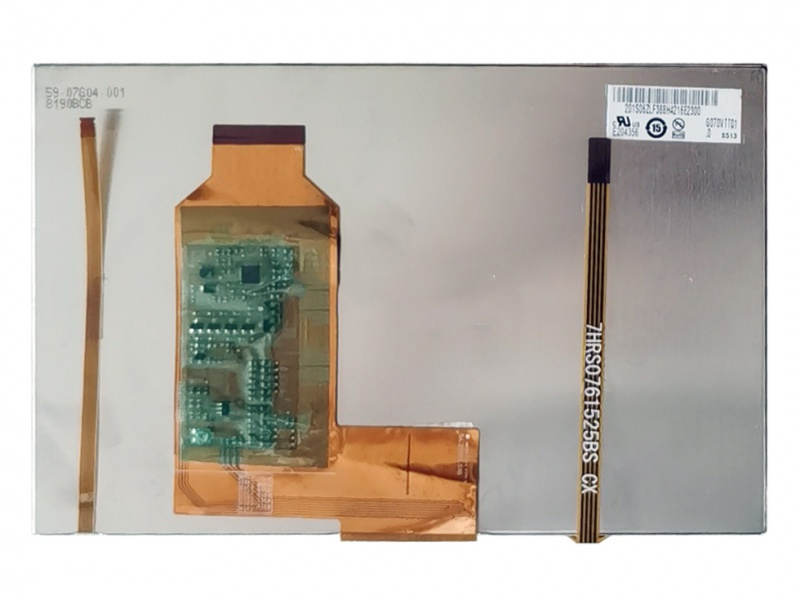
This article delves deep into the G070VTT01.0, moving beyond basic datasheet specifications to explore its defining characteristics, optimal use cases, and the technical considerations vital for successful integration. We will examine its place within AUO's portfolio, decode its interface and power requirements, and provide practical insights for sourcing and implementation. Whether you are developing a portable medical device, an industrial human-machine interface (HMI), or a compact point-of-sale terminal, understanding the nuances of this display module is key to unlocking its full potential in your project.

Decoding the G070VTT01.0: Core Specifications and Features
The AUO G070VTT01.0 is a 7.0-inch diagonal TFT-LCD module built on a-Si (amorphous Silicon) technology. Its native resolution is 800 (RGB) x 480 pixels (WVGA), a format that offers a clear balance between detail and system cost for many embedded applications. The panel employs a transmissive display type, requiring a backlight for visibility, which is typically an integrated LED side-light system offering high brightness and long life.
Key performance metrics include a brightness level suitable for indoor use, a contrast ratio that ensures legibility, and wide viewing angles provided by AUO's proprietary technology. The module features a robust mechanical design, often with a metal frame for structural integrity and electromagnetic interference (EMI) shielding. Understanding these foundational specs is the first step in evaluating its suitability, as they directly impact the visual quality and environmental resilience of the end product.
The Technological Heart: Panel Structure and Visual Performance
Beneath the surface, the G070VTT01.0 incorporates specific technologies that define its visual character. The panel likely utilizes a Twisted Nematic (TN) or Advanced Twisted Nematic (ATN) liquid crystal mode, optimized for fast response times and cost-effectiveness. The surface treatment is crucial; it often includes an anti-glare (AG) coating to diffuse ambient light, reducing reflections and improving readability under various lighting conditions.
The color gamut, typically covering a standard range like 50% NTSC, is calibrated for consistent and accurate color reproduction, which is vital for applications where visual information must be reliably interpreted. The integration of the driver IC and the design of the glass substrate are optimized for the 7-inch form factor, ensuring stable signal transmission and minimizing image artifacts. This internal architecture is what translates electrical signals into the crisp, stable image the panel is known for.
Interface and Integration: Connecting to Your System
A critical aspect of any display module is its interface. The G070VTT01.0 commonly utilizes a Low-Voltage Differential Signaling (LVDS) interface. LVDS is a popular choice in industrial and embedded systems due to its robustness, noise immunity, and ability to transmit high-speed data over longer distances within a device compared to parallel RGB interfaces.
Integration requires careful attention to the pinout definition, power sequencing, and timing controller (TCON) settings as per the datasheet. Designers must ensure their host controller can output an LVDS signal compatible with the panel's specific format (e.g., JEIDA or VESA standards). Furthermore, the power supply design must provide clean, stable voltages for the logic board and the LED backlight driver, as noise here can directly affect display stability and longevity.
Target Applications and Market Niche
The G070VTT01.0 is not designed for consumer televisions or smartphones. Its strengths are leveraged in specialized markets where durability, longevity, and clear communication are paramount. Primary application areas include Industrial Human-Machine Interfaces (HMIs) for factory automation and control systems, Portable Medical Devices such as patient monitors or diagnostic equipment, and Transportation displays for fleet management or rear-seat entertainment.
It also finds use in Point-of-Sale (POS) terminals, kiosks, and thin-client computing devices. In these environments, the 7-inch size offers a compact yet informative viewing area, the WVGA resolution is sufficient for GUI elements and data, and the panel's reliability ensures continuous operation. Identifying this niche helps in sourcing compatible replacement parts or designing new systems with a proven component.
Sourcing, Compatibility, and Alternate Considerations
As a specific model from AUO, the G070VTT01.0 may have a defined lifecycle. For ongoing production or maintenance, understanding the supply chain is essential. It is available through authorized distributors of AUO components and specialized display module suppliers. When sourcing, verify the exact version and revision to avoid compatibility issues.
It is also prudent to investigate potential alternates or compatible replacements, such as models from other manufacturers (like Innolux or Tianma) with similar physical dimensions, resolution, and interface. Key matching parameters include the mounting hole pattern, connector type and location, and interface protocol. Planning for component obsolescence by designing with a "pin-compatible" footprint can save significant requalification effort down the line.
Best Practices for Implementation and Longevity
Successful implementation extends beyond electrical connection. Mechanical integration must account for the panel's tolerance and avoid applying stress to the glass. The use of appropriate gaskets or seals may be necessary for dust or moisture protection in harsh environments. Thermal management is also crucial; while LED backlights generate less heat than CCFLs, ensuring adequate ventilation around the module prevents overheating and premature aging.
From a software perspective, proper initialization of the display controller and optimization of the backlight brightness (often via PWM control) can significantly enhance user experience and power efficiency. Adhering to the recommended operating and storage conditions in the datasheet will maximize the operational life of the G070VTT01.0 in the field, protecting your investment and ensuring consistent performance.
FAQs: G070VTT01.0 LCD Display Panel
Q1: What is the exact screen size of the G070VTT01.0?A: It is a 7.0-inch diagonal TFT-LCD panel, with an active area typically around 152.4mm x 91.44mm.
Q2: What is its native resolution?A: The native resolution is 800 (horizontal) x 480 (vertical) pixels, commonly known as WVGA.
Q3: What type of interface does it use?A: It primarily uses a Low-Voltage Differential Signaling (LVDS) digital interface.
Q4: Who manufactures the G070VTT01.0 panel?A: It is manufactured by AU Optronics (AUO), a major Taiwanese display panel producer.
Q5: Is this a touch screen panel?A: The G070VTT01.0 is a display-only module. Touch functionality (resistive or capacitive) is typically added as a separate overlay.
Q6: What is the typical brightness level?A: Brightness varies, but it is commonly in the range of 300-500 nits/cd/m², suitable for indoor use.
Q7: What are the main applications for this panel?A: Ideal for industrial HMIs, portable medical devices, POS systems, transportation displays, and kiosks.
Q8: How is the backlight powered and controlled?A: The integrated LED backlight is powered by a DC voltage (e.g., 3.3V or 5V) and can often be dimmed via a PWM (Pulse Width Modulation) signal.
Q9: Are there direct replacement alternatives from other brands?A: Yes, several brands offer 7-inch WVGA LVDS panels. Compatibility depends on exact mechanical dimensions, connector pinout, and electrical timing.
Q10: Where can I find the official datasheet?A: The datasheet is available through AUO's official website or through authorized distributors and component suppliers.
Conclusion
The AUO G070VTT01.0 7-inch LCD display panel exemplifies how a well-specified component can become a cornerstone for reliable embedded systems. Its WVGA resolution, robust LVDS interface, and industrial-grade construction make it a versatile choice for developers across critical sectors like healthcare, industrial automation, and commerce. Success with this module hinges on a deep understanding that extends beyond pixels and inches to encompass integration nuances, supply chain awareness, and application-specific environmental considerations.
By treating the display as a core system element—addressing its power, signal, mechanical, and thermal needs with care—engineers can ensure optimal performance and longevity. In a market filled with generic options, the specificity and proven track record of the G070VTT01.0 offer a valuable combination of performance and peace of mind for demanding applications.





