














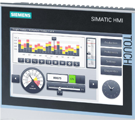





- Industrial display
-
Industrial Products
- DC Servo Drive
- AC Servo Drive
- Industrial board
- Siemens
- Switch Sensor
- Proximity Switch
- Temperature Controller
- Protection Relay
- Fiber Optic Sensor
- Encoder
- Fan
- other
- Heidelberg
- MITSUBISHI
- FANUC
- Siemens adapter
- Fujitsu connector
- Motherboard
- Board
- Contactor
- Circuit
- OMRON
- Relay
- Motor Driver
- power supply
- Cable
- Transformer
- HMI Touch Glass
-
HMI Full Machine Whole unit
- OMRON HMI Touch Panel
- Siemens HMI Touch Panel
- Mitsubishi HMI Touch Panel
- Allen-Bradley automation HMI Touch Panel
- DELTA HMI Touch Panel
- Proface HMI Touch Panel
- KINCO DELTA HMI Touch Panel
- HITECH HMI Touch Panel
- WEINTEK HMI Touch Panel
- TECVIEW HMI Touch Panel
- WEINVIEW HMI Touch Panel
- PANASONIC HMI Touch Panel
- KYOCERA HMI Touch Panel
- SCHNEIDER HMI Touch Panel
- Module
- lcd inverter
- Membrane Keypad Switch
- Zhiyan Customized Touch Screens
- Frequency Inverter
- Servo Motor
- PLC
In the intricate world of electronic components, the display module often serves as the critical interface between a device and its user. For engineers, product designers, and procurement specialists, selecting the right display is a decision that balances technical specifications, reliability, and supply chain stability. This article delves into a specific and vital component: the G060TAA01.1, a 6-inch TFT display module manufactured by AUO (AU Optronics), one of the world's leading panel producers.

Our exploration will move beyond a simple datasheet review. We will dissect the G060TAA01.1's core technological attributes, its ideal application ecosystems, and the tangible benefits it brings to product design. Furthermore, we will address the practical considerations of integration and sourcing, providing a holistic view essential for making an informed component selection. This deep dive aims to equip you with the knowledge to evaluate whether this AUO display is the optimal visual solution for your next-generation device.
Unpacking the G060TAA01.1: Core Specifications and Technology
The AUO G060TAA01.1 is a 6.0-inch diagonal TFT-LCD module featuring a resolution of 480 x 854 pixels (WVGA). This 16:9 aspect ratio is well-suited for modern graphical user interfaces and video content. At its heart lies an a-Si (amorphous Silicon) TFT panel, a mature and cost-effective technology known for its good color performance and reliability. The module typically offers a brightness level ranging from 300 to 400 nits, ensuring adequate visibility in most indoor environments.
A key specification is its interface: the G060TAA01.1 utilizes an RGB parallel interface. This is a direct, high-speed digital connection where the host controller sends pixel data for red, green, and blue sub-pixels simultaneously. This interface provides excellent control and image quality, making it a preferred choice for applications where the main processor has a built-in LCD controller. Understanding this interface is crucial, as it directly dictates the type of driver IC and controller compatibility required for integration.
Target Applications and Market Fit
The technical profile of the G060TAA01.1 positions it perfectly for a range of embedded and industrial applications. Its 6-inch size is a sweet spot for portable and handheld devices that require a clear, readable screen without excessive bulk. Prime application areas include Industrial Human-Machine Interfaces (HMIs), where it can serve as the control and monitoring screen for machinery, test equipment, or automation systems.
Furthermore, it finds a strong fit in portable medical devices, such as patient monitors or diagnostic tools, where reliability and consistent performance are non-negotiable. The consumer space also utilizes this module in devices like advanced home automation controllers, fitness equipment displays, or in-vehicle infotainment systems for auxiliary functions. Its balance of size, resolution, and interface technology makes it a versatile workhorse for mid-range display requirements.
The AUO Advantage: Quality and Supply Chain Considerations
Sourcing a display from AUO, a tier-one panel manufacturer, carries significant advantages beyond the component itself. AUO's production processes adhere to high quality control standards, leading to better consistency in color uniformity, lower defect rates, and longer operational lifetimes compared to panels from lesser-known fabs. This inherent reliability reduces long-term warranty risks for the end product.
From a supply chain perspective, choosing a module like the G060TAA01.1 from a major player like AUO often means better forecasting for long-term availability. While specific end-of-life cycles must always be checked, standard models from large manufacturers typically have longer production lifetimes and clearer roadmaps. This stability is critical for products with development cycles spanning years or those intended for the market for an extended period, mitigating the risk of costly mid-design re-spins due to component obsolescence.
Integration Essentials: Interface and Power Design
Successfully integrating the G060TAA01.1 requires careful attention to its electrical and physical interface. The RGB parallel interface, while powerful, demands a sufficient number of GPIOs (General-Purpose Input/Output pins) from the host microcontroller or application processor. Designers must ensure their main IC has a compatible LCD controller or be prepared to incorporate an external bridge controller.
Power design is another critical area. The module requires multiple voltage rails (e.g., for logic, analog, and backlight LED driver). A stable and clean power supply, especially for the analog section, is paramount to avoid display noise or flickering. Furthermore, the LED backlight driver circuit must be correctly designed to provide the required current for the target brightness while incorporating dimming control if needed. Proper ESD (Electrostatic Discharge) protection on all external connections is also a must for industrial robustness.
Optical Enhancement and Customization Options
The base G060TAA01.1 module can be enhanced with various optical bonding and treatment options to improve performance in specific environments. Optical Bonding is a process where a clear resin is laminated directly between the LCD cell and the cover glass or touch panel. This technique dramatically reduces internal reflection, increases contrast in bright ambient light (sunlight readability), eliminates condensation gaps, and makes the display more mechanically robust.
Other common customizations include the addition of projected capacitive (PCAP) or resistive touchscreen layers, the application of anti-glare (AG) or anti-reflective (AR) coatings on the surface, and the selection of different polarizer modes (e.g., transmissive for backlit use, or transflective for excellent sunlight readability with lower power backlight). While these add cost, they can be essential for achieving the desired user experience in challenging lighting conditions or for interactive applications.
Sourcing and Lifecycle Management Strategy
For procurement teams, sourcing the G060TAA01.1 involves navigating a landscape of authorized distributors, specialized display module integrators, and potentially the factory direct channel. Working with authorized distributors guarantees genuine, factory-fresh components but may involve higher minimum order quantities. Specialized display integrators can provide tremendous value by supplying the module pre-customized (e.g., with touchscreen, bonding, and a tailored controller board), simplifying the engineering burden.
A proactive lifecycle management strategy is essential. Even with AUO's stability, it is prudent to inquire about the product's current status (active, not recommended for new design, or obsolete) at the project's outset. For products expected to have a very long manufacturing lifespan, discussing potential second-source options or last-time-buy forecasts with your supplier early can prevent catastrophic production halts down the line. Building a relationship with a knowledgeable supplier is as important as selecting the display itself.
Frequently Asked Questions (FAQs)
Q1: What is the exact resolution and aspect ratio of the G060TAA01.1?A1: It has a resolution of 480 (RGB) x 854 pixels, which is WVGA in a 16:9 widescreen aspect ratio.
Q2: What type of interface does this display use?A2: It uses a parallel RGB digital interface, which requires a host controller with a compatible TTL LCD controller.
Q3: Is this display suitable for outdoor use?A3: The standard module has moderate brightness. For good outdoor readability, optical bonding and a high-brightness version (if available) or a strong backlight design are recommended.
Q4: Can I get this display with a touchscreen?A4: Yes, it is commonly available with integrated resistive or projected capacitive (PCAP) touch panels from module integrators.
Q5: What is the typical operating temperature range?A5: The standard operating temperature range is usually from -20°C to +70°C, but specific grades may vary. Always check the datasheet.
Q6: Who manufactures the G060TAA01.1?A6: It is manufactured by AU Optronics (AUO), a leading global manufacturer of TFT-LCD panels.
Q7: Is the driver IC included on the module?A7: Yes, TFT modules like this one have the necessary column and row driver ICs mounted on the glass (COG) or the PCB.
Q8: What is the main advantage of choosing an AUO display?A8: The primary advantages are high manufacturing quality, reliability, consistent performance, and generally more stable long-term supply.
Q9: How do I control the backlight brightness?A9: The LED backlight is typically driven by a constant current. Brightness is controlled via PWM (Pulse Width Modulation) dimming on the enable line or through an adjustable current source.
Q10: Where can I buy the G060TAA01.1?A10: It can be sourced through AUO's authorized distributors, electronic component distributors, or specialized display module suppliers who may offer value-added services.
Conclusion
The AUO G060TAA01.1 6-inch TFT display emerges as a compelling solution for a wide spectrum of embedded and industrial applications. Its balanced specifications—a 16:9 WVGA resolution, reliable a-Si technology, and a direct RGB interface—offer a solid foundation for devices requiring a clear, responsive visual interface. The value of selecting a module from a tier-one manufacturer like AUO extends into the realms of quality assurance and supply chain predictability, factors that are crucial for commercial product success.
Ultimately, leveraging this component effectively requires a holistic approach. Engineers must thoughtfully address integration challenges, particularly around interface matching and power design, while product managers should consider optical enhancements and a robust sourcing strategy. By understanding both the technical attributes and the broader ecosystem surrounding the G060TAA01.1, development teams can confidently harness its capabilities to create robust, user-friendly products that stand the test of time.





