














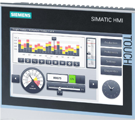





- Industrial display
-
Industrial Products
- DC Servo Drive
- AC Servo Drive
- Industrial board
- Siemens
- Switch Sensor
- Proximity Switch
- Temperature Controller
- Protection Relay
- Fiber Optic Sensor
- Encoder
- Fan
- other
- Heidelberg
- MITSUBISHI
- FANUC
- Siemens adapter
- Fujitsu connector
- Motherboard
- Board
- Contactor
- Circuit
- OMRON
- Relay
- Motor Driver
- power supply
- Cable
- Transformer
- HMI Touch Glass
-
HMI Full Machine Whole unit
- OMRON HMI Touch Panel
- Siemens HMI Touch Panel
- Mitsubishi HMI Touch Panel
- Allen-Bradley automation HMI Touch Panel
- DELTA HMI Touch Panel
- Proface HMI Touch Panel
- KINCO DELTA HMI Touch Panel
- HITECH HMI Touch Panel
- WEINTEK HMI Touch Panel
- TECVIEW HMI Touch Panel
- WEINVIEW HMI Touch Panel
- PANASONIC HMI Touch Panel
- KYOCERA HMI Touch Panel
- SCHNEIDER HMI Touch Panel
- Module
- lcd inverter
- Membrane Keypad Switch
- Zhiyan Customized Touch Screens
- Frequency Inverter
- Servo Motor
- PLC
In the intricate ecosystem of display technologies, specific panel models become the unsung heroes powering specialized applications. The G057VN01 V2, a 5.7-inch LCD panel manufactured by AU Optronics (AUO), stands as a prime example. This isn't a component destined for mainstream consumer televisions or smartphones; rather, it is a precision-engineered solution designed for environments where reliability, readability, and ruggedness are non-negotiable. As a V2 revision, it represents an evolution, hinting at refinements over its predecessor aimed at enhancing performance or broadening compatibility.

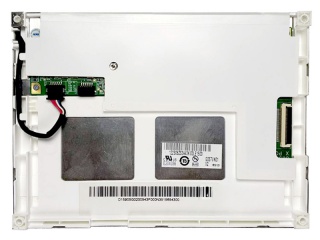
This article delves into a comprehensive analysis of the AUO G057VN01 V2 display. We will move beyond basic datasheet specifications to explore its defining technological characteristics, the specific market niches it serves, and the tangible benefits it offers to engineers and product designers. From its core architecture to its integration challenges and future relevance, we aim to provide a detailed resource for anyone considering this panel for an industrial, medical, or instrumentation application, understanding why this specific model continues to be a relevant choice in a rapidly advancing technological landscape.
Core Architecture and Technical Specifications
At its heart, the G057VN01 V2 is a TFT-LCD (Thin-Film Transistor Liquid Crystal Display) module utilizing a-Si (amorphous Silicon) technology. This mature and cost-effective process provides a solid foundation for its performance profile. The panel boasts a native resolution of 640 x 480 pixels (VGA), which translates to a pixel density of approximately 141 PPI on its 5.7-inch diagonal active area. This resolution is a strategic choice, offering a clear balance between sharpness for alphanumeric and graphic data and lower system processing overhead compared to higher-definition panels.
Key specifications define its operational envelope. It typically features a high contrast ratio, crucial for distinguishing fine details, and a wide operating temperature range, often from -20°C to 70°C, underscoring its industrial pedigree. The backlighting system, often utilizing LED technology for longevity and stability, is engineered for consistent luminance. The interface is a critical component, commonly supporting parallel RGB or LVDS signaling, which dictates how the module communicates with the host controller board. Understanding these fundamental specs is the first step in evaluating its fit for a project.
Defining Features and Performance Characteristics
What truly differentiates the G057VN01 V2 in the marketplace are its performance characteristics tailored for challenging conditions. A paramount feature is its high brightness capability, frequently reaching 400 nits or more. This ensures excellent sunlight readability, a vital requirement for outdoor industrial equipment, transportation systems, or portable field devices used in various lighting environments. Coupled with this is its wide viewing angle, often employing IPS (In-Plane Switching) or similar technology, which allows for consistent color and contrast when viewed from off-axis angles.
Furthermore, the panel is built for durability. It often incorporates a robust construction with a strong metal frame and hardened surface glass to resist vibration, shock, and potential abrasion. Its optical bonding option, where the touchscreen (if present) is laminated directly to the LCD cell, reduces internal reflection, enhances contrast, and prevents condensation, thereby improving performance in humid or variable-temperature environments. These features collectively move it from a simple display to a reliable human-machine interface (HMI) component.

Primary Applications and Market Niches
The technical profile of the G057VN01 V2 directly dictates its application domains. It is predominantly found in Industrial Automation and Control systems, serving as the display for PLC (Programmable Logic Controller) interfaces, CNC machine operator panels, and factory floor monitoring stations. Its ruggedness and reliability are essential in these settings. Another critical sector is Medical and Healthcare, where it might be integrated into portable diagnostic devices, patient monitoring equipment, or laboratory instruments, benefiting from its clear readability and stable performance.
Additional key niches include Transportation and Fleet Management (e.g., in-vehicle displays for logistics, bus information systems, and marine navigation), Test and Measurement Equipment (oscilloscopes, spectrum analyzers), and Point-of-Sale (POS) and Kiosk systems. In each case, the panel is valued not for cutting-edge consumer features like ultra-high refresh rates, but for its unwavering consistency, long-term availability, and ability to perform under stress—attributes that define the industrial and professional display segment.
Integration Considerations and Design Challenges
Successfully integrating the G057VN01 V2 into a product requires careful planning. The choice of interface (e.g., parallel RGB vs. LVDS) must align with the host processor's capabilities, potentially necessitating a specific display controller or bridge IC. Designers must account for the power sequencing requirements of the panel and its backlight inverter/LED driver circuit to prevent damage and ensure stable operation. The mechanical design must accommodate the module's exact footprint, mounting holes, and connector placement, which are typically defined by an industry-standard form factor.
Thermal management is another crucial consideration, especially when operating at temperature extremes or in enclosed spaces. Ensuring adequate heat dissipation from the backlight and drive electronics prolongs lifespan. Furthermore, if a touch interface (resistive or capacitive) is required, it must be sourced as a compatible overlay and its controller integrated into the system. Navigating these challenges effectively is key to leveraging the panel's inherent reliability in a final product.
The V2 Revision: Evolution and Improvements
The "V2" designation signifies a revision from an original G057VN01 model. While specific change logs are proprietary to AUO, such revisions typically address field feedback and aim to enhance the product. Improvements in a V2 version may include extended temperature range for broader environmental compatibility, power consumption optimization for better energy efficiency, or enhanced electromagnetic compatibility (EMC) performance to meet stricter regulatory standards.
It might also involve component longevity upgrades, such as using LEDs with a longer rated life for the backlight, or mechanical refinements for easier integration. For a designer, selecting the V2 revision often means benefiting from these incremental but important improvements that increase system robustness and potentially reduce total cost of ownership through higher reliability and lower failure rates in the field.
Future Outlook and Legacy Compatibility
In an era dominated by OLED and high-resolution consumer displays, the continued relevance of panels like the G057VN01 V2 lies in their specialized value proposition. The market for industrial and embedded displays prioritizes long-term product life cycles, often spanning 7-10 years or more. Manufacturers like AUO support these models with extended availability, which is critical for industries that cannot frequently redesign end-products due to component obsolescence.
Looking forward, the principles embodied by this panel—ruggedness, high brightness, wide temperature operation—will remain essential. Its eventual successor will likely integrate newer interface standards like MIPI-DSI while maintaining the same form factor and rugged characteristics for drop-in upgrades. Thus, the G057VN01 V2 represents a stable node in technological evolution, ensuring that critical systems across various industries have a dependable visual interface for years to come.
FAQs: G057VN01 V2 AUO 5.7" LCD
1. What is the resolution of the G057VN01 V2 display?It has a VGA resolution of 640 x 480 pixels.
2. Who manufactures this LCD panel?It is manufactured by AU Optronics (AUO), a leading display panel producer.
3. What does the "V2" in the model name indicate?It indicates a revised version of the original panel, typically featuring improvements in performance, temperature range, or reliability.
4. What are the typical applications for this display?Common applications include industrial HMI, medical devices, test equipment, transportation systems, and POS/kiosks.
5. What type of interface does it use?It commonly uses parallel RGB or LVDS (Low-Voltage Differential Signaling) interfaces.
6. Is it suitable for outdoor use?Yes, its high brightness (often 400+ nits) and wide operating temperature range make it suitable for many outdoor and harsh environment applications.
7. Does it have a touchscreen?The G057VN01 V2 is primarily an LCD module. Touch functionality (resistive or capacitive) is typically added as a separate overlay.
8. What is its operating temperature range?The standard range is typically from -20°C to 70°C, confirming its industrial-grade design.
9. Why choose this over a cheaper consumer-grade panel?For reliability, long-term availability, wide temperature operation, high brightness, and rugged construction—all critical for professional/industrial use.
10. Where can I find the datasheet and buy this panel?Datasheets are available from AUO or authorized distributors. Purchasing is done through specialized electronic component distributors or display module integrators.
Conclusion
The AUO G057VN01 V2 5.7-inch LCD panel exemplifies the engineering priorities of the industrial and professional display sector. It is not defined by the pursuit of the highest pixel count, but by a steadfast commitment to reliability, readability under diverse conditions, and mechanical robustness. Its specifications—from VGA resolution and high brightness to a wide operating temperature range—are carefully curated to meet the exacting demands of automation, medical, transportation, and instrumentation applications.
For product designers and engineers, understanding this panel's architecture, integration requirements, and target niches is crucial. It represents a proven solution where failure is not an option. As display technology continues to advance, the core values embodied by the G057VN01 V2 will persist, ensuring its legacy and that of similar panels in enabling the durable and dependable human-machine interfaces that modern industry relies upon.





