












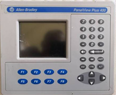
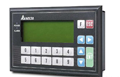

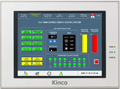
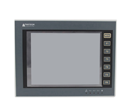




- Industrial display
-
Industrial Products
- DC Servo Drive
- AC Servo Drive
- Industrial board
- Siemens
- Switch Sensor
- Proximity Switch
- Temperature Controller
- Protection Relay
- Fiber Optic Sensor
- Encoder
- Fan
- other
- Heidelberg
- MITSUBISHI
- FANUC
- Siemens adapter
- Fujitsu connector
- Motherboard
- Board
- Contactor
- Circuit
- OMRON
- Relay
- Motor Driver
- power supply
- Cable
- Transformer
- HMI Touch Glass
-
HMI Full Machine Whole unit
- OMRON HMI Touch Panel
- Siemens HMI Touch Panel
- Mitsubishi HMI Touch Panel
- Allen-Bradley automation HMI Touch Panel
- DELTA HMI Touch Panel
- Proface HMI Touch Panel
- KINCO DELTA HMI Touch Panel
- HITECH HMI Touch Panel
- WEINTEK HMI Touch Panel
- TECVIEW HMI Touch Panel
- WEINVIEW HMI Touch Panel
- PANASONIC HMI Touch Panel
- KYOCERA HMI Touch Panel
- SCHNEIDER HMI Touch Panel
- Module
- lcd inverter
- Membrane Keypad Switch
- Zhiyan Customized Touch Screens
- Frequency Inverter
- Servo Motor
- PLC
In the demanding world of specialized display technology, where reliability under extreme conditions is non-negotiable, the EL320.240.36HB 5.7" LCD panel emerges as a critical component. Designed explicitly for integration with Lumineq's unique electroluminescent (EL) display technology, this panel represents a sophisticated fusion of traditional LCD functionality with high-performance backlighting solutions. This article delves deep into the technical specifications, operational advantages, and ideal application ecosystems of this specialized display module.
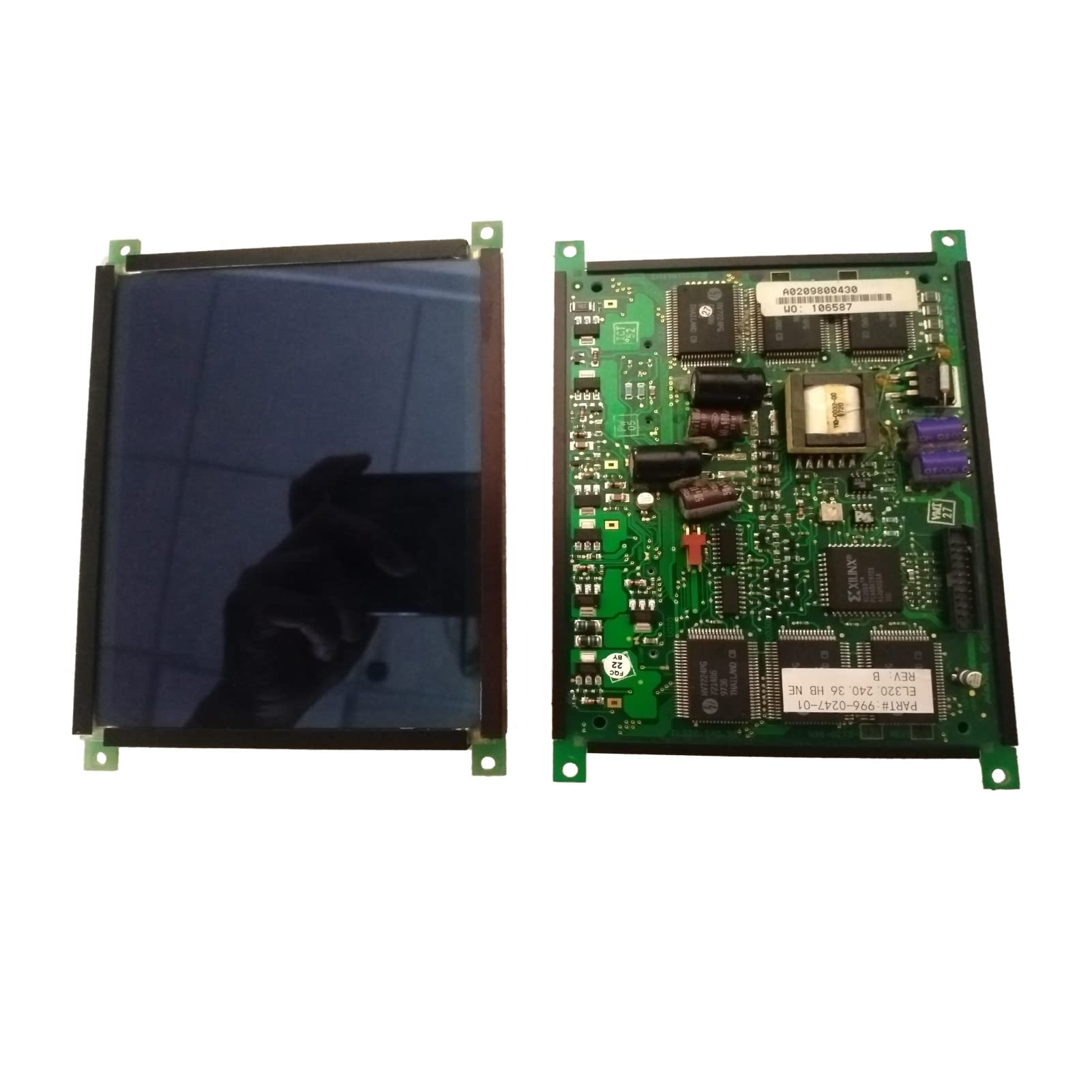
Beyond a simple part number, the EL320.240.36HB signifies a tailored solution for industries where display failure is not an option. We will explore its construction, the synergy between its LCD matrix and the Lumineq backlight, and the specific environmental challenges it is engineered to overcome. For engineers, procurement specialists, and product designers working in aviation, military, medical, or industrial instrumentation, understanding the capabilities of this panel is key to developing robust and dependable human-machine interfaces.
Decoding the Specification: Anatomy of the EL320.240.36HB
The model name EL320.240.36HB is a concise data sheet in itself. It denotes a display with a resolution of 320 x 240 pixels (QVGA) on a 5.7-inch diagonal, providing a clear and functional viewing area for data-intensive applications. The "36HB" is crucial, indicating the integration of a Lumineq Thin Film Electroluminescent (TFEL) backlight unit. Unlike conventional LED or CCFL backlights, this TFEL panel is a solid-state, glass-based component that emits light uniformly across its surface when an alternating current is applied.
This construction is fundamental to its performance. The LCD layer is responsible for forming the alphanumeric characters, symbols, and graphics, while the Lumineq backlight provides the illumination. The separation of these functions allows each technology to be optimized independently for maximum reliability and environmental resistance, setting the stage for its exceptional durability profile.
The Lumineq TFEL Advantage: Unmatched Durability and Performance
The core differentiator of this panel lies in its Lumineq backlight. TFEL technology is inherently rugged. It contains no filaments, delicate gases, or organic materials that degrade over time. The solid-state construction makes it incredibly resistant to shock, vibration, and extreme pressure variations. It operates consistently across a breathtakingly wide temperature range, from deep cold to intense heat, where traditional backlights would falter or fail.
Furthermore, TFEL backlights offer perfect uniformity with no hotspots, ensuring every pixel is evenly illuminated—a critical factor in readability. They are also completely free of electromagnetic interference (EMI), making them ideal for sensitive electronic environments. This combination of traits translates to a mean time between failures (MTBF) that far exceeds that of standard LCD modules, providing a lifecycle measured in decades rather than years.
Optimal Application Environments: Where This Panel Excels
The technical virtues of the EL320.240.36HB direct it toward mission-critical and harsh-environment applications. In aviation and aerospace, it is found in cockpit displays, flight data readers, and ground support equipment, where readability in direct sunlight and operation at high altitudes are paramount. The military and defense sector utilizes it in vehicle control units, portable command systems, and naval instrumentation, relying on its shock resistance and wide temperature tolerance.
Medical device manufacturers, especially for life-support and diagnostic equipment used in ambulances or field hospitals, value its reliability and consistent performance. Similarly, industrial automation and process control interfaces employ this panel in factory floors, oil rigs, and utility substations, where dust, moisture, and constant vibration are everyday challenges.
Integration Considerations and Design Implications
Integrating the EL320.240.36HB requires an understanding of its electrical and physical interface. Designers must account for the specific drive electronics needed for both the LCD and the TFEL backlight, which typically requires an inverter to provide the high-frequency AC voltage. The panel's mechanical footprint, including connector type and mounting holes, must be precisely accommodated in the product housing.
Optical bonding is a highly recommended design practice. This process involves filling the air gap between the LCD and the front cover glass with a clear resin. It eliminates internal reflection, significantly improves sunlight readability, enhances mechanical strength, and prevents condensation, further boosting the module's environmental sealing and durability for the most severe use cases.
Comparative Analysis: TFEL vs. LED and Other Backlight Technologies
When compared to standard LED backlights, the Lumineq TFEL solution is not about peak brightness but about consistency, longevity, and environmental robustness. LEDs can achieve higher nits but may suffer from uneven lighting, thermal management issues at extremes, and a shorter operational life. OLED displays, while offering excellent contrast, contain organic materials that degrade with exposure to UV light and oxygen, limiting their lifespan and stability in harsh conditions.
The TFEL backlight's value proposition is clear: it sacrifices the highest possible brightness for unparalleled stability and endurance. For applications where the display must perform perfectly at -40°C as at +85°C, and must do so for tens of thousands of hours without dimming or failure, TFEL is the superior, often the only viable, choice.
Lifecycle and Sourcing: A Long-Term Investment
Selecting the EL320.240.36HB is a strategic decision focused on total cost of ownership and product longevity. Its extended MTBF reduces maintenance costs and downtime risks. For manufacturers of long-lifecycle products (e.g., aircraft, industrial machinery), the availability of a stable, long-supported display component is critical to avoid costly redesigns.
Procurement should be directed through authorized distributors or directly from the manufacturer. Given its specialized nature, lead times may be longer than for commercial-grade panels. Engaging with technical sales support early in the design phase is essential to ensure proper integration and to secure a reliable supply chain for the product's entire production and service life.
FAQs: EL320.240.36HB 5.7" LCD Panel for Lumineq
Q1: What does "36HB" stand for in the part number?A: It signifies the integrated Lumineq Thin Film Electroluminescent (TFEL) backlight unit.
Q2: What is the primary advantage of a Lumineq TFEL backlight?A: Exceptional durability, wide operating temperature range, perfect uniformity, and very long lifespan.
Q3: What is the resolution and size of this display?A: It is a 5.7-inch diagonal panel with a QVGA resolution of 320 x 240 pixels.
Q4: Can this display be used in sunlight-readable applications?A: Yes, especially when combined with optical bonding and anti-reflective treatments, it performs well in high-ambient light.
Q5: What are typical operating and storage temperature ranges?A: TFEL backlights typically operate from -40°C to +85°C and can withstand even wider storage temperatures.
Q6: Is this display resistant to shock and vibration?A: Yes, its solid-state, glass-based construction provides very high resistance to mechanical stress.
Q7: What industries commonly use this panel?A: Aviation, military/defense, medical, industrial automation, and transportation.
Q8: What is optical bonding and why is it recommended?A: It fills the air gap with resin to improve readability, strength, and environmental sealing. Highly recommended for harsh conditions.
Q9: How does the lifespan compare to an LED-backlit LCD?A: The TFEL backlight has a significantly longer lifespan, often exceeding 50,000 hours with minimal degradation.
Q10: Where can I source this display module?A: Through authorized distributors or directly from the display manufacturer or Lumineq's sales network.
Conclusion
The EL320.240.36HB 5.7" LCD panel is far more than a simple display; it is a purpose-built reliability engine for critical interfaces. Its integration of a robust Lumineq TFEL backlight transforms a standard QVGA LCD into a component capable of surviving and performing where others cannot. The choice to specify this panel is a calculated investment in product integrity, reducing long-term failure risk and total cost of ownership.
For engineers confronting the challenges of extreme environments, this module offers a proven, high-assurance solution. It underscores a fundamental principle in specialized design: selecting components whose performance envelope exceeds the application's demands is the cornerstone of creating truly dependable and enduring technology. In the landscape of harsh-environment displays, the EL320.240.36HB stands as a benchmark for durability and consistent performance.





