


















- Industrial display
-
Industrial Products
- DC Servo Drive
- AC Servo Drive
- Industrial board
- Siemens
- Switch Sensor
- Proximity Switch
- Temperature Controller
- Protection Relay
- Fiber Optic Sensor
- Encoder
- Fan
- other
- Heidelberg
- MITSUBISHI
- FANUC
- Siemens adapter
- Fujitsu connector
- Motherboard
- Board
- Contactor
- Circuit
- OMRON
- Relay
- Motor Driver
- power supply
- Cable
- Transformer
- HMI Touch Glass
-
HMI Full Machine Whole unit
- OMRON HMI Touch Panel
- Siemens HMI Touch Panel
- Mitsubishi HMI Touch Panel
- Allen-Bradley automation HMI Touch Panel
- DELTA HMI Touch Panel
- Proface HMI Touch Panel
- KINCO DELTA HMI Touch Panel
- HITECH HMI Touch Panel
- WEINTEK HMI Touch Panel
- TECVIEW HMI Touch Panel
- WEINVIEW HMI Touch Panel
- PANASONIC HMI Touch Panel
- KYOCERA HMI Touch Panel
- SCHNEIDER HMI Touch Panel
- Module
- lcd inverter
- Membrane Keypad Switch
- Zhiyan Customized Touch Screens
- Frequency Inverter
- Servo Motor
- PLC
In the intricate world of electronic components, the display often serves as the critical interface between machine and user. Among the myriad of options available to engineers and product developers, the ee101ia-01d from Innolux stands out as a specific and compelling solution. This 10.1-inch TFT (Thin-Film Transistor) LCD module is not merely a generic screen; it is a meticulously engineered component designed for reliability and performance in demanding applications. This article delves deep into the specifications, technological underpinnings, and practical applications of this particular display model.
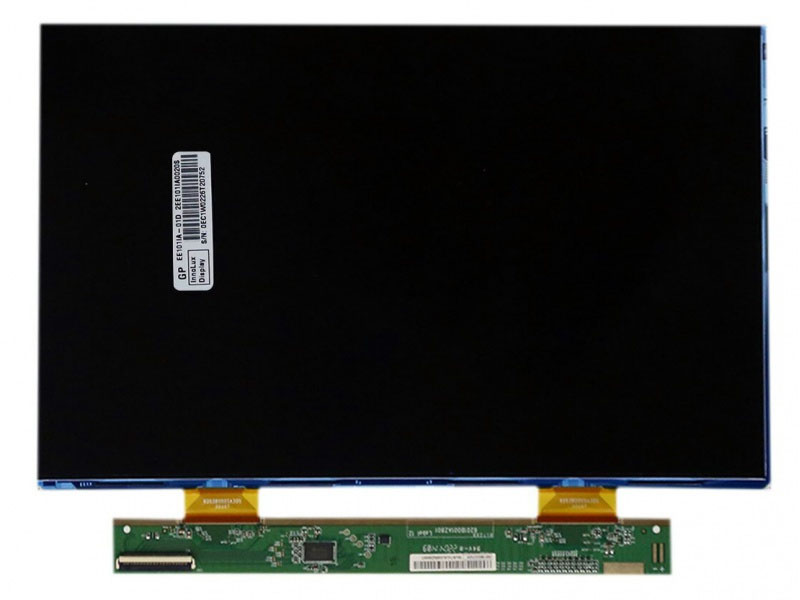
Our exploration will move beyond basic datasheet parameters to uncover what makes the ee101ia-01d a preferred choice in sectors ranging from industrial automation to medical devices and point-of-sale systems. We will analyze its optical performance, mechanical robustness, interface compatibility, and the design considerations it necessitates. By understanding its strengths and optimal use cases, developers can make informed decisions about integrating this display into their next-generation products, ensuring a seamless and durable user experience.
Decoding the Model: Core Specifications of the ee101ia-01d
The Innolux ee101ia-01d is defined by a precise set of specifications that dictate its performance envelope. At its heart is a 10.1-inch diagonal active area with a standard resolution of 1024 x 600 pixels (WSVGA). This aspect ratio and resolution offer a balanced canvas for graphical user interfaces (GUIs) that require more space than a 7-inch display but must maintain compact form factors. The module utilizes a standard RGB interface, making it compatible with a wide array of common LCD controllers and System-on-Chip (SoC) solutions prevalent in embedded design.
Key optical specs include a brightness typically ranging from 300 to 400 nits, ensuring readability in most indoor environments, and a contrast ratio that delivers clear image differentiation. The backlight unit, often employing LED technology, is designed for longevity and consistent illumination. Understanding these foundational specs is crucial, as they form the non-negotiable baseline for any integration project, directly impacting power consumption, compatibility, and the fundamental clarity of the displayed content.
A Closer Look at TFT Technology and Panel Performance
The TFT LCD technology within the ee101ia-01d is what enables its stable and controllable image quality. Unlike passive matrix displays, each pixel is actively controlled by one or more thin-film transistors, drastically reducing crosstalk and enabling faster response times. This is vital for displaying dynamic content without smearing. The panel's viewing angles—typically specified as 80/80/80/80 (Left/Right/Up/Down) at a contrast ratio of 10:1—are a critical performance metric.
For industrial or commercial applications where multiple operators may view the screen from different positions, consistent color and contrast across a wide angle are essential. The panel's surface treatment, often a hard coating or anti-glare layer, mitigates reflections and protects against scratches. This combination of active matrix control and robust optical construction ensures that the display provides reliable visual feedback in challenging operational environments, from factory floors to retail counters.
Mechanical Design and Environmental Durability
The physical construction of the ee101ia-01d is engineered for integration and resilience. The module features a compact outline dimension and a standard mounting configuration, allowing it to be securely fitted into product chassis. The use of a robust metal frame or bezel provides structural integrity, protecting the delicate glass substrate from flexing and shock. This mechanical ruggedness is a primary reason for its popularity in industrial and medical applications.
Furthermore, many variants of this module are designed to operate reliably across a wide temperature range, often from -20°C to 70°C for the operating environment. This tolerance is non-trivial; it ensures the display can boot and function in cold storage facilities, withstand the heat generated within enclosed kiosks, or perform consistently in outdoor-facing applications with climate control. This durability extends the product's lifecycle and reduces failure rates, a key consideration for B2B and embedded solutions.
Interface and Integration: Connecting to Your System
Successful integration of the ee101ia-01d hinges on a clear understanding of its interface. The module typically requires three main connection types: power, video signal, and backlight control. The power supply must be clean and stable, as noise can introduce visual artifacts. The RGB parallel interface, with its standard timing, needs to be correctly matched by the host controller's LCD timing generator to avoid synchronization issues.
For developers, the integration process involves:
Designing a power circuit that meets the module's voltage and current requirements.
Routing the numerous RGB data and control lines with careful attention to signal integrity.
Implementing a backlight driver circuit, which may be a simple resistor-based current limit or a more sophisticated PWM-controlled driver for dimming functionality.
Proper handling of these electrical interfaces is the difference between a flawless display and one plagued with flicker, noise, or premature backlight failure.
Typical Applications and Market Niches
The ee101ia-01d finds its home in applications where reliability, clarity, and a midsized format are paramount. In industrial human-machine interfaces (HMIs), it serves as the primary touchpoint for machine control and monitoring. Its durability makes it suitable for factory automation panels that must resist vibration, dust, and temperature fluctuations. The medical device sector utilizes this display in diagnostic equipment and patient monitoring systems, where consistent visual accuracy is critical.
Other prominent niches include:
Point-of-Sale (POS) Systems: For retail and hospitality, providing a clear interface for transactions.
Transportation and Fleet Management: In vehicle-mounted terminals for logistics and navigation.
Gaming and Kiosk Systems: Where continuous operation and user interaction are required.
In each case, the display is valued not as a consumer-grade component but as an industrial-grade part that contributes to the overall product's reliability and professional perception.
Design Considerations and Sourcing Strategy
When designing the ee101ia-01d into a product, engineers must account for several factors beyond the electrical connection. Thermal management is crucial, as heat from the backlight and surrounding components can affect performance and longevity; adequate ventilation or heat sinking should be considered. The supply chain for such specific industrial components requires a strategic approach. While Innolux is the original manufacturer, the module is often distributed through authorized distributors or sold as part of a kit with a compatible controller board.
It is advisable to:
Secure samples for thorough testing in the actual product environment.
Engage with reputable suppliers who can provide technical support and guarantee authentic components.
Plan for potential long-term availability (LTA) issues by understanding the product's lifecycle status and identifying potential alternative modules early in the design phase.
A proactive design and sourcing strategy mitigates risk and ensures a smooth production rollout.
FAQs: Innolux ee101ia-01d 10.1-inch TFT Screen
Q1: What is the resolution of the ee101ia-01d?A1: It has a WSVGA resolution of 1024 x 600 pixels.
Q2: What type of interface does this display use?A2: It typically uses a standard parallel RGB interface.
Q3: Is this a touch screen module?A3: The ee101ia-01d is primarily an LCD module. Touch functionality (resistive or capacitive) is usually added as a separate overlay.
Q4: What is the typical brightness?A4: Brightness commonly ranges from 300 to 400 nits.
Q5: What are the operating temperature limits?A5: It is designed to operate within a wide range, typically from -20°C to 70°C.
Q6: What is the main application for this screen?A6: It's widely used in industrial HMIs, medical devices, POS systems, and kiosks.
Q7: Does it include a backlight driver?A7: The module includes the backlight (LEDs), but the driver circuit must be designed separately by the integrator.
Q8: What is the power supply voltage?A8: It commonly requires a 3.3V or 5.0V supply for logic and a higher voltage (e.g., 12V-24V) for the LED backlight. Always check the specific datasheet.
Q9: How do I mount it into my product?A9: It features mounting holes on a metal frame for secure mechanical fixation into a chassis.
Q10: Where can I buy the ee101ia-01d?A10: Through authorized electronic component distributors or specialized display module suppliers. Always verify the source for authenticity.
Conclusion
The Innolux ee101ia-01d 10.1-inch TFT screen exemplifies the kind of specialized component that powers professional and industrial equipment. Its value lies not in flashy consumer features but in its consistent performance, robust construction, and adaptability to challenging environments. From its core TFT technology and optical specs to its mechanical design and integration requirements, every aspect is tailored for embedded applications where failure is not an option.
For product developers and engineers, a thorough understanding of this module's characteristics enables informed design choices, leading to more reliable and successful end products. By treating the display as a critical system component—with careful attention to electrical, mechanical, and thermal integration—teams can leverage the ee101ia-01d to create interfaces that are not only functional but also durable enough to withstand the rigors of daily use in demanding sectors. It remains a testament to the importance of choosing the right foundational technology for professional-grade digital interfaces.





