













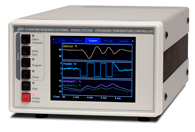
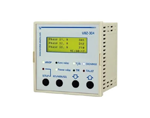

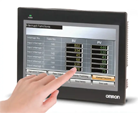





- Industrial display
-
Industrial Products
- DC Servo Drive
- AC Servo Drive
- Industrial board
- Siemens
- Switch Sensor
- Proximity Switch
- Temperature Controller
- Protection Relay
- Fiber Optic Sensor
- Encoder
- Fan
- other
- Heidelberg
- MITSUBISHI
- FANUC
- Siemens adapter
- Fujitsu connector
- Motherboard
- Board
- Contactor
- Circuit
- OMRON
- Relay
- Motor Driver
- power supply
- Cable
- Transformer
- HMI Touch Glass
-
HMI Full Machine Whole unit
- OMRON HMI Touch Panel
- Siemens HMI Touch Panel
- Mitsubishi HMI Touch Panel
- Allen-Bradley automation HMI Touch Panel
- DELTA HMI Touch Panel
- Proface HMI Touch Panel
- KINCO DELTA HMI Touch Panel
- HITECH HMI Touch Panel
- WEINTEK HMI Touch Panel
- TECVIEW HMI Touch Panel
- WEINVIEW HMI Touch Panel
- PANASONIC HMI Touch Panel
- KYOCERA HMI Touch Panel
- SCHNEIDER HMI Touch Panel
- Module
- lcd inverter
- Membrane Keypad Switch
- Zhiyan Customized Touch Screens
- Frequency Inverter
- Servo Motor
- PLC
In the intricate world of electronic components, the display module serves as the critical bridge between a machine's internal processes and the human user. Among the myriad of options available to engineers and product designers, the AA043MA01 Mitsubishi 4.3-inch LCD Display Module stands out as a notable solution for applications demanding reliability, clarity, and compact integration. This module is not merely a screen; it is a sophisticated sub-system combining a high-quality TFT LCD panel, a dedicated controller, and a backlight unit, engineered to deliver consistent performance in demanding environments.

This article provides a comprehensive exploration of the AA043MA01. We will delve beyond basic specifications to understand its core technological architecture, the specific advantages it offers over generic alternatives, and the key considerations for its successful integration. Furthermore, we will examine its ideal application landscapes, the crucial steps for interfacing and driving the module, and finally, contextualize its position in the current market. Whether you are an embedded systems developer, an industrial designer, or a procurement specialist, this deep dive aims to furnish you with the practical knowledge needed to evaluate and utilize this versatile display module effectively.
Core Architecture and Technical Specifications
The Mitsubishi AA043MA01 is built around a robust and well-defined architecture. At its heart lies a 4.3-inch diagonal Thin-Film Transistor (TFT) liquid crystal display panel with a resolution of 480 x 272 pixels. This WVGA format provides a balanced pixel density for sharp text and competent graphics rendering in its size class. The module incorporates a RGB 24-bit parallel interface, which is a standard and widely supported protocol allowing for direct control of pixel color and intensity from a host microcontroller or processor, enabling fast and fluid display updates.
Integral to the module is an onboard LCD controller/driver IC. This controller manages the complex timing sequences required to address each pixel on the TFT panel, significantly reducing the design burden on the host system. The module typically includes a CCFL (Cold Cathode Fluorescent Lamp) backlight system with an inverter, known for its uniform brightness and wide operating temperature range, although LED-backlit variants may also exist. Key electrical specifications such as supply voltage requirements (e.g., 3.3V for logic, 5V/12V for backlight), operating temperature range (often from -20°C to +70°C), and viewing angle characteristics are critical parameters that define its suitability for industrial or outdoor applications.

Distinctive Advantages in Practical Applications
Choosing the AA043MA01 over a commoditized display component offers several tangible benefits. First is assured quality and consistency. As a module from Mitsubishi Electric, a leader in industrial automation, it undergoes rigorous manufacturing and testing processes, ensuring long-term reliability and minimal pixel defects—a non-negotiable factor in medical, automotive, or industrial control systems.
Second, it provides system integration simplicity. The module arrives as a fully assembled and tested unit, with the LCD panel, driver circuits, and backlight optically bonded and mechanically integrated. This eliminates the need for designers to source these elements separately and solve complex interference, alignment, and bonding challenges. Furthermore, the standardized interface and available documentation (including detailed datasheets and application notes) significantly shorten development cycles. The mechanical design, often featuring a sturdy metal frame, also ensures structural integrity in environments subject to vibration or shock.
Key Integration Considerations for Engineers
Successful deployment of the AA043MA01 requires careful attention to several integration aspects. Power supply design is paramount. The separate logic and backlight power rails must be clean and stable, with proper decoupling capacitors placed near the module's connectors to prevent noise from affecting display quality. The high-voltage AC output for the CCFL backlight inverter necessitates careful PCB routing to meet safety and EMI regulations.
Signal integrity for the high-speed parallel RGB interface is another critical concern. Trace lengths on the host PCB should be matched, and impedance control should be considered to prevent color ghosting or synchronization issues. The host processor must have a compatible LCD controller peripheral or require an external graphics controller chip. Additionally, mechanical integration involves planning for the module's bezel dimensions, mounting holes, and connector placement, while the software driver must correctly initialize the display's timing registers according to its specific parameters.
Ideal Application Landscapes and Use Cases
The technical profile of the AA043MA01 makes it exceptionally suited for embedded systems where durability and clarity are prioritized over consumer-grade aesthetics. A primary domain is industrial human-machine interfaces (HMIs) for programmable logic controllers (PLCs), motor drives, and factory automation equipment. Its readability under various lighting conditions and robust construction are ideal for the factory floor.
It is also prevalent in transportation and vehicular systems, such as in-car infotainment displays for commercial vehicles, navigation units for agricultural machinery, or information panels in public transport. The wide operating temperature range supports these applications. Other significant use cases include test and measurement instruments, point-of-sale terminals, and specialized medical monitoring devices where a reliable, medium-resolution display is required to present critical data consistently over many years.
Interfacing and Drive Methodology
Driving the AA043MA01 involves both hardware connectivity and software configuration. Physically, connection is made via one or two high-density FPC (Flexible Printed Circuit) or board-to-board connectors that carry the RGB data lines, horizontal/vertical sync signals, pixel clock, and control pins. The host system's LCD controller must be configured to match the module's native timing: specific values for horizontal back porch, front porch, sync pulse, and active pixels (and their vertical counterparts) must be programmed. These values are precisely defined in the module's datasheet.
On the software side, after initializing the hardware interface, a frame buffer in the host's memory is typically allocated. The LCD controller peripheral then automatically streams data from this buffer to the display. Higher-level software, such as a graphical library or embedded GUI framework (e.g., Qt for Embedded Linux, emWin), can then be used to draw windows, widgets, and text onto this frame buffer, abstracting the low-level hardware details and accelerating application development.
Market Context and Comparative Analysis
In today's market, the AA043MA01 represents a mature and proven technology. It competes and coexists with newer modules featuring LED backlighting (offering lower power consumption and thinner profiles) and higher resolutions. Its value proposition is strongest in applications where its specific combination of size, reliability, and industrial-grade construction is required, and where the cost of qualification and integration for a new component is high.
When comparing alternatives, engineers might evaluate cost versus performance trade-offs. A generic 4.3-inch TFT module may have a lower upfront cost but could involve greater integration risk and longer validation time. Conversely, a newer module with a MIPI DSI interface might offer higher data bandwidth for advanced graphics but requires a more modern processor. The AA043MA01 occupies a strategic middle ground, offering a low-risk, well-documented path for upgrading or designing systems that need a dependable visual interface without pushing the boundaries of pixel density or ultra-low power.
Frequently Asked Questions (FAQs)
Q1: What is the exact resolution of the AA043MA01 display?A: It has a resolution of 480 (horizontal) x 272 (vertical) pixels, commonly referred to as WVGA.
Q2: What type of interface does this module use?A: It uses a standard parallel RGB interface (often 24-bit data width) for pixel data transfer.
Q3: Is the backlight LED or CCFL?A: The standard AA043MA01 typically uses a CCFL backlight with an integrated inverter, known for uniform brightness.
Q4: What is the typical operating voltage?A: The logic interface usually runs on 3.3V, while the backlight inverter may require 5V or 12V input.
Q5: What is the module's operating temperature range?A: It is designed for industrial use, with a typical operating range of -20°C to +70°C.
Q6: Does it include a touch screen?A: The base AA043MA01 module is a display-only unit. Touch panels (resistive or capacitive) can often be added as a separate overlay.
Q7: What kind of controller is needed to drive it?A: You need a host microcontroller or microprocessor with a built-in LCD controller that supports parallel RGB timing, or an external graphics controller chip.
Q8: Where can I find the datasheet and pinout diagram?A: These documents are available through authorized Mitsubishi Electric distributors or component supplier websites.
Q9: Is this module suitable for automotive applications?A: Its wide temperature range makes it suitable, but specific automotive-grade qualification may be required for stringent environments.
Q10: How does it compare to a modern smartphone display?A: It has a much lower resolution and likely uses older backlight tech, but it is far more robust, reliable, and designed for continuous operation in harsh conditions, not for consumer multimedia.
Conclusion
The Mitsubishi AA043MA01 4.3-inch LCD display module exemplifies the enduring value of a well-engineered, purpose-built component in the electronics ecosystem. Its significance lies not in pushing the extremes of pixel count or slimness, but in delivering uncompromising reliability, straightforward integration, and consistent performance in environments where these attributes are paramount. For engineers developing industrial controls, transportation systems, or specialized instrumentation, it offers a proven solution that mitigates project risk and accelerates time-to-market.
As display technology continues to evolve with trends toward higher efficiency and smarter interfaces, modules like the AA043MA01 will continue to serve as the dependable workhorses in critical applications. The decision to select it is ultimately a strategic one, balancing the need for cutting-edge features with the imperative for robustness and longevity. By understanding its architecture, advantages, and integration requirements, design teams can make an informed choice, leveraging this capable module to create products that are not only functional but also built to last.





