















- Industrial display
-
Industrial Products
- DC Servo Drive
- AC Servo Drive
- Industrial board
- Siemens
- Switch Sensor
- Proximity Switch
- Temperature Controller
- Protection Relay
- Fiber Optic Sensor
- Encoder
- Fan
- other
- Heidelberg
- MITSUBISHI
- FANUC
- Siemens adapter
- Fujitsu connector
- Motherboard
- Board
- Contactor
- Circuit
- OMRON
- Relay
- Motor Driver
- power supply
- Cable
- Transformer
- HMI Touch Glass
-
HMI Full Machine Whole unit
- OMRON HMI Touch Panel
- Siemens HMI Touch Panel
- Mitsubishi HMI Touch Panel
- Allen-Bradley automation HMI Touch Panel
- DELTA HMI Touch Panel
- Proface HMI Touch Panel
- KINCO DELTA HMI Touch Panel
- HITECH HMI Touch Panel
- WEINTEK HMI Touch Panel
- TECVIEW HMI Touch Panel
- WEINVIEW HMI Touch Panel
- PANASONIC HMI Touch Panel
- KYOCERA HMI Touch Panel
- SCHNEIDER HMI Touch Panel
- Module
- lcd inverter
- Membrane Keypad Switch
- Zhiyan Customized Touch Screens
- Frequency Inverter
- Servo Motor
- PLC
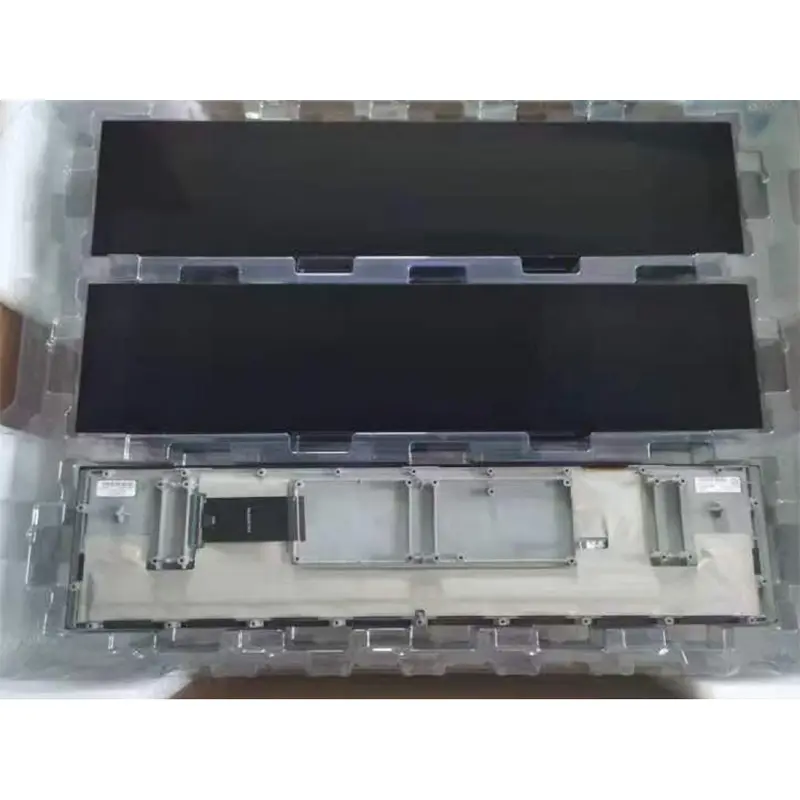
In the realm of high-performance visual interfaces, display specifications often serve as the critical bridge between raw data and human comprehension. Among the myriad of specialized components, the C203RAT01.0 emerges as a distinct and engineered solution for applications demanding an ultra-wide, high-resolution canvas. This article delves into the technical essence and practical implications of this AUO-sourced 20.3-inch LCD module, which boasts a striking native resolution of 3840(RGB)×720.
Moving beyond a simple datasheet review, we will explore the unique design philosophy behind its elongated aspect ratio, decode the significance of its optical and electrical performance, and examine its role within modern digital ecosystems. From industrial control panels to cutting-edge automotive dashboards and bespoke retail displays, the C203RAT01.0 represents a convergence of form and function tailored for specific, demanding environments. Our analysis aims to provide engineers, product designers, and procurement specialists with a comprehensive understanding of where and why this particular display module excels, and what considerations are paramount for its successful integration.
Decoding the Specification: The Anatomy of a 3840×720 Display
The core identity of the C203RAT01.0 is defined by its 3840(RGB)×720 resolution. This translates to an aspect ratio of approximately 16:3, a format that is exceptionally wide and relatively short. The "RGB" notation signifies a standard stripe sub-pixel arrangement, where each pixel comprises three sub-pixels (Red, Green, Blue). With a total of over 2.76 million pixels packed into a 20.3-inch diagonal, the module achieves a pixel density that ensures sharp text and graphics, a necessity for information-rich interfaces.
This resolution is not arbitrary. It is meticulously chosen to match the panoramic layout of modern control systems or instrument clusters, allowing for seamless, multi-window operations without the intrusive bezels of tiled standard displays. The physical dimensions and active area are precisely calibrated to fit into specific industrial or vehicular form factors, making it a drop-in solution for upgrade paths or new designs requiring a wide field of informational view.
The Engineering Core: Panel Technology and Optical Performance
At its heart, the C203RAT01.0 utilizes a-Si TFT (Amorphous Silicon Thin-Film Transistor) LCD technology, a mature and reliable workhorse for industrial applications. Key optical parameters define its usability. The brightness, typically specified in nits (cd/m²), is crucial for readability in high-ambient light conditions like factory floors or sunlit car interiors. Contrast ratio dictates the depth of image perception, while the color gamut defines the range of colors it can reproduce.
Furthermore, viewing angle performance—often based on IPS or similar wide-view technology—is paramount. In a landscape-oriented, ultra-wide display, operators or users may view the screen from sharp horizontal angles. A panel with poor horizontal viewing angles would suffer from color shift and contrast loss at the edges, defeating the purpose of the wide format. The module's backlight system and optical film stack are engineered to balance these parameters for consistent visual performance across its entire expanse.
Interface and Integration: The Electrical Pathway
A display module is not an island; it requires a robust and compatible interface to receive data. The C203RAT01.0 typically employs LVDS (Low-Voltage Differential Signaling) or embedded interfaces like eDP (Embedded DisplayPort). LVDS remains a popular choice for its noise immunity and reliability in electrically noisy environments, which are common in industrial and automotive settings.
The interface choice dictates the required controller board (often called a timing controller or LCD driver board) and the compatibility with the host system's graphic output. Designers must carefully match the pin assignment, voltage levels, and signal timing. Additionally, power consumption and thermal management are critical integration factors. The driver ICs and backlight LEDs generate heat, and proper heat sinking or ventilation must be considered within the end-product's enclosure to ensure long-term reliability and prevent premature dimming.
Target Applications: Where the Ultra-Wide Format Excels
The unique form factor of the C203RAT01.0 carves out its niche in several advanced application sectors. In industrial automation and process control, it serves as a master supervisory screen, displaying production line schematics, real-time metrics, and control buttons across a continuous vista, enhancing operator situational awareness.
In the automotive sector, particularly in electric vehicles and concept dashboards, this module is ideal for panoramic digital instrument clusters or center console displays. It can unify the speedometer, navigation, entertainment, and vehicle status into one cohesive, curved (or multi-segment) screen. Other applications include specialized gaming and simulation setups, high-end point-of-sale systems, and control rooms for security or transportation management, where information segmentation is key.
Critical Design Considerations for Implementation
Successfully integrating this display requires more than just mechanical fitting. Mechanical mounting is the first hurdle, involving precise bezel design, consideration of the module's own metal frame, and protection against vibration, especially in mobile applications. The backlight lifetime, often rated at 50,000 hours or more, is a vital reliability metric.
Environmental robustness is another cornerstone. Many applications require the display to operate across a wide temperature range (e.g., -30°C to 80°C for automotive grades). Designers must also account for potential moisture, dust ingress (specified by IP ratings if applicable), and electromagnetic compatibility (EMC). The optical bonding of the cover glass to the LCD cell is a common technique to reduce internal reflection, improve sunlight readability, and enhance structural integrity.
Comparative Landscape and Future Trajectory
Positioned against standard 16:9 displays, the C203RAT01.0 is a specialized tool. Its value lies in its custom fit for panoramic layouts, eliminating the need for multiple displays and their distracting bezels. Compared to newer OLED technology, a-Si TFT LCDs offer advantages in cost-effectiveness for large sizes, long-term image retention (no burn-in risk), and proven stability.
The future trajectory for such modules points towards higher integration, with driver electronics becoming more compact. There is also a trend towards local dimming LED backlights for better contrast and power efficiency. While flexible or micro-LED displays may represent the distant future, for current demanding applications requiring a reliable, high-resolution, ultra-wide window into digital processes, the C203RAT01.0 and its technological siblings represent a sophisticated and optimized present-day solution.
FAQs: C203RAT01.0 AUO Display Module
1. What is the primary use case for this display?It is designed for ultra-wide format applications like industrial control panels, automotive digital dashboards, and specialized information displays where a seamless, panoramic view is essential.
2. What does 3840(RGB)×720 resolution mean?It indicates a native resolution of 3840 horizontal pixels (with standard RGB sub-pixels) by 720 vertical pixels, resulting in an aspect ratio of roughly 16:3.
3. What type of panel technology is used?It uses a-Si TFT LCD technology, often with wide viewing angle enhancements like IPS or FFS for consistent color and contrast across the wide screen.
4. What is the typical interface for this module?It commonly uses an LVDS (Low-Voltage Differential Signaling) interface for robust data transmission in electrically noisy environments.
5. How bright is this display?Brightness varies by version, but industrial/automotive-grade modules often range from 500 to 1000+ nits to ensure visibility in high-ambient light.
6. Is this display suitable for outdoor use?Not inherently. For outdoor use, it requires a high-brightness version, optical bonding, and a ruggedized enclosure with proper sealing and thermal management.
7. Can it be used as a replacement for a standard monitor?It can, but it requires a specific controller board compatible with its resolution and interface. Its ultra-wide aspect ratio is not ideal for general desktop computing.
8. What is the expected lifespan of the backlight?Typical LED backlight lifespans for such modules are rated at 50,000 hours or more to half-brightness, ensuring long-term operation.
9. Does it support touch functionality?The C203RAT01.0 is a display panel only. Touch functionality (resistive, capacitive) can be added as a separate overlay during system integration.
10. Where can I find driver boards or technical support for integration?Driver boards are available from specialized LCD controller manufacturers. Technical support is typically provided by authorized distributors or directly by AUO for large projects.
Conclusion
The AUO C203RAT01.0 20.3-inch LCD module is far more than a simple screen; it is a purpose-built visual interface engine for the panoramic digital age. Its defining 3840×720 resolution addresses a specific and growing need for seamless, wide-format information display across industrial, automotive, and specialized commercial domains. Through its careful balance of a-Si TFT reliability, robust LVDS interfacing, and stringent optical performance, it provides a dependable canvas for complex human-machine interactions.
Successful deployment, however, hinges on a deep understanding of its integration requirements—from mechanical mounting and thermal design to environmental hardening. For engineers and designers navigating the selection of display technology, the C203RAT01.0 stands as a compelling example of how specialized form factors, driven by application-specific demands, continue to play a vital role in shaping our technological landscape, proving that optimal display solutions are often those engineered with a singular vision in mind.





