













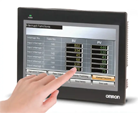
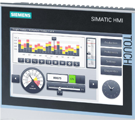





In the demanding world of industrial automation, medical equipment, and human-machine interfaces (HMIs), the display is far more than a simple output device—it is the critical touchpoint between complex systems and human operators. The choice of screen directly impacts reliability, readability, and ultimately, operational success. This article provides an in-depth exploration of the LCD display AA104XD02, a 10.4-inch industrial panel built to excel in challenging environments. We will move beyond basic specifications to examine the engineering philosophy behind its design, its key performance characteristics, and the specific application scenarios where it delivers unparalleled value.


By dissecting the AA104XD02, we aim to offer engineers, system integrators, and procurement specialists a comprehensive resource. Understanding the nuances of this display, from its 1024 x 768 (XGA) resolutionto its robust construction and wide-temperature operation, is essential for making informed decisions in industrial design. This analysis will illuminate why this particular module stands as a benchmark for durability and clarity in its class.

Decoding the Core Specification: XGA in an Industrial Context
The AA104XD02 features a 10.4-inch diagonal screen with an XGA (1024 x 768 pixels) resolution and a classic 4:3 aspect ratio. In an era dominated by widescreens, this format remains highly relevant for industrial and medical applications. The 4:3 ratio is ideal for displaying legacy software interfaces, diagnostic dashboards, and data-rich control panels without wasteful black bars or distorted graphics. The XGA resolution provides a sharp pixel density of approximately 123 PPI, ensuring that text, schematics, and numerical data are rendered with crisp clarity, reducing operator eye strain during prolonged monitoring sessions.
This specification is not arbitrary; it represents a sweet spot between detail and system efficiency. Higher resolutions would demand more from the connected system's graphics processor and potentially increase costs without tangible benefits for most machine control tasks. The AA104XD02's XGA output delivers sufficient detail for complex interfaces while maintaining compatibility with a wide range of industrial PCs and embedded controllers, making it a versatile and practical choice for system integration.
Robustness by Design: Built for Extreme Environments
What truly differentiates an industrial display from a commercial one is its resilience. The AA104XD02 is engineered to withstand conditions that would cripple standard screens. It typically operates across an extended temperature range, often from -30°C to +80°C, ensuring functionality in unheated warehouses or near hot machinery. Its construction resists vibration and shock, protecting the delicate internal components from the constant hum and occasional impacts of factory floors.
Furthermore, the module is designed with long-term reliability as a core tenet. It utilizes high-grade, industrial-temperature rated components, including the backlight LEDs and driving ICs. This focus on component quality mitigates the risk of premature failure, a critical consideration for systems where display downtime can halt entire production lines or critical processes. The robust metal frame and often strengthened glass substrate provide additional physical protection against environmental stressors.
Optical Performance: Clarity Under Pressure
Superior optical performance is non-negotiable. The AA104XD02 boasts a high-brightness backlight, typically reaching 1000 nits or more. This intense luminosity guarantees readability in direct sunlight or under bright factory lighting, eliminating glare and washout. Coupled with a wide viewing angle (often 80/80/80/80 in Left/Right/Up/Down directions), it ensures that visual information remains consistent and accurate from virtually any operator position, which is crucial for collaborative monitoring or installations viewed from an angle.
The panel also offers a high contrast ratio, delivering deep blacks and bright whites. This enhances the legibility of graphs, alerts, and text, allowing for quick and error-free data interpretation. Some variants may also feature optical bonding, a process where the touch panel (if present) is laminated directly to the LCD. This technique reduces internal reflection, improves contrast in bright light, and minimizes condensation, further solidifying its performance in optically challenging environments.
Interface and Integration: The Connectivity Backbone
The utility of a display module hinges on its ability to connect seamlessly with control systems. The AA104XD02 commonly provides dual input interfaces, most notably LVDS (Low-Voltage Differential Signaling). LVDS is the industry-standard digital interface for robust, noise-resistant data transmission over longer cable runs within enclosures. This makes it perfectly suited for industrial applications where electromagnetic interference (EMI) is prevalent.
Alongside LVDS, many versions include legacy VGA (D-Sub) support, offering flexibility for integration with older equipment or as a secondary input source. This dual-interface capability future-proofs investments and simplifies the integration process. Designers must also consider power requirements, mounting options (typically through VESA or custom bezels), and the potential integration of touch technology, which leads naturally to the next critical aspect of its functionality.
Touch Technology Options: Enabling Direct Interaction
For modern HMIs, touch capability is often essential. The AA104XD02 is frequently available with integrated touch solutions, primarily 5-wire or 8-wire resistive touch screens. Resistive technology is favored in industrial settings for several key reasons: it can be activated with a gloved hand, a stylus, or any blunt object—a necessity in environments where operators wear protective gear. It is also highly resistant to surface contaminants like dust, moisture, and minor liquids.
While capacitive touch (projected capacitive) offers multi-touch and a sleeker feel, its sensitivity to gloves and environmental factors makes resistive touch the more reliable and pragmatic choice for the AA104XD02's target applications. The touch panel is integrated to withstand millions of actuations, ensuring the interactive element is as durable as the display itself. This transforms the unit from a passive monitor into an active control interface.
Typical Applications and Industry Verticals
The specific blend of features makes the AA104XD02 a preferred component across several critical industries. In industrial automation and control, it serves as the primary HMI for PLCs, CNC machines, and robotic control stations, where its readability and durability are paramount. The medical equipment field utilizes it in diagnostic devices, patient monitors, and surgical equipment, benefiting from its stable performance, clarity, and ease of sterilization.
Additionally, it finds a home in transportation systems (for onboard information displays and control), kiosks and POS systems in harsh retail or outdoor environments, and specialized test and measurement instruments. In each case, the display is selected not for its novelty, but for its proven ability to perform a critical viewing or interactive function reliably, day in and day out, under conditions that would degrade lesser components.
FAQs: AA104XD02 Industrial Display
Q1: What is the screen size and resolution of the AA104XD02?A1: It is a 10.4-inch LCD with XGA resolution (1024 x 768 pixels) and a 4:3 aspect ratio.
Q2: Why is a 4:3 aspect ratio still used?A2: It's ideal for legacy software, data panels, and control interfaces without distortion, matching many traditional system layouts.
Q3: What makes this an "industrial" display?A3: Its extended operating temperature range, high brightness, vibration/shock resistance, and use of industrial-grade components for reliability.
Q4: How bright is the display?A4: It typically features high brightness, often 1000 nits or more, for readability in brightly lit or outdoor environments.
Q5: What interfaces does it support?A5: Common interfaces include LVDS (for robust digital connection) and often VGA for legacy compatibility.
Q6: Does it come with touch screen capability?A6: Yes, it is frequently available with integrated 5-wire or 8-wire resistive touch, operable with gloves or a stylus.
Q7: What is the operating temperature range?A7: It is designed for wide-temperature operation, typically from -30°C to +80°C.
Q8: What are its primary applications?A8: Industrial HMIs, medical devices, transportation systems, ruggedized kiosks, and test/measurement equipment.
Q9: What is optical bonding, and is it available?A9: Optical bonding laminates the touch layer to the LCD, reducing glare and improving durability. It is an option on many industrial displays like this one.
Q10: Is it suitable for outdoor use?A10: Its high brightness and wide-temperature capability make it suitable for sheltered outdoor or semi-outdoor use, though full sunlight readability and waterproofing may require additional enhancements.
Conclusion
The LCD display AA104XD02 exemplifies the engineering rigor required for mission-critical visual interfaces. It transcends being a mere collection of specs—its 10.4-inch XGA panel, exceptional robustness, high-brightness optics, and reliable touch options form a cohesive solution tailored for harsh environments. This analysis underscores that selecting an industrial display is a strategic decision impacting system longevity, operator efficiency, and total cost of ownership.
For integrators designing the next generation of industrial controls, medical devices, or rugged interactive systems, the AA104XD02 represents a proven, reliable benchmark. Its value lies in its predictable performance under pressure, ensuring that the vital link between machine and user remains clear, responsive, and utterly dependable, day after day.





