


















- Industrial display
-
Industrial Products
- DC Servo Drive
- AC Servo Drive
- Industrial board
- Siemens
- Switch Sensor
- Proximity Switch
- Temperature Controller
- Protection Relay
- Fiber Optic Sensor
- Encoder
- Fan
- other
- Heidelberg
- MITSUBISHI
- FANUC
- Siemens adapter
- Fujitsu connector
- Motherboard
- Board
- Contactor
- Circuit
- OMRON
- Relay
- Motor Driver
- power supply
- Cable
- Transformer
- HMI Touch Glass
-
HMI Full Machine Whole unit
- OMRON HMI Touch Panel
- Siemens HMI Touch Panel
- Mitsubishi HMI Touch Panel
- Allen-Bradley automation HMI Touch Panel
- DELTA HMI Touch Panel
- Proface HMI Touch Panel
- KINCO DELTA HMI Touch Panel
- HITECH HMI Touch Panel
- WEINTEK HMI Touch Panel
- TECVIEW HMI Touch Panel
- WEINVIEW HMI Touch Panel
- PANASONIC HMI Touch Panel
- KYOCERA HMI Touch Panel
- SCHNEIDER HMI Touch Panel
- Module
- lcd inverter
- Membrane Keypad Switch
- Zhiyan Customized Touch Screens
- Frequency Inverter
- Servo Motor
- PLC
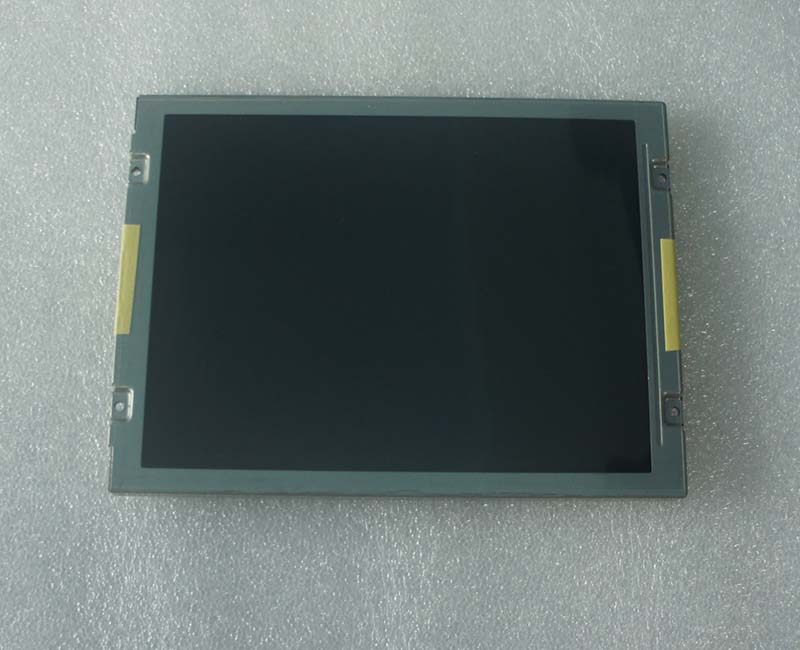
In the intricate world of industrial automation, control, and specialized display applications, the clarity and reliability of the human-machine interface (HMI) are paramount. Among the myriad of components that bring machinery to life, the AA084VJ11 Mitsubishi 8.4-inch LCD display screen stands out as a critical and sophisticated piece of technology. This specific model is not a consumer-grade monitor but a high-performance industrial module designed for integration into demanding environments where failure is not an option.
This article delves deep into the technical essence and practical applications of the AA084VJ11. We will move beyond basic specifications to explore its architectural design, the unique advantages it offers to engineers and system integrators, and the specific challenges it is engineered to overcome. From its role in factory automation to its presence in medical and transportation systems, understanding this display is key to appreciating the silent, visual backbone of modern industrial technology.

Unpacking the AA084VJ11: Core Architecture and Specifications
The Mitsubishi AA084VJ11 is a TFT-LCD (Thin-Film Transistor Liquid Crystal Display) module with an 8.4-inch diagonal screen area, typically offering a resolution of 800 x 600 pixels (SVGA). Its architecture is built around durability and signal integrity. At its heart is an active-matrix TFT panel, known for superior image stability, faster response times, and better color reproduction compared to passive matrix designs. The module integrates a CCFL (Cold Cathode Fluorescent Lamp) backlighting system, known for its bright, even illumination and long operational life, crucial for 24/7 industrial operations.
Key specifications include a high brightness level (often around 400-450 nits) for visibility in well-lit environments, a wide operating temperature range to withstand non-climate-controlled settings, and robust mechanical construction. The interface is typically LVDS (Low-Voltage Differential Signaling), a standard for transmitting high-speed data with minimal noise interference over longer cable runs inside equipment. This foundational design makes it not just a screen, but a resilient visual output engine.
The Industrial Advantage: Durability and Environmental Resilience
What truly distinguishes the AA084VJ11 from commercial displays is its engineered resilience. Industrial environments present a host of challenges: constant vibration from machinery, airborne dust and contaminants, wide temperature fluctuations, and potential exposure to electromagnetic interference (EMI). This Mitsubishi module is designed to perform reliably under these stresses. Its construction often involves reinforced connectors and a rigid metal or high-strength plastic frame to resist physical shock and vibration.
The extended temperature range allows it to function in both chilly factory floors and hot control cabinets. Furthermore, the display's electronics are shielded to mitigate EMI, ensuring that nearby motors or power supplies do not distort the on-screen image. This inherent ruggedness translates directly into reduced downtime, lower maintenance costs, and higher system reliability—critical factors for production lines, utility control systems, and medical diagnostic equipment where continuous operation is essential.
Integration and Interface: The System Integrator's Perspective
For system integrators and OEMs (Original Equipment Manufacturers), the AA084VJ11 is valued as much for its ease of integration as for its performance. The module is supplied as a "bare panel," requiring the integrator to design or source a compatible controller board, power supply, and often a touchscreen overlay. The standardized LVDS interface simplifies connection to a wide range of industrial single-board computers (SBCs) and embedded controllers.
This flexibility allows engineers to tailor the entire display subsystem to the specific application, whether it requires resistive or capacitive touch technology, specific mounting solutions, or custom firmware for startup logos and diagnostics. The long-term availability and stable design lifecycle of such industrial components are also a major consideration, ensuring that a machine built today can be supported and repaired for a decade or more, unlike consumer displays with rapid model turnover.
Key Application Sectors: Where the AA084VJ11 Excels
The application landscape for this display is vast and varied, centered on fields where reliability trumps all. In factory automation, it serves as the primary HMI for PLCs (Programmable Logic Controllers), controlling robotic arms, conveyor systems, and packaging machinery. In medical technology, it can be found in patient monitoring systems, diagnostic ultrasound devices, and laboratory analyzers, where clear, accurate visual feedback is non-negotiable.
The transportation sector utilizes it in vehicle diagnostic tools, fleet management systems, and railway control panels. Additionally, it appears in point-of-sale (POS) systems, kiosks, and specialized test and measurement equipment. In each case, the AA084VJ11 provides the robust, dependable visual interface that allows operators to interact confidently with complex systems.
Comparative Analysis: CCFL Backlighting in a LED World
A notable technical aspect of the AA084VJ11 is its use of CCFL backlighting at a time when LED backlighting dominates the consumer market. This choice is deliberate. CCFL technology offers exceptional uniformity of light across the entire screen area, a critical factor in medical imaging or detailed technical diagrams where color and brightness consistency is vital. It also provides a very specific color temperature profile that some industrial applications are calibrated for.
While LEDs are more energy-efficient and allow for thinner displays, CCFLs in an industrial context are prized for their proven longevity under constant use and stable performance over a wide temperature range. Understanding this trade-off highlights the application-driven design philosophy behind industrial components: the "latest" technology is not always the most suitable for a mission-critical, decade-long service life.
Maintenance, Sourcing, and Lifecycle Considerations
Procuring and maintaining the AA084VJ11 involves strategic thinking. Due to its industrial nature, it is not typically sold through retail channels but through specialized electronic component distributors or directly from Mitsubishi's industrial divisions. A crucial consideration is the product lifecycle. Manufacturers often provide long-term availability guarantees, but eventual obsolescence is a reality.
This makes sourcing from reputable suppliers who can guarantee authentic, new-old-stock, or properly refurbished units essential for long-term support. For maintenance, common issues include backlight degradation (eventual dimming of the CCFL) or physical damage to the panel. Having access to technical datasheets, interface pinouts, and compatible controller boards is vital for successful troubleshooting and repair, extending the operational life of the entire equipment.
FAQs
Q1: What is the AA084VJ11?A: It is an industrial-grade 8.4-inch TFT-LCD display module manufactured by Mitsubishi, designed for integration into durable equipment.
Q2: What is its typical resolution?A: It commonly features an SVGA resolution of 800 x 600 pixels.
Q3: What type of backlight does it use?A: It uses a CCFL (Cold Cathode Fluorescent Lamp) backlight system for uniform brightness.
Q4: Why choose CCFL over LED?A: For superior light uniformity, specific color temperature, and proven long-term stability in industrial settings.
Q5: What is the main interface?A: It typically uses an LVDS (Low-Voltage Differential Signaling) interface for reliable data transmission.
Q6: Where is it commonly used?A: In factory HMIs, medical devices, transportation control systems, POS terminals, and test equipment.
Q7: Is it a standalone monitor?A: No, it's a bare panel module requiring an external controller board, power supply, and often a touchscreen overlay.
Q8: Why is it considered "industrial"?A: Due to its rugged construction, wide operating temperature range, vibration resistance, and protection against EMI.
Q9: How do I source one?A: Through specialized industrial electronics distributors or authorized Mitsubishi component suppliers.
Q10: What happens when it's discontinued?A: Plan for lifecycle management by sourcing from suppliers with guaranteed stock or identifying compatible alternative modules.
Conclusion
The Mitsubishi AA084VJ11 8.4-inch LCD display is far more than a simple screen; it is a testament to the principles of industrial engineering. Its value lies not in flashy features, but in its unwavering reliability, environmental toughness, and seamless integrability into systems where performance cannot be compromised. From the factory floor to the hospital ward, it serves as a critical, trustworthy portal between complex digital controls and human operators.
Understanding its CCFL technology, LVDS interface, and application-specific design provides crucial insight for engineers, purchasers, and maintenance professionals. In a world increasingly dependent on robust automation, components like the AA084VJ11 form the durable, visual foundation upon which efficient and safe operations are built, reminding us that in industrial technology, resilience and longevity are the ultimate benchmarks of quality.





