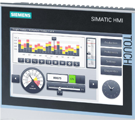
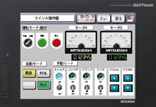
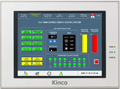
In the intricate world of industrial and embedded display solutions, the Mitsubishi AA065VE11 stands as a quintessential example of engineering precision meeting enduring reliability. This 6.5-inch a-Si TFT-LCD module (LCM) is far more than a simple screen; it is a meticulously designed component built for systems where performance consistency is non-negotiable. With its VGA (640 x RGB x 480) resolution delivering 122 pixels per inch, it occupies a critical niche, offering a balance of clarity, compactness, and robust interface compatibility that modern digital interfaces often overlook.
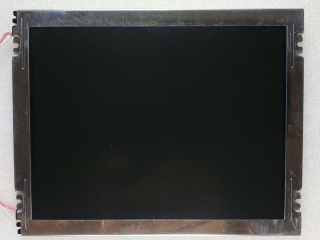

This article delves into a comprehensive analysis of the AA065VE11, moving beyond basic specifications to explore its architectural significance. We will examine the enduring relevance of its VGA interface in contemporary systems, the practical implications of its optical performance, and the specific engineering choices that make it a preferred choice in demanding environments such as industrial human-machine interfaces (HMIs), medical devices, and point-of-sale terminals. Our journey will uncover why this specific LCM continues to be a benchmark for quality and dependability in a market increasingly driven by disposable consumer technology.
Decoding the AA065VE11: Core Architecture and Specifications
The foundation of the AA065VE11's reliability lies in its Amorphous Silicon (a-Si) TFT technology. This mature and highly stable process forms the backbone of the display, ensuring consistent performance over a wide temperature range and a long operational lifespan. The 6.5-inch diagonal active area provides a substantial viewing canvas while maintaining a compact form factor crucial for embedded designs. The native resolution of 640 horizontal pixels (each with RGB sub-pixels) by 480 vertical pixels defines its VGA standard, a deliberate choice that balances detail with signal integrity.
With a pixel density of 122 PPI, the module delivers sharp, legible imagery suitable for text, graphics, and basic user interface elements without the excessive power draw or processing overhead of higher-resolution displays. Its configuration as a full LCM (LCD Module) means it includes the essential driving electronics and the LVDS (Low-Voltage Differential Signaling) interface controller, presenting a clean, digital input to system integrators. This turnkey approach significantly reduces development complexity, allowing engineers to focus on application software rather than low-level display driver design.
The Enduring Power of the VGA Standard in Modern Systems
While considered legacy in the consumer PC space, the VGA resolution (640x480) embodied by the AA065VE11 remains profoundly relevant in industrial and specialized applications. Its strength lies in its simplicity, universality, and low processing burden. Modern microcontrollers, FPGAs, and System-on-Chip (SoC) solutions can generate and drive a VGA signal with minimal external hardware, making system design more efficient and cost-effective.
Furthermore, the 4:3 aspect ratio is exceptionally well-suited for many HMI and control panel layouts, which often involve toolbars, status bars, and data fields that fit naturally into this format. The resolution provides sufficient pixel real estate for complex interfaces without necessitating expensive, high-performance graphics processors. For systems requiring multiple displays, the standardized timing of VGA simplifies synchronization and duplication. Thus, the AA065VE11 acts as a bridge, connecting modern digital control systems with a robust, well-understood, and easy-to-implement visual output standard.
Optical Performance: Clarity, Readability, and Environmental Adaptation
The optical characteristics of the AA065VE11 are tuned for functionality under varied conditions. Its brightness, typically specified to meet industrial norms, ensures viewability in moderately lit environments. The contrast ratio defines the depth between blacks and whites, crucial for text legibility and graphical clarity. Perhaps more critically, the viewing angles—both horizontal and vertical—are engineered to allow for clear readability even when the operator is not directly in front of the panel, a common scenario in mounted equipment.
The module's design also considers the use of optional enhancements. Integrators can specify polarizer configurations or surface treatments to mitigate ambient light glare, a vital feature for devices used outdoors or under bright factory lighting. The stability of the a-Si TFT layer ensures that these optical properties remain consistent over time and across its specified operating temperature range, preventing image degradation that could lead to user error or system misinterpretation in critical applications.
Interface and Integration: The LVDS Advantage
The integration pathway for the AA065VE11 is streamlined through its use of an LVDS interface. LVDS is the industry-standard digital video link for displays of this class, favored for its robustness against electromagnetic interference (EMI). This noise immunity is paramount in industrial settings where motors, power supplies, and communication lines can generate significant electrical noise that would corrupt simpler signaling methods.
The LVDS channel transmits pixel data, clock, and control signals differentially over a paired cable, ensuring data integrity over longer distances within a device chassis compared to older TTL interfaces. For the system designer, this means greater flexibility in placing the display relative to the main controller board, reduced shielding requirements, and ultimately, a more reliable end product. The AA065VE11's inclusion of this interface as part of the LCM package removes the guesswork from signal integrity design, providing a predictable and stable connection.
Application Realms: Where the AA065VE11 Excels
The true test of any industrial component is its performance in the field. The AA065VE11 finds its home in environments where failure is not an option. In Industrial HMI systems, it serves as the primary window into machine control, displaying real-time metrics, diagnostic data, and control buttons. Its rugged build and stable performance withstand constant use and potential exposure to vibrations or temperature fluctuations.
In the Medical Device sector, reliability translates to patient safety. The display may be integrated into diagnostic equipment, patient monitors, or surgical tools where consistent, accurate visual feedback is critical. Furthermore, its design can be adapted to meet specific regulatory requirements for medical electronics. Other key applications include Point-of-Sale (POS) terminals, where it handles transaction interfaces under constant daily operation; Transportation information displays; and Test and Measurement equipment, providing a clear readout for technicians and engineers.
Comparative Context and Long-Term Value Proposition
When evaluated against newer display technologies like higher-resolution IPS panels or OLEDs, the AA065VE11's value proposition becomes clear: it is not about winning a specs race, but about delivering guaranteed performance. Its advantages are longevity of supply (critical for products with multi-decade lifecycles), proven reliability in harsh conditions, and a lower total cost of integration when considering the entire signal chain and power requirements.
For a project requiring ten units of a cutting-edge consumer display, sourcing and compatibility can be a nightmare in five years. The AA065VE11, as part of Mitsubishi's established industrial lineup, offers a stable supply chain and consistent performance documentation. This long-term viability reduces lifecycle management risks for OEMs. The module represents a strategic component choice, prioritizing system-wide reliability, ease of design, and total cost of ownership over raw pixel count.
FAQs: AA065VE11 Mitsubishi TFT-LCD LCM
1. What does "LCM" stand for in AA065VE11?LCM means "LCD Module," indicating it includes the LCD panel, driver circuits, backlight, and interface connectors as a complete unit.
2. Is the VGA resolution too low for modern applications?Not for its target applications. VGA (640x480) is ideal for industrial HMIs, POS systems, and medical devices where legibility, low processing load, and signal reliability are more critical than ultra-high definition.
3. What type of backlight does this module use?It typically uses a long-life LED backlight system, known for its efficiency, durability, and wide operating temperature range.
4. What is the main advantage of the LVDS interface?LVDS provides high-speed, noise-resistant data transmission, which is crucial for maintaining a clear, stable image in electrically noisy industrial environments.
5. Can this display be used in outdoor environments?With standard configuration, it's for indoor use. However, high-brightness versions and anti-glare surface treatments can be specified for enhanced outdoor viewability.
6. What is the typical operating temperature range?Industrial-grade modules like this typically offer a wide operating range, often from -20°C to +70°C or similar, ensuring functionality in demanding conditions.
7. Is touch screen functionality available?The AA065VE11 is a display module. Resistive or capacitive touch panels can usually be added as an optional overlay by the integrator or manufacturer.
8. Why choose a-Si TFT technology?Amorphous Silicon TFT is a mature, cost-effective, and highly reliable technology with excellent longevity and stability, perfect for long-lifecycle products.
9. How does the 122 PPI pixel density affect image quality?At 122 PPI on a 6.5" screen, the image is sharp and pixelation is minimal for its intended use, providing excellent readability for text and graphics.
10. What makes Mitsubishi displays suitable for industrial use?Mitsubishi Electric is renowned for high-quality, reliable components designed with rigorous standards for performance consistency, longevity, and support, which are essential for industrial applications.
Conclusion
The Mitsubishi AA065VE11 6.5-inch a-Si TFT-LCD module exemplifies a philosophy where optimal, proven performance trumps fleeting technological trends. Its careful integration of VGA resolution, robust LVDS interfacing, and industrial-grade optical performance creates a display solution that is greater than the sum of its parts. It addresses the core needs of system integrators in critical fields: reliability, ease of implementation, and long-term availability.
In an era of rapid obsolescence, this module stands as a testament to enduring design. It serves as a reliable visual interface in the machines and devices that form the backbone of industry, medicine, and commerce. For engineers and product managers, selecting the AA065VE11 is not merely a technical specification choice; it is a strategic decision for risk reduction and product longevity, ensuring that the display remains the most dependable part of any system it serves.