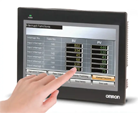
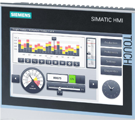
In the intricate world of industrial and embedded electronics, the display often serves as the critical bridge between complex machine operations and human understanding. For engineers, product designers, and procurement specialists, selecting the right display module is a decision that impacts product performance, reliability, and user experience. This article delves deep into the LQ104S1LG81, a specific 10.4-inch LCD module designed to interface with SHARP's LQ104S1LG81 series systems.
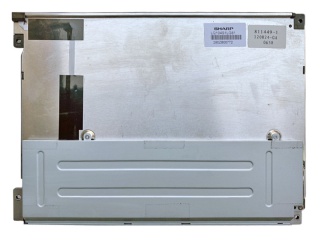
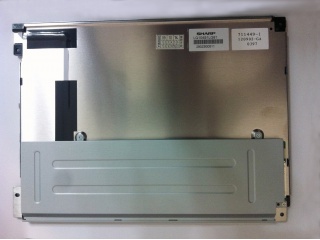
Our exploration moves beyond basic datasheet parameters. We will dissect the module's core technological attributes, its intended application ecosystem, and the tangible benefits it offers in demanding environments. From its precise optical characteristics to its robust mechanical construction and essential integration considerations, this analysis aims to provide a comprehensive resource for professionals evaluating this component for their next-generation designs.

Decoding the LQ104S1LG81: Core Specifications and Technology
The LQ104S1LG81 is a 10.4-inch diagonal TFT-LCD (Thin-Film Transistor Liquid Crystal Display) module built around an a-Si (amorphous Silicon) active matrix. Its native resolution of 800 x 600 pixels (SVGA) offers a balanced blend of sufficient detail and lower system processing overhead compared to higher-resolution panels, making it suitable for industrial HMI (Human-Machine Interface), point-of-sale systems, and medical monitoring devices. The module typically employs a standard RGB interface, facilitating direct connection to many common controllers.
A key technological aspect is its backlighting system. Most variants utilize high-performance, long-life LED backlights, which provide uniform brightness, wide operating temperature ranges, and better power efficiency compared to older CCFL technology. The optical stack includes polarizers and filters designed to deliver specific performance in contrast ratio, color gamut, and viewing angles, which are critical parameters for readability under various lighting conditions.
Optical Performance: Clarity, Color, and Viewing Angles
Optical performance is paramount for user interaction. The LQ104S1LG81 is engineered for clarity and stability. Its brightness level, often ranging around 300 to 400 nits, ensures visibility in moderately bright indoor environments. The contrast ratio, a measure of the difference between the brightest white and the darkest black, is crucial for text legibility and image depth; this module is designed to provide a high static contrast ratio.
Color performance is calibrated for accuracy and consistency, typically covering a significant portion of the NTSC color space to ensure that interface elements and graphics are rendered faithfully. Furthermore, the module offers wide viewing angles (commonly 80/80/80/80 degrees in Left/Right/Up/Down specifications), minimizing color shift and contrast loss when viewed from off-axis positions. This is essential for applications where multiple operators may view the screen from different angles.
Mechanical Design and Environmental Robustness
The physical construction of the LQ104S1LG81 is tailored for integration into larger systems. Its outline dimensions, mounting hole patterns, and bezel design conform to industry-standard form factors for 10.4-inch displays, simplifying the mechanical design process for OEMs. The module itself is a relatively compact assembly, often comprising the LCD panel, driver circuits, backlight unit, and a metal or rigid plastic frame for structural integrity.
Environmental robustness is a critical differentiator for industrial components. This display module is built to withstand the rigors of continuous operation. Its operating and storage temperature ranges are specified to exceed commercial-grade products, ensuring functionality in non-climate-controlled settings. Additionally, the design considers factors like vibration resistance and humidity tolerance, which are vital for applications in factory automation, transportation, or outdoor kiosks.
Interface and Integration Considerations
Successful integration hinges on understanding the electrical and signal interface. The LQ104S1LG81 primarily uses a parallel RGB (TTL) interface with standard control signals like HSYNC, VSYNC, DE (Data Enable), and DOTCLK. This requires a host controller or system-on-chip (SoC) with a compatible LCD controller output. Designers must carefully match voltage levels, signal timing, and the color data format.
Power supply design is another crucial consideration. The module requires separate, stable power rails for the logic (typically 3.3V or 5V) and the LED backlight (which may require a higher voltage or constant current driver). Proper power sequencing and in-rush current limiting for the backlight are essential for long-term reliability and to prevent premature failure.
Target Applications and Industry Use Cases
The specific blend of size, resolution, and ruggedness makes the LQ104S1LG81 ideal for a range of professional and industrial applications. In Industrial Automation, it serves as a primary HMI for PLCs (Programmable Logic Controllers), controlling machinery and visualizing process data on factory floors. Its reliability is key in these 24/7 operational environments.
Other prominent use cases include Point-of-Sale (POS) and Self-Service Kiosks, where its size is optimal for transaction interfaces and menu displays. In the medical field, it can be found in diagnostic equipment and patient monitoring systems, where consistent optical performance is non-negotiable. Additionally, it finds roles in transportation infotainment, thin-client terminals, and specialized instrumentation.
Comparative Advantages and Sourcing Strategy
Choosing the LQ104S1LG81 over generic or commercial displays offers distinct advantages. Its primary benefit is predictability and longevity. As a module specified for industrial use, its supply lifecycle tends to be longer, and its performance parameters are guaranteed across the specified temperature range. This reduces requalification risks for products with long market lives.
When sourcing, it is vital to partner with authorized distributors or reliable suppliers who can guarantee authenticity, provide technical support, and ensure a stable supply chain. Engineers should verify compatibility with their specific SHARP system (LQ104S1LGxx) and request detailed documentation, including the definitive datasheet, mechanical drawings, and interface timing diagrams for their specific "81" variant to ensure a flawless integration.
FAQs: LQ104S1LG81 10.4" LCD Display Module
Q1: What is the exact resolution of the LQ104S1LG81?A1: It features an SVGA resolution of 800 pixels horizontally by 600 pixels vertically.
Q2: What type of backlight does it use?A2: It typically utilizes a long-life LED backlight system for better efficiency and durability.
Q3: What is the standard interface for this module?A3: It commonly uses a parallel RGB (TTL) digital interface with standard sync signals.
Q4: Is this module suitable for outdoor use?A4: While robust for industrial indoor use, direct sunlight visibility may require an enhanced brightness version or protective cover; check specific optical specs.
Q5: Can I replace a CCFL-backlit module with this LED version directly?A5: Not directly. The mechanical fit might be similar, but the power supply and inverter requirements for the backlight are completely different.
Q6: What are the key factors for driving the LED backlight?A6: A constant-current driver with proper brightness control (PWM or analog dimming) and in-rush current protection is essential.
Q7: Where can I find the pinout and interface timing diagram?A7: These are contained in the official technical specification (datasheet) for the specific LQ104S1LG81 variant, available from SHARP or authorized distributors.
Q8: What is the typical operating temperature range?A8: Industrial-grade versions typically operate from -20°C to +70°C or similar, but always confirm with the official datasheet.
Q9: Is it compatible with Raspberry Pi or Arduino?A9: Not directly. These platforms require additional interface boards (LCD driver boards) to convert their video output to the module's parallel RGB interface.
Q10: Why choose this specific module over a cheaper commercial panel?A10: For guaranteed long-term supply, consistent performance under stress, wider temperature tolerance, and overall higher reliability in critical applications.
Conclusion
The LQ104S1LG81 10.4-inch LCD module represents a specialized component designed for performance and endurance. Its value lies not in being the highest-resolution or flashiest display, but in its engineered reliability, stable optical characteristics, and industrial-grade construction. For designers building systems that must perform consistently in challenging environments—from factory floors to medical clinics—this module offers a proven solution.
Ultimately, successful implementation requires a thorough understanding of its technical parameters, a careful integration strategy focusing on power and signal interfaces, and a reliable sourcing partner. By appreciating the depth of engineering behind modules like the LQ104S1LG81, developers can create more robust, dependable, and user-friendly products, solidifying the critical link between machine intelligence and human operation.