













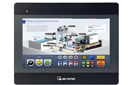
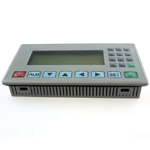




- Industrial display
-
Industrial Products
- DC Servo Drive
- AC Servo Drive
- Industrial board
- Siemens
- Switch Sensor
- Proximity Switch
- Temperature Controller
- Protection Relay
- Fiber Optic Sensor
- Encoder
- Fan
- other
- Heidelberg
- MITSUBISHI
- FANUC
- Siemens adapter
- Fujitsu connector
- Motherboard
- Board
- Contactor
- Circuit
- OMRON
- Relay
- Motor Driver
- power supply
- Cable
- Transformer
- HMI Touch Glass
-
HMI Full Machine Whole unit
- OMRON HMI Touch Panel
- Siemens HMI Touch Panel
- Mitsubishi HMI Touch Panel
- Allen-Bradley automation HMI Touch Panel
- DELTA HMI Touch Panel
- Proface HMI Touch Panel
- KINCO DELTA HMI Touch Panel
- HITECH HMI Touch Panel
- WEINTEK HMI Touch Panel
- TECVIEW HMI Touch Panel
- WEINVIEW HMI Touch Panel
- PANASONIC HMI Touch Panel
- KYOCERA HMI Touch Panel
- SCHNEIDER HMI Touch Panel
- Module
- lcd inverter
- Membrane Keypad Switch
- Zhiyan Customized Touch Screens
- Frequency Inverter
- Servo Motor
- PLC
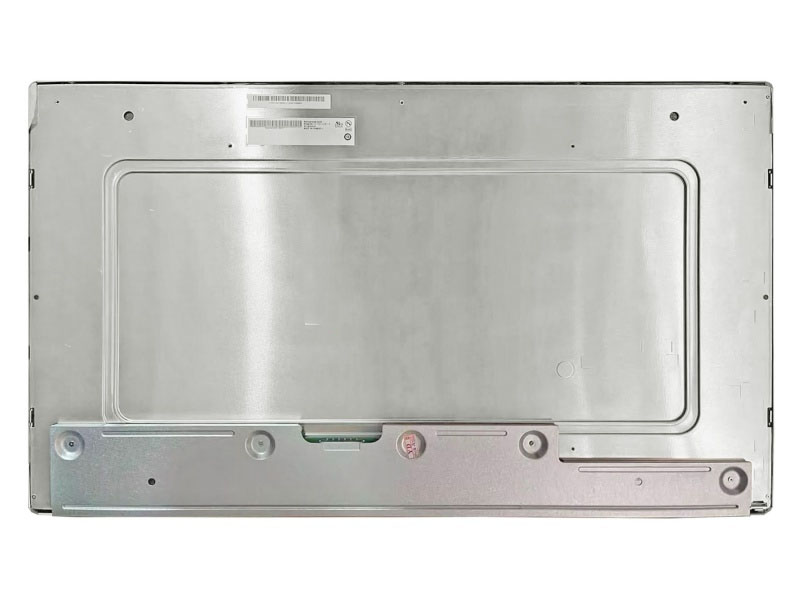
G270HAN01.1 27" LCD Panel: A Technical Deep Dive into AUO’s Industrial and Gaming-Grade Display Solution
When sourcing high-performance LCD panels for industrial automation, medical imaging, or premium gaming monitors, the G270HAN01.1 by AU Optronics (AUO) emerges as a benchmark. This 27-inch IPS-type panel is not merely a generic display component; it represents a precise engineering trade-off between color fidelity, response time, and long-term reliability. This article unpacks the panel’s technical architecture, application-specific advantages, and why it remains a strong contender in the competitive 27-inch landscape.

1. Core Specifications: Beyond the Datasheet
Panel Type: AHVA (Advanced Hyper-Viewing Angle), AUO’s proprietary IPS-like technology. This ensures 178° viewing angles with minimal color shift and gamma curve distortion, critical for multi-monitor setups or public kiosks.
Refresh Rate & Response: Native 60Hz, but with an overdrive-capable GTG (Gray-to-Gray) response of 12ms typical (5ms with overdrive). While not a high-speed gaming panel, this suits professional video editing and real-time control interfaces.
Color Gamut: 72% NTSC (sRGB coverage ~100%). This is the industrial sweet spot—wide enough for accurate medical grayscale or CAD work, but not oversaturated like DCI-P3 panels that can cause color clipping in specialized software.
Brightness & Contrast: 350 cd/m² typical (400 cd/m² max) with a static contrast ratio of 1000:1. The backlight uses a WLED (White LED) edge-lit design, which keeps the module thin (10.5mm) and power-efficient (17W typical).
Maturity: First released in 2017, this panel is in its late volume production phase. This means stable yields and a well-documented electrical integration roadmap.
2. The Engineering Significance of “AHVA”
Additionally, the AHVA layer provides a slightly higher aperture ratio compared to older IPS designs, resulting in more uniform brightness across the screen. This is measurable in EDID (Extended Display Identification Data) compliance, where the G270HAN01.1 typically reports a 93% uniformity within the active area—a significant advantage for medical PACS (Picture Archiving and Communication System) viewers.
3. Application-Specific Suitability
Industrial Automation: The panel’s operating temperature range (0°C to 50°C) and storage range (-20°C to 60°C) match CE and UL standards for factory floor environments. The 15kV ESD protection on the interface connector reduces failure risk in static-heavy manufacturing zones.
Medical Imaging: With a gamma of 2.2 and a 30-bit grayscale conversion capability (via external LUTs), it meets the DICOM Part 14 compliance when paired with a proper controller board. Many white-label medical monitor builders use this panel because of its low blue-light emission (TÜV-certified) without sacrificing brightness.
Gaming & eSports: While not a 144Hz panel, it excels in console gaming (PS4 Pro, Xbox One X) at 1080p/60fps. The 4ms overdrive setting eliminates motion blur in slower-paced strategy games, and the AHVA layer provides better dark room performance than TN panels.
4. Electrical & Mechanical Considerations for Integrators
Interface: It uses 2-channel LVDS (30 pins) at 85MHz, which is older but highly stable. This means compatible controller boards are cheaper than eDP or V-by-One solutions, reducing BOM costs for low-volume runs.
Mounting: The module has threaded mounting holes (M3 x 4mm depth) on the rear chassis—not just screw tabs. This allows direct attachment to VESA-compliant frames without a custom metal bracket.
Thermal Management: The backlight driver board generates ~4W of heat. Proper thermal tape between the driver and chassis is mandatory for 24/7 operation. AUO’s design guide specifies a maximum chassis temperature of 65°C to prevent LED droop.
5. Competitive Analysis: How It Stacks Up
6. Longevity & Roadmap
AUO announced the G270HAN01.1 as a “EOL (End of Life) active” panel in 2023, meaning no new designs are recommended but current production runs will continue through 2025 due to existing contracts. This creates a procurement sweet spot: the panel is cheap (many distributors have inventory from 2022-2023), but still fully supported with firmware updates. For projects with a 3-year lifecycle, this is a low-risk purchase.





