















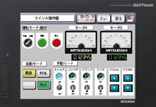
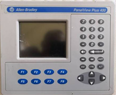
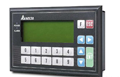

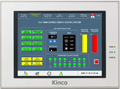





- Industrial display
-
Industrial Products
- DC Servo Drive
- AC Servo Drive
- Industrial board
- Siemens
- Switch Sensor
- Proximity Switch
- Temperature Controller
- Protection Relay
- Fiber Optic Sensor
- Encoder
- Fan
- other
- Heidelberg
- MITSUBISHI
- FANUC
- Siemens adapter
- Fujitsu connector
- Motherboard
- Board
- Contactor
- Circuit
- OMRON
- Relay
- Motor Driver
- power supply
- Cable
- Transformer
- HMI Touch Glass
-
HMI Full Machine Whole unit
- OMRON HMI Touch Panel
- Siemens HMI Touch Panel
- Mitsubishi HMI Touch Panel
- Allen-Bradley automation HMI Touch Panel
- DELTA HMI Touch Panel
- Proface HMI Touch Panel
- KINCO DELTA HMI Touch Panel
- HITECH HMI Touch Panel
- WEINTEK HMI Touch Panel
- TECVIEW HMI Touch Panel
- WEINVIEW HMI Touch Panel
- PANASONIC HMI Touch Panel
- KYOCERA HMI Touch Panel
- SCHNEIDER HMI Touch Panel
- Module
- lcd inverter
- Membrane Keypad Switch
- Zhiyan Customized Touch Screens
- Frequency Inverter
- Servo Motor
- PLC
In the landscape of industrial display technology, the Universal G242CX5R1AC SII stands as a nuanced solution that warrants more than a cursory glance. Designated as a 5.5-inch FSTN-LCD LCM with a resolution of 240×128 pixels, this component is often the silent workhorse of embedded systems, medical devices, and heavy machinery interfaces. This article aims to deconstruct its specifications, functional advantages, and real-world application logic, providing an actionable understanding for procurement specialists, design engineers, and system integrators.

The Core Display Technology: FSTN-LCD Explained
Improved Contrast: The compensation film neutralizes the residual birefringence of the STN cell in the "off" state, producing a darker background. This results in a higher contrast ratio compared to standard STN panels, making text and graphics sharper.
Gray Scale Capability: Unlike ordinary STN which often exhibits a yellow or blue tint, FSTN technology allows for a more neutral black-on-white or white-on-black appearance, enabling the display of multiple gray levels.
Lower Power Consumption: FSTN panels are inherently passive matrix displays. They consume negligible power when holding a static image, making them ideal for battery-dependent or energy-sensitive applications.
Character Density: 240×128 pixels can typically display 15 rows of 30 standard 8×8 characters. This is sufficient for complex data tables, system status logs, or multi-line parameter readouts without requiring scrolling.
Optimal Viewing Distance: The 5.5-inch size provides a generous active area (approximately 114.0 mm × 64.0 mm) that is readable from arm’s length— a crucial factor in industrial environments where operators may not be sitting directly in front of a screen.
Graphical Flexibility: While often used for text, the 240×128 resolution permits the creation of simplified graphical user interfaces (GUIs), such as bar graphs, trend lines, and basic icons, without the processing overhead of a TFT display.
Simplified Integration: The module handles much of the display refresh logic. The host microcontroller only needs to send data and commands over a standard parallel bus, reducing software complexity.
Built-in Character Generator ROM (CGROM): The controller on the SII variant usually includes pre-programmed character tables (standard ASCII and extended European fonts), allowing engineers to send a single byte to display a letter, rather than defining the matrix manually.
Temperature Compensation: Many SII variants include integrated temperature circuitry that adjusts the LCD driving voltage (Vop) automatically. This is essential for displays used in environments ranging from -20°C to +70°C.
Medical Instrumentation: Ventilators, infusion pumps, and patient monitors often use FSTN panels. The lack of backlight flicker (common in cheaper TFT panels) and the ability to read the display under direct sunlight (with a transflective polarizer) makes the G242CX5R1AC SII a trusted choice.
Industrial Control: PLCs (Programmable Logic Controllers), temperature controllers, and CNC machines benefit from the wide operating temperature range and the immunity to electromagnetic interference (EMI) that passive matrix LCDs offer over their active matrix counterparts.
Specialty Retail & Instrumentation: Gas pumps, vending machines, and scientific scales utilize these displays for their long lifecycle and predictable supply chain availability.
Supply Voltage and Contrast: The display requires a stable logic voltage (usually 3.3V or 5.0V) and a separate, adjustable Vop for the LCD glass. A potentiometer or a PWM-driven voltage booster is often needed to fine-tune contrast, as the optimal setting varies with temperature.
Backlight Configuration: This model typically uses an LED backlight (often white or yellow-green). Engineers must design a current-limiting resistor or a constant-current driver. Over-driving the LEDs will drastically reduce the module's operational lifespan.
Connector and Mechanical Fit: The module usually employs a Zebra strip (heat seal) or a standard pin header. Proper alignment and pressure are critical to avoid "missing rows" or "ghosting" on the display. The mechanical drawing must be followed precisely to ensure the display sits flush in the bezel.





