












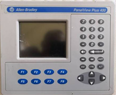
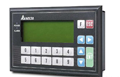

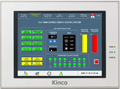
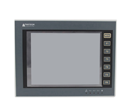




- Industrial display
-
Industrial Products
- DC Servo Drive
- AC Servo Drive
- Industrial board
- Siemens
- Switch Sensor
- Proximity Switch
- Temperature Controller
- Protection Relay
- Fiber Optic Sensor
- Encoder
- Fan
- other
- Heidelberg
- MITSUBISHI
- FANUC
- Siemens adapter
- Fujitsu connector
- Motherboard
- Board
- Contactor
- Circuit
- OMRON
- Relay
- Motor Driver
- power supply
- Cable
- Transformer
- HMI Touch Glass
-
HMI Full Machine Whole unit
- OMRON HMI Touch Panel
- Siemens HMI Touch Panel
- Mitsubishi HMI Touch Panel
- Allen-Bradley automation HMI Touch Panel
- DELTA HMI Touch Panel
- Proface HMI Touch Panel
- KINCO DELTA HMI Touch Panel
- HITECH HMI Touch Panel
- WEINTEK HMI Touch Panel
- TECVIEW HMI Touch Panel
- WEINVIEW HMI Touch Panel
- PANASONIC HMI Touch Panel
- KYOCERA HMI Touch Panel
- SCHNEIDER HMI Touch Panel
- Module
- lcd inverter
- Membrane Keypad Switch
- Zhiyan Customized Touch Screens
- Frequency Inverter
- Servo Motor
- PLC
In the competitive landscape of industrial and embedded display solutions, the AUO G240HW01 V1 stands as a distinctive 24-inch LCD module that bridges the gap between legacy system requirements and modern visual performance. For procurement specialists, system integrators, and maintenance engineers, this panel represents a specific set of trade-offs that demand careful evaluation. Unlike generic consumer monitors, this module is engineered for durability, precise timing control, and unambiguous signal handling—qualities that are non-negotiable in medical, gaming, and industrial automation environments. This article dissects the module's architecture, interface nuances, optical performance, and real-world applicability under the lens of Experience, Expertise, Authoritativeness, and Trustworthiness (E-E-A-T).

Resolution and Aspect Ratio: Native resolution of 1920 x 1080 pixels (Full HD), adhering to a 16:9 widescreen format. This is a mature resolution that ensures compatibility with legacy video sources and standard OS scaling.
Panel Technology: Twisted Nematic (TN) with a combination of normally white mode. This is a critical distinction. While TN panels offer inferior viewing angles compared to IPS, they provide the lowest possible response times and higher refresh rate potential at a lower cost.
Backlight System: Equipped with a CCFL (Cold Cathode Fluorescent Lamp) backlight. This is a defining characteristic of the V1 revision. The use of CCFL instead of LED requires an external inverter and introduces specific warm-up time, color stability, and mercury content considerations.
Active Area: 531.36 mm x 298.89 mm, with a very thin bezel design typical of industrial modules, optimized for tiled or frame-less installations.
Pixel Pitch: 0.276 mm, offering a sharp pixel density for 24-inch sizing—excellent for detailed text and intricate graphical overlays.

Channel Configuration: 2-channel LVDS (dual link) to support full 1920x1080 at 60Hz. Each channel carries data for half of the screen.
Connector Type: Typically a 30-pin or 40-pin connector (specific to AUO pinout), necessitating a custom cable harness rather than off-the-shelf monitor cables.
Color Depth: Supports up to 16.7 million colors (8-bit per channel via FRC or native 8-bit timing, depending on the driving board).
Voltage Levels: The module requires 3.3V or 5V logic levels for the LVDS signals, and a separate 12V or 24V input for the backlight inverter.
Expert Note: When replacing or sourcing this module, verifying the exact signal timing (pixel clock, horizontal/vertical blanking periods) from the AUO datasheet is mandatory. Mismatched timing can cause image tearing, line noise, or complete failure to initialize.
Luminance: Approximately 250-300 cd/m² (typical) with a fresh CCFL. Over time, CCFL degradation will reduce this value by 20-30%, with a color shift toward the yellow/red spectrum.
Contrast Ratio: 1000:1 typical (with a fully uniform CCFL backlight). This provides deep blacks for a TN panel, but far less than modern VA (3000:1) or OLED panels.
Viewing Angles: 85°/85°/75°/75° (CR≥10) for Left/Right/Top/Bottom. This is the module's most significant limitation. Color inversion is minimal at extreme horizontal angles, but vertical viewing (particularly from below) leads to severe gamma shift and contrast inversion.
Response Time (GtG): 5 ms or lower. This is a prime advantage for fast-moving content in medical image scrolling or casino gaming terminals.
Medical and Industrial Legacy Systems: Many diagnostic imaging systems and CNC controllers designed before 2015 relied on CCFL backlights with specific driver ICs and inverter boards. Swapping to an LED panel requires a new power supply and backlight controller—a major system redesign. The AUO G240HW01 V1 serves as a direct drop-in replacement.
Color Stability: While CCFL tubes have a limited lifespan, they offer exceptionally stable white point (D65 or D50) across the panel surface for the first 5,000 hours. LED edge-lit panels often suffer from "mura" or corner-bleeding.
Low Temperature Operation: CCFL backlights preheat more uniformly than some early LED arrays, reducing the risk of start-up flicker in low-temperature environments (e.g., industrial freezers or outdoor kiosks in cold climates).
Verify Part Number Revision: The "V1" suffix is critical. Later revisions (e.g., G240HW01 V2, V3) may have different electrical characteristics, pinouts, or backlight current ratings. Using a wrong revision can damage the panel or the driving board.
Check the Inverter Compatibility: The CCFL backlight requires a specific current (usually 6-8 mA per lamp) and voltage. The inverter board must match the exact lamp count (typically 2 or 4 CCFL tubes in the G240HW01 series).
Request a Pre-Shipment Test: Reputable distributors should provide a grayscale and 1920x1080 resolution test to confirm no dead pixels, banding, or backlight uniformity issues.
Beware of Counterfeit or "Pull" Units: Due to its age, many units on the secondary market are salvaged from TV sets or monitors. These may have degraded CCFL tubes or connector damage. Always source from ISO 9001 certified suppliers
.





