

















- Industrial display
-
Industrial Products
- DC Servo Drive
- AC Servo Drive
- Industrial board
- Siemens
- Switch Sensor
- Proximity Switch
- Temperature Controller
- Protection Relay
- Fiber Optic Sensor
- Encoder
- Fan
- other
- Heidelberg
- MITSUBISHI
- FANUC
- Siemens adapter
- Fujitsu connector
- Motherboard
- Board
- Contactor
- Circuit
- OMRON
- Relay
- Motor Driver
- power supply
- Cable
- Transformer
- HMI Touch Glass
-
HMI Full Machine Whole unit
- OMRON HMI Touch Panel
- Siemens HMI Touch Panel
- Mitsubishi HMI Touch Panel
- Allen-Bradley automation HMI Touch Panel
- DELTA HMI Touch Panel
- Proface HMI Touch Panel
- KINCO DELTA HMI Touch Panel
- HITECH HMI Touch Panel
- WEINTEK HMI Touch Panel
- TECVIEW HMI Touch Panel
- WEINVIEW HMI Touch Panel
- PANASONIC HMI Touch Panel
- KYOCERA HMI Touch Panel
- SCHNEIDER HMI Touch Panel
- Module
- lcd inverter
- Membrane Keypad Switch
- Zhiyan Customized Touch Screens
- Frequency Inverter
- Servo Motor
- PLC
INNOLUX G238HCJ-LH1 23.8" LCD Display: A Technical Deep Dive for Industrial & Commercial Applications
In the competitive landscape of industrial and commercial display solutions, the INNOLUX G238HCJ-LH1 stands as a specific, purpose-built engineered component rather than a consumer-grade monitor. While many 23.8-inch panels flood the market, this model occupies a critical niche for integrators requiring reliability, optical precision, and environmental resilience. This article provides a comprehensive analysis of the G238HCJ-LH1, examining its technical specifications, real-world performance characteristics, and the unique value it brings to demanding applications.
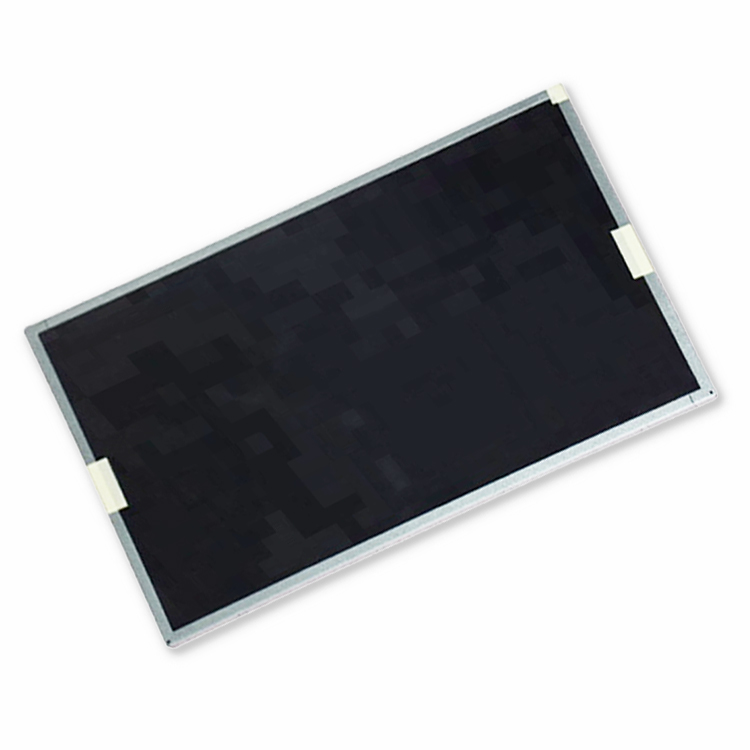
Panel Type: AHVA (Advanced Hyper-Viewing Angle), an INNOLUX proprietary technology that rivals IPS for color consistency and wide viewing angles.
Diagonal Size: 23.8 inches (60.45 cm), the standard optimal form factor for multi-monitor kiosks and medical carts.
Resolution: FHD 1920 x 1080 pixels, delivering a pixel density of approximately 93 PPI—ideal for clear text rendering without requiring high-end scaling.
Aspect Ratio: 16:9 widescreen.
Color Depth: 16.7M colors (8-bit), ensuring smooth gradations and accurate representation of data visualizations.
Viewing Angle: 89/89/89/89 (Typ.) CR>=10, offering near-perfect symmetry. This eliminates color shift off-axis—critical for public-facing installations.
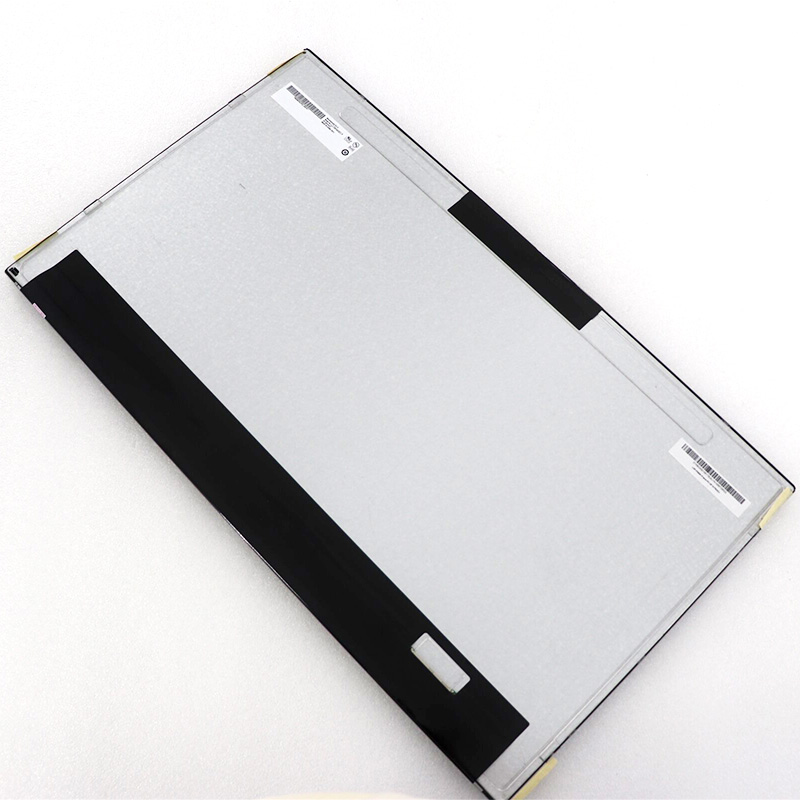
Brightness (Luminance): 250 cd/m² (Typical). While 250 nits is a moderate rating on paper, INNOLUX calibrates this panel to maintain linearity across the brightness range. The real advantage lies in the anti-glare surface treatment, which retains perceived brightness in high-ambient-light environments like hospital corridors or retail floors.
Contrast Ratio: 1000:1 (Typical). This is standard for an AHVA panel of this class. The black levels are deep enough for text-focused medical interfaces and POS systems, though not suitable for professional HDR video grading.
Surface Treatment: Anti-glare (Haze 25%). This is a critical feature. The 25% haze coating diffuses direct light sources without introducing a grainy "sparkle" effect often seen in inferior coatings. This makes the panel readable under fluorescent, LED, and indirect sunlight conditions.
Interface: 2-CH LVDS (8-bit), 30 pins. The dual-channel support ensures sufficient bandwidth for 1920x1080 @ 60Hz without compression artifacts.
Backlight: WLED (White Light Emitting Diode). The backlight design is edge-lit, which allows for a slim module profile (typically 8-10mm total thickness with bezel).
Power Consumption: Approximately 12-15W (Typical). This is efficiency optimized for always-on operation in digital signage (24/7). The LED driver circuit is designed to minimize ripple current, extending LED lifespan to a rated 30,000 hours or more.
Electrical Interface: The panel requires a +3.3V logic supply and a +5V or +12V backlight supply, depending on the specific driver board configuration used by the integrator.
Operating Temperature: 0°C to +50°C (32°F to 122°F). This range supports both air-conditioned data centers and semi-outdoor kiosks with thermal management.
Storage Temperature: -20°C to +60°C (-4°F to 140°F). This ensures reliability during shipping and warehousing.
Vibration Resistance: While not formally MIL-STD rated, the panel structure uses a robust metal frame (VSOP) to withstand typical transportation and fan-induced vibrations. Integrators should still assess their specific mechanical mounting bracket design.
ESD Protection: The logic circuit is protected against Electrostatic Discharge up to ±8kV (Contact) and ±15kV (Air), per IEC 61000-4-2 standards. This is non-negotiable for touchscreen kiosks in high-traffic areas.
Color Uniformity: INNOLUX’s Advanced Super-Viewing Angle (ASVA) matrix ensures that Delta E (color deviation) across the entire panel remains below 3.0 directly out of the box, without individual calibration. This is superior to many mid-tier IPS panels.
Optical Bonding Compatibility: The panel's top polarizer and cover glass gap are engineered for seamless optical bonding with projected capacitive touch sensors. This reduces parallax and light reflectance significantly in touch applications.
Supply Chain Stability: INNOLUX maintains a high production yield of this specific model, making it a reliable choice for medium-to-high volume runs (1000+ units) where lead time consistency matters.
Medical Information Terminals: The 250-nit brightness with anti-glare coating meets the readability requirements for patient info boards, nurse call systems, and bedside terminals without eye strain.
Retail POS and Self-Service Kiosks: The wide viewing angle ensures queuing customers can see the status screen without craning their necks. The LVDS interface also allows for low-latency touch integration.
Industrial Controls (HMI): The robust operating temperature range and ESD protection make it suitable for factory floor HMI panels where dust and electrical noise are present.
Gaming and Casino Machines: The 60Hz refresh rate and 5ms (Typ.) response time are adequate for slot machines and video lottery terminals (VLTs), where color accuracy and longevity outweigh high frame rate requirements.
LVDS Timing Controller: The panel requires a compatible LVDS timing controller board (e.g., NXP or TITAN-based) that supports 1920x1080 @ 60Hz and the specific 30-pin pinout of the G238HCJ-LH1. This is not a standard HDMI device.
Backlight Inverter: The WLED backlight requires a constant-current driver. Using an incorrect voltage driver will either under-illuminate or cause thermal runaway. Always match the voltage and current (typically 100-120mA per string) to the datasheet specifications.





