




















The industrial display landscape demands precision, durability, and unwavering performance, particularly in environments where standard commercial screens falter. Among the components engineered for such rigorous applications, the G213UAN01.1 21.3" TFT screen from AUO (AU Optronics) stands as a critical piece of hardware. This article provides an in-depth technical and commercial analysis of this specific model. More than just a specification sheet, this exploration delves into the architectural decisions behind its design, its ideal deployment scenarios in medical and industrial control settings, and its market positioning against contemporary alternatives. We will dissect its high-resolution capabilities, unique aspect ratio, and optical characteristics that make it a preferred choice for diagnostic imaging and process monitoring. For engineers, procurement specialists, and system integrators, understanding the nuances of this display is essential for making informed decisions in projects where reliability and image fidelity are non-negotiable. This analysis serves as a comprehensive guide to the G213UAN01.1, bridging the gap between raw specifications and real-world application.
The Legacy of AUO in the Industrial Sector
To fully appreciate the G213UAN01.1, one must first understand its pedigree. AU Optronics (AUO) is not merely a manufacturer of panels; it is a leader in the industrial-grade display market. Unlike consumer displays, which prioritize cost and thinness, AUO’s industrial division focuses on longevity, thermal stability, and optical consistency across the entire production batch. The G213UAN01.1 is a testament to this philosophy. It is engineered for a lifecycle of 50,000 hours or more, operating reliably in temperatures ranging from 0°C to 50°C. This contrasts sharply with commercial monitors that often suffer from image retention or backlight degradation within a few years of continuous operation. The panel utilizes a proven LVDS (Low-Voltage Differential Signaling) interface, a standard that offers excellent noise immunity for long cable runs typical in industrial enclosures. This model also benefits from AUO's rigorous quality control in its advanced TFT (Thin-Film Transistor) fabrication facilities, ensuring that each pixel performs within tight luminance and color tolerances. This foundation of reliability is the primary reason this screen is not a commodity item, but a selected component for mission-critical systems.
Decoding the 21.3-Inch: Aspect Ratio and Resolution
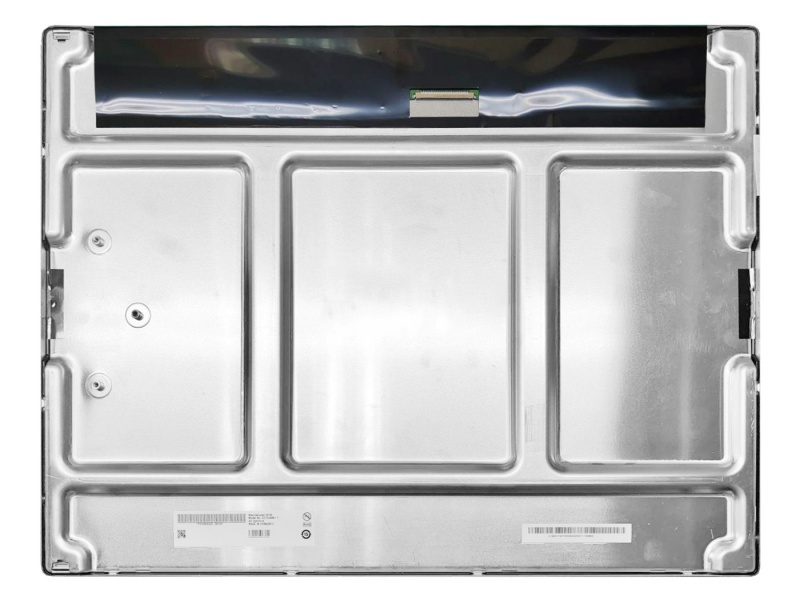
The physical specifications of the G213UAN01.1 are deeply tied to its intended function. The 21.3-inch diagonal measurement is not arbitrary; it corresponds to a 4:3 aspect ratio. In a world dominated by 16:9 widescreens, this choice is deliberate. The 4:3 format is the standard for medical imaging modalities like PACS (Picture Archiving and Communication System) and digital X-ray. It allows for the display of two standard A4 or Letter-sized medical documents side-by-side without distortion, or the viewing of a single, large radiograph at its natural proportions. The native resolution of the G213UAN01.1 is 1600 x 1200 (UXGA). This provides a pixel density of approximately 94 PPI (Pixels Per Inch), which is the sweet spot for diagnostic detail without causing eye strain from excessively fine text or requiring heavy system scaling. For a radiologist, this resolution offers enough clarity to discern micro-fractures or subtle tissue differentiations. For industrial control rooms, it ensures that complex SCADA (Supervisory Control and Data Acquisition) dashboards are visible and legible from a typical viewing distance. This specific pairing of size and resolution creates a "goldilocks" zone that balances screen real estate with pixel-level precision.
Optical Performance: Luminance, Contrast, and Viewing Angles
Performance in the field is determined by the optical stack of the display. The G213UAN01.1 typically features a luminance rating of 1000 cd/m² (nits). This is exceptionally high compared to a standard desktop monitor, which is usually around 250-350 cd/m². This high brightness is not for aesthetic purposes; it is essential for overcoming ambient light in brightly lit hospital rooms or sunlit factory floors. Furthermore, it allows the display to be used with a front cover glass or touch panel, which can reduce effective brightness by 15-30%. The contrast ratio, typically listed at 1000:1 for this model, ensures deep blacks and vivid whites, crucial for differentiating tones in a grayscale medical image. The viewing angle specification is equally impressive: 89° in all four directions (CR≥10). This wide viewing angle, achieved through advanced IPS (In-Plane Switching) technology, ensures that colors and contrast remain stable whether the operator is standing directly in front of the screen or viewing it from an oblique angle beside a patient bed or control console. This consistency is mandatory for collaborative diagnosis where multiple specialists may be viewing the same screen.
Applications Beyond the Clinic: Industrial and Gaming
While the medical sector is a primary adopter, the versatility of the G213UAN01.1 extends into other high-stakes environments. In the industrial automation sector, this display is integrated into CNC machine control panels and process monitoring stations. The 4:3 ratio provides a perfect canvas for displaying square or rectangular process diagrams and historical trend charts without wasted space. Its ruggedized design withstands vibrations from heavy machinery. Another burgeoning application is in the casino and electronic gaming industry. Video lottery terminals (VLTs) and electronic table game units require displays that can run 24/7, resist burn-in, and offer vibrant graphics. The G213UAN01.1's high brightness and reliability make it an ideal choice for these devices, where downtime directly impacts revenue. In flight simulation, multiple 4:3 displays are often tiled to create a panoramic view, and the G213UAN01.1’s consistent color reproduction across units is critical for maintaining a convincing training environment. This cross-industry applicability is a key driver of demand for this specific AUO model.
Navigating Procurement and Compatibility
Sourcing the G213UAN01.1 requires a strategic approach. It is not typically stocked by consumer electronics retailers. Instead, it is procured through specialized industrial distributors like Digi-Key, Mouser, or dedicated display suppliers. A critical consideration is the LVDS cable pinout. This display requires a specific 30-pin (or 2x15) LVDS connector, and the pin mapping must match the driver board or system motherboard. A mismatch can lead to no display, incorrect colors, or even damage. System integrators must also pay close attention to the backlight driver requirements. The screen uses an LED backlight, but the constant current driver circuit must be specified for the panel's voltage and current demands (typically around 12V or 24V). Furthermore, buyers should be aware of stock revisions. AUO often releases updated versions (e.g., Rev.C or Rev.D) with minor changes to the component list or timing controller. Verifying the revision number ensures software timings and physical mounting holes remain compatible. Understanding these procurement nuances prevents costly engineering re-spins and delivery delays.
Long-Term Value and End-of-Life Considerations
The final chapter in the life of a G213UAN01.1 screen is about sustainability and obsolescence management. AUO, as a professional-grade manufacturer, typically provides a longevity guarantee of 3 to 5 years for this model, with production runs often lasting longer than consumer panels. However, industrial screens do eventually reach end-of-life (EOL). For mission-critical systems, forward-thinking integrators purchase a last-time buy or maintain a safety stock. The value of the G213UAN01.1 lies in its standardization; because it adheres to the 21.3" UXGA industry standard, replacement by a competitor's equivalent (like LG or NEC) is sometimes possible with only a cable adapter change. However, the optical uniformity and specific drive timing of the AUO model often make a direct replacement the preferred choice. Maintaining a system with these screens is not a liability but an investment. The panel's high build quality means it often outlives the system hardware it is attached to. For repair and refurbishment markets, a working G213UAN01.1 holds significant value, as it can revitalize legacy medical or aviation equipment that would otherwise be impossible to replace.
FAQs
What is the exact resolution of the G213UAN01.1?It is 1600 x 1200 pixels (UXGA), with a standard 4:3 aspect ratio.
What type of interface does this screen use?It uses a dual-channel LVDS (Low-Voltage Differential Signaling) interface, typically a 30-pin connector.
Is this screen suitable for direct sunlight?With its high brightness of 1000 cd/m², it is usable in bright indoor light but typically requires a specialized optical bonding treatment for full outdoor sunlight readability.
Can I use this screen with a Raspberry Pi?Not directly. You will need an LVDS-to-HDMI or LVDS-to-eDP driver board specifically configured for 1600x1200 resolution to interface with a single-board computer.
What is the typical operating temperature range?The standard operating temperature is 0°C to 50°C (32°F to 122°F). Storage temperature is typically wider, from -20°C to 60°C.
Is the G213UAN01.1 a touch screen?No, it is a raw LCD panel (open frame). A touch panel overlay must be added by the integrator if required.
What does "21.3-inch" mean compared to a 22-inch monitor?The 21.3" refers to the viewable diagonal of the actual pixel area. A 22-inch monitor is often measured with the bezel, and typically uses a widescreen 16:9 ratio.
How long does the backlight in this unit last?The LED backlight is rated for 50,000 hours to half-brightness. This equates to over 5.7 years of continuous 24/7 operation.
Is this panel compatible with medical grade standards?While AUO does not perform the final system-level certification, the panel's optical performance (high brightness, DICOM-ready grayscale) makes it a preferred component in FDA-listed medical monitors.
Where can I find the specific data sheet for this model?Official datasheets are available from AUO's distributor portal or from authorized suppliers like Digi-Key and Mouser, which host the most current revision data.
Conclusion
The G213UAN01.1 21.3" TFT screen by AUO represents far more than a simple display component; it is a carefully engineered tool designed for environments where accuracy and reliability are paramount. We have seen how its deliberate 4:3 aspect ratio and UXGA resolution serve the specific needs of medical diagnostics and industrial monitoring, while its exceptional optical performance—high brightness and wide viewing angles—ensures clarity in challenging ambient light conditions. This panel's value is not in its novelty, but in its proven, robust design that minimizes downtime and maximizes diagnostic confidence. For engineers and system designers, choosing the G213UAN01.1 is a statement of commitment to quality. It means selecting a component backed by a global manufacturing leader, one that offers a clear upgrade path and long-term support. In a market saturated with disposable consumer electronics, the G213UAN01.1 stands as a pillar of industrial-grade durability, proving that the best technology is often the most dependable, not the cheapest or the flashiest. It is a sound investment for the long haul.





