













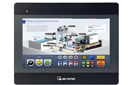
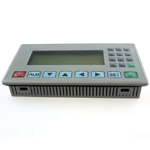




- Industrial display
-
Industrial Products
- DC Servo Drive
- AC Servo Drive
- Industrial board
- Siemens
- Switch Sensor
- Proximity Switch
- Temperature Controller
- Protection Relay
- Fiber Optic Sensor
- Encoder
- Fan
- other
- Heidelberg
- MITSUBISHI
- FANUC
- Siemens adapter
- Fujitsu connector
- Motherboard
- Board
- Contactor
- Circuit
- OMRON
- Relay
- Motor Driver
- power supply
- Cable
- Transformer
- HMI Touch Glass
-
HMI Full Machine Whole unit
- OMRON HMI Touch Panel
- Siemens HMI Touch Panel
- Mitsubishi HMI Touch Panel
- Allen-Bradley automation HMI Touch Panel
- DELTA HMI Touch Panel
- Proface HMI Touch Panel
- KINCO DELTA HMI Touch Panel
- HITECH HMI Touch Panel
- WEINTEK HMI Touch Panel
- TECVIEW HMI Touch Panel
- WEINVIEW HMI Touch Panel
- PANASONIC HMI Touch Panel
- KYOCERA HMI Touch Panel
- SCHNEIDER HMI Touch Panel
- Module
- lcd inverter
- Membrane Keypad Switch
- Zhiyan Customized Touch Screens
- Frequency Inverter
- Servo Motor
- PLC
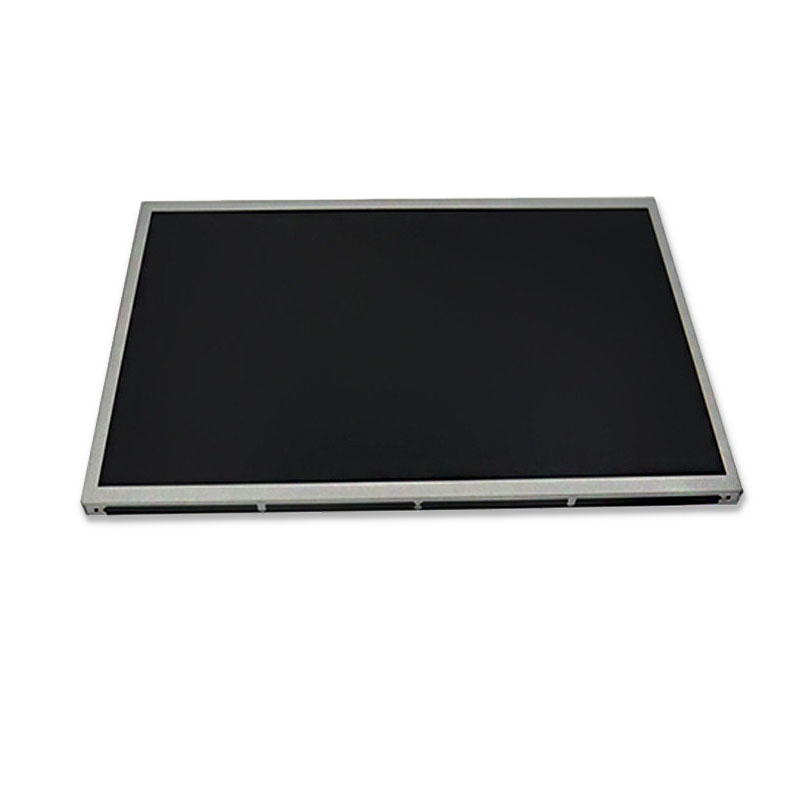
In the rapidly evolving landscape of display technology, the 18.5-inch segment occupies a unique and indispensable niche. While consumer markets chase after ever-larger screens and higher resolutions, industrial, commercial, and medical applications demand reliability, optical clarity, and consistent performance. The G185HAN01.0, manufactured by AU Optronics (AUO), is a prime example of a component designed not for spectacle, but for substance. This model is a 18.5-inch TFT-LCD module that bridges the gap between legacy 17-inch systems and modern 19-inch design requirements, offering a native resolution of 1366 x 768 pixels (WXGA). Its most distinguishing feature is the High Brightness (HAN) designation, which typically implies a luminance output of over 350 cd/m², making it suitable for environments with significant ambient light. This article will dissect the technical architecture, application logic, and competitive positioning of the G185HAN01.0. We will explore why this specific model remains a critical component for system integrators, replacement market vendors, and OEMs who prioritize longevity and performance over consumer trends. From its electrical interface to its mechanical constraints, we aim to provide a comprehensive analysis that moves beyond a simple datasheet summary.
Decoding the AUO Nomenclature: What "G185HAN01.0" Actually Tells You
Understanding the part number is the first step toward grasping the product's engineering intent. The prefix G185 directly indicates the screen size: 18.5 inches diagonally. This is a critical dimension because it often fits into standard cutouts for industrial panels, POS terminals, and medical monitoring carts without requiring custom bezels. The HAN segment is the performance modifier; it stands for High Application Norm, which in AUO's industrial line is synonymous with enhanced brightness and a wider operating temperature range compared to standard models (like the "L" series). This implies a backlight system designed for sustained high-luminance operation, often utilizing the latest LED technology with a specific number of LEDs to ensure uniform light distribution.
The 01.0 suffix denotes the revision or generation of the design. This is crucial for engineers sourcing replacement parts; a G185HAN01.0 is not necessarily a direct pin-to-pin drop-in replacement for a G185HAN01.1. The timing controller (TCON) board layout or the LVDS connector mapping might have subtle differences. Breaking down this nomenclature helps procurement teams avoid costly mistakes. Furthermore, the "G" series is AUO's dedicated industrial line, distinguished from consumer lines by adherence to stricter reliability testing, including vibration, shock, and humidity resistance. Knowing this, a system integrator can confidently specify this panel for a factory floor HMI (Human Machine Interface) where vibration and dust are constant factors. The name itself is a promise: a robust, bright, and standardized industrial component.
Optical Characteristics and the "High Brightness" Advantage
At the heart of the G185HAN01.0's appeal is its optical performance. The High Brightness rating, typically around 400 to 500 cd/m² (depending on the specific backlight configuration), is a decisive factor for applications like digital signage in retail windows or outdoor kiosks under shade. This level of luminance ensures that the display remains legible even when competing with strong ambient lighting, a scenario where a standard 250 cd/m² panel would appear washed out. The contrast ratio, usually specified at 3000:1 (due to the VA technology often used in this model), provides deep blacks and vibrant colors, which is essential for medical imaging review and graphic-rich control software.
The viewing angles are another critical consideration. While VA panels historically suffered from gamma shift off-angle, AUO has refined the technology to achieve wide viewing angles, typically 178° horizontal and 178° vertical. This is achieved through precise alignment of the liquid crystal layers. The response time—often in the 5-8 ms (G to G) range—is sufficient for displaying dynamic data, such as scrolling charts or video feeds, without ghosting. It is not designed for high-speed gaming, but for operational clarity. The color reproduction, usually covering 72% of the NTSC standard (or equivalent sRGB coverage), is adequate for most industrial and commercial needs. For an integrator, this data sheet translates to a real-world advantage: the screen can be placed in a sunlit lobby or a bright workshop and still deliver a crisp, high-contrast image that operators can read without eye strain.
Interface, Power, and Signal Integrity: The Backbone of Integration
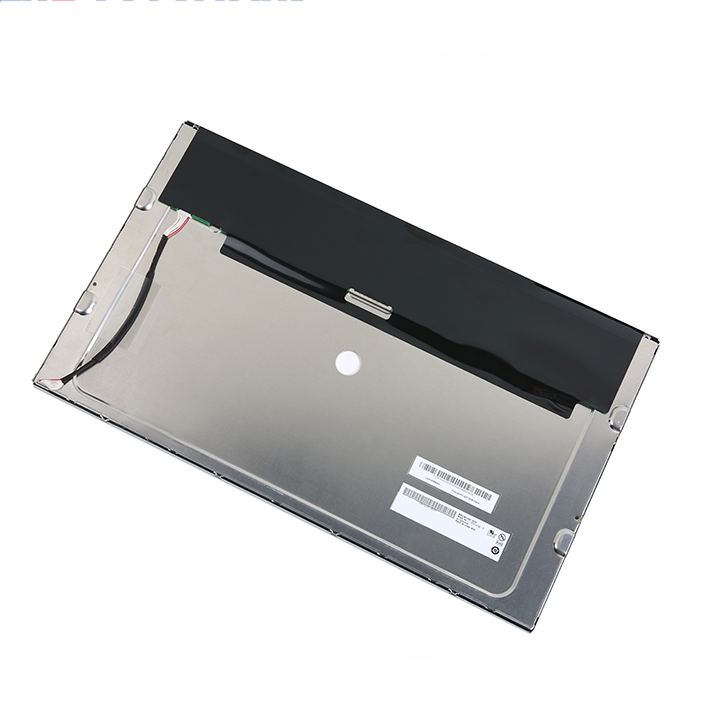
Integration complexity is often the hidden cost of display selection. The G185HAN01.0 simplifies this with a standard LVDS (Low-Voltage Differential Signaling) interface. This is a mature, well-understood protocol that is supported by a vast ecosystem of single-board computers, LCD controllers, and embedded systems. The display typically uses a 2-channel, 8-bit LVDS connection, which supports the 16.7 million colors required for full-color imagery. Mechanical compatibility is enhanced by the use of a standard 30-pin connector, making it a relatively straightforward drop-in upgrade for many existing systems.
Power management is equally pragmatic. The backlight section is driven by a separate LED driver circuit. This means the system designer needs to supply a specific voltage and current for the LEDs (e.g., 24V, 500mA) separate from the logic power (typically 3.3V or 5V). This separation allows for fine-tuning of brightness levels via PWM (Pulse Width Modulation) control without affecting the delicate LCD logic. For the professional integrator, this design reduces electrical noise risks and simplifies compliance with CE and FCC standards. The panel also integrates ESD protection circuits on the input lines, ensuring that the display can withstand the electrical noise common in industrial environments. A thorough understanding of these power and signal requirements is essential for generating a clean, stable image and preventing premature failure of the timing controller.
Mechanical Design and Environmental Ruggedness
Beyond the electronics, the physical build of the G185HAN01.0 is engineered for longevity. The panel's physical dimensions adhere closely to the standard for 18.5-inch open-frame monitors, typically featuring a symmetrical slim bezel design that allows for VESA mounting or installation into a cutout. The active area is precisely 409.8 mm x 230.4 mm, a size that comfortably fits standard 18.5-inch enclosures. The total thickness, including the backlight unit and driver board, is designed to be minimal, often under 10mm at its thinnest point, aiding in the creation of sleek, modern equipment enclosures.
The environmental specifications are where this AUO panel truly differentiates itself from consumer-grade monitors. It is rated for an operating temperature range of -20°C to +70°C. This enables deployment in cold storage logistics, unventilated outdoor kiosks, or hot factory floors. The storage temperature range is even wider, typically -30°C to +80°C. Such ratings are only achievable through the use of industrial-grade liquid crystals and robust power supply components. Additionally, the product often includes mounting brackets and holes designed for secure attachment, preventing vibration-induced fatigue failures. For medical applications, the panel's compliance with industry standards for flammability (UL94-V0 for the backlight components) and low EMI (Electromagnetic Interference) is a significant advantage, helping OEMs accelerate their path to certification (e.g., IEC 60601 for medical electrical equipment).
Lifecycle Management: The True Long-Term Value Proposition
The most significant, yet often overlooked, aspect of the G185HAN01.0 is its product lifecycle strategy. AUO specifically designs its industrial "G" series panels for extended availability, typically promising a minimum of 3 to 5 years of active production and up to 7 years of legacy support. This is a stark contrast to consumer panels which are often discontinued within 12-18 months. For a medical device manufacturer or an industrial control system integrator, this long lifecycle is a critical factor in the Total Cost of Ownership (TCO). It allows for longer production runs of their own equipment and provides a stable source for warranty replacements and aftermarket repairs.
Furthermore, AUO maintains revision control to ensure that if a component becomes obsolete, a suitable replacement (often the next iteration, like the 01.1) is available with minimal BOM changes. The use of standardized connectors and electrical interfaces facilitates this transition. From a supply chain perspective, the G185HAN01.0 is also stocked by major global distributors, ensuring relatively short lead times compared to custom-specified panels. This availability is a direct result of the high demand from the gaming, medical, and POS (Point of Sale) kiosk markets. Choosing this display is essentially an investment in supply chain security and product longevity, allowing the end product to remain maintainable and marketable for years or even a decade after its initial launch.
FAQs: Addressing Critical Questions About the G185HAN01.0
What is the native resolution of the G185HAN01.0? The native resolution is 1366 x 768 pixels (WXGA), with a 16:9 aspect ratio.
Is the G185HAN01.0 a touch screen? No, this is a standard TFT-LCD display module. It does not have a built-in touch sensor, though it can be integrated with an external touch panel (e.g., resistive, capacitive).
What interface does it use to connect to a motherboard? It uses a standard 30-pin, 2-channel LVDS interface for video data transmission.
What voltage is required for the backlight? The backlight requires a separate LED driver and typically operates at 24V, but always consult the specific datasheet for your revision for exact voltage and current ratings.
Can this display be used outdoors in direct sunlight? It is "high brightness" (400-500 cd/m²), making it readable in bright light, but it is not designed for prolonged direct sunlight without a suitable filter or enclosure to manage heat and UV exposure.
What is the typical response time? The response time is usually in the 5 to 8ms range (Grey to Grey), which is adequate for dynamic menu systems and video but not for high-speed action.
Is there a wide temperature version available? Yes, the "HAN" series is designed for a wider range. The standard operating temp is -20°C to +70°C, making it suitable for many industrial applications.
Is the G185HAN01.0 pin-compatible with other 18.5 inch screens? Not necessarily. AUO may have different pin assignments (e.g., for LVDS vs. eDP). Always verify the datasheet for the exact connector layout before replacing a screen.
What is the typical lifespan of the LED backlight? The rated lifespan is typically 50,000 hours (half brightness), which translates to over 5.5 years of 24/7 operation.
Where can I purchase a G185HAN01.0? It is available through major electronic component distributors (like DigiKey, Mouser) as well as specialized LCD wholesale suppliers, often in single unit or bulk quantities.
Conclusion: A Strategic Component for a Durable World
The G185HAN01.0 from AUO is a testament to the proposition that quality display engineering is about more than high pixel counts. This 18.5-inch TFT module excels in the demanding environments of industrial automation, medical simulation, digital signage, and commercial kiosks because it is built for longevity and reliability. From its clear "HAN" designation signaling high brightness and a wide temperature range, to its standardized LVDS interface and extended lifecycle management, this panel offers a balanced solution that prioritizes functional durability over flashy features. For the design engineer, it translates to lower integration risk and a longer product lifespan. For the procurement manager, it means supply chain stability. For the end-user, it delivers a crisp, reliable visual interface day after day, year after year. In a consumer market obsessed with the next big thing, the G185HAN01.0 stands as the quiet, dependable workhorse that keeps critical systems running. It reminds us that sometimes the most impressive technology is the one you never have to think about because it simply works. By choosing this display, industry professionals invest not just in a component, but in a legacy of proven performance and peace of mind.
Related Product Links:LQ10D368 Sharp 10.4"640*480 LCD display screen





