













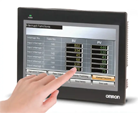
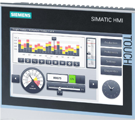
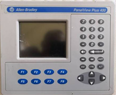





- Industrial display
-
Industrial Products
- DC Servo Drive
- AC Servo Drive
- Industrial board
- Siemens
- Switch Sensor
- Proximity Switch
- Temperature Controller
- Protection Relay
- Fiber Optic Sensor
- Encoder
- Fan
- other
- Heidelberg
- MITSUBISHI
- FANUC
- Siemens adapter
- Fujitsu connector
- Motherboard
- Board
- Contactor
- Circuit
- OMRON
- Relay
- Motor Driver
- power supply
- Cable
- Transformer
- HMI Touch Glass
-
HMI Full Machine Whole unit
- OMRON HMI Touch Panel
- Siemens HMI Touch Panel
- Mitsubishi HMI Touch Panel
- Allen-Bradley automation HMI Touch Panel
- DELTA HMI Touch Panel
- Proface HMI Touch Panel
- KINCO DELTA HMI Touch Panel
- HITECH HMI Touch Panel
- WEINTEK HMI Touch Panel
- TECVIEW HMI Touch Panel
- WEINVIEW HMI Touch Panel
- PANASONIC HMI Touch Panel
- KYOCERA HMI Touch Panel
- SCHNEIDER HMI Touch Panel
- Module
- lcd inverter
- Membrane Keypad Switch
- Zhiyan Customized Touch Screens
- Frequency Inverter
- Servo Motor
- PLC
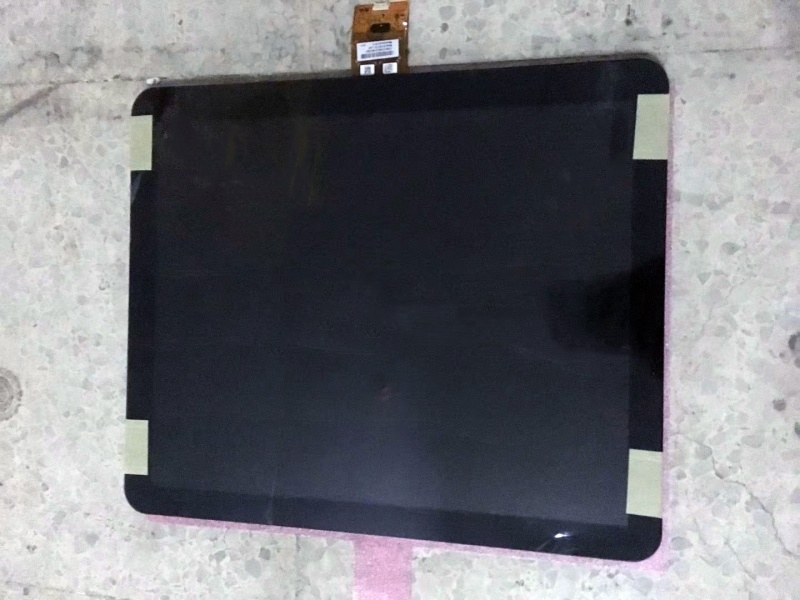
In the ever-evolving landscape of industrial automation, medical imaging, and digital signage, the choice of display technology is not merely a specification—it is a foundation for performance and reliability. The G170ETT01.0, a 17-inch LCD panel manufactured by AU Optronics (AUO), represents a pivotal component for engineers and system integrators who demand high durability and consistent visual output. Unlike consumer-grade monitors, this panel is engineered for environments where 24/7 operation is non-negotiable. As industries pivot toward more robust and energy-efficient solutions, understanding the unique architecture and application boundaries of this specific model becomes critical. This article dissects the technical intricacies, operational advantages, and practical deployment strategies of the AUO G170ETT01.0. We will move beyond surface-level specifications, exploring the engineering rationales behind its design and the real-world scenarios where it excels, providing actionable insights for professionals looking to optimize their hardware investments.
Engineering Precision: The Core Architecture of the G170ETT01.0
The G170ETT01.0 is not a standard off-the-shelf display; it is an industrial-grade equipment designed with a specific set of technical constraints. At its heart, the panel utilizes a-Si TFT-LCD (Amorphous Silicon Thin-Film Transistor) technology. This choice is intentional, balancing production cost with the reliable switching speeds required for static industrial interfaces. The panel boasts a native resolution of 1280 x 1024 pixels (SXGA), providing a 5:4 aspect ratio. This is a deliberate design choice for applications like factory floor control terminals and MRI patient monitors, where square-cornered interfaces offer efficient data layout without the letterboxing issues of widescreen formats. The LVDS (Low-Voltage Differential Signaling) interface ensures signal integrity over short distances, a critical factor in environments with high electromagnetic interference. The backlighting is typically WLED, a decision that provides a longer operational lifespan (often exceeding 50,000 hours) and lower power consumption compared to traditional CCFL counterparts. Understanding that this panel is often used in direct sunlight or bright factory conditions, AUO has engineered a high luminance output, typically around 350 to 400 cd/m², with an anti-glare surface treatment to reduce reflection artifacts that can cause operator error.

Thermal and Structural Resilience: Operating in Extreme Conditions
One of the defining characteristics of the G170ETT01.0 is its wide operating temperature range, generally spanning from -20°C to +70°C. This is a critical differentiator from commercial panels, which typically fail or degrade rapidly outside of 0°C to 50°C. This thermal tolerance is achieved through multiple engineering layers. The liquid crystal material itself is a "wide-temperature" formulation that maintains viscosity and response time at low temperatures, preventing the "ghosting" effect common in consumer screens. The structural design incorporates a robust metal frame that acts as a heat sink, dissipating heat from the driver ICs and backlight driver board. This passive thermal management eliminates the need for active cooling fans, which are failure points in dusty or chemically aggressive environments. Furthermore, the panel often adheres to IP4X (or higher) ingress protection standards when integrated into a bezel, protecting against solid particles like dust and metal shards. For integrators, this means that the G170ETT01.0 can be deployed in unventilated enclosures near heavy machinery or in outdoor digital kiosks that experience diurnal temperature swings, without the immediate risk of condensation-induced short circuits or thermal runaway.
Optical Characteristics: Color Consistency and Viewing Angles
While consumer monitors prioritize wide color gamuts for entertainment, the G170ETT01.0 prioritizes color stability and grayscale accuracy. This panel typically features a 6-bit + FRC (Frame Rate Control) driver, capable of displaying 16.2 million colors. This is sufficient for differentiating between critical alarm states in a control room (e.g., red for emergency, yellow for caution) or highlighting tissue density in medical imaging. The panel utilizes TN (Twisted Nematic) technology, which provides a fast response time (often around 5ms Tr+Tf) but has inherent limitations in vertical viewing angles. The typical viewing angles are 80°/80°/80°/60° (L/R/U/D). The asymmetry—degraded performance when viewed from below—is a crucial design parameter. Engineers must position the screen so that the primary operator’s line of sight is perpendicular to the panel surface. To mitigate color shift at wider angles, AUO has implemented specific optical compensation films that reduce the contrast inversion effect typical of older TN panels. The contrast ratio is typically 1000:1, which, while not exceptional for an IPS panel, is excellent for TN technology, providing deep blacks in the dimly lit conditions of a control room. This optical profile suggests that the G170ETT01.0 is optimized for a single, central viewer rather than a group, a key consideration for point-of-care medical devices or single-operator workstations.
Interface Integration: LVDS Signal Integrity and Timing Controllers
Integrating the G170ETT01.0 into a system requires a deep understanding of its electrical interface. The panel uses a dual-channel LVDS connection, typically a 30-pin connector. This is necessary to support the 1280x1024 resolution at a standard 60Hz refresh rate. The Timing Controller (TCON) embedded on the panel’s PCB manages signal parsing and pixel clocking. For the system designer, the critical specification is the Pixel Clock, which is usually around 108 MHz. A mismatch in pixel clock frequency between the graphics source and the panel can lead to artifacts like pixel jitter or image stretching. The G170ETT01.0 typically requires a 3.3V power supply for the logic board and a separate, higher voltage for the backlight (often 12V for the LED driver). Power sequencing is vital: the logic supply must be stable before the backlight is enabled. Failure to follow the recommended power-on/off sequence (VDD → LVDS signals → Backlight) can damage the TCON or cause transient image retention. Experts recommend using a dedicated PAL (Panel Adapter Link) board or a microcontroller-based sequencing circuit to ensure these timing constraints are met, especially when prototyping a new embedded system. The impedance of the LVDS differential pairs should be maintained at 100 ohms to prevent signal reflection.
Comparative Analysis: G170ETT01.0 vs. Consumer 17-inch Monitors
A common mistake is assuming any 17-inch panel can serve as a drop-in replacement. The G170ETT01.0 differs from a standard desktop monitor on multiple fundamental levels. First, longevity: consumer monitors are often designed for a 2-3 year lifespan with 8 hours of daily use per day. The AUO panel, with its WLED backlight and industrial capacitors, is rated for 50,000 to 100,000 hours of continuous operation. Second, mechanical structure: a consumer panel relies on the monitor's plastic bezel for structural rigidity. The G170ETT01.0 has a mounting hole pattern (often VESA 75mm or 100mm) and a robust metal chassis allowing it to be directly bolted into a machine enclosure. Third, chemical resistance: the polarizer on the G170ETT01.0 is often coated to withstand mild cleaning agents like isopropyl alcohol, which would damage the anti-glare coating on standard displays. Finally, supply chain stability: AUO guarantees production and support for industrial panels for at least 5-7 years, whereas consumer panels may be discontinued within 12 months. For a manufacturer building a medical cart or a CNC controller, this long-term availability is crucial for recertification and ongoing production. The premium price of the G170ETT01.0, therefore, is justified by its Total Cost of Ownership (TCO), which is lower due to reduced failure rates and longer service intervals.
Deployment Scenarios and Common Pitfalls
The G170ETT01.0 shines in three primary deployment scenarios: Industrial HMI (Human-Machine Interface), Medical Patient Monitors, and Gaming/Casino Terminals. In a typical HMI application, the panel interacts with a PLC (Programmable Logic Controller) via a serial protocol conversion. A common pitfall here is EMI (Electromagnetic Interference) from the LVDS cable acting as an antenna if not properly shielded. Using a ferrite core on the cable can mitigate this. In medical settings, the panel’s viewing angle asymmetry can be problematic if the monitor is articulated above or below the patient’s eye level. Integration engineers must ensure the panel is mounted so the primary viewer (the doctor or nurse) is within the optimal 0 to 15 degree upward viewing cone. A second pitfall is backlight bleeding: while acceptable in industrial environments, any light leakage is often unacceptable in medical imaging. Careful torque management of the mounting screws (typically 2-4 kg-cm) is essential to prevent the metal frame from distorting and causing uneven pressure on the LCD glass. For casino terminals, the anti-glare surface is critical, but it can also trap dust over time. A positive pressure ventilation system within the enclosure is recommended to keep the active area clean. Ignoring the display's datasheet for storage humidity (usually 5-95% non-condensing) is a fast track to edge corrosion and gate driver failure.
FAQs
What is the exact resolution of the AUO G170ETT01.0? It is 1280 x 1024 pixels (SXGA) with a 5:4 aspect ratio.
Is this panel compatible with a Raspberry Pi? Not directly. It requires an LVDS interface. You would need an HDMI-to-LVDS converter board and a 12V/3.3V power supply.
What is the typical backlight lifetime for this panel? The WLED backlight is rated for 50,000 to 100,000 hours, depending on the specific version and operating current.
Can I use this panel outdoors? Yes, for shaded outdoor use or in a high-brightness enclosure. Its 350-400 cd/m² brightness is marginal for direct sunlight; a high-brightness version or optical bonding may be required.
What is the difference between the G170ETT01.0 and the G170ETN01.0? The "N" denotes a different revision or mechanical specification. The "T" typically indicates a specific touch panel compatibility or a different backlight driver board. Always verify the datasheet.
Does this panel support DisplayPort or HDMI? No. The native interface is only Dual-Channel LVDS. An external controller board is necessary for HDMI/DisplayPort conversion.
What is the optimal operating temperature range? The storage temperature is -20°C to +70°C, and the operating temperature is typically -10°C to +60°C or higher, depending on the specific model variant.
Is a touch screen available for this panel? AUO often offers a companion touch lens, but the G170ETT01.0 itself is a raw LCD panel. System integrators typically add a resistive or capacitive touch overlay.
Why does the viewing angle seem poor from the bottom? It is a TN panel with asymmetrical viewing angles (80/80/80/60). The 60° limit is from the bottom. Mount the screen so the user looks straight on or slightly downwards.
Can I replace a broken G170ETT01.0 with any 17-inch SXGA panel? No. The physical dimensions, mounting holes, connector location, and electrical timing are unique. Always use the exact AUO part number or a verified cross-reference.
Conclusion
The AUO G170ETT01.0 17-inch LCD panel is more than a commodity display; it is a meticulously engineered component designed for the demanding intersection of reliability, longevity, and consistent performance. From its robust wide-temperature liquid crystal formulation to its precise LVDS interface timing, every design choice serves a specific operational context. The panel’s strengths lie not in cinematic color vibrancy but in its ability to provide a stable, readable interface in environments that would destroy a standard monitor. However, its successful deployment hinges on the integrator’s understanding of its constraints—particularly its TN viewing angles and interface requirements. By recognizing the trade-offs between cost, durability, and optical performance, professionals can leverage the G170ETT01.0 to build systems that stand the test of time. As industrial digitization accelerates, the role of such specialized components becomes not just beneficial, but essential for maintaining operational integrity and minimizing downtime. Choosing this panel is a strategic commitment to long-term system reliability over short-term convenience.
Related Product Links:NL6448BC33-59 NEC 10.4 inch industry LCD display screen





