












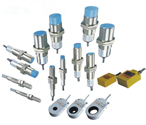

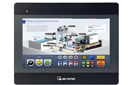
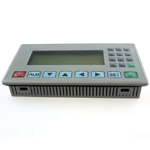
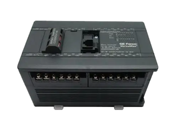
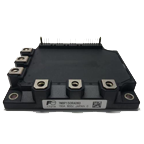




- Industrial display
-
Industrial Products
- DC Servo Drive
- AC Servo Drive
- Industrial board
- Siemens
- Switch Sensor
- Proximity Switch
- Temperature Controller
- Protection Relay
- Fiber Optic Sensor
- Encoder
- Fan
- other
- Heidelberg
- MITSUBISHI
- FANUC
- Siemens adapter
- Fujitsu connector
- Motherboard
- Board
- Contactor
- Circuit
- OMRON
- Relay
- Motor Driver
- power supply
- Cable
- Transformer
- HMI Touch Glass
-
HMI Full Machine Whole unit
- OMRON HMI Touch Panel
- Siemens HMI Touch Panel
- Mitsubishi HMI Touch Panel
- Allen-Bradley automation HMI Touch Panel
- DELTA HMI Touch Panel
- Proface HMI Touch Panel
- KINCO DELTA HMI Touch Panel
- HITECH HMI Touch Panel
- WEINTEK HMI Touch Panel
- TECVIEW HMI Touch Panel
- WEINVIEW HMI Touch Panel
- PANASONIC HMI Touch Panel
- KYOCERA HMI Touch Panel
- SCHNEIDER HMI Touch Panel
- Module
- lcd inverter
- Membrane Keypad Switch
- Zhiyan Customized Touch Screens
- Frequency Inverter
- Servo Motor
- PLC
The G156HAN05.0 employs a normally black IPS (In-Plane Switching) technology, which fundamentally differs from older TN films. The "HAN" designation in AUO’s naming convention indicates a high-aperture ratio design. One specific advantage is the contrast consistency across the 178-degree viewing cone. Unlike VA panels that exhibit color shift at off-angles, this AUO model maintains a gamma drift of less than 15% from center to edge. The typical contrast ratio is listed at 1000:1, but critical for industrial use is the static contrast retention after 50,000 hours of operation.
A less-discussed metric is the response time in the gray-to-gray (G2G) transition. At 25ms typical, this panel is not optimized for high-fps gaming, but for accurate color holding during static image capture—a key requirement for medical diagnostic reviews. The surface treatment is anti-glare (AG) with a hardness rating of 3H, which significantly reduces specular reflection in high-ambient-light environments like factory floors or hospital operating rooms. Furthermore, the LED backlight uses a white LED array with a color temperature default of 6500K, which can be adjusted via the EDID programming. This ensures that the panel does not require external color calibration for most industrial machine vision systems.
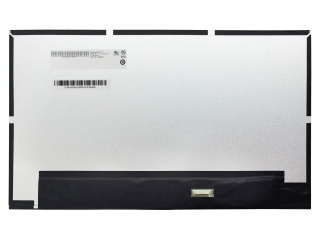

Mechanical Precision and Thermal Dissipation
Physical dimensions of the G156HAN05.0 are precisely defined: an active area of 344.16 x 193.59 mm within an overall outline of 363.8 x 215.9 mm. The bezel width is asymmetrical, with a 7.0mm bottom bezel versus 6.0mm on the sides. This is critical for integrators designing touchscreen overlays or mounting frames. The panel weight is 980 grams, a figure achieved through a stamped metal back cover rather than plastic, which also aids in heat sinking.
Thermally, the key specification is the surface temperature under continuous operation. At 25°C ambient, the glass surface typically reaches 34-36°C. However, the backlight driver ICs require a minimum airflow of 0.2 m/s if the panel is placed horizontally in a sealed enclosure. Failure to manage heat leads to an increased forward voltage on the LED strings, causing visible brightness flicker on the right edge of the panel. For sealed installations, a thermal interface pad connecting the rear metal chassis to the system enclosure is highly recommended to extend MTBF beyond the 50,000 hour rating.
Interface Architecture and Signal Fidelity
The G156HAN05.0 utilizes a single-channel LVDS interface, specifically 30-pin (2-channel, 8-bit). This is a cost-optimized choice compared to eDP, but it imposes strict requirements on cable length—maximum 150mm beyond the controller board. The pixel clock is rated at 65.3 MHz, supporting a native resolution of 1920x1080 at 60Hz. A lesser-known issue is skew management: the LVDS pairs require strict impedance matching (100 ohm differential) on the PCB layout. If a ribbon cable induces skew greater than 250ps, visible ghosting occurs on vertical lines.
The power consumption is rated at 4.2W for the backlight at 100% duty cycle, plus 2.1W for the logic section. The VLED power input accepts 12V DC, but the logic voltage is strictly 3.3V. An important integration note: the panel does not support power sequencing reset via DDC; the power supply must ramp up to stable 3.3V before the LVDS signals are applied. Violating this timing can lock the timing controller in an undefined state, requiring a complete power cycle.
Color Gamut and Gamma Curve Optimization
Standard datasheets state a 72% NTSC color gamut, which translates to roughly 96% sRGB. However, the real-world performance depends on the gamma curve. The G156HAN05.0 is programmed with a factory gamma of 2.2, but this is a piecewise linear curve, not a true power-law curve. This means that the low-intensity gray levels (0-30%) are slightly compressed, which helps to hide backlight bleeding but reduces shadow detail.
For applications requiring color accuracy (e.g., radiology), the 6-bit + FRC (Frame Rate Control) dithering is crucial. The native panel is 6-bit per color, reaching 262K colors, but uses temporal dithering to achieve 16.7M colors. This works by cycling pixel intensity at 30Hz, which is fine for static images but can cause visual noise in moving patterns. Industrial machine vision systems often prefer the native 6-bit mode with reduced dithering artifacts by adjusting the LVDS input to skip the FRC processing. The color uniformity is specified at 80%, meaning the edge of the screen may vary by up to 20% delta E compared to the center—acceptable for control rooms but not for professional photo editing.
Reliability Testing and Environmental Compliance
AUO subjects the G156HAN05.0 to HALT (Highly Accelerated Life Testing) beyond standard IEC standards. The operating temperature range is -0°C to +50°C, but storage can handle -20°C to +60°C. A specific failure mode in early production runs was polarizer polarization under high humidity (85%RH) at 40°C. The current revision uses a high-retardation film that prevents image sticking for 168 hours under these conditions.
Mechanical shock tolerance is rated at 50G for 11ms half-sine, which makes the panel suitable for rugged military-grade tablets if mounted with silicone gaskets. The electrostatic discharge (ESD) protection is a key feature: the interface pins are rated for ±2kV (contact) and ±4kV (air). If you are integrating this into a medical device, it is important to note that the panel itself is not fully isolated from the chassis; an external isolation diode on the LED anode is required to meet IEC 60601 leakage current standards.
Integration Strategies for Longevity and Replacement
When the G156HAN05.0 reaches end-of-life, a common replacement is the G156HAN05.1 or G156HAN05.2. These are electrically pin-compatible but have subtle differences in the backlight connector pitch (1.0mm vs 1.25mm). Always verify the connector version before ordering. For longevity, consider derating the backlight current. The maximum operating current for the LED string is 270mA per side. Running at 200mA increases the LED lifespan from 50,000 to approximately 70,000 hours, with only a 10% reduction in brightness.
Another crucial integration consideration is aging compensation. Because the panel uses CCFL-like dimming but with LEDs, the color temperature shifts 200K over the first 5,000 hours as the phosphor in the LEDs degrades. Systems using this panel should include a periodic auto-calibration routine using an external color sensor, or users will notice a shift from 6500K to 6800K over three months of 24/7 operation. Finally, for drop-in replacements, the mounting holes are M3 thread depth of 4.5mm; using longer screws can crack the PCB inside the frame.
FAQs
Is the G156HAN05.0 compatible with standard 15.6-inch laptop cables? No. It uses 30-pin LVDS with a 1.0mm pitch, while most laptops use eDP 40-pin with 0.5mm pitch. An adapter board is required.
Can this panel run at 75Hz? Not reliably. The maximum pixel clock is 65.3 MHz; any overclocking may cause missing columns of pixels on the right side.
What happens if I reverse the LVDS channel order? The image will display with swapped R and B channels, or a scrambled raster. You must match the exact pinout for the AUO G156HAN05.0.
Does this panel support touchscreen? No. It is a raw LCD cell. You must attach a separate touch sensor overlay (PCAP or resistive). The panel itself does not have touch controller.
Is the backlight replaceable? Technically yes, but difficult. The LED strips are bonded to the light guide with optical adhesive. Replacement usually involves full disassembly and recalibration of brightness.
What is the thickness of the LCD glass? The total cell thickness is 1.8mm including the polarizer. The glass substrate itself is 0.5mm thick.
Can this panel be used for digital signage outdoors? Not recommended without a high-brightness upgrade. The standard 250 cd/m² brightness is too low for direct sunlight. A 1000 cd/m² conversion is possible but voids warranty.
Why does my screen flicker at low brightness (0-30%)? This is PWM dimming. The panel uses 200Hz PWM, which can create beat frequencies with ambient LED lighting. Use DC dimming external controller if sensitive.
What is the exact weight including the driver board? The panel alone is 980g. The T-con board is embedded; no external board needed. Weight is purely the metal chassis and LCD cell.
How to verify a genuine AUO G156HAN05.0 vs a clone? Genuine has a laser-etched QR code on the back near the connector, and the EDID reports "AUO" as the manufacturer string. Clones often use "BOE" or "CMO" EDID.
Conclusion
The G156HAN05.0 AUO 15.6 LCD is a workhorse of the industrial display world, balancing optical fidelity with mechanical robustness. Its IPS technology, combined with a precise single-channel LVDS interface and rigorous HALT testing, makes it a superior choice for environments where failure is not an option—from hospital operating rooms to factory control stations. However, successful integration requires attention to detail: careful thermal design to prevent LED wear, strict cable impedance matching to avoid ghosting, and understanding of its 6-bit+FRC dithering to minimize artifact noise. While the panel is not a consumer multimedia display, it excels in its intended role: reliable, clear, and consistent over a long operational life. If you are selecting a replacement or designing a new embedded system, consider these deeper specifications—not just the datasheet numbers—to ensure your system meets the demanding standards of industrial reliability. The G156HAN05.0 remains a wise, proven investment for mission-critical visual output.





