


















- Industrial display
-
Industrial Products
- DC Servo Drive
- AC Servo Drive
- Industrial board
- Siemens
- Switch Sensor
- Proximity Switch
- Temperature Controller
- Protection Relay
- Fiber Optic Sensor
- Encoder
- Fan
- other
- Heidelberg
- MITSUBISHI
- FANUC
- Siemens adapter
- Fujitsu connector
- Motherboard
- Board
- Contactor
- Circuit
- OMRON
- Relay
- Motor Driver
- power supply
- Cable
- Transformer
- HMI Touch Glass
-
HMI Full Machine Whole unit
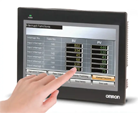
- OMRON HMI Touch Panel
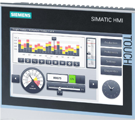
- Siemens HMI Touch Panel
- Mitsubishi HMI Touch Panel
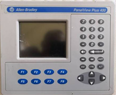
- Allen-Bradley automation HMI Touch Panel
- DELTA HMI Touch Panel
- Proface HMI Touch Panel
- KINCO DELTA HMI Touch Panel
- HITECH HMI Touch Panel
- WEINTEK HMI Touch Panel
- TECVIEW HMI Touch Panel
- WEINVIEW HMI Touch Panel
- PANASONIC HMI Touch Panel
- KYOCERA HMI Touch Panel
- SCHNEIDER HMI Touch Panel
- Module
- lcd inverter
- Membrane Keypad Switch
- Zhiyan Customized Touch Screens
- Frequency Inverter
- Servo Motor
- PLC
The landscape of industrial display technology is defined by precision, durability, and optical clarity. Among the components that set the benchmark for these metrics is the G156HAN02.2, a 15.6-inch LCD panel manufactured by AU Optronics (AUO). This specific model has become a critical reference point for engineers, system integrators, and procurement specialists seeking high-performance solutions for medical equipment, human-machine interfaces, and digital signage.
This article explores the technical architecture of the G156HAN02.2, moving beyond basic specifications to analyze its electro-optical performance, structural integrity, and real-world application constraints. We will examine how AUO has engineered this panel to balance brightness, contrast, and power efficiency while maintaining the rigorous reliability standards demanded by 24/7 operational environments. Whether you are evaluating its suitability for a new project or troubleshooting legacy system integration, this deep dive provides the technical rationale behind the panel’s market positioning.
Optical Performance and Color Fidelity
The optical specifications of the G156HAN02.2 are tailored for environments where accurate visual reproduction is non-negotiable. This panel typically operates with a brightness range of 300 to 400 cd/m² and a contrast ratio of 1000:1, ensuring that both bright clinical images and dark industrial graphics retain their depth. The use of an AHVA (Advanced Hyper-Viewing Angle) technology, AUO’s proprietary variant of IPS, guarantees wide viewing angles (typically 89/89/89/89 degrees) without significant color shift or luminance degradation.
Color reproduction is a critical variable. The G156HAN02.2 supports a 72% NTSC color gamut. While this is not the wide gamut found in high-end graphic design monitors (which often reach 100% sRGB or DCI-P3), it represents a deliberate engineering choice for standard industrial applications. A narrower gamut improves power efficiency and reduces backlight stress in continuous operation. Furthermore, this model often relies on 8-bit color depth, delivering 16.7 million colors, which is sufficient for displaying nuanced grayscale patterns in medical imaging or gradient control panels in factory automation.
Engineers should also note the response time, which is typically in the 25ms (Tr+Tf) range. This is slower than consumer gaming monitors but perfectly acceptable for static content, data display, or slow-changing video feeds common in industrial contexts. Excessive speed optimization is unnecessary here and would only increase panel cost.
Interface Configuration and Signal Integrity
A panel’s value is determined not only by its display quality but by its ability to integrate seamlessly with a host system. The G156HAN02.2 is predominantly available with an eDP (Embedded DisplayPort) interface, typically operating at 1.2 or 1.4 standards. This choice is significant for several reasons. First, eDP reduces the number of signal lanes compared to traditional LVDS, allowing for thinner cabling and smaller connectors—critical for embedded systems with tight spatial constraints.
The interface resolution is pinned at 1920 x 1080 (Full HD) with a standard 60 Hz refresh rate. The eDP architecture inherently supports Panel Self-Refresh (PSR) technology. When the display image is static, the panel can store the last frame in its internal memory, allowing the graphics processing unit to enter a low-power state. This is particularly beneficial for applications like point-of-sale terminals or patient monitoring dashboards where the screen content changes infrequently.
Signal integrity is maintained through differential signaling and careful impedance matching. When sourcing this panel, it is imperative to verify that the host controller’s eDP output is compatible with the panel’s specific lane configuration (often 2 lanes for FHD at 60Hz). A mismatch in lane count can lead to shimmering artifacts or complete failure to initialize the display.

Mechanical Architecture and Thermal Management
The physical structure of the G156HAN02.2 is built for survival. The panel typically adheres to the 15.6-inch form factor standard, with precise dimensions critical for bezel integration. The overall module thickness is often around 2.4 to 3.0 mm, excluding the backlight unit and driver board. This thin profile is achieved through a slim bezel design, making it suitable for modern edge-to-edge display assemblies.
Thermal management is a subtle but crucial aspect. The panel's backlight system, which utilizes a WLED (White Light Emitting Diode) array, generates heat that must be dissipated. AUO engineers have designed the metal frame—typically a zinc-coated steel chassis—to act as a passive heat sink. The panel’s operating temperature range is usually 0°C to 50°C (ambient) and storage range from -20°C to 60°C.
It is important to install the panel using top-down mounting with conductive screws to ensure the chassis connects to system ground, preventing electrostatic discharge damage. The mounting holes are standardized for VESA compliance in many integrator kits, though the exact pattern (often 75x75mm or 100x100mm via adapter brackets) must be verified against the mechanical drawing before prototyping.

Backlight Technology and Luminance Uniformity
The G156HAN02.2 utilizes a direct-lit or edge-lit WLED backlight, with edge-lit being more common in this size to minimize thickness. The backlight’s lifespan is rated at 30,000 to 50,000 hours (to half-brightness), depending on the drive current and ambient temperature. This is a vital metric for equipment expected to operate continuously for years.
Luminance uniformity is a key differentiator. Professional-grade panels like this one are often binned for 80% or higher luminance uniformity. This means the brightness at any corner or edge of the screen is at least 80% of the brightness at the center. In applications such as medical radiology viewing, variations beyond 15% can lead to diagnostic errors due to perceived differences in tissue density.
The backlight driver circuit includes PWM (Pulse Width Modulation) dimming control. The frequency of this PWM is typically set above 1 kHz to avoid visible flicker. Lower quality panels might use 200 Hz PWM, which causes eye strain and headaches in sensitive users. When integrating, the system designer should ensure the host motherboard can supply the correct voltage (usually 12V ± 10%) and current for the backlight inverter, along with a PWM signal that matches the panel’s synchronization requirements.
Application Scenarios and Environmental Suitability
The true test of any industrial LCD panel is its performance in real-world conditions. The G156HAN02.2 is optimized for a specific set of demanding environments. Its primary deployment is in medical equipment, including patient monitoring systems, anesthesia workstations, and diagnostic ultrasound machines. The panel’s high contrast ratio and consistent grayscale reproduction are essential for interpreting subtle physiological signals.
Beyond healthcare, this panel is frequently found in industrial HMI (Human-Machine Interface) panels. These are the touchscreens on CNC machines, robotic controllers, and process control systems. The panel’s anti-glare surface treatment (typically 2H hardness or higher) reduces reflections from overhead factory lighting. Furthermore, the panel is often combined with a resistive or capacitive touch sensor integrated by a third-party laminator.
While not rated for outdoor use, the G156HAN02.2 can function in high-ambient-light kiosk environments (e.g., lobby information kiosks) if fitted with an optical bonding layer that eliminates the air gap between the LCD and the protective cover glass. Without bonding, internal reflections reduce readability by 15-25% in bright conditions. The panel is not inherently waterproof, so it requires a conformal coating or sealed enclosure when used in kitchens, laboratories, or semi-condensing environments.
FAQS
What is the exact resolution of the G156HAN02.2? It is a native 1920 x 1080 (Full HD) panel.
Is this panel compatible with a standard LVDS interface? No, it typically uses an eDP (Embedded DisplayPort) interface, not LVDS.
What is the typical brightness level? Standard brightness is 300 cd/m², with some variants reaching 400 cd/m².
Can this panel be used for outdoor applications? Not directly; it has low readability in direct sunlight without a high-brightness upgrade or optical bonding.
What is the operating temperature range? It is designed for 0°C to 50°C ambient temperature.
Does the panel include a touch screen? No, the G156HAN02.2 is a raw LCD cell. Touch integration is a secondary process.
What is the typical response time? Usually around 25ms (Tr+Tf), sufficient for static and low-motion content.
Is the backlight replaceable or integrated? The WLED backlight is integrated and not field-replaceable; failure requires panel replacement.
What are the mounting hole dimensions? It uses standard mounting ears; VESA 75x75 or 100x100 via optional brackets is common.
Is this panel RoHS compliant? Yes, it is manufactured to meet RoHS and other environmental compliance standards.
Conclusion
The AUO G156HAN02.2 is not a generic component; it is a precisely engineered tool for professional environments. Its combination of AHVA viewing angles, reliable eDP interface, and robust mechanical design make it a superior choice for medical, industrial, and kiosk applications. We have dissected its optical standards, interface logic, thermal constraints, and backlight architecture to reveal why this panel holds a specific value proposition: longevity and consistency over raw performance.
When selecting this panel, remember that its success depends on system-level integration—the quality of the power supply, the thermal dissipation within the enclosure, and the precision of the touch lamination. For engineers who require a display that will perform flawlessly for 50,000 hours in a demanding setting, the G156HAN02.2 remains a reference grade component. It is a testament to the philosophy that in industrial design, stability and reliability are the highest forms of innovation.





