
















- Industrial display
-
Industrial Products
- DC Servo Drive
- AC Servo Drive
- Industrial board
- Siemens
- Switch Sensor
- Proximity Switch
- Temperature Controller
- Protection Relay
- Fiber Optic Sensor
- Encoder
- Fan
- other
- Heidelberg
- MITSUBISHI
- FANUC
- Siemens adapter
- Fujitsu connector
- Motherboard
- Board
- Contactor
- Circuit
- OMRON
- Relay
- Motor Driver
- power supply
- Cable
- Transformer
- HMI Touch Glass
-
HMI Full Machine Whole unit
- OMRON HMI Touch Panel
- Siemens HMI Touch Panel
- Mitsubishi HMI Touch Panel
- Allen-Bradley automation HMI Touch Panel
- DELTA HMI Touch Panel
- Proface HMI Touch Panel
- KINCO DELTA HMI Touch Panel
- HITECH HMI Touch Panel
- WEINTEK HMI Touch Panel
- TECVIEW HMI Touch Panel
- WEINVIEW HMI Touch Panel
- PANASONIC HMI Touch Panel
- KYOCERA HMI Touch Panel
- SCHNEIDER HMI Touch Panel
- Module
- lcd inverter
- Membrane Keypad Switch
- Zhiyan Customized Touch Screens
- Frequency Inverter
- Servo Motor
- PLC
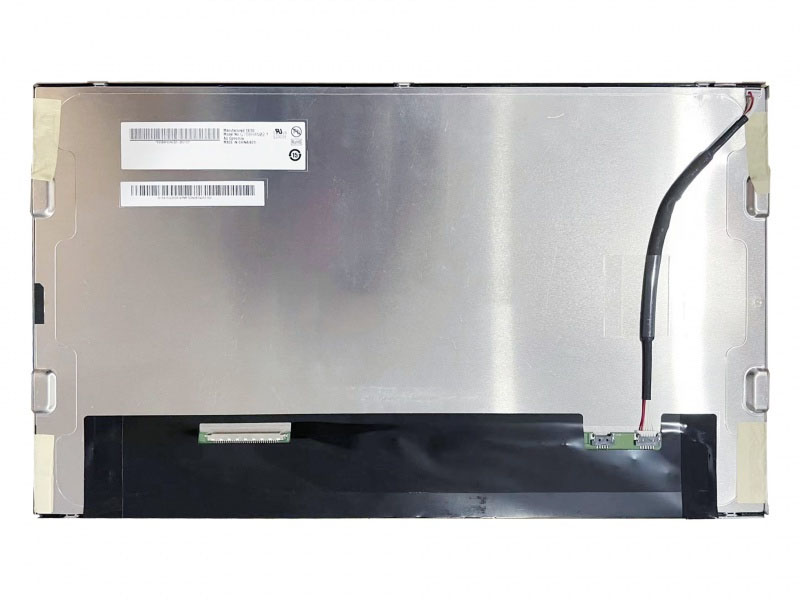
In the rapidly evolving landscape of industrial and commercial display technology, the selection of a reliable and high-performance LCD panel is a critical decision for engineers and system integrators. This article provides a comprehensive technical deep dive into the G156HAN02.1, a 15.6-inch a-Si TFT-LCD module manufactured by AU Optronics (AUO). More than just a standard replacement part, this panel represents a specific class of industrial-grade components designed for longevity and consistent visual performance under demanding conditions.
We will move beyond basic specifications to explore the underlying design philosophy, the operational advantages offered by its AHVA (Advanced Hyper-Viewing Angle) technology, and the critical role of its LVDS interface in signal integrity. The analysis will cover its structural robustness, optical characteristics, and practical application scenarios. By the end of this article, you will understand not just what this panel is, but why its specific engineering choices make it a suitable candidate for applications ranging from medical diagnostics to industrial human-machine interfaces (HMIs).
The AHVA Advantage: Beyond Standard IPS
At the heart of the G156HAN02.1 lies AUO’s proprietary AHVA (Advanced Hyper-Viewing Angle) technology. While often categorized alongside IPS, AHVA is a distinct liquid crystal alignment method that optimizes both light transmission and response times. Unlike traditional TN panels that suffer from severe color shift and contrast inversion at wide angles, this panel delivers a symmetrical 85-degree viewing angle in all directions (CR≥10).
The practical benefit is substantial: operators viewing the screen from off-center positions—a common scenario in multi-display control rooms or shared medical equipment—will perceive consistent brightness and accurate color rendering. Furthermore, AHVA technology enhances the panel's native contrast ratio. The G156HAN02.1 boasts a typical contrast of 1000:1, which is notably higher than many standard IPS panels in its class. This allows for deeper blacks and a more vivid dynamic range, crucial for applications like diagnostic imaging where subtle gradients in grayscale must be distinguishable. The technology also contributes to a faster response time, typically in the 25 ms range, which mitigates motion blur for dynamic industrial process monitoring.
Decoding the Optical Performance: Luminance and Color Depth
Optical performance is the primary differentiator for any LCD panel, and the G156HAN02.1 is engineered for environments where ambient lighting is a challenge. With a typical surface luminance of 400 cd/m² (nits), this panel is classified as "high-brightness." This is not an arbitrary figure; it is specifically calibrated to overcome washout caused by overhead fluorescent lighting in factory floors or bright surgical lights in an operating room.
Color reproduction is handled via a 6-bit + Hi-FRC (Frame Rate Control) driver. While true 8-bit panels offer 16.7 million colors without flicker, Hi-FRC in this context is a sophisticated temporal dithering algorithm that simulates the 16.7M palette from a 262k color set. For most industrial, kiosk, and medical text-based or symbology applications, this emulation is visually lossless. However, it is critical to note that this panel is not designed for high-end graphic design where absolute color accuracy per pixel is mandatory. The WLED backlight, with a typical lifespan of 50,000 hours, supports this brightness without significant degradation, ensuring a long maintenance-free service life. The surface treatment, typically an anti-glare (AG) coating, diffuses reflections from external light sources, further reducing eye strain for operators engaged in prolonged monitoring tasks.
Mechanical Architecture and Interfacing Precision
The physical construction of the G156HAN02.1 is a study in robust engineering. It utilizes a LVDS (Low-Voltage Differential Signaling) interface, specifically a 2-channel, 30-pin connector. This is a deliberate choice for noise immunity. In electrically noisy industrial environments, high-frequency digital signals can degrade. LVDS uses differential pairs to cancel out electromagnetic interference (EMI), ensuring signal integrity over a cable run of up to several meters.
The panel's physical dimensions are standardized at 363.8 x 215.9 mm (outline) with an active area of 344.16 x 193.59 mm. The module thickness is kept to a minimum—typically around 10-12 mm—allowing for easier integration into existing chassis designs. It is often used in an Open Frame configuration, meaning it is supplied without a bezel or touch sensor, offering design flexibility to the OEM. The operating temperature range of 0°C to 60°C and a storage range of -20°C to 60°C confirm its suitability for non-ventilated enclosures and semi-outdoor kiosks, provided the system manages thermal load. The absence of a rigid bezel means the panel requires careful mounting using screw holes on the side brackets to avoid stressing the glass.
Power Management and Backlight Architecture
Power efficiency is a critical but often overlooked parameter. The G156HAN02.1 operates on a typical power consumption of 11-12 Watts for the backlight, with the logic power consuming an additional ~0.5 Watts. This is moderate for a 400-nit panel and is a direct result of the efficiency of the WLED array. The backlight driver is integrated, requiring only a single DC power supply (usually 12V) to drive both the logic and the LEDs.
Understanding the backlight pin-out is crucial. The panel uses a CN1 connector for the LED strings. They are typically configured in parallel strings, meaning a failure in one string will reduce overall brightness but not cause a total blackout—a feature known as graceful degradation. For system integrators, this panel offers a distinct advantage: it does not require an external inverter or a high-voltage CCFL supply. This simplifies power supply design and reduces EMI from high-voltage switching. The dimming control is achieved via PWM (Pulse Width Modulation) on the backlight enable pin, allowing for smooth brightness adjustment without flicker at standard operating frequencies.
Application-Specific Integration and Alternatives
While the G156HAN02.1 is a general-purpose industrial panel, its specification profile makes it optimal for specific verticals. The Medical Sector is a prime candidate for PACS workstations and patient monitoring, where high brightness and wide viewing angles are non-negotiable. In Industrial Automation, it serves as the primary HMI display for CNC machines and PLC controllers, where reliability and readability under harsh lighting are paramount. It is also found in Gaming Machines and Ticketing Kiosks where a robust, long-life display is required.
It is important to differentiate this model from its similar counterparts. For instance, the G156HAN01.0 or G156HAN02.0 often have identical outlines but may differ in backlight driver design or initial luminance. Before integration, a precise pin-to-pin check of the data sheet is mandatory. The panel is also available in a G156HAN02.2 revision which often includes minor firmware updates for improved color uniformity. For applications requiring true 8-bit color, a higher-tier model like the G156XAN series from AUO should be considered, though at a higher power cost. This panel represents the sweet spot between cost, performance, and durability for 15.6-inch standard industrial requirements.
Frequently Asked Questions (FAQs)
Q: What is the exact resolution of the G156HAN02.1?A: The native resolution is 1920 x 1080 (Full HD) with a 16:9 aspect ratio.
Q: Can I use this panel with a Raspberry Pi or similar single-board computer?A: Yes, but only if you use an LVDS to HDMI or MIPI bridge board. The native interface is LVDS, not HDMI.
Q: What is the typical lifespan of the backlight?A: The WLED backlight is rated for 50,000 hours to half-brightness, under normal operating conditions.
Q: Is the G156HAN02.1 compatible with touch screens?A: It is an open-frame panel. You can add a capacitive or resistive touch sensor overlay, but it is not integrated into the module.
Q: What is the difference between this panel and a standard laptop LCD?A: This panel uses industrial-grade components with a wider temperature range, higher brightness, and a longer lifecycle than consumer laptop panels.
Q: What is the weight of the module?A: The typical weight is approximately 620 grams (without a bezel or driver board).
Q: What kind of LVDS signal does it require?A: It requires a 2-channel, 8-bit (JEIDA standard) LVDS signal. The pinout is defined by AUO and is non-proprietary.
Q: Can it operate in a high-humidity environment?A: Yes, the operating humidity range is typically 20% to 80% RH (non-condensing).
Q: What is the pixel pitch?A: The pixel pitch is 0.17925 mm (H) x 0.17925 mm (V), providing a sharp pixel density of ~141 PPI.
Q: Is the panel RoHS compliant?A: Yes, AUO manufactures this panel to be fully RoHS compliant, free of hazardous substances like mercury and lead.
Conclusion
The G156HAN02.1 represents a mature, well-engineered solution within the 15.6-inch industrial display ecosystem. It successfully balances the conflicting demands of high brightness, wide viewing angles, and robust signal integrity within a compact, power-efficient footprint. For system integrators, the key takeaway is the panel’s reliability derived from its AHVA technology and LVDS interface, making it a low-risk option for applications where failure is not an option, such as medical and industrial control.
Its primary limitation—the simulated 8-bit color via Hi-FRC—is a trade-off that standard industrial applications rarely notice. When selecting this panel, focus on verifying the specific backlight driver board and connector orientation for your chassis. Used correctly, the G156HAN02.1 is not just a screen; it is a strategic component that ensures operational clarity and longevity. For projects demanding a cost-effective, high-contrast display that performs consistently over a decade of service, this AUO panel remains a benchmark choice.





