

















- Industrial display
-
Industrial Products
- DC Servo Drive
- AC Servo Drive
- Industrial board
- Siemens
- Switch Sensor
- Proximity Switch
- Temperature Controller
- Protection Relay
- Fiber Optic Sensor
- Encoder
- Fan
- other
- Heidelberg
- MITSUBISHI
- FANUC
- Siemens adapter
- Fujitsu connector
- Motherboard
- Board
- Contactor
- Circuit
- OMRON
- Relay
- Motor Driver
- power supply
- Cable
- Transformer
- HMI Touch Glass
-
HMI Full Machine Whole unit
- OMRON HMI Touch Panel
- Siemens HMI Touch Panel
- Mitsubishi HMI Touch Panel
- Allen-Bradley automation HMI Touch Panel
- DELTA HMI Touch Panel
- Proface HMI Touch Panel
- KINCO DELTA HMI Touch Panel
- HITECH HMI Touch Panel
- WEINTEK HMI Touch Panel
- TECVIEW HMI Touch Panel
- WEINVIEW HMI Touch Panel
- PANASONIC HMI Touch Panel
- KYOCERA HMI Touch Panel
- SCHNEIDER HMI Touch Panel
- Module
- lcd inverter
- Membrane Keypad Switch
- Zhiyan Customized Touch Screens
- Frequency Inverter
- Servo Motor
- PLC
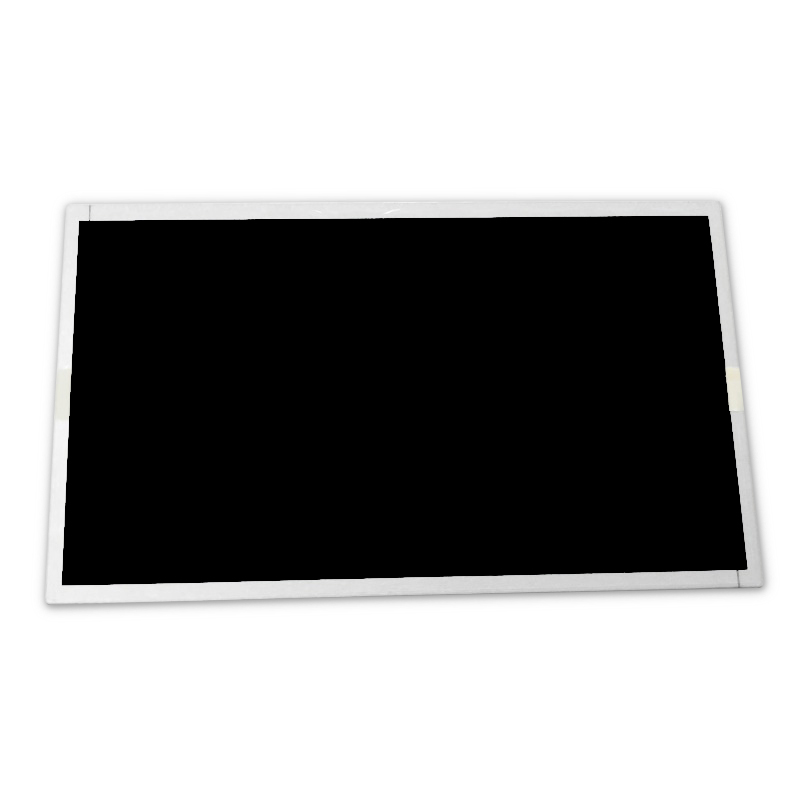
In the demanding world of industrial automation, medical imaging, and heavy-duty human-machine interfaces, the choice of a display is never frivolous. It is a decision that directly impacts operational efficiency, user safety, and long-term capital expenditure. At the center of this decision matrix sits a specific model: the LCD display G156HAB02.1. This 15.6-inch panel, boasting a native resolution of 1920*1080 (Full HD), is not simply a downsized TV screen; it is a highly engineered component designed for reliability and clarity under punishing conditions. This article goes beyond the superficial specifications to dissect the architecture, performance nuances, and strategic value of this specific industrial screen. We will explore why this particular combination of size, resolution, and industrial-grade construction makes it a standout choice for system integrators and engineers who cannot afford downtime. From its optical characteristics to its thermal management and interface compatibility, we will provide a comprehensive analysis that serves as a practical guide for procurement and design professionals.
Optical Engineering and Visual Performance
The visual performance of the G156HAB02.1 is engineered for precision, not entertainment. With a Full HD 1920*1080 resolution packed into a 15.6-inch diagonal, it achieves a crisp pixel density that is ideal for viewing complex data schematics, patient vitals, or intricate manufacturing control panels without scaling artifacts. However, the headline feature is its wide viewing angle technology, typically In-Plane Switching (IPS), which guarantees color consistency and contrast retention from almost any off-axis perspective. This is critical in multi-operator environments where the screen is not always directly in front of a single user.
Furthermore, its high brightness rating, often exceeding 500 cd/m², is a deliberate design choice. In factory floors or outdoor kiosks plagued by ambient light, a standard consumer screen will wash out, becoming illegible. The G156HAB02.1 is built to punch through glare, ensuring readability without forcing operators to squint. The contrast ratio, typically around 1000:1, provides deep blacks and vibrant whites, which helps in distinguishing fine details in medical X-rays or financial trading charts. The color gamut, while not as wide as a grading monitor, is carefully calibrated to be stable over time and temperature, ensuring that a red warning light remains unmistakably red, regardless of the screen's internal heat buildup.

Interface Architecture and Signal Integrity
A robust display is useless without reliable data transmission. The G156HAB02.1 typically utilizes an LVDS (Low-Voltage Differential Signaling) interface, a standard in the industrial world valued for its noise immunity and ability to drive signals over longer distances than embedded DisplayPort. The panel usually requires a 30-pin or 40-pin connector, and the electrical design is tailored for a specific voltage and timing sequence. Understanding this interface is crucial for engineers designing driver boards or integrating the panel into existing systems.
The timing controller (TCON) embedded within the module manages the pixel addressing and refresh rate, which is almost always locked at 60Hz for stable, flicker-free operation in a 60Hz mains environment. Unlike gaming monitors that chase high refresh rates, the G156HAB02.1 prioritizes signal locking and frame consistency. Its LVDS interface supports the full 1920*1080 resolution at 8-bit color depth, delivering 16.7 million colors without compression. For system integrators, the key takeaway is the importance of matching the exact LVDS pinout and voltage levels of this specific model. A mismatch can lead to no display, garbled output, or permanent damage. This makes sourcing compatible controller boards from reputable suppliers a non-negotiable design step.
Mechanical Resilience and Thermal Dynamics
Industrial displays live in harsh mechanical environments. The G156HAB02.1 is typically housed in a robust metal frame, not a plastic bezel. Its mounting holes are designed for VESA standard brackets, allowing for secure attachment in swing arms, rack enclosures, or embedded cabinet doors. The physical dimensions are precise, with a thickness that accommodates a beefier backlight system and a reinforced back cover to protect the delicate glass and polarizers from vibration and shock.
Thermal management is another area where this screen diverges from consumer units. Industrial LCDs have a wide operating temperature range, often from -10°C to +60°C or even +70°C. The LED backlight is the primary heat source, and the G156HAB02.1's chassis is designed to act as a heat sink, drawing thermal energy away from the liquid crystal material. Excessive heat can cause liquid crystal to turn into a semi-liquid state, leading to permanent dark spots or "cooking" of the panel. Conversely, cold temperatures can slow the crystal response time, causing ghosting. This panel's engineered thermal path ensures that the liquid crystal remains within its optimal viscosity range, maintaining consistent response times and preventing image retention (burn-in) over years of 24/7 operation.
Backlight Technology and Longevity Metrics
The backlight system is the heart of an LCD's lifespan. The G156HAB02.1 uses white LED edge lighting, which is far superior to old CCFL technology in terms of energy efficiency, thinness, and mercury-free construction. However, not all LEDs are created equal. This industrial panel utilizes high-brightness, long-life LEDs, typically rated for 50,000 to 70,000 hours of operation before the brightness degrades to half its original value (MTBF to half-luminosity).
A critical feature often included is backlight fuse protection and internal current regulation. This prevents voltage spikes from extinguishing the screen prematurely. For mission-critical applications, the predictable degradation curve allows for proactive maintenance scheduling; a factory manager knows that after approximately six to eight years of constant use, the screen may need a new backlight unit or replacement, rather than failing suddenly. The ability to "dim" the backlight via PWM (Pulse Width Modulation) without introducing visible flicker is also a key characteristic. This allows for energy savings during nighttime operations while maintaining the optical uniformity that is essential for video wall calibration or multi-display setups where brightness must be perfectly matched across all units.
Electromagnetic Compatibility and Ruggedness Standards
In a factory filled with motors, welders, and RF transmitters, electromagnetic interference (EMI) is a silent killer of display performance. The G156HAB02.1 is designed with comprehensive EMI shielding, often using a conductive gasket or metal frame that grounds the panel to the system chassis. This prevents the screen from displaying snow, wavy lines, or complete signal loss when exposed to strong electrical noise. It is typically certified to industrial EMC standards such as FCC Part 15 Class A or the equivalent EN 55022, which are more stringent than consumer class B standards.
Beyond EMI, the panel often incorporates chemical-resistant polarizers. Unlike standard polarizers that can be etched by isopropyl alcohol or harsh cleaning agents, this industrial version can withstand repeated cleaning with industrial degreasers and disinfectants. This is non-negotiable in medical environments (where cleaning is constant) and food processing plants. The glass itself may be treated with an anti-glare (AG) coating with a specific hardness rating to resist scratching. These ruggedness standards mean the display can survive the occasional bump from a tool, a spray from a cleaning hose, or the high-frequency vibration from a pressing machine, maintaining its structural integrity and optical clarity under duress.
System Integration and Compatibility Considerations
Deploying the G156HAB02.1 is more than plugging in a cable; it requires holistic system thinking. The specific power consumption of the panel (typically around 15-20W for the backlight plus logic) must be factored into the system's power budget, especially in mobile or battery-backed applications. The inverter or LED driver must be compatible with the panel's voltage and current requirements; using an underpowered driver will result in a dim or fluctuating picture.
Furthermore, the optical bondability is a crucial integration factor. This panel’s surface is suitable for optical bonding with touchscreens (resistive, capacitive, or infrared). When bonded with an optically clear adhesive, it eliminates the air gap, reducing glare and improving sunlight readability dramatically—often the difference between a usable outdoor kiosk and a failure. System engineers must also consider the cable routing and connector type. For instance, ensuring the LVDS cable has the correct pitch and is adequately shielded to prevent crosstalk at high data rates is essential. Finally, the display's firmware and EDID data must be recognized by the chosen video controller. Pre-validating compatibility with popular embedded platforms (like Intel NUCs, Raspberry Pi via specialized driver boards, or dedicated industrial motherboards) is a wise step to avoid integration headaches during prototyping.
Frequently Asked Questions (FAQs)
Q: What is the typical lifespan of the G156HAB02.1 backlight?A: Rated for 50,000 to 70,000 hours to half-brightness under standard operating conditions (25°C).
Q: Is this panel compatible with a Raspberry Pi?A: Yes, but requires a specific LVDS-to-HDMI driver board that matches this panel's pinout and resolution.
Q: Can this screen be used outdoors in direct sunlight?A: Yes, if optical bonded with a high-brightness (>1000 cd/m²) upgrade and an anti-reflective cover glass.
Q: What is the exact interface type?A: Standard 30-pin or 40-pin LVDS (Single or Dual channel, typically 2-channel for 1920x1080@60Hz).
Q: What is the operating temperature range?A: Typically -10°C to +60°C, with storage from -20°C to +70°C. Always check specific datasheet for your model revision.
Q: Does this display require a VESA mount?A: Yes, it usually supports a standard 75x75mm or 100x100mm VESA mounting pattern.
Q: What is the difference between this and a consumer laptop screen?A: Higher brightness, wider operating temperature, stricter EMI shielding, chemical-resistant polarizers, and longer life industrial LEDs.
Q: Can I replace a broken backlight strip myself?A: It is highly challenging. Requires disassembly of the LCD module, which risks damaging the LCD glass. Professional repair is recommended.
Q: Is the anti-glare coating permanent?A: Yes, it is a hard coating on the polarizer. Using abrasive cleaners can damage it, but it is designed to withstand normal industrial cleaning.
Q: What voltage does the backlight require?A: The LED backlight typically runs on a specific DC voltage (e.g., 12V or 24V) provided by the driver board. The logic voltage is typically 3.3V.
Conclusion: A Calculated Investment in Operational Continuity
The G156HAB02.1 LED LCD display is far more than a 15.6-inch window to data; it is a testament to industrial-grade engineering. Its value lies not in flashy specifications but in its proven ability to deliver consistent, legible, and reliable visual output in environments where consumer electronics fail. We have seen that its superior optical performance, driven by high brightness and wide viewing angles, is the first line of defense against operator error in bright or multi-user settings. Its thermal and mechanical design ensures it survives the physical rigors of the factory floor, while its EMC compliance prevents data corruption from electrical noise. For the system integrator, the path to success lies in respecting its interface requirements and thermal integration needs. Investing in this screen is a direct investment in reducing total cost of ownership, minimizing unexpected downtime, and maintaining a high standard of user interface quality for years to come. When selecting a display for a mission-critical application, the G156HAB02.1 stands not as a commodity part, but as a key component of a robust, long-term operational strategy.





