












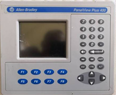
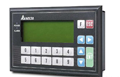

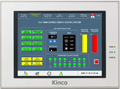
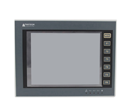




- Industrial display
-
Industrial Products
- DC Servo Drive
- AC Servo Drive
- Industrial board
- Siemens
- Switch Sensor
- Proximity Switch
- Temperature Controller
- Protection Relay
- Fiber Optic Sensor
- Encoder
- Fan
- other
- Heidelberg
- MITSUBISHI
- FANUC
- Siemens adapter
- Fujitsu connector
- Motherboard
- Board
- Contactor
- Circuit
- OMRON
- Relay
- Motor Driver
- power supply
- Cable
- Transformer
- HMI Touch Glass
-
HMI Full Machine Whole unit
- OMRON HMI Touch Panel
- Siemens HMI Touch Panel
- Mitsubishi HMI Touch Panel
- Allen-Bradley automation HMI Touch Panel
- DELTA HMI Touch Panel
- Proface HMI Touch Panel
- KINCO DELTA HMI Touch Panel
- HITECH HMI Touch Panel
- WEINTEK HMI Touch Panel
- TECVIEW HMI Touch Panel
- WEINVIEW HMI Touch Panel
- PANASONIC HMI Touch Panel
- KYOCERA HMI Touch Panel
- SCHNEIDER HMI Touch Panel
- Module
- lcd inverter
- Membrane Keypad Switch
- Zhiyan Customized Touch Screens
- Frequency Inverter
- Servo Motor
- PLC
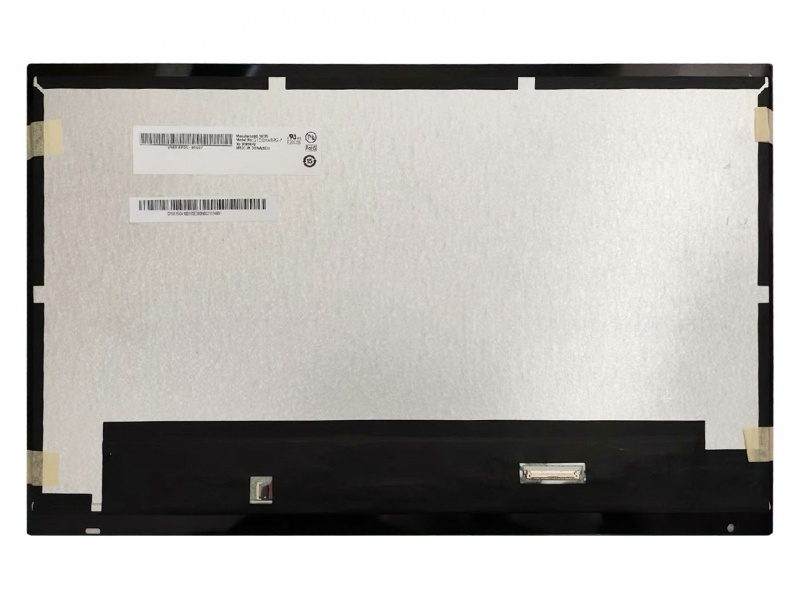
The modern industrial and medical display landscape demands precision, reliability, and visual clarity under diverse operating conditions. Among the components engineered to meet these rigorous standards, the G156HAB02.0 stands out as a high-performance 15.6-inch LCD display module manufactured by AU Optronics (AUO). This article delves into the technical architecture, application-specific strengths, and operational nuances of this particular model. We will explore not merely its surface specifications, but the engineering decisions behind its design, such as its unique LVDS interface configuration and optical bonding capabilities. By understanding this module’s value proposition, procurement specialists and system integrators can make informed decisions for environments ranging from factory floor automation to critical care patient monitoring. The following chapters will dissect the module’s core attributes, technical interface, industrial relevance, comparative advantages, integration challenges, and future-proofing considerations.
Core Specifications and Optical Engineering
The G156HAB02.0 is not a standard consumer-grade screen; it is an industrial-grade component built for longevity. At its heart lies a 15.6-inch a-Si TFT-LCD active matrix panel. The module delivers a native resolution of 1920 x 1080 pixels (Full HD), ensuring sharp text and detailed graphics. A critical optical parameter is its brightness, typically rated at 400 cd/m² (nits). This level of luminance is essential for readability in brightly lit industrial settings or operating rooms.
Equally important is the contrast ratio, which stands at 1000:1. This ensures that blacks appear deep and colors remain saturated, which is vital for imaging applications. The viewing angles, specified as 85/85/85/85 degrees (CR>10), indicate a wide, symmetrical viewing cone, allowing multiple operators to view the screen simultaneously without color inversion. Furthermore, the module supports a color gamut of 72% NTSC, striking a balance between color accuracy and power efficiency. The surface treatment typically features an anti-glare coating (Haze 25%), which diffuses ambient light and reduces operator fatigue caused by reflections.
Decoding the Interface: LVDS and Timing Controller
Understanding the electrical interface of the G156HAB02.0 is crucial for system integration. The module utilizes a LVDS (Low-Voltage Differential Signaling) interface, specifically a 30-pin connector with a 2-channel configuration. This is a standard in high-speed data transmission for flat panel displays, as it reduces electromagnetic interference (EMI) and allows for longer cable runs compared to older parallel interfaces.
The module operates on a typical voltage supply of 3.3V and has a specific power consumption, often around 22-24W depending on the backlight setting. It incorporates a built-in Timing Controller (TCON), which processes video data and manages the panel's pixel addressing. The signal type is LVDS (JEIDA-24), and the physical layer is standardized. For engineers, the key challenge lies in matching the cable pinout and signal timing precisely. The module requires a specific backlight driving circuit, as it typically uses an LED array. The lifecycle length of this display is a testament to its industrial design; AUO guarantees long-term availability, a requirement for medical devices that need regulatory recertification for any visual change.
Industrial and Medical Application Affinity
The design philosophy of the G156HAB02.0 is tailored for harsh environments. Its brightness and anti-glare properties make it ideal for Human-Machine Interfaces (HMIs) in factories, CNC machines, and automation control systems where lighting conditions fluctuate. The wide operating temperature range, typically from 0°C to 70°C, ensures reliable startup and operation in unheated manufacturing areas or near heat-generating machinery.
In the medical sector, this module finds primary use in patient monitoring systems, anesthesia machines, and diagnostic ultrasound equipment. The key features here are reliability and readability. The 400-nit brightness allows nurses and doctors to read vital signs quickly even under intense overhead examination lights. The wide viewing angle is critical for team consultations around a monitor. Furthermore, AUO often offers optional optical bonding services for this model, where the LCD and cover glass are laminated with optical glue. This dramatically reduces parallax, improves sunlight readability, and prevents condensation within the display stack, a crucial feature for sterilization-compliant medical devices.
Comparative Market Positioning
When placed against other panels in the 15.6-inch industrial segment, the G156HAB02.0 carves a distinct niche. Compared to standard consumer laptop panels, it offers a significantly wider operating temperature range and a more robust mechanical design, including mounting holes and metal brackets. Against competing industrial panels like those from LG Display or Innolux, the AUO model is often preferred for its consistent brightness uniformity and stable gray-scale performance.
One specific competitor is the G156HAN series. The “HAB” designation in the G156HAB02.0 implies a specific backlight unit or electrical revision. While the G156HAN may offer higher brightness (600 nits for some models), the G156HAB achieves a superior contrast ratio in its standard power envelope. This makes it more suitable for applications requiring color accuracy over sheer brute-force brightness. The pricing reflects a mid-to-high tier industrial segment. It is not a low-cost commodity, but an investment in a visual system that must pass stringent FMEA (Failure Mode and Effects Analysis) requirements in medical or transportation applications.
Integration Challenges and Design Considerations
Integrating the G156HAB02.0 into a custom product is not a simple plug-and-play operation. The primary challenge is the backlight driving circuit. Engineers must design or source a compatible LED driver that provides the correct forward voltage and current (typically around 12V or 24V input with constant current regulation) to achieve the rated 400 cd/m². Using an inadequate driver can cause flickering, uneven illumination, or premature LED failure.
Another consideration is the mechanical mounting. The module has a defined cutout and standard VESA mounting holes (75x75 mm or 100x100 mm depending on the bezel design). The total depth of the module, including the backlight unit, must be accounted for in enclosure design. Thermal management is also a factor; while the panel operates efficiently, extended use in high ambient temperatures requires airflow or heat sinks to dissipate heat from the LED backlight. Finally, procurement managers must be aware of the product lifecycle status. While AUO supports long-term supply, confirming that the module is not in an "EOL" (End of Life) phase is critical before starting a production run.
Future-Proofing and Lifecycle Management
In the world of industrial displays, availability trumps raw performance. The G156HAB02.0 excels in this domain. AUO typically commits to a 3-5 year production guarantee for industrial panels, and replacements are often cross-compatible with previous revisions. For a medical device manufacturer, changing a display requires re-testing for electromagnetic compatibility (EMC), drop safety, and optical clarity, a process that can cost tens of thousands of dollars. Therefore, selecting a stable platform like the G156HAB02.0 is a strategic decision.
For future-proofing, engineers should design the carrier board to accept potential drop-in replacements like the G156HAB03.0 or slightly newer revisions. The LVDS standard is mature, but one should verify if future updates migrate to eDP (Embedded DisplayPort). Currently, this module remains solidly in the LVDS domain. Sourcing this module from authorized distributors ensures that you receive genuine AUO product with traceability, which is mandatory for ISO 13485 (Medical) and ISO 9001 (Industrial) compliance. The module's long-term availability makes it a low-risk, high-stability choice for systems that will be in the field for a decade or more.
FAQs
What is the exact resolution of the G156HAB02.0?It is 1920 x 1080 pixels (Full HD) with a 16:9 aspect ratio.
Does this display support touch functionality?No, the standard module is a display only. AUO offers separate touch panels (PCAP or Resistive) that can be bonded optically.
What is the typical power consumption?Approximately 18-24W, depending on the backlight brightness setting and signal activity.
What is the operating temperature range?Standard range is 0°C to +70°C for operation, and -20°C to +80°C for storage.
Can I use a standard laptop eDP cable to connect this?No, this module uses an LVDS interface (30-pin, 2-channel), not eDP. An LVDS cable and driver board are required.
Is the backlight replaceable?The module uses integrated LEDs. Replacement is not practical; the entire backlight unit or module should be replaced.
What is the surface treatment of the glass?It features an Anti-Glare (AG) surface with a haze level of approximately 25%.
Is this module suitable for sunlight readable applications?It is readable. For direct sunlight, optical bonding and a higher brightness model (e.g., 1000 nits) are recommended.
What is the weight of the module?Typically around 1.1 kg to 1.3 kg, depending on the specific mechanical assembly.
Where can I purchase genuine AUO G156HAB02.0 modules?Through authorized distributors like Winstar Display, Digi-Key, Mouser, or directly from AUO's sales channels.
Conclusion
The AUO G156HAB02.0 15.6-inch LCD module represents a mature, reliable, and technically refined solution for the demanding worlds of industrial automation and medical instrumentation. Its strength lies not in revolutionary technology, but in the perfection of engineering fundamentals—consistent luminance, wide viewing angles, a robust operating temperature range, and a standardized interface. For system integrators, it offers a low-risk pathway to a high-quality visual interface. The primary value derived from this module is its predictable performance over a long lifecycle. By mastering its specific driving requirements and mechanical constraints, design teams can build user interfaces that enhance operator efficiency and diagnostic accuracy. In an era of fleeting consumer trends, the G156HAB02.0 stands as a testament to the enduring value of purpose-built, industrial-grade design.





