
























- Industrial display
-
Industrial Products
- DC Servo Drive
- AC Servo Drive
- Industrial board
- Siemens
- Switch Sensor
- Proximity Switch
- Temperature Controller
- Protection Relay
- Fiber Optic Sensor
- Encoder
- Fan
- other
- Heidelberg
- MITSUBISHI
- FANUC
- Siemens adapter
- Fujitsu connector
- Motherboard
- Board
- Contactor
- Circuit
- OMRON
- Relay
- Motor Driver
- power supply
- Cable
- Transformer
- HMI Touch Glass
-
HMI Full Machine Whole unit
- OMRON HMI Touch Panel
- Siemens HMI Touch Panel
- Mitsubishi HMI Touch Panel
- Allen-Bradley automation HMI Touch Panel
- DELTA HMI Touch Panel
- Proface HMI Touch Panel
- KINCO DELTA HMI Touch Panel
- HITECH HMI Touch Panel
- WEINTEK HMI Touch Panel
- TECVIEW HMI Touch Panel
- WEINVIEW HMI Touch Panel
- PANASONIC HMI Touch Panel
- KYOCERA HMI Touch Panel
- SCHNEIDER HMI Touch Panel
- Module
- lcd inverter
- Membrane Keypad Switch
- Zhiyan Customized Touch Screens
- Frequency Inverter
- Servo Motor
- PLC
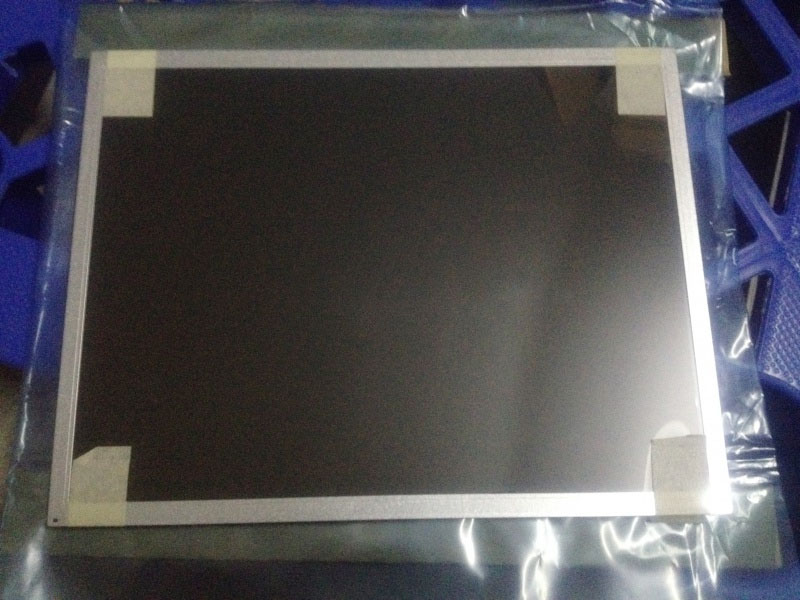
In the intricate ecosystem of electronic components, the display panel often serves as the critical interface between machine and user. For engineers, product designers, and procurement specialists, selecting the right display is a decision that balances technical specifications, reliability, and supply chain viability. This article delves into a specific and pivotal component: the G150XTN03.5, a 15-inch TFT display module manufactured by AUO (AU Optronics).
Far more than just a part number, the G150XTN03.5 represents a tailored solution for a range of industrial, commercial, and embedded applications. We will move beyond basic datasheet parameters to explore its architectural significance, the technology that defines its performance, and the practical considerations for integration. This deep dive aims to provide a comprehensive understanding of where this panel excels, its ideal use cases, and how it stands as a testament to AUO's engineering in the competitive landscape of mid-sized industrial displays.

Decoding the G150XTN03.5: Core Specifications and Architecture
The G150XTN03.5 is a 15.0-inch diagonal a-Si TFT-LCD module with an aspect ratio of 4:3. This squarer format, compared to wide-screen panels, is a deliberate design choice for vertical market applications. Its native resolution is 1024 x 768 (XGA), offering a clear and detailed image suitable for data-intensive interfaces. The module employs LVDS (Low-Voltage Differential Signaling) interface technology, which ensures robust signal integrity and resistance to noise over the typical cable lengths used in system integration, making it a reliable choice for electrically complex environments.
Architecturally, it features a landscape-mode design with a wide viewing angle, crucial for applications where multiple operators may view the screen from different positions. The backlight unit is typically composed of high-longevity CCFL (Cold Cathode Fluorescent Lamp) lamps, though LED-backlit versions may exist, impacting power consumption and lifespan. Understanding these foundational specs—the 4:3 XGA format, LVDS interface, and viewing angle technology—is the first step in appreciating its targeted application space.
The 4:3 Aspect Ratio: A Niche of Enduring Relevance
In a world dominated by 16:9 widescreens, the persistence of the 4:3 aspect ratio in panels like the G150XTN03.5 is not an anachronism but a strategic fit. This format provides more vertical screen real estate, which is invaluable for specific use cases. In industrial control systems, medical monitoring devices, and point-of-sale terminals, the interface often consists of stacked menus, long lists of data, or portrait-oriented documents. A 4:3 display presents this information more efficiently without wasteful black bars or excessive horizontal scrolling.
This aspect ratio aligns perfectly with legacy software and hardware interfaces designed for older CRT monitors, facilitating straightforward upgrades. Furthermore, the physical dimensions of a 4:3 15-inch panel often fit more seamlessly into existing cabinetry and enclosures designed for older equipment. Therefore, the G150XTN03.5's format is a key feature, signaling its purpose-built nature for B2B and embedded markets where functionality and form-factor compatibility trump consumer trends.
Performance Characteristics: Brightness, Contrast, and Viewing Angles
The usability of an industrial display hinges on its performance under various conditions. The G150XTN03.5 is engineered for consistent readability. Its brightness specification is typically in the range of 300-400 nits, which is sufficient for most indoor industrial and office environments, combating ambient light without causing excessive eye strain or power draw. The contrast ratio defines the difference between the darkest black and the brightest white, contributing to text clarity and image depth.
Perhaps more critical for collaborative or multi-angle viewing scenarios are the horizontal and vertical viewing angles. This panel offers wide viewing angles (often 80/80/80/80 degrees per the L/R/U/D specification), ensuring that color shift and contrast degradation are minimized when viewed off-center. This performance is achieved through specific TFT cell design and optical film technology. For an operator moving around a machine or a customer viewing a kiosk from an angle, this consistency is essential for accurate interpretation of the on-screen information.
Typical Applications and Integration Scenarios
The technical profile of the G150XTN03.5 naturally directs it towards specific vertical markets. A primary application is in Industrial Human-Machine Interfaces (HMIs). Here, it serves as the visual conduit for controlling machinery, monitoring production lines, and visualizing SCADA systems, where its rugged reliability and clear XGA resolution are paramount. In the medical field, it can be found in diagnostic equipment, patient monitoring stations, and laboratory analyzers, where color consistency and reliability are non-negotiable.
Beyond these, it is a fit for point-of-sale (POS) systems, gaming machines, transportation information displays, and specialized instrumentation. Integration involves careful consideration of the LVDS interface, which requires a compatible controller board (often called a LCD controller or timing controller). Designers must also account for power supply requirements for the backlight and logic board, mechanical mounting using the panel's pre-drilled holes, and the sourcing of a compatible LVDS cable to connect the panel to the host system.
Supply Chain and Sourcing Considerations
As a component from a major manufacturer like AUO, the G150XTN03.5 exists within a global supply chain. For OEMs and integrators, sourcing involves key decisions. Purchasing directly in large volumes from AUO or authorized distributors ensures authenticity, consistency in quality, and access to technical support. However, minimum order quantities (MOQs) can be high. The panel is also commonly available through specialized electronic component brokers and resellers, which can facilitate smaller-quantity purchases or provide access to end-of-life stock.
A critical consideration is the panel's lifecycle status. As a product matures, it may move from active status to not recommended for new designs (NRND), and finally to end-of-life (EOL). Understanding this status is vital for long-term product planning. Sourcing from the open market requires diligence to avoid counterfeit or remarked parts. Verifying supplier credentials, requesting original packaging, and, if possible, testing sample units are essential practices to mitigate supply chain risk.
Comparative Context: Positioning in the Display Market
To fully grasp the value proposition of the G150XTN03.5, it helps to position it against alternatives. Compared to consumer-grade 15-inch panels, it is built with higher-grade components for extended duty cycles and greater temperature tolerance. Against other industrial 15-inch 4:3 panels, its competitive edge lies in AUO's manufacturing scale, potential cost-effectiveness at volume, and the proven reliability of its a-Si TFT process. It may face competition from panels with LED backlights offering thinner profiles and lower power consumption, or from newer TFT technologies like IPS for even wider viewing angles.
However, its strength is as a balanced, well-understood, and widely available solution. For projects requiring a dependable, no-surprises display with a classic 4:3 format, the G150XTN03.5 often represents an optimal intersection of performance, availability, and cost. It fills a mature but stable niche, less about cutting-edge specs and more about providing a solid, integrable foundation for professional equipment.
FAQs: G150XTN03.5 15" TFT Display
Q1: What is the native resolution of the G150XTN03.5?A1: The native resolution is 1024 x 768 pixels (XGA).
Q2: What type of interface does it use?A2: It uses an LVDS (Low-Voltage Differential Signaling) interface.
Q3: Why is the 4:3 aspect ratio important?A3: It provides more vertical space for data display and is compatible with many legacy industrial and medical software interfaces.
Q4: What are typical applications for this display?A4: Industrial HMIs, medical devices, POS systems, gaming machines, and instrumentation.
Q5: Is this panel suitable for outdoor use?A5: Typically not; its brightness (usually 300-400 nits) is designed for indoor use. Outdoor applications require high-brightness (1000+ nits) panels.
Q6: What is the backlight technology?A6: It commonly uses CCFL backlights, though LED versions may be available. This affects power consumption and lifespan.
Q7: How do I connect this panel to my system?A7: You need a host controller with an LVDS output and a compatible LVDS cable that matches the panel's pinout.
Q8: Is the G150XTN03.5 still in production?A8: You must check with AUO or authorized distributors for its current lifecycle status (Active, NRND, or EOL).
Q9: Can I touch-enable this display?A9: Yes, by adding a separate resistive or capacitive touchscreen overlay (touch panel) and controller.
Q10: Where can I source this display module?A10: From AUO authorized distributors, electronic component brokers, or specialized display resellers.
Conclusion
The AUO G150XTN03.5 15-inch TFT display module exemplifies how a purpose-built component can outlast fleeting consumer trends. Its value is not in being the newest or the flashiest, but in its deliberate design—the 4:3 XGA format, robust LVDS interface, and reliable performance—that meets the exacting demands of industrial, medical, and commercial applications. It serves as a dependable bridge between complex digital systems and human operators.
For engineers and designers, understanding this panel's specifications, ideal use cases, and sourcing landscape is crucial for making informed integration decisions. In a world of constant technological churn, the G150XTN03.5 stands as a testament to the enduring need for specialized, reliable, and perfectly fitted components in the backbone of our professional technology infrastructure.





