


















- Industrial display
-
Industrial Products
- DC Servo Drive
- AC Servo Drive
- Industrial board
- Siemens
- Switch Sensor
- Proximity Switch
- Temperature Controller
- Protection Relay
- Fiber Optic Sensor
- Encoder
- Fan
- other
- Heidelberg
- MITSUBISHI
- FANUC
- Siemens adapter
- Fujitsu connector
- Motherboard
- Board
- Contactor
- Circuit
- OMRON
- Relay
- Motor Driver
- power supply
- Cable
- Transformer
- HMI Touch Glass
-
HMI Full Machine Whole unit
- OMRON HMI Touch Panel
- Siemens HMI Touch Panel
- Mitsubishi HMI Touch Panel
- Allen-Bradley automation HMI Touch Panel
- DELTA HMI Touch Panel
- Proface HMI Touch Panel
- KINCO DELTA HMI Touch Panel
- HITECH HMI Touch Panel
- WEINTEK HMI Touch Panel
- TECVIEW HMI Touch Panel
- WEINVIEW HMI Touch Panel
- PANASONIC HMI Touch Panel
- KYOCERA HMI Touch Panel
- SCHNEIDER HMI Touch Panel
- Module
- lcd inverter
- Membrane Keypad Switch
- Zhiyan Customized Touch Screens
- Frequency Inverter
- Servo Motor
- PLC
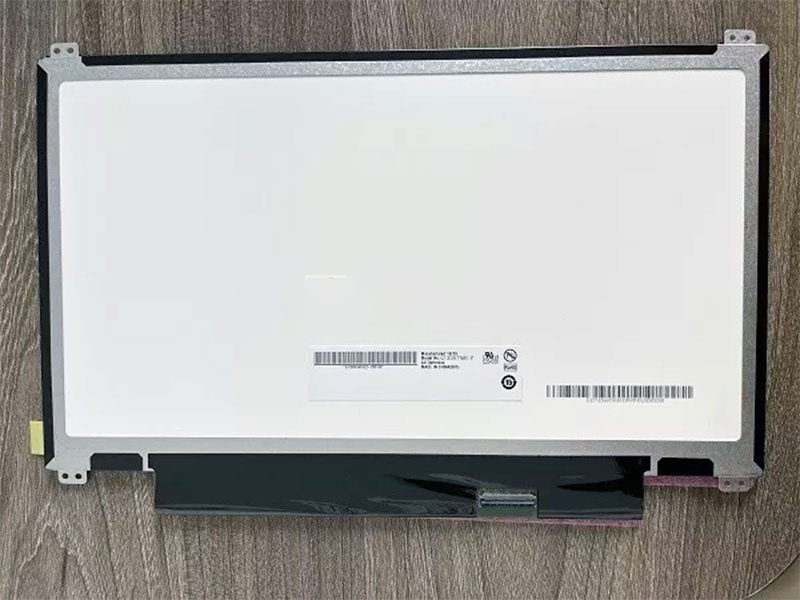
In the intricate world of display technology, where every pixel and refresh rate is scrutinized, the AUO G133HAN02.1 emerges as a significant component for designers and engineers. This 13.3-inch LCD panel is not merely a part number on a spec sheet; it represents a carefully balanced set of features tailored for specific, demanding applications. As the bridge between digital information and human perception, its characteristics dictate the quality, efficiency, and usability of the final product it powers.
This article delves into a comprehensive analysis of the AUO G133HAN02.1. We will move beyond basic specifications to explore its core technological profile, the tangible benefits its features deliver, and the primary application landscapes it is designed for. Furthermore, we will examine the critical integration considerations for product developers, contextualize it within the competitive market, and finally, discuss its role in the broader trajectory of display innovation. Our goal is to provide a resource that informs strategic decision-making for professionals selecting displays for next-generation devices.
Core Technical Profile and Specifications
The AUO G133HAN02.1 is built on an IPS (In-Plane Switching) panel structure, a technology renowned for its superior color consistency and wide viewing angles. This foundation is critical, ensuring that the visual content remains stable and color-accurate even when viewed from sharp angles, a necessity for collaborative work or devices with flexible hinges. The panel boasts a Full HD (1920 x 1080) resolution, delivering a pixel density that ensures sharp text and detailed imagery suitable for professional and entertainment use.
Its optical performance is defined by a high brightness level of 300 nits (typical) and a contrast ratio of 700:1, enabling comfortable viewing in various ambient lighting conditions. The color gamut coverage, typically around 45% NTSC or 62% sRGB, positions it as a reliable solution for standard color applications. The interface relies on eDP (Embedded DisplayPort), a modern, high-speed digital connection that supports the data throughput required for Full HD content while enabling slimmer device designs and lower power consumption compared to older LVDS interfaces.

Performance Advantages and User Benefits
The technical specifications of the G133HAN02.1 translate directly into tangible user and system-level benefits. The IPS technology directly combats the color shift and contrast degradation common in TN panels, providing a more immersive and reliable visual experience for end-users, whether they are editing documents, coding, or streaming video. The Full HD resolution on a 13.3-inch canvas strikes an optimal balance between screen real estate and interface scalability, avoiding the need for excessive operating system scaling that can sometimes blur elements.
From an engineering perspective, the use of the eDP interface is a significant advantage. It simplifies board design, reduces electromagnetic interference (EMI), and, crucially, enhances power efficiency. This efficiency contributes directly to longer battery life in portable devices—a paramount concern for laptops and portable monitors. Furthermore, the panel's standard brightness and contrast specifications ensure adequate performance without forcing excessive backlight power draw, making it an economically efficient choice for balancing performance with system power budgets.
Primary Application Landscapes
The AUO G133HAN02.1 finds its ideal home in several key product categories where its blend of size, resolution, and performance is most valued. Its most natural fit is in the mainstream to premium notebook computer segment. For business laptops, ultrabooks, and educational devices, it offers the right combination of clarity for productivity, good viewing angles for presentations, and power efficiency for all-day use.
Beyond traditional laptops, this panel is a strong candidate for the growing market of portable external monitors. Professionals seeking a mobile dual-screen setup require a panel that is compact, reliable, and can be driven efficiently via USB-C, a task for which the eDP interface is well-suited. Additionally, it serves specialized applications in industrial control panels, medical diagnostic displays (where applicable certifications are met), and embedded systems in kiosks or point-of-sale terminals, where consistent visual performance and long-term availability are critical.
Integration and Design Considerations
Successfully integrating the G133HAN02.1 into a product requires careful attention to several factors. Designers must account for its mechanical footprint, including the exact dimensions, bezel size, and mounting hole patterns to ensure a seamless fit within the device chassis. The eDP interface necessitates a compatible timing controller (T-Con) and graphics source, and engineers must correctly implement the required number of lanes and signal integrity measures on the printed circuit board (PCB).
Power management is another crucial area. The backlight driver circuit must be designed to match the panel's LED requirements, ensuring uniform brightness and supporting dimming controls (like PWM or DC dimming) to manage power and user comfort. Thermal management is also essential, as proper heat dissipation from the driver ICs and backlight ensures long-term reliability and prevents premature aging or color shifts. Finally, firmware and software must be configured to use the panel's exact timing parameters to avoid display artifacts.
Market Context and Competitive Analysis
Within the 13.3-inch Full HD IPS segment, the AUO G133HAN02.1 operates in a competitive landscape populated by offerings from other major panel manufacturers like LG Display, Innolux, and BOE. Its competitive edge often lies in AUO's reputation for consistent quality, reliable supply chains, and specific performance tweaks. It may compete against panels with slightly higher brightness, wider color gamuts (e.g., 72% NTSC), or lower power consumption variants.
The choice for OEMs often comes down to a careful cost-benefit analysis. The G133HAN02.1 represents a balanced, cost-optimized solution that does not compromise on the core IPS viewing angle benefits. For projects where ultimate color accuracy or ultra-low power is not the absolute top priority, but overall value and reliability are, this panel stands as a compelling option. Understanding its position helps procurement and engineering teams make informed sourcing decisions against both technical specs and total cost of integration.
The Role in Evolving Display Trends
While not a cutting-edge technology demonstrator, the G133HAN02.1 plays a vital role in the diffusion of established quality features into the mainstream market. It represents the maturation and commoditization of IPS and eDP technologies, making wide viewing angles and efficient connectivity accessible for a broad range of products. This drives the overall quality baseline of the market upward.
Looking forward, panels like this serve as the foundation upon which next-generation features are incrementally added. Future iterations in this form factor may see the integration of narrower bezels for modern designs, low blue light modes without external filters, or improved transmissivity for even better power efficiency. The G133HAN02.1, in its current iteration, fulfills today's market needs reliably while the industry continues to advance towards higher refresh rates, mini-LED backlighting, and ultimately, new panel technologies.
FAQs
Q1: What is the screen size and resolution of the AUO G133HAN02.1?A1: It is a 13.3-inch diagonal LCD panel with a Full HD resolution of 1920 x 1080 pixels.
Q2: What panel technology does it use?A2: It utilizes IPS (In-Plane Switching) technology, known for excellent viewing angles and color consistency.
Q3: What is the typical brightness of this panel?A3: The typical brightness is 300 nits, making it suitable for indoor use under normal lighting conditions.
Q4: What interface does this LCD panel use?A4: It uses an eDP (Embedded DisplayPort) interface for data transmission.
Q5: Is this panel suitable for high-color-accuracy work like photo editing?A5: With a gamut around 62% sRGB, it is suitable for general use and office work, but not for professional-grade color-critical applications which require wider gamuts like 100% sRGB or Adobe RGB.
Q6: What are the main applications for this panel?A6: Primary applications include mainstream laptops, ultrabooks, portable external monitors, and various embedded systems.
Q7: Does it support touch functionality?A7: The standard AUO G133HAN02.1 is a non-touch panel. Touch functionality would require a separate digitizer layer.
Q8: How does the eDP interface benefit the end product?A8: eDP enables higher data bandwidth, supports higher resolutions, reduces EMI, simplifies design, and improves overall power efficiency compared to older LVDS interfaces.
Q9: What should engineers consider when integrating this panel?A9: Key considerations include mechanical fit, eDP signal integrity, backlight driver design, thermal management, and accurate timing configuration in software.
Q10: How does this panel compare to similar offerings from LG or Innolux?A10: It competes in the same segment, with differences often in specific brightness, power consumption, color gamut, pricing, and supply chain reliability. It is positioned as a balanced, value-oriented IPS solution.
Conclusion
The AUO G133HAN02.1 13.3-inch LCD panel exemplifies a mature and well-optimized component in the display ecosystem. It successfully packages essential modern features—IPS wide-view technology, Full HD clarity, and the efficient eDP interface—into a reliable and cost-effective solution. Its value proposition is clear: it elevates the baseline visual experience for a wide array of devices without venturing into the premium cost bracket associated with ultra-high gamut or high-refresh-rate panels.
For product developers, understanding this panel's strengths in balance and integration is key. It serves as a testament to the industry's progress in making quality displays accessible and underscores the importance of selecting the right component that aligns with both the technical requirements and the commercial goals of a project. As display technology continues its rapid evolution, workhorse panels like the G133HAN02.1 will remain the backbone of countless devices, reliably connecting users to the digital world.





