


















- Industrial display
-
Industrial Products
- DC Servo Drive
- AC Servo Drive
- Industrial board
- Siemens
- Switch Sensor
- Proximity Switch
- Temperature Controller
- Protection Relay
- Fiber Optic Sensor
- Encoder
- Fan
- other
- Heidelberg
- MITSUBISHI
- FANUC
- Siemens adapter
- Fujitsu connector
- Motherboard
- Board
- Contactor
- Circuit
- OMRON
- Relay
- Motor Driver
- power supply
- Cable
- Transformer
- HMI Touch Glass
-
HMI Full Machine Whole unit
- OMRON HMI Touch Panel
- Siemens HMI Touch Panel
- Mitsubishi HMI Touch Panel
- Allen-Bradley automation HMI Touch Panel
- DELTA HMI Touch Panel
- Proface HMI Touch Panel
- KINCO DELTA HMI Touch Panel
- HITECH HMI Touch Panel
- WEINTEK HMI Touch Panel
- TECVIEW HMI Touch Panel
- WEINVIEW HMI Touch Panel
- PANASONIC HMI Touch Panel
- KYOCERA HMI Touch Panel
- SCHNEIDER HMI Touch Panel
- Module
- lcd inverter
- Membrane Keypad Switch
- Zhiyan Customized Touch Screens
- Frequency Inverter
- Servo Motor
- PLC
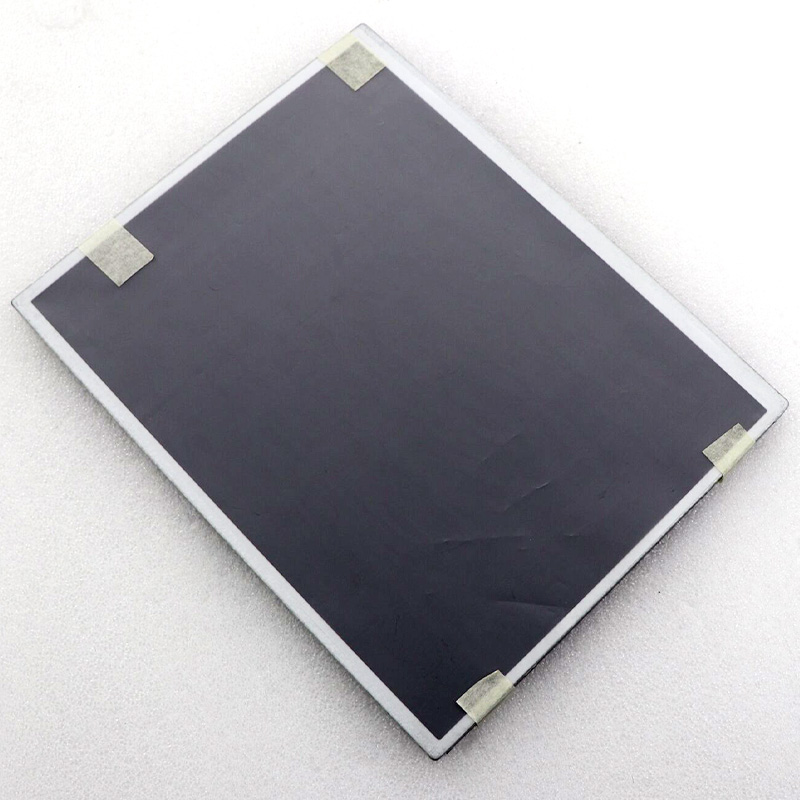
In the intricate ecosystem of electronic devices, the display serves as the critical bridge between digital information and human perception. For engineers, product designers, and procurement specialists, selecting the right display module is a decision that profoundly impacts performance, user experience, and project viability. This article provides a comprehensive, in-depth analysis of the G121XCE-LM1, a 12.1-inch LCD display module manufactured by INNOLUX. We will move beyond basic datasheet specifications to explore the module's architectural nuances, performance characteristics in real-world applications, and its strategic position within the competitive landscape.

Our exploration is structured to guide you from foundational understanding to practical integration. We will dissect the module's core technology and visual performance, examine its mechanical and electrical interface design, and assess its reliability under various environmental conditions. Furthermore, we will identify its ideal application domains and provide a balanced comparison with alternative solutions. This holistic analysis aims to equip you with the knowledge necessary to determine if the G121XCE-LM1 is the optimal visual interface for your next-generation industrial, medical, or embedded system project.
Unpacking the Core Technology and Visual Performance
At the heart of the G121XCE-LM1 lies a 12.1-inch diagonal TFT-LCD panel with a resolution of 1024 x 768 pixels (XGA). This 4:3 aspect ratio format, while less common in consumer tablets, remains highly relevant in industrial and medical applications where legacy software compatibility and vertical screen space are paramount. The module utilizes a-Si (amorphous Silicon) Thin-Film Transistor technology, offering a mature, reliable, and cost-effective manufacturing process suitable for the extended lifecycles of professional equipment.
The visual performance is defined by key parameters. A typical brightness of 500 nits ensures readability in brightly lit environments, such as factory floors or under medical examination lights. The contrast ratio and color gamut are engineered for accuracy and clarity rather than ultra-saturated consumer media consumption, making it suitable for diagnostic imaging or detailed data visualization. The viewing angles, both horizontal and vertical, are sufficiently wide to allow for clear sightlines from various positions, a crucial factor in multi-operator environments like control rooms.
Mechanical Design and Electrical Interface Integration
The G121XCE-LM1 is not merely a panel; it is a fully integrated module. Mechanically, it features a compact and robust design, often with an all-metal frame for enhanced durability and electromagnetic interference (EMI) shielding. The outline dimensions and mounting hole patterns are standardized, facilitating straightforward integration into chassis and enclosures. Designers must pay close attention to the bezel width, as it directly impacts the final product's front-panel aesthetics and functional design.
Electrically, integration is streamlined through standard interfaces. The module typically employs an LVDS (Low-Voltage Differential Signaling) interface, a proven and robust standard for transmitting high-speed video data with low noise emission. This requires a compatible LVDS transmitter on the host system's mainboard. The power supply requirements are clearly defined, usually a single +3.3V or +5V input, simplifying power architecture design. The inclusion of an integrated CCFL or LED backlight driver circuit further reduces the engineering burden on the system integrator.
Environmental Robustness and Reliability Considerations
For applications beyond the controlled office environment, the module's resilience is non-negotiable. The G121XCE-LM1 is engineered to meet stringent operational and storage temperature ranges, often spanning from -20°C to 70°C for operation. This ensures stable performance in unheated warehouses, automotive environments, or near industrial machinery. Resistance to vibration and shock is inherent in its solid construction, protecting the internal bonds and connections from physical stress.
Long-term reliability is a cornerstone of its value proposition. The use of high-grade components and a manufacturing process focused on longevity results in a high Mean Time Between Failures (MTBF) rating. The backlight system, especially if utilizing LED technology, offers a significantly longer lifespan compared to older CCFL designs, often exceeding 50,000 hours. This translates to lower total cost of ownership and reduced maintenance needs over the decade-plus lifespan expected of capital equipment.
Target Application Domains and Use Case Analysis
The specific combination of features positions the G121XCE-LM1 as a specialist rather than a generalist. Its primary domain is industrial human-machine interface (HMI) systems. Here, its high brightness, wide temperature tolerance, and robust build make it perfect for factory automation panels, PLC operator interfaces, and test equipment displays. The second major domain is medical and healthcare equipment, where its reliable performance, stable imaging, and compatibility with sterilization protocols are critical for devices like patient monitors, diagnostic ultrasound systems, or laboratory analyzers.
Additional niches include transportation (in-vehicle information systems for buses or trains), point-of-sale (POS) terminals in retail, and specialized embedded systems in security and defense. In each case, the decision hinges on the need for a dependable, long-life display that prioritizes functional reliability over flashy consumer-grade features. It is the workhorse display for mission-critical visual tasks.
Comparative Landscape and Alternative Solutions
Understanding the G121XCE-LM1 requires context within the broader market. Direct competitors include similar XGA modules from other major manufacturers like AUO, BOE, or Panasonic. Comparison points extend beyond mere size and resolution to include optical bonding options (which reduce glare and enhance durability), touchscreen integration (resistive or projected capacitive), and specific enhancements like sunlight readability filters.
Alternative paths exist. One could opt for a smaller or larger module from the same family, or consider a switch to a widescreen format (e.g., WXGA) for modern software interfaces. The most significant crossroad is the choice between a standard LCD like this and emerging technologies like industrial-grade OLEDs, which offer superior contrast and viewing angles but at a higher cost and with different longevity characteristics. The G121XCE-LM1 represents a balanced, cost-effective, and proven solution in the mid-to-high tier of industrial displays.
Integration Best Practices and Sourcing Strategy
Successful deployment begins with meticulous integration. Designers must ensure adequate thermal management within the end-product enclosure, as excessive heat can shorten the backlight life and affect performance. Electrical design must account for clean power delivery to the module and proper signal integrity for the LVDS lines. Mechanically, provisions for stress-free mounting and protection against moisture or dust ingress (per required IP ratings) are essential.
From a sourcing perspective, the G121XCE-LM1 is typically available through authorized distributors of INNOLUX or specialized display module suppliers. Key considerations include lead time, minimum order quantities (MOQs), and the availability of long-term supply guarantees, which are vital for products with multi-year manufacturing cycles. Engaging with suppliers who offer technical support and can provide compatible accessories (like controller boards or cables) can significantly accelerate development.
FAQs: G121XCE-LM1 Display Module
1. What is the exact resolution and aspect ratio of the G121XCE-LM1?It features an XGA resolution of 1024 x 768 pixels with a 4:3 aspect ratio.
2. What type of interface does this module use?It typically uses a standard LVDS (Low-Voltage Differential Signaling) interface for video input.
3. Is the backlight LED or CCFL?Most modern versions utilize an LED backlight system for longer lifespan and lower power consumption.
4. What are the typical operating temperature ranges?It is designed to operate reliably within a range of approximately -20°C to 70°C.
5. Is this module suitable for outdoor use?While it has high brightness (500 nits), true outdoor use in direct sunlight usually requires a dedicated sunlight-readable version with higher nit ratings and optical bonding.
6. Does it come with a touchscreen?The G121XCE-LM1 is primarily a display module. Touchscreen functionality (resistive or capacitive) is usually an add-on option that must be specified.
7. What are its main application areas?Primary applications include Industrial HMI, Medical Devices, Transportation Systems, and Point-of-Sale terminals.
8. How does it compare to a consumer laptop display?It is built for reliability, longevity, and stable performance under harsh conditions, whereas consumer displays prioritize thinness, color vibrancy, and low cost.
9. What is the expected lifespan of the module?The LED backlight often has a lifetime of 50,000 hours or more, and the overall module is designed for long-term operation in professional equipment.
10. Where can I find a datasheet and purchase this module?Datasheets are available from INNOLUX's official website or through authorized electronic component distributors. Purchasing is done via these distributors or specialized display suppliers.
Conclusion
The INNOLUX G121XCE-LM1 12.1-inch LCD display module exemplifies the engineering principles required for professional-grade visual components. It transcends being a simple commodity by offering a deliberate combination of robust construction, reliable performance across challenging environments, and a focus on long-term operational stability. Its XGA resolution in a 4:3 format caters to a legacy-rich but still vital segment of the industrial and medical markets.
Selecting this module is a strategic decision that aligns with projects where durability, clarity, and total cost of ownership outweigh the allure of the latest consumer display trends. For system integrators designing the control panels, diagnostic tools, and embedded interfaces that power critical infrastructure, the G121XCE-LM1 stands as a proven and dependable solution, ensuring that the vital bridge between machine and user remains clear and unwavering for years to come.





