



















- Industrial display
-
Industrial Products
- DC Servo Drive
- AC Servo Drive
- Industrial board
- Siemens
- Switch Sensor
- Proximity Switch
- Temperature Controller
- Protection Relay
- Fiber Optic Sensor
- Encoder
- Fan
- other
- Heidelberg
- MITSUBISHI
- FANUC
- Siemens adapter
- Fujitsu connector
- Motherboard
- Board
- Contactor
- Circuit
- OMRON
- Relay
- Motor Driver
- power supply
- Cable
- Transformer
- HMI Touch Glass
-
HMI Full Machine Whole unit
- OMRON HMI Touch Panel
- Siemens HMI Touch Panel
- Mitsubishi HMI Touch Panel
- Allen-Bradley automation HMI Touch Panel
- DELTA HMI Touch Panel
- Proface HMI Touch Panel
- KINCO DELTA HMI Touch Panel
- HITECH HMI Touch Panel
- WEINTEK HMI Touch Panel
- TECVIEW HMI Touch Panel
- WEINVIEW HMI Touch Panel
- PANASONIC HMI Touch Panel
- KYOCERA HMI Touch Panel
- SCHNEIDER HMI Touch Panel
- Module
- lcd inverter
- Membrane Keypad Switch
- Zhiyan Customized Touch Screens
- Frequency Inverter
- Servo Motor
- PLC
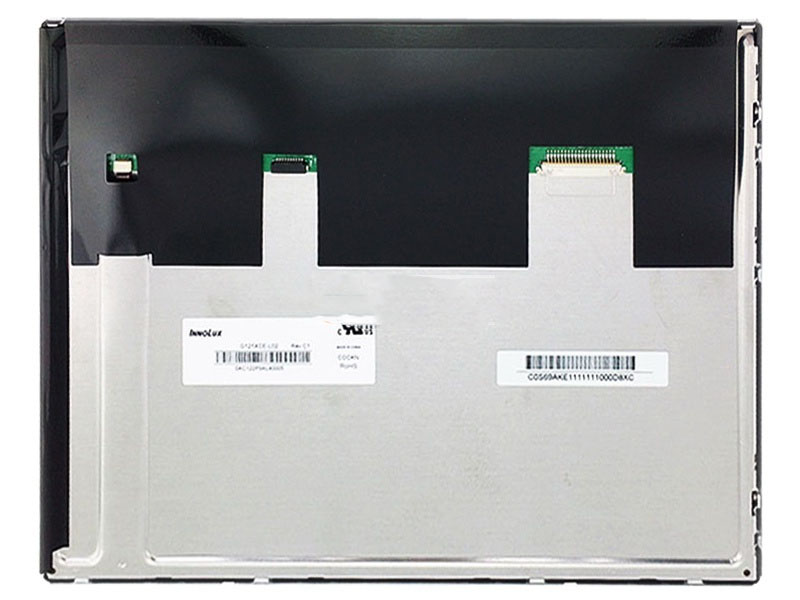
In the intricate ecosystem of electronic devices, the display panel serves as the fundamental portal between user and machine. For engineers, product designers, and procurement specialists, selecting the right LCD is a critical decision that impacts performance, durability, and end-user satisfaction. This article provides a comprehensive, in-depth analysis of the Innolux G121XCE-L01, a 12.1-inch LCD display panel that has established itself as a reliable component in demanding industrial and commercial applications. We will move beyond basic datasheet specifications to explore the technical nuances, practical implementation considerations, and the specific market niches where this panel excels.

Our exploration will dissect its core technology, visual performance, rugged construction, integration requirements, ideal application scenarios, and its position within the competitive landscape. This guide aims to equip you with the knowledge necessary to evaluate whether the Innolux G121XCE-L01 is the optimal display solution for your next project, ensuring an informed decision that balances technical capability with real-world operational demands.
Delving into the Core Technology: TFT-LCD with a Twist
The Innolux G121XCE-L01 is built on a mainstream yet highly refined Twisted Nematic (TN) Thin-Film Transistor (TFT) LCD technology. While newer panel types like IPS offer wider viewing angles, TN technology provides distinct advantages crucial for its target markets: exceptionally fast response times and high cost-effectiveness. The panel's native resolution of 1024 x 768 (XGA) in a 4:3 aspect ratio is a key identifier. This format remains highly relevant in industrial and medical fields where legacy software interfaces and specific data display formats are prevalent, avoiding the stretching or scaling issues that can occur with widescreen panels.
Beyond the matrix, the integration of a CCFL (Cold Cathode Fluorescent Lamp) backlight system is a defining characteristic. In an era dominated by LED backlighting, CCFL offers a specific benefit: superior uniformity and stability of light output over a very wide temperature range. This technology, coupled with a robust optical bonding option, minimizes internal condensation and glare, enhancing readability in volatile environments. The panel's design philosophy prioritizes long-term stability and consistent performance under stress over the ultra-thin profiles enabled by modern LED edge-lighting.
Visual Performance and Readability Analysis
Evaluating the visual output of the G121XCE-L01 requires context. Its 250 nits of brightness and 500:1 contrast ratio may seem modest compared to consumer tablets, but they are engineered for controlled or indoor industrial settings. This brightness level is sufficient for most factory floors or medical offices while minimizing power consumption and heat generation. The 500:1 contrast ratio ensures clear differentiation between text, graphics, and background, which is paramount for data monitoring and diagnostic equipment.
The viewing angles, typical of TN technology, are specified at 80/80/80/80 (Left/Right/Up/Down). This indicates the image will maintain integrity within an 80-degree cone, which is perfectly adequate for applications where the user is positioned directly in front of the display, such as a test station, a point-of-sale system, or an embedded machine controller. The panel's performance is optimized for clarity and reliability in its primary viewing zone rather than for wide-off-axis consumption.
Ruggedized Design for Demanding Environments
This is where the Innolux G121XCE-L01 truly distinguishes itself. Its specification sheet reads like a checklist for durability. The operating temperature range of -30°C to 80°C and storage range of -40°C to 85°C are exceptional, allowing deployment in unheated warehouses, near industrial ovens, or in outdoor kiosks with climate swings. This resilience is a direct result of the stable CCFL backlight and carefully selected liquid crystal compounds.
Furthermore, the panel is designed to withstand significant vibration and shock, making it suitable for transportation, agriculture, and military applications. The surface hardness rating protects against scratches during installation and operation. Optional enhancements like optical bonding—filling the air gap between the LCD and cover glass with a resin—dramatically improve durability by reducing reflection, strengthening the structure, and preventing moisture ingress. This ruggedized feature set transforms the panel from a simple display into a robust system component.
Electrical Interface and System Integration
Successful integration hinges on understanding the panel's communication and power requirements. The G121XCE-L01 utilizes a standard LVDS (Low-Voltage Differential Signaling) interface, specifically a 2-channel, 8-bit configuration. This mature and noise-resistant interface ensures reliable data transmission over the typical cable lengths used in embedded systems. Designers must ensure their controller board or system-on-chip (SoC) supports LVDS output with the correct timing parameters (detailed in the panel's datasheet).
Power supply design is critical. The CCFL backlight requires an inverter circuit to generate the high-voltage AC needed to illuminate the lamps. This adds a component to the Bill of Materials (BOM) and requires careful layout to avoid electromagnetic interference. The panel's logic board, however, runs on a low-voltage DC supply. System integrators must account for both power rails, the inverter's enable signal, and brightness control, which is typically managed via PWM (Pulse-Width Modulation). Proper thermal management for the inverter is also a key consideration for long-term reliability.
Target Applications and Market Fit
The technical specifications of the Innolux G121XCE-L01 directly map to a well-defined set of vertical markets. Its primary home is in Industrial Human-Machine Interfaces (HMIs) for factory automation, process control, and test/measurement equipment. The 4:3 XGA format is ideal for displaying legacy SCADA system layouts, and its ruggedness handles factory floor conditions.
In the Medical field, it finds use in diagnostic instruments, patient monitoring systems, and dental equipment, where stable performance and readability are non-negotiable. The Transportation sector utilizes it for in-vehicle infotainment and control systems in buses, trains, and construction vehicles, benefiting from its wide temperature tolerance. Additionally, it serves well in Point-of-Sale (POS) terminals, gaming machines, and specialized military and aerospace displays where reliability trumps the latest consumer display trends.
Competitive Landscape and Procurement Considerations
When sourcing a display like the G121XCE-L01, it's vital to compare it with alternatives. Competing panels from manufacturers like AUO, Sharp, or BOE may offer similar sizes and resolutions. Key differentiators become the extreme temperature ratings, the availability of optical bonding as a direct option, and the long-term product lifecycle guarantee. Innolux, as a major panel maker, often provides stronger support for extended manufacturing windows crucial for industrial products that may be in production for a decade or more.
Procurement specialists should look beyond the unit cost. The total cost of integration, including the inverter, cabling, and potential bonding services, must be calculated. Furthermore, securing a stable supply chain through authorized distributors or direct channels is essential to avoid production delays. Evaluating the technical support and availability of detailed documentation (mechanical drawings, interface timings) is as important as evaluating the panel's specs.
FAQs: Innolux G121XCE-L01 Display Panel
Q1: What is the resolution and aspect ratio of this panel?A1: It has an XGA resolution of 1024 x 768 pixels with a 4:3 aspect ratio.
Q2: What type of backlight does it use?A2: It uses a CCFL (Cold Cathode Fluorescent Lamp) backlight system.
Q3: What is its operating temperature range?A3: It has a wide operating temperature range of -30°C to 80°C.
Q4: What interface does it use?A4: It uses a standard 2-channel, 8-bit LVDS (Low-Voltage Differential Signaling) interface.
Q5: Is this panel suitable for outdoor use?A5: It can be used in outdoor environments if properly housed, thanks to its wide temperature range, but direct sunlight may wash out the 250-nit screen. An optical bonded version with a high-brightness option would be better.
Q6: What is optical bonding and is it available?A6: Optical bonding fills the air gap with resin to reduce glare and improve durability. It is a common optional feature for this panel from integrators.
Q7: Why choose a CCFL backlight over LED?A7: CCFL offers excellent brightness uniformity and stable performance across extreme temperatures, which is critical for industrial applications.
Q8: What are the main applications for this display?A8: Ideal for industrial HMIs, medical devices, transportation systems, POS terminals, and gaming machines.
Q9: What is a key consideration for powering this panel?A9: You will need an external inverter circuit to power the CCFL backlight, in addition to the low-voltage supply for the panel logic.
Q10: How does it compare to modern consumer displays?A10: It trades ultra-thin design, wide viewing angles, and high brightness for extreme ruggedness, temperature tolerance, long-term stability, and a reliable 4:3 format for legacy systems.
Conclusion
The Innolux G121XCE-L01 12.1-inch LCD panel is a testament to the principle that the best technology is the one most fit for purpose. It is not a cutting-edge consumer display, but a precision-engineered industrial component. Its value lies in its proven TN technology, exceptionally wide operating temperature range, robust construction, and stable CCFL backlighting—all tailored for environments where reliability is paramount.
For system designers working in industrial automation, medical instrumentation, or transportation, this panel offers a dependable, long-life solution. The decision to select it hinges on a clear understanding of the environmental challenges, integration requirements for the LVDS interface and CCFL inverter, and the specific benefits of its 4:3 XGA format. In a world of rapidly changing consumer electronics, the G121XCE-L01 stands as a reliable workhorse, engineered not for the living room, but for the harsh realities of mission-critical applications.





